Amides
Amides are a wide range of chemical compounds that contain at least one heterocyclic ring, which has atoms of at least two different elements in the ring structure, and at least one amide group (-CONH2). These compounds are crucial in the synthesis of pharmaceuticals, polymers, and agrochemicals. Amides exhibit unique properties and reactivity, making them valuable intermediates in organic synthesis. At CymitQuimica, we offer a comprehensive selection of high-quality amides to support your research and industrial needs.
Found 16399 products of "Amides"
Sort by
Purity (%)
0
100
|
0
|
50
|
90
|
95
|
100
pTH (1-34) amide (human) trifluoroacetate salt
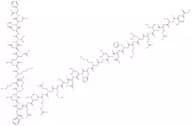
CAS:<p>Parathyroid hormone (PTH) is a peptide hormone that regulates calcium and phosphate balance in the body. PTH is secreted by the parathyroid glands, located near the thyroid gland in the neck. It is also known as parathormone or parathyrin. The active form of PTH, called pTH (1-34) amide, has been shown to stimulate bone resorption and to inhibit bone formation. The amino acid sequence of this hormone starts with arginine and ends with phenylalanine. The N-terminal amino acid residue is an aspartic acid or asparagine and histidine is the only basic residue in this molecule. This molecule has two acidic residues, glutamic acid and aspartic acid, which are found on the side chains of two amino acids: aspartic acid and glutamic acid. Valine is found at position 3 and phenylalanine at position 34.</p>Formula:C181H292N56O50S2Purity:Min. 95%Molecular weight:4,116.73 g/molN-Me-Abz-Amyloid β/A4 Protein Precursor770 (708-715)-Lys(Dnp)-D-Arg-D-Arg-D-Arg amide trifluoroacetate salt
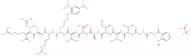
CAS:<p>Please enquire for more information about N-Me-Abz-Amyloid beta/A4 Protein Precursor770 (708-715)-Lys(Dnp)-D-Arg-D-Arg-D-Arg amide trifluoroacetate salt including the price, delivery time and more detailed product information at the technical inquiry form on this page</p>Formula:C70H116N26O18Purity:Min. 95%Molecular weight:1,609.83 g/molC14-Ceramide
CAS:<p>Ceramide is a fatty acid that is an important component of cell membranes. It has been shown to inhibit the activity of enzymes such as phospholipase A2 and lipoxygenase, which are involved in inflammatory reactions. Ceramide can also be used to diagnose infectious diseases, such as tuberculosis and malaria. The diagnostic procedure involves measuring the enzyme activities of ceramidase and lysosomal sphingomyelinase with the help of a radioactive substrate. This can be done by extracting tissue from mammalian cells or by drawing blood samples from patients. In addition, ceramide may be associated with insulin resistance and cancer.</p>Formula:C32H63NO3Purity:Min. 95%Molecular weight:509.85 g/molβ-Casomorphin (1-5) amide (bovine)
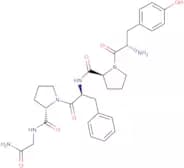
CAS:<p>Please enquire for more information about Beta-Casomorphin (1-5) amide (bovine) including the price, delivery time and more detailed product information at the technical inquiry form on this page</p>Formula:C30H38N6O6Purity:Min. 95%Molecular weight:578.66 g/molAntho-RFamide Pyr-Gly-Arg-Phe-NH2
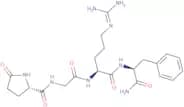
CAS:<p>Antho-RFamide Pyr-Gly-Arg-Phe-NH2 is an acidic amino acid. It has been shown to be a precursor of dopamine β-hydroxylase, which is a key enzyme in the synthesis of epinephrine and norepinephrine. This compound has a diameter of 0.8 nm, and it's been observed in cnidarians and multicellular animals. The biological function of Antho-RFamide Pyr-Gly-Arg-Phe-NH2 is not yet known, but it has been sequenced and identified as fatty acid with a sequence that is identical to serotonin. Analysis shows that this molecule contains an acidic environment with an alkaline pH.</p>Formula:C22H32N8O5Purity:Min. 95%Molecular weight:488.54 g/molPAR-2 (1-6) amide (human) trifluoroacetate salt
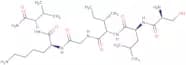
CAS:<p>PAR-2 (1-6) amide (human) trifluoroacetate salt H-Ser-Leu-Ile-Gly-Lys-Val-NH2 trifluoroacetate salt is a protease inhibitor that inhibits the activity of PAR2, a protein receptor. PAR2 is implicated in cancer and inflammation. It has been shown to inhibit growth factor signaling, as well as activate toll-like receptor 4 and other inflammatory pathways. PAR2 inhibition has also been studied in vivo and found to be effective in treating wild type mice with melanoma cells. In vitro studies have shown that PAR2 inhibition by PAR 2 (1-6) amide (human) trifluoroacetate salt H-Ser-Leu-Ile-Gly-Lys-Val NH2 trifluoroacetate salt blocks the production of tumour necrosis factor alpha and interleukin 6.</p>Formula:C28H54N8O7Purity:Min. 95%Molecular weight:614.78 g/mol(D-Arg6,Asn10)-MCH (6-16) amide (human, mouse, rat) trifluoroacetate salt
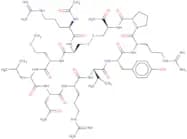
CAS:<p>Please enquire for more information about (D-Arg6,Asn10)-MCH (6-16) amide (human, mouse, rat) trifluoroacetate salt including the price, delivery time and more detailed product information at the technical inquiry form on this page</p>Formula:C60H100N22O14S3Purity:Min. 95%Molecular weight:1,449.77 g/molPAR-2 (1-6) amide (human) (scrambled) trifluoroacetate salt
CAS:<p>Please enquire for more information about PAR-2 (1-6) amide (human) (scrambled) trifluoroacetate salt including the price, delivery time and more detailed product information at the technical inquiry form on this page</p>Formula:C28H54N8O7Purity:Min. 95%Molecular weight:614.78 g/molN,N-Dimethylformamide dibenzyl acetal
CAS:<p>N,N-Dimethylformamide dibenzyl acetal is an organic solvent that has a low volatility and high solubility in water. It is used as a cosolvent for reactions involving carboxylic acids, formamides, and epoxides. N,N-Dimethylformamide dibenzyl acetal can be used to produce peroxide as a reagent for oxidation reactions. Hydrogen peroxide can be produced from this compound by treatment with thionyl chloride or alkanoic acid. This chemical is also derivatized by the mesoporous method to provide mesoporous silica nanoparticles with enhanced surface area.</p>Purity:Min. 95%Glycinamide hydrochloride
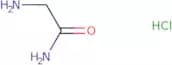
CAS:<p>Glycinamide hydrochloride is an inhibitor that binds to the glycine-binding site of the protein synthetase and inhibits the formation of glycinamide ribonucleotide. It has been shown to inhibit human glycinamide ribonucleotide synthetase in vitro. Glycinamide hydrochloride is also a glycinamide amide, which was synthesized by linking two molecules of glycine with an amide bond. This molecule is cross-linked with a macrogel, forming a hydrogel. The hydrogel can be used in biomedical applications, such as tissue engineering and drug delivery systems.</p>Formula:C2H7ClN2OColor and Shape:White PowderMolecular weight:110.54 g/molOsteostatin (1-5) amide (human, bovine, dog, horse, mouse, rabbit, rat) trifluoroacetate salt
CAS:<p>Please enquire for more information about Osteostatin (1-5) amide (human, bovine, dog, horse, mouse, rabbit, rat) trifluoroacetate salt including the price, delivery time and more detailed product information at the technical inquiry form on this page</p>Formula:C27H42N10O7Purity:Min. 95%Molecular weight:618.69 g/molBiotinyl-LL-37 amide trifluoroacetate salt
CAS:<p>Please enquire for more information about Biotinyl-LL-37 amide trifluoroacetate salt including the price, delivery time and more detailed product information at the technical inquiry form on this page</p>Formula:C215H355N63O54SPurity:Min. 95%Molecular weight:4,718.58 g/mol4-Amino-N-(4-methylpyrimidin-2-yl)benzenesulfonamide
CAS:<p>4-Amino-N-(4-methylpyrimidin-2-yl)benzenesulfonamide (AMBPS) is a sulfonamide antimicrobial agent that belongs to the group of sulfa drugs. It is a potent inhibitor of tetracycline resistance in bacterial cells, and has been shown to be effective against infectious diseases such as tuberculosis, leprosy and pneumonia. AMBPS has also been used in wastewater treatment and biological studies with high values. This drug binds to sulfamerazine, which inhibits bacterial growth by inhibiting RNA synthesis. The hydrogen bonding interactions between AMBPS and sulfadiazine are thought to be responsible for the effects on congestive heart failure.</p>Formula:C11H12N4O2SPurity:Min. 95%Molecular weight:264.3 g/molpTH (1-31) amide (human)
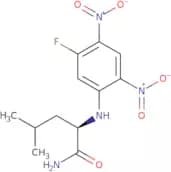
CAS:<p>pTH (1-31) amide is a polymer conjugate that is used to treat osteoporosis. It has been shown to be effective in reducing the risk of fracture and increasing bone mineral density in animals. The compound binds to the extracellular domain of the estrogen receptor, altering its conformation and preventing it from interacting with other proteins in the nucleus. pTH (1-31) amide has also been shown to reduce blood pressure in animals by inhibiting angiotensin-converting enzyme. Clinical data on this drug are limited, but it has been well tolerated so far.</p>Formula:C162H270N50O46S2Purity:Min. 95%Molecular weight:3,718.32 g/molNα-(5-fluoro-2,4-dinitrophenyl)-D-leucinamide
CAS:<p>Nalpha-(5-fluoro-2,4-dinitrophenyl)-D-leucinamide is a chemical compound that inhibits the activity of proteases. It has been shown to inhibit leukemia cells and actinomycetes. This chemical binds to the active site of proteases, inhibiting the hydrolysis of peptides by blocking the access of water molecules to the reactive site. In addition, Nalpha-(5-fluoro-2,4-dinitrophenyl)-D-leucinamide can also be used as a fluorescent probe for protease activity in analytical methods. The product research on this compound has shown that it is a potent inhibitor of cyclic peptide synthetases and can be used as an anti-inflammatory agent.</p>Formula:C12H15FN4O5Purity:Min. 95%Color and Shape:Off-White To Yellow SolidMolecular weight:314.27 g/molN-(Hydroxymethyl)-phenylacetamide
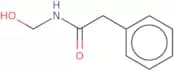
CAS:<p>N-(Hydroxymethyl)-phenylacetamide is an organic solvent that is used in the synthesis of certain antibiotics. It is a synthetic compound and can be obtained by reacting toluene with benzene, using a strong acid catalyst such as sulfuric acid. N-(Hydroxymethyl)-phenylacetamide has been used in the synthesis of isoquinolones, which are also antibiotics. This organic solvent can also be used for recrystallization, which is a process that helps purify solids from liquids or liquids from solids. The yield of this reaction is high, making it an efficient way to synthesize these compounds.</p>Formula:C9H11NO2Purity:Min. 95%Molecular weight:165.19 g/molGalanin Message Associated Peptide (16-41) amide
CAS:<p>Please enquire for more information about Galanin Message Associated Peptide (16-41) amide including the price, delivery time and more detailed product information at the technical inquiry form on this page</p>Formula:C134H219N35O37SPurity:Min. 95%Molecular weight:2,944.45 g/mol(Ser8)-GLP-1 (7-36) amide (human, bovine, guinea pig, mouse, rat) trifluoroacetate salt
CAS:<p>Please enquire for more information about (Ser8)-GLP-1 (7-36) amide (human, bovine, guinea pig, mouse, rat) trifluoroacetate salt including the price, delivery time and more detailed product information at the technical inquiry form on this page</p>Formula:C149H226N40O46Purity:Min. 95%Molecular weight:3,313.63 g/molHexahydroisonicotinamide
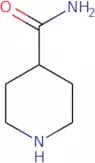
CAS:<p>Hexahydroisonicotinamide (HNI) is a potent amyloid protein inhibitor that is structurally related to picolinic acid. HNI has been shown to be effective in the treatment of infectious diseases caused by bacteria, such as diazonium salt-resistant strains of Pseudomonas aeruginosa and Enterobacter cloacae. Hexahydroisonicotinamide is also active against methicillin-resistant Staphylococcus aureus (MRSA), which may be due to its structural similarity to picolinic acid. The molecular weight of HNI is 587.6, with a molecular formula of C9H11N3O2. It has been shown that hexahydroisonicotinamide inhibits the transfer reaction between an amide and piperidinium, as well as the phosphorylation of proteins by enzyme kinases. This drug binds to hydrated biphenyl molecules and inhibits their</p>Formula:C6H12N2OPurity:Min. 95%Color and Shape:White To Yellow SolidMolecular weight:128.17 g/molN-(2-Amino-ethyl)-2-(benzyl-phenyl-amino)-acetamide
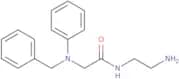
CAS:<p>Please enquire for more information about N-(2-Amino-ethyl)-2-(benzyl-phenyl-amino)-acetamide including the price, delivery time and more detailed product information at the technical inquiry form on this page</p>Formula:C17H21N3OPurity:Min. 95%Color and Shape:White PowderMolecular weight:283.37 g/mol