


Amides
Amides are a wide range of chemical compounds that contain at least one heterocyclic ring, which has atoms of at least two different elements in the ring structure, and at least one amide group (-CONH2). These compounds are crucial in the synthesis of pharmaceuticals, polymers, and agrochemicals. Amides exhibit unique properties and reactivity, making them valuable intermediates in organic synthesis. At CymitQuimica, we offer a comprehensive selection of high-quality amides to support your research and industrial needs.
Found 16393 products of "Amides"
Sort by
Purity (%)
0
100
|
0
|
50
|
90
|
95
|
100
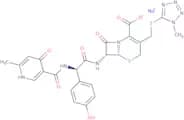
Cefpiramide sodium
CAS:<p>Cefpiramide sodium is a cephalosporin antibiotic that has been shown to be effective against a wide range of bacteria, including those which are resistant to other antibiotics. Cefpiramide sodium is used for the treatment of skin and soft tissue infections in infants or for the treatment of respiratory tract infections in adults. The antibiotic binds to bacterial cell membranes and inhibits bacterial growth by inhibiting fatty acid synthesis, which is important for the production of cell walls. Cefpiramide sodium has been shown to have antiviral properties as well as antibacterial properties. These effects may be due to its ability to inhibit viral protein synthesis or by binding directly to the virus itself. Cefpiramide Sodium is an anti-infective drug that belongs to a group called cephalosporins, which are antibiotics that inhibit growth of bacteria by binding to their cell walls and preventing them from synthesizing essential fatty acids required for building their cell walls. It also has antiviral properties.</p>Purity:Min. 95%N-(5-Aminopentyl) methotrexate amide-LC-biotin
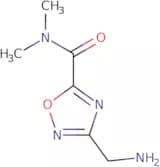
<p>N-(5-Aminopentyl) methotrexate amide-LC-biotin is a specialized bioconjugate, derived through the conjugation of methotrexate, an established antifolate drug, with an LC-biotin moiety. This product is synthesized by covalently linking methotrexate, which is known for its role in cancer therapy through the inhibition of dihydrofolate reductase (DHFR), to a biotin moiety via a long-chain spacer. The resultant bioconjugate retains the therapeutic effects of methotrexate, particularly in its ability to interrupt nucleotide synthesis, thereby affecting cell division in rapidly proliferating cancer cells.The inclusion of biotin in the structure allows for facile attachment to avidin or streptavidin-labeled systems, facilitating targeted delivery and enhanced detection in molecular and cellular studies. The primary application of N-(5-Aminopentyl) methotrexate amide-LC-biotin lies in the realm of targeted drug delivery and advanced research into methotrexate metabolism. By leveraging the high affinity of biotin-streptavidin interactions, researchers can effectively study the biodistribution and cellular uptake of methotrexate, advancing cancer therapeutic strategies and providing insights into antifolate drug mechanisms at the molecular level.</p>Formula:C41H59N13O7SPurity:Min. 95%Color and Shape:PowderMolecular weight:878.06 g/mol3-(Aminomethyl)-N,N-dimethyl-1,2,4-oxadiazole-5-carboxamide
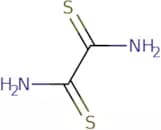
CAS:<p>Please enquire for more information about 3-(Aminomethyl)-N,N-dimethyl-1,2,4-oxadiazole-5-carboxamide including the price, delivery time and more detailed product information at the technical inquiry form on this page</p>Formula:C6H10N4O2Purity:Min. 95%Molecular weight:170.17 g/molDithiooxamide
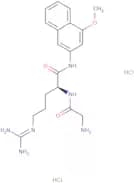
CAS:<p>Dithiooxamide is a chemical compound that contains two sulfur atoms, one oxygen atom, and one nitrogen atom. It has been shown to be an effective treatment for wastewater by removing nitrogen and phosphorus. Dithiooxamide binds to metal ions such as copper and iron in the water, forming a complex. This process prevents the metal ions from being available as catalysts in the oxidation of organic pollutants. The binding of dithiooxamide with these metals also removes them from wastewater, preventing them from being taken up by plants or animals. Dithiooxamide can be used to remove malonic acid (a carcinogen) and p-nitrophenyl phosphate (a liver toxin) from blood samples for analysis using electrochemical impedance spectroscopy, which relies on the ability of dithiooxamide to bind to these chemicals. Dithiooxamide is also used as a surfactant in analytical chemistry methods such as gas chromatography or liquid chromatography because it</p>Formula:C2H4N2S2Purity:Min. 95%Color and Shape:PowderMolecular weight:120.2 g/molGly-arg-4-methoxy-β-naphthylamide dihydrochloride
CAS:<p>Please enquire for more information about Gly-arg-4-methoxy-beta-naphthylamide dihydrochloride including the price, delivery time and more detailed product information at the technical inquiry form on this page</p>Formula:C19H26N6O3·2ClHPurity:Min. 95%Molecular weight:459.37 g/molN,N-Dimethylformamide dineopentyl acetal
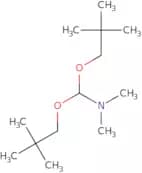
CAS:<p>N,N-Dimethylformamide dineopentyl acetal (DMFD) is a synthetic drug that has been used to treat cancer and infectious diseases. It is synthesized from the reaction of dimethylformamide with diethylacetal. DMFD has shown an anti-inflammatory effect in animals, which may be due to its ability to inhibit the production of prostaglandins. The structural analysis of DMFD reveals the presence of two phenyl groups and a hydroxyl group, which are responsible for its biological activity. Structural analysis also led to the determination of several functional groups, including a chloride ion and a methoxy group.</p>Formula:C13H29NO2Purity:Min. 95%Molecular weight:231.38 g/molNIR-664-iodoacetamide
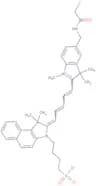
CAS:<p>NIR-664 is a potential use for the treatment of cancer. It is an iodinated acetamide with a ruthenium complex that has been shown to have magnetic and fluorescent properties. The diameter of NIR-664 is approximately 2 nm, and it has a hydrophobic character. This compound can be used in nanocrystals or as a mesoporous material. The fluorescence of NIR-664 can be observed in the near infrared region at 664 nm, which gives this compound its name. NIR-664 has also been shown to react with ruthenium, which makes it suitable for use in particle form.</p>Formula:C37H42IN3O4SPurity:Min. 95%Molecular weight:751.72 g/molMethyl Succinamate
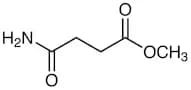
CAS:Formula:C5H9NO3Purity:>98.0%(GC)Color and Shape:White to Almost white powder to crystalMolecular weight:131.13Stearanilide
CAS:Formula:C24H41NOPurity:>98.0%(HPLC)(N)Color and Shape:White to Almost white powder to crystalMolecular weight:359.60Ethanesulfonamide, 1,1,2,2,2-pentafluoro-
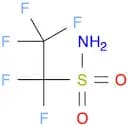
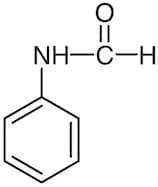
CAS:Formula:C2H2F5NO2SPurity:98%Color and Shape:SolidMolecular weight:199.0998Formanilide
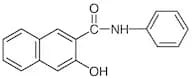
CAS:Formula:C7H7NOPurity:>99.0%(GC)Color and Shape:White to Light yellow to Light orange powder to crystalMolecular weight:121.143-Hydroxy-2-naphthanilide
CAS:Formula:C17H13NO2Purity:>97.0%(T)(HPLC)Color and Shape:White to Light yellow to Light orange powder to crystalMolecular weight:263.30N-[4-Bromo-2-nitro-5-(trifluoromethyl)phenyl]-acetamide
CAS:Purity:95.0%Molecular weight:327.05700683593754-{[2-methyl-6-(trifluoromethyl)pyridin-3-yl]amino}-4-oxobut-2-enoic acid
CAS:Molecular weight:274.19900512695312-(4-CHLOROPHENYL)-6,7-DIHYDROPYRAZOLO[1,5-A]PYRAZIN-4(5H)-ONE
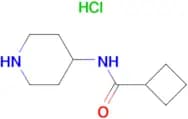
CAS:Purity:95.0%Molecular weight:247.67999267578125N-(Piperidin-4-yl)cyclobutanecarboxamidehydrochloride
CAS:Purity:95.0%Molecular weight:218.72999572753906Ref: 10-F079428
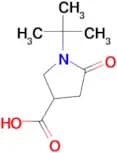
Discontinued product1-tert-Butyl-5-oxo-3-pyrrolidinecarboxylic acid
CAS:Purity:95.0%Color and Shape:SolidMolecular weight:185.223007202148441-[3-(Difluoromethoxy)phenyl]-5-oxopyrrolidine-3-carboxylic acid
CAS:Purity:97.0%Molecular weight:271.2200012207031





![N-[4-Bromo-2-nitro-5-(trifluoromethyl)phenyl]-acetamide](/_next/image/?url=https%3A%2Fstatic.cymitquimica.com%2Fproducts%2F10%2Fthumb-webp%2FF217923.webp&w=3840&q=75)

![4-{[2-methyl-6-(trifluoromethyl)pyridin-3-yl]amino}-4-oxobut-2-enoic acid](/_next/image/?url=https%3A%2Fstatic.cymitquimica.com%2Fproducts%2F10%2Fthumb-webp%2FF518653.webp&w=3840&q=75)
![2-(4-CHLOROPHENYL)-6,7-DIHYDROPYRAZOLO[1,5-A]PYRAZIN-4(5H)-ONE](/_next/image/?url=https%3A%2Fstatic.cymitquimica.com%2Fproducts%2F10%2Fthumb-webp%2FF388535.webp&w=3840&q=75)

![1-[3-(Difluoromethoxy)phenyl]-5-oxopyrrolidine-3-carboxylic acid](/_next/image/?url=https%3A%2Fstatic.cymitquimica.com%2Fproducts%2F10%2Fthumb-webp%2FF402561.webp&w=3840&q=75)