Amides
Amides are a wide range of chemical compounds that contain at least one heterocyclic ring, which has atoms of at least two different elements in the ring structure, and at least one amide group (-CONH2). These compounds are crucial in the synthesis of pharmaceuticals, polymers, and agrochemicals. Amides exhibit unique properties and reactivity, making them valuable intermediates in organic synthesis. At CymitQuimica, we offer a comprehensive selection of high-quality amides to support your research and industrial needs.
Found 16399 products of "Amides"
Sort by
Purity (%)
0
100
|
0
|
50
|
90
|
95
|
100
5-Fluoronicotinamide
CAS:Controlled Product<p>Applications 5-Fluoronicotinamide<br></p>Formula:C6H5FN2OColor and Shape:NeatMolecular weight:140.1210,12-Pentacosadiynamide
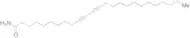
CAS:Controlled ProductFormula:C25H43NOColor and Shape:NeatMolecular weight:373.6156-Chloro-imidazo[2,1-b]thiazole-5-sulfonic Acid Amide
CAS:Controlled Product<p>Applications 6-chloro-imidazo[2,1-b]thiazole-5-sulfonic acid amide (cas# 112582-89-5) is a useful research chemical.<br></p>Formula:C5H4N3O2S2ClColor and Shape:NeatMolecular weight:237.69N-[5-[(1R)-2-Bromo-1-hydroxyethyl]-2-(phenylmethoxy)phenyl]formamide
CAS:Controlled ProductFormula:C16H16BrNO3Color and Shape:NeatMolecular weight:350.207N-[3-[[3-Fluoro-4-(4-morpholinyl)phenyl]amino]-2-hydroxypropyl]acetamide
CAS:Controlled ProductFormula:C15H22FN3O3Color and Shape:NeatMolecular weight:311.3521-Cyano-N,N-dimethylmethanesulfonamide
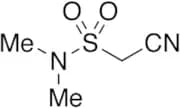
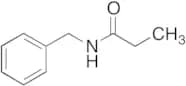
CAS:Controlled ProductFormula:C4H8N2O2SColor and Shape:NeatMolecular weight:148.184N-Benzylpropanamide
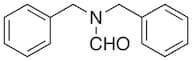
CAS:Controlled Product<p>Applications N-Benzylpropanamide is an intermediate in the synthesis of N-Ethyl-N-nitroso-1-propanamine-d4 (E817997) and isotope labelled version of N-Ethyl-N-nitroso-1-propanamine. N-Ethyl-N-nitroso-1-propanamine is a derivative of N-Nitrosodiethylamine (N525465),a widely occurring nitrosamine that is one of the most important environmental carcinogens primarily inducing tumors of liver.<br>References Shirakami, Y., et al.: Bitamin, 87, 156 (2013); Fujii, Y., et al.: Toxicol., 305, 30 (2013); Uehara, T., et al.: Toxicol. Sci., 132, 53 (2013);<br></p>Formula:C10H13NOColor and Shape:NeatMolecular weight:163.216N,N-Dibenzylformamide
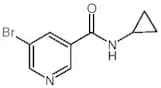
CAS:Controlled Product<p>Applications N,N-Dibenzylformamide (cas# 5464-77-7) is a compound useful in organic synthesis.<br></p>Formula:C15H15NOColor and Shape:NeatMolecular weight:225.295-Bromo-N-cyclopropylnicotinamide
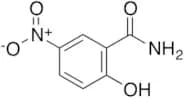
CAS:Controlled Product<p>Applications N-Cyclopropyl 5-bromonicotinamide<br></p>Formula:C9H9BrN2OColor and Shape:NeatMolecular weight:241.092-Hydroxy-5-nitrobenzamide
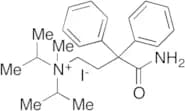
CAS:Controlled Product<p>Applications 2-Hydroxy-5-nitrobenzamide is used in the synthesis of salicylamides and its nitro derivatives.<br>References Gupta, G. L.: J. Proc. Inst. Chem., 38, 165 (1966)<br></p>Formula:C7H6N2O4Color and Shape:NeatMolecular weight:182.13Isopropamide Iodide
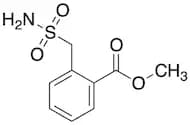
CAS:Controlled ProductFormula:C23H33N2O·IColor and Shape:NeatMolecular weight:480.43o-Carbomethoxybenzyl Sulfonamide
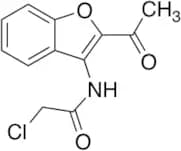
CAS:Controlled Product<p>Applications o-Carbomethoxybenzyl Sulfonamide is a useful reactant in organic synthesis.<br>References Jiang, Lin, et al.: Youji Huaxue, 26(2), 203-206 (2006)<br></p>Formula:C9H11NO4SColor and Shape:NeatMolecular weight:229.25N-(2-Acetyl-1-benzofuran-3-yl)-2-chloroacetamide
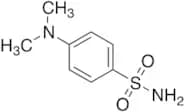
CAS:Controlled Product<p>Applications N-(2-acetyl-1-benzofuran-3-yl)-2-chloroacetamide (cas# 855715-46-7) is a useful research chemical.<br></p>Formula:C12H10NO3ClColor and Shape:NeatMolecular weight:251.664-(dimethylamino)benzenesulfonamide
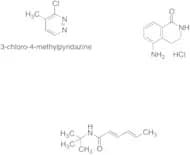
CAS:Controlled Product<p>Applications 4-(dimethylamino)benzenesulfonamide (cas# 6162-21-6) is a useful research chemical.<br></p>Formula:C8H12N2O2SColor and Shape:NeatMolecular weight:200.26N-Isobutylsorbamide
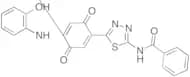
CAS:Controlled Product<p>Applications N-Isobutylsorbamide shows antitubercular activity towards mycobacterium strains. It is a derivative of Sorbic Acid (S676890), a naturally occurring organic compound first isolated from unripe berries and used as a food preservative and as an inhibitor of Clostridium Botulinum bacteria in meat products.<br>References Gupta, O. et al.: Bull. Med. Ethno-Bot. Res., 1, 99 (1980); Van, M.C., et al.: Int. J. Food. Microbiol., 160, 124 (2012); Li, J., et al.: J. Am. Soc. Mass. Spec., 23, 1625 (2012);<br></p>Formula:C10H17NOColor and Shape:NeatMolecular weight:167.25N-(5-(4-((2-Hydroxyphenyl)amino)-3,6-dioxocyclohexa-1,4-dien-1-yl)-1,3,4-thiadiazol-2-yl)benzamide
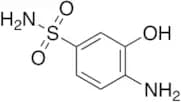
Controlled ProductFormula:C21H14N4O4SColor and Shape:NeatMolecular weight:418.4254-Amino-3-hydroxybenzenesulfonamide (may contain up to 20% inorganics)
CAS:Controlled Product<p>Applications 4-amino-3-hydroxybenzenesulfonamide (cas# 3588-76-9) is a useful research chemical.<br></p>Formula:C6H8N2O3SColor and Shape:NeatMolecular weight:188.2044-Formyl-n-isopropylbenzamide
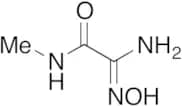
CAS:Controlled Product<p>Applications 4-Formyl-n-isopropylbenzamide is an metabolite from the oxidation of the anti-neoplastic agent in aqueous solutions.<br>References Swaffar, D., et al.: Drug Metab. Dispos., 20, 632-642 (1992)<br></p>Formula:C11H13NO2Color and Shape:White To Light YellowMolecular weight:191.23Methyloxamide 2-Oxime
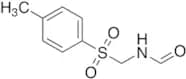
CAS:Controlled ProductFormula:C3H7N3O2Color and Shape:NeatMolecular weight:117.107N-(p-Tolylsulfonylmethyl)formamide
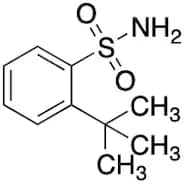
CAS:Controlled Product<p>Stability Hygroscopic<br>Applications N-(p-Tolylsulfonylmethyl)formamide (cas# 36635-56-0) is a useful research chemical.<br></p>Formula:C9H11NO3SColor and Shape:NeatMolecular weight:213.252-tert-Butylbenzenesulfonamide
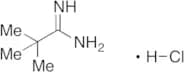
CAS:Controlled Product<p>Applications 2-tert-Butylbenzenesulfonamide can be used as reactant in preparation of benzimidazole derivatives for inhibiting neoplastic cells.<br>References Sperl, G., et al.: U.S., US 6348032 B1 20020219 (2002)<br></p>Formula:C10H15NO2SColor and Shape:NeatMolecular weight:213.3Pivalimidamide Hydrochloride
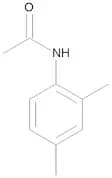
CAS:Controlled Product<p>Applications Pivalimidamide Hydrochloride is used as a reagent in the preparation of 2-alkyl-4-aryltetrahydropyridopyrimidines and 2-alkyl-4-aryl-tetrahydropyrimidoazepines as selective 5-HT2A antagonists.<br>References Shireman, B. T., et al.: Bioorg. Med. Chem. Lett., 18, 2103 (2008);<br></p>Formula:C5H13ClN2Color and Shape:NeatMolecular weight:136.62N-(2,4-Dimethylphenyl)acetamide
CAS:Controlled Product<p>Applications N-(2,4-dimethylphenyl)acetamide (cas# 2050-43-3) is a useful research chemical.<br></p>Formula:C10H13NOColor and Shape:Off White SolidMolecular weight:163.22N-Benzylformamide
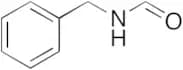
CAS:Controlled Product<p>Applications N-Benzylformamide is a useful synthetic intermediate. It is used to prepare thiadiazolidinone derivatives as possible glycogen synthase kinase 3 inhibitors. It can also be used to synthesize selective antitubercular agents.<br>References Martinez, A., et al.: J. Med. Chem., 48, 7103 (2005); Karabanovichi, G., et al.: Eur. J. Med. Chem., 82, 324 (2014)<br></p>Formula:C8H9NOColor and Shape:NeatMolecular weight:135.171-Adamantanecarboxamide
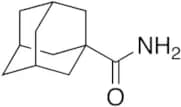
CAS:Controlled Product<p>Applications Reproduction of Sindbis virus strains sensitive and resistant to 1-adamantanecarboxamide.<br>References Erice, A., et al.: N. Engl. J. Med., 320, 289 (1989), Andronova, V.L., et al.: Bull. Exper. Bio. Med., 129, 74 (2000).<br></p>Formula:C11H17NOColor and Shape:NeatMolecular weight:179.26N-Benzylbenzamide
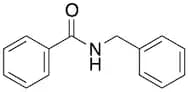
CAS:Controlled Product<p>Applications N-BENZYLBENZAMIDE (cas# 1485-70-7) is a useful research chemical.<br></p>Formula:C14H13NOColor and Shape:NeatMolecular weight:211.25N-[1-[3-(2-Ethoxyphenyl)-2,5-dihydro-5-oxo-1,2,4-triazin-6-yl]ethyl]acetamide
CAS:Controlled Product<p>Applications N-[1-[3-(2-Ethoxyphenyl)-2,5-dihydro-5-oxo-1,2,4-triazin-6-yl]ethyl]acetamide is an intermediate in the synthesis of Vardenafil (V098001) related compounds.<br>References Olszewska, T., et al.: Tetahedron., 69, 474 (2013);<br></p>Formula:C15H18N4O3Color and Shape:NeatMolecular weight:302.33[1,1'-Biphenyl]-4-ethanimidamide
CAS:Controlled ProductFormula:C14H14N2Color and Shape:NeatMolecular weight:210.28Benzyl Acetoacetic Amide
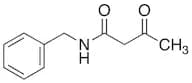
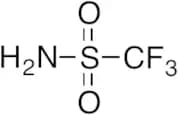
CAS:Controlled Product<p>Applications Benzyl Acetoacetic Amide (cas# 882-36-0) is a compound useful in organic synthesis.<br>References Sakaki, J., et al.: Chem. Pharm. Bull., 37, 2952 (1989),<br></p>Formula:C11H13NO2Color and Shape:NeatMolecular weight:191.23Trifluoromethylsulfonamide
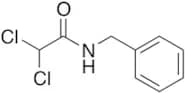
CAS:Controlled ProductFormula:CH2F3NO2SColor and Shape:NeatMolecular weight:149.09N-Benzyl-2,2-dichloroacetamide
CAS:Controlled Product<p>Applications N-benzyl-2,2-dichloroacetamide (cas# 6063-50-9) is a useful research chemical.<br></p>Formula:C9H9NOCl2Color and Shape:NeatMolecular weight:218.082-(Methylamino)benzamide
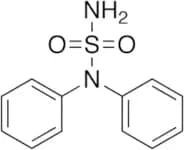
CAS:Controlled Product<p>Applications 2-(Methylamino)benzamide (cas# 7505-81-9) is a useful research chemical.<br></p>Formula:C8H10N2OColor and Shape:NeatMolecular weight:150.18N,N-Diphenyl Sulfamide
CAS:Controlled Product<p>Applications N,N-Diphenyl Sulfamide is used in the preparation of aryl-substituted sulfamides.<br>References Muniz, K. et al.: Synlett 1, 149 (2005);<br></p>Formula:C12H12N2O2SColor and Shape:NeatMolecular weight:248.3N-(3-Chlorophenyl)-cyanamide
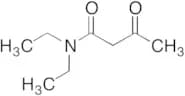
CAS:Controlled ProductFormula:C7H5ClN2Color and Shape:NeatMolecular weight:152.581N,N-Diethylacetoacetamide
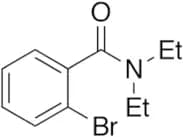
CAS:Controlled Product<p>Applications N,N-Diethylacetoacetamide is an intermediate in the synthesis of Phosphamidon (E/Z mixture) (P353730), an organophosphate insecticide that acts as a cholinesterase inhibitor.<br>References Jacques, R., et al.: Archiv fuer Toxikologie 18: 316 (1960); Bachmann, F.: Proc. Intern. Cong. Crop. Protection, 4th Congr., 2, 1153 (1960)<br></p>Formula:C8H15NO2Color and Shape:NeatMolecular weight:157.21N,N-Diethyl-2-bromobenzamide
CAS:Controlled Product<p>Applications N,N-Diethyl-2-bromobenzamide (cas# 76041-86-6) is a compound useful in organic synthesis.<br></p>Formula:C11H14BrNOColor and Shape:NeatMolecular weight:256.14(E)-N-(2-((7-Nitrobenzo[c][1,2,5]oxadiazol-4-yl)amino)ethyl)-4-oxo-4-phenylbut-2-enamide
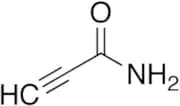
Controlled Product<p>Applications (E)-N-(2-((7-nitrobenzo[c][1,2,5]oxadiazol-4-yl)amino)ethyl)-4-oxo-4-phenylbut-2-enamide is a useful research chemical.<br></p>Formula:C18H15N5O5Color and Shape:NeatMolecular weight:381.342Propiolamide
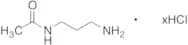
CAS:Controlled Product<p>Applications Propiolamide (cas# 7341-96-0) is a compound useful in organic synthesis.<br></p>Formula:C3H3NOColor and Shape:NeatMolecular weight:69.06N-(3-Aminopropyl)acetamide Hydrochloride (>90%)
CAS:Controlled Product<p>Applications N-(3-Aminopropyl)acetamide Hydrochloride salt is a salt form of N-Acetyl-1,3-propanediamine (A165390), which is an protected intermediate in the synthesis of analogs of Spermidine (S680400), an antineoplastic agent.<br>References Bergeron, R. et al.: J. Med. Chem, 40, 1475 (1997);<br></p>Formula:C5H12N2O·x(HCl)Purity:>90%Color and Shape:NeatMolecular weight:116.16 + x(36.46)2-(2-Amino-4,5-dihydroxy-4,5-dihydrothiazol-4-yl)-N-(4-(2-(((R)-2-hydroxy-2-phenylethyl)amino)ethyl)phenyl)acetamide
Controlled ProductFormula:C21H26N4O4SColor and Shape:NeatMolecular weight:430.5213-Amino-benzenemethanesulfonamide
CAS:Controlled ProductFormula:C7H10N2O2SColor and Shape:NeatMolecular weight:186.232N-[4-Chloro-3-(trifluoromethyl)phenyl]-2-hydroxy-5-nitrobenzamide
CAS:Controlled ProductFormula:C14H8ClF3N2O4Color and Shape:NeatMolecular weight:360.673Thionicotinamide
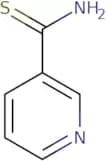
CAS:<p>Thionicotinamide is a drug that belongs to the group of ethionamide. It is a synthetic compound with synergistic activity against tuberculosis bacteria. Thionicotinamide inhibits bacterial growth by binding to mycolic acid, which is a component of the cell wall. Thionicotinamide also has conformational properties, which inhibit the enzyme activities. This drug also interacts with other drugs, such as ethionamide, and may have an effect on the metabolism of these drugs in humans. Thionicotinamide binds to lipids and reduces the activity of enzymes that are involved in lipid synthesis. The nitrogen atoms of thionicotinamide bind to four oxygen atoms from two molecules of glycol ethers in a 1:1 ratio. This binding leads to the formation of hydrogen bonds between these molecules, resulting in an increase in kinetic energy for these reactions and improved structural analysis for this molecule.</p>Formula:C6H6N2SPurity:Min. 95%Color and Shape:PowderMolecular weight:138.19 g/molDeshydroxy bicalutamide
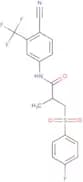
CAS:<p>Deshydroxy bicalutamide is a ligand that has been synthesized to bind to the androgen receptor. It is an antagonist of the androgen receptor. Deshydroxy bicalutamide has been shown to inhibit cancer cell growth in prostate cancer cell lines, which is due to its ability to bind and block the ligand-binding domain of the androgen receptor. Molecular modelling has shown that deshydroxy bicalutamide binds in the hydroxyl group region of the binding site, which blocks it from binding with other ligands such as testosterone. This may lead to decreased levels of testosterone in males, leading to decreased levels of androgens in prostate cancer cells.</p>Formula:C18H14F4N2O3SPurity:Min. 95%Molecular weight:414.38 g/molN-(6-Phenylhexyl)-5-chloro-1-naphthalenesulfonamide
CAS:<p>N-(6-Phenylhexyl)-5-chloro-1-naphthalenesulfonamide is a dibutyryl camp analog that has been shown to inhibit the L-type calcium channel in a dose-dependent manner. It has an effect on both spermatozoa and glioma cells, with its most significant effect being inhibition of the intracellular calcium ion. This drug inhibits the growth rate of these cells, which may be due to its ability to activate adrenergic receptors and cause increased intracellular calcium ion levels. N-(6-Phenylhexyl)-5-chloro-1-naphthalenesulfonamide also slows the cycle of the cell, which may be due to a kinetic effect.</p>Formula:C22H24ClNO2SPurity:Min. 95%Molecular weight:401.95 g/molN-(4-Bromonaphthalene-1-yl)-acetamide
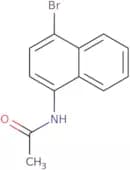
CAS:<p>The N-(4-bromonaphthalene-1-yl)-acetamide is a high quality chemical that is used as a reaction component in the synthesis of pharmaceuticals and other speciality chemicals. It can also be used as a building block for creating more complex compounds. This compound is a versatile building block that can be used to synthesise many different types of products.</p>Formula:C12H10BrNOPurity:Min. 95%Molecular weight:264.12 g/mol2-(4-Aminophenoxy)acetamide
CAS:<p>2-(4-Aminophenoxy)acetamide is a chemical compound that belongs to the class of acetamides. It is used in the production of polyester fibers and dyes. 2-(4-Aminophenoxy)acetamide is a colorless, crystalline solid that has not been identified in nature.</p>Formula:C8H10N2O2Purity:Min. 95%Molecular weight:166.18 g/molIsonicotinamide
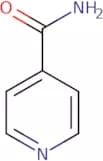
CAS:<p>Isonicotinamide is a coordination compound with the chemical formula (CH3)2NHCOCH2CO2N(CH3)2. It is also known as isonicotinic acid amide. Isonicotinamide has been shown to be active against resistant microorganisms, such as multidrug-resistant Mycobacterium tuberculosis and methicillin-resistant Staphylococcus aureus (MRSA). The molecular geometry of this compound is related to the intramolecular hydrogen bond that forms between the nitrogen atoms in its amide group and the oxygen atoms in malonic acid. Isonicotinamide has also been shown to have antimicrobial properties, which are likely due to its ability to chelate metal ions.</p>Formula:C6H6N2OPurity:Min. 95%Color and Shape:White PowderMolecular weight:122.12 g/molFormamide
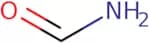
CAS:Controlled Product<p>Formamide is a colorless, volatile chemical compound that is most commonly used in the laboratory for the preparation of dna duplexes. It can also be used to treat bowel disease and HIV infection. It is not active against viruses or bacteria but has been shown to bind to toll-like receptors on cells. Formamide is an organic substance that exists as a gas at room temperature and pressure. Formaldehyde reacts with water in the presence of sodium carbonate to form formamide, which is soluble in water. Formamide has been used as a reaction solution for surface methodology experiments because it evaporates quickly and leaves no residue on surfaces. Formamide has been shown to inhibit epidermal growth factor (EGF) activity by binding to the EGF receptor protein and preventing its activation. This inhibition leads to decreased cell proliferation, reduced protein synthesis, and inhibition of DNA replication.</p>Formula:CH3NOPurity:Min. 95%Color and Shape:Colorless PowderMolecular weight:45.04 g/molDecarboxamide meprobamate
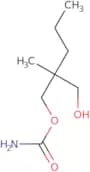
CAS:<p>Carisoprodol Related Compound AMeprobamate is a carbamate derivative used as an anxiolytic drug.</p>Formula:C8H17NO3Purity:Min. 95%Color and Shape:White To Light (Or Pale) Yellow SolidMolecular weight:175.23 g/mol


![6-Chloro-imidazo[2,1-b]thiazole-5-sulfonic Acid Amide](/_next/image/?url=https%3A%2Fstatic.cymitquimica.com%2Fproducts%2FTR%2Fthumb-webp%2FC383335.webp&w=3840&q=75)
![N-[5-[(1R)-2-Bromo-1-hydroxyethyl]-2-(phenylmethoxy)phenyl]formamide](/_next/image/?url=https%3A%2Fstatic.cymitquimica.com%2Fproducts%2FTR%2Fthumb-webp%2FB683320.webp&w=3840&q=75)
![N-[3-[[3-Fluoro-4-(4-morpholinyl)phenyl]amino]-2-hydroxypropyl]acetamide](/_next/image/?url=https%3A%2Fstatic.cymitquimica.com%2Fproducts%2FTR%2Fthumb-webp%2FF632029.webp&w=3840&q=75)

![N-[1-[3-(2-Ethoxyphenyl)-2,5-dihydro-5-oxo-1,2,4-triazin-6-yl]ethyl]acetamide](/_next/image/?url=https%3A%2Fstatic.cymitquimica.com%2Fproducts%2FTR%2Fthumb-webp%2FE679580.webp&w=3840&q=75)
![[1,1'-Biphenyl]-4-ethanimidamide](/_next/image/?url=https%3A%2Fstatic.cymitquimica.com%2Fproducts%2FTR%2Fthumb-webp%2FB397835.webp&w=3840&q=75)


![(E)-N-(2-((7-Nitrobenzo[c][1,2,5]oxadiazol-4-yl)amino)ethyl)-4-oxo-4-phenylbut-2-enamide](/_next/image/?url=https%3A%2Fstatic.cymitquimica.com%2Fproducts%2FTR%2Fthumb-webp%2FN495010.webp&w=3840&q=75)


![N-[4-Chloro-3-(trifluoromethyl)phenyl]-2-hydroxy-5-nitrobenzamide](/_next/image/?url=https%3A%2Fstatic.cymitquimica.com%2Fproducts%2FTR%2Fthumb-webp%2FB680370.webp&w=3840&q=75)