Amides
Found 16483 products of "Amides"
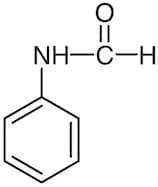
Formanilide
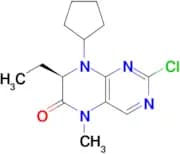
CAS:Formula:C7H7NOPurity:>99.0%(GC)Color and Shape:White to Light yellow to Light orange powder to crystalMolecular weight:121.14(R)-2-Chloro-8-cyclopentyl-7-ethyl-5-methyl-7,8-dihydropteridin-6(5H)-one
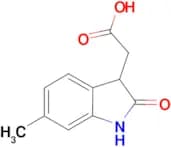
CAS:Purity:95.0%Color and Shape:SolidMolecular weight:294.7799987792969(6-methyl-2-oxo-2,3-dihydro-1H-indol-3-yl)acetic acid
CAS:Purity:95.0%Molecular weight:205.212997436523441-[3-(Difluoromethoxy)phenyl]-5-oxopyrrolidine-3-carboxylic acid
CAS:Purity:97.0%Molecular weight:271.2200012207031(S)-2-(4-(2-(2-Amino-4-oxo-4,7-dihydro-1H-pyrrolo[2,3-d]pyrimidin-5-yl)ethyl)benzamido)pentanedioic acid
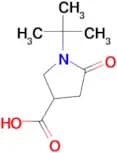
CAS:Purity:95.0%Color and Shape:Solid, Blue powderMolecular weight:427.41699218751-tert-Butyl-5-oxo-3-pyrrolidinecarboxylic acid
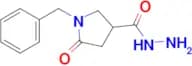
CAS:Purity:95.0%Color and Shape:SolidMolecular weight:185.223007202148441-Benzyl-5-oxopyrrolidine-3-carbohydrazide
CAS:Purity:95.0%Color and Shape:SolidMolecular weight:233.270996093754-{[2-methyl-6-(trifluoromethyl)pyridin-3-yl]amino}-4-oxobut-2-enoic acid
CAS:Molecular weight:274.1990051269531N-[4-Bromo-2-nitro-5-(trifluoromethyl)phenyl]-acetamide
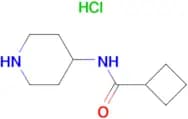
CAS:Purity:95.0%Molecular weight:327.0570068359375N-(Piperidin-4-yl)cyclobutanecarboxamidehydrochloride
CAS:Purity:95.0%Molecular weight:218.729995727539061-[4-(methylthio)phenyl]-5-oxopyrrolidine-3-carboxylic acid
CAS:Purity:95.0%Color and Shape:SolidMolecular weight:251.3000030517578Ref: 10-F350818
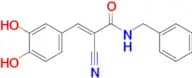
Discontinued productN-Benzyl-2-cyano-3-(3,4-dihydroxyphenyl)acrylamide
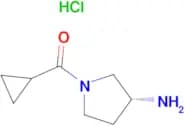
CAS:Purity:99.0%Molecular weight:294.30999755859375(R)-(3-Aminopyrrolidin-1-yl)(cyclopropyl)methanone hydrochloride
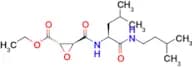
CAS:Purity:95.0%Molecular weight:190.6699981689453L-TRANS-EPOXYSUCCINYL-LEU-3-METHYLBUTYLAMIDE-ETHYL ESTER
CAS:Purity:95.0%Molecular weight:342.43600463867192-((4-Fluorophenyl)sulfonyl)hexahydropyrrolo[1,2-a]pyrazin-6(2H)-one
CAS:Purity:95%Molecular weight:298.32998657226563-AMINO-6,7-DIHYDROPYRAZOLO[1,5-A]PYRAZIN-4(5H)-ONE
CAS:Purity:95.0%Molecular weight:152.15699768066406Ref: 10-F079428
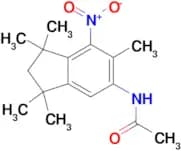
Discontinued productN-(1,1,3,3,6-pentamethyl-7-nitro-2,3-dihydro-1H-inden-5-yl)acetamide
Molecular weight:290.36300659179692-(4-CHLOROPHENYL)-6,7-DIHYDROPYRAZOLO[1,5-A]PYRAZIN-4(5H)-ONE
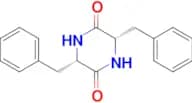
CAS:Purity:95.0%Molecular weight:247.67999267578125Cyclo(L-Phe-L-Phe)
CAS:Purity:99.0%Color and Shape:Solid, White powderMolecular weight:294.35400390625Coconut diethanolamide
CAS:Controlled ProductCoconut diethanolamide is a chemical substance that is used as a test compound in carcinogenesis studies. It is a fatty acid and a fatty alcohol, and it has been shown to promote the growth of cancer cells. Coconut diethanolamide has not been found to be an allergen, but it has shown carcinogenic potential. The bioassay for long-term exposure to coconut diethanolamide showed epidermal hyperplasia in mice.
Color and Shape:Brown Yellow Clear Viscous Liquid2,2,2-Trifluoroacetamide
CAS:2,2,2-Trifluoroacetamide is a chemical compound that is stable under normal conditions and can be stored for long periods of time. The compound has been shown to react with trifluoroacetic acid and in the presence of an electrochemical probe to give a redox reaction. This reaction mechanism has been studied by using pharmacokinetic properties of 2,2,2-trifluoroacetamide and its metabolites. The compound is not active against infectious diseases but may be used as a reagent in analytical methods. 2,2,2-Trifluoroacetamide has also been investigated for its ability to bind hydrogen atoms and form intramolecular hydrogen bonds with tryptophan residues in proteins.
Formula:C2H2F3NOPurity:Min. 95%Color and Shape:PowderMolecular weight:113.04 g/molRef: 3D-FT46948
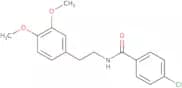
Discontinued productN-(2-(3,4-dimethoxyphenyl)ethyl)(4-chlorophenyl)formamide
CAS:Controlled ProductPlease enquire for more information about N-(2-(3,4-dimethoxyphenyl)ethyl)(4-chlorophenyl)formamide including the price, delivery time and more detailed product information at the technical inquiry form on this page
Purity:Min. 95%Ref: 3D-FD169719
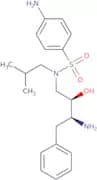
Discontinued product4-Amino-N-((2R,3S)-3-amino-2-hydroxy-4-phenylbutyl)-N-ispobutylbenzenesulfonamide
CAS:4-Amino-N-((2R,3S)-3-amino-2-hydroxy-4-phenylbutyl)-N-isobutylbenzenesulfonamide is an amide that is used to treat HIV infections. It has been shown to have potent anti-viral activity against HIV infected cells in the laboratory and can inhibit the replication of HIV by interfering with the virus's ability to use the reverse transcriptase enzyme. 4ABAB has been shown to bind to the enzyme ribonuclease H (crth2), which is responsible for breaking down viral RNA. This binding prevents crth2 from cleaving viral RNA, thus inhibiting DNA synthesis and preventing cell death. 4ABAB also interferes with a hydrogen bond between ethyl group and the hydroxyl group on crth2, leading to a decrease in activity.
Formula:C20H29N3O3SPurity:Min. 95%Color and Shape:White PowderMolecular weight:391.53 g/molRef: 3D-FA58013
Discontinued product(3-(2,6-dichlorophenyl)-5-methylisoxazol-4-yl)-N-(2,5-dimethoxyphenyl)formamide
CAS:Please enquire for more information about (3-(2,6-dichlorophenyl)-5-methylisoxazol-4-yl)-N-(2,5-dimethoxyphenyl)formamide including the price, delivery time and more detailed product information at the technical inquiry form on this page
Purity:Min. 95%Ref: 3D-FD169572
Discontinued product2-chloro-n-(4-chlorophenyl)acetamide
CAS:2-Chloro-N-(4-chlorophenyl)acetamide (2CPA) is an antimycobacterial agent that inhibits the growth of Mycobacterium tuberculosis. The antimycobacterial activity of 2CPA has been demonstrated in a dilution method, where it reduced the number of viable cells in cultures of M. tuberculosis and Mycobacterium smegmatis. The antimicrobial activity of 2CPA was confirmed using a fluorescence assay, which showed that this compound is active against M. tuberculosis H37Rv and M. smegmatis at concentrations above 0.1 mM. 2CPA also has a potent bactericidal effect on Staphylococcus aureus with an MIC value of 0.06 mg/mL at 30 minutes and is active against Enterococcus faecalis with an MIC value of 4 mg/mL at 30 minutes.
Formula:C8H7Cl2NOPurity:Min. 95%Molecular weight:204.05 g/molRef: 3D-FC59259
Discontinued product5-Amino-N,N'-bis(2,3-dihydroxypropyl)-2,4,6-triiodo-1,3-benzenedicarboxamide
CAS:5-Amino-N,N'-bis(2,3-dihydroxypropyl)-2,4,6-triiodo-1,3-benzenedicarboxamide is an experimental compound that is used in the industrial preparation of pharmaceuticals and agricultural chemicals. It has a molecular weight of 191.14 g/mol. The crystallization process involves the use of ethanol to create supersaturation and then cooling to induce crystallization. This compound can be synthesized by an iodination reaction with x-ray irradiation at low temperatures.
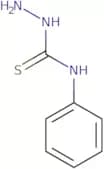
Formula:C14H18I3N3O6Purity:Min. 95%Color and Shape:White PowderMolecular weight:705.02 g/molN-Phenylhydrazinecarbothioamide
CAS:N-Phenylhydrazinecarbothioamide is a chemical compound that is used in wastewater treatment. It is an organic molecule that is composed of hydrophobic and hydrophilic parts. The hydrophobic part, which contains the phenyl group, binds to the hydrophobic region of the cell membrane and causes the cell to lyse. The hydrophilic part has an affinity for water and can be used as an electrode material in electrochemical impedance spectroscopy. N-Phenylhydrazinecarbothioamide also has been shown to have antibacterial properties against human pathogens, including Mycobacterium tuberculosis, Clostridium perfringens, and Escherichia coli O157:H7. The compound has been shown to inhibit cervical cancer cells by inhibiting protein synthesis through inhibition of ribosomal activity and fragmentation assay analysis showed that N-phenylhydrazinecarbothioamide binds to copper ions at a coordination geometry of
Formula:C7H9N3SPurity:Min. 95%Color and Shape:SolidMolecular weight:167.23 g/molRef: 3D-FP114396
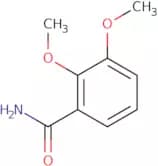
Discontinued product2-Veratramide
CAS:2-Veratramide is a drug that belongs to the group of amides. It is a highly soluble, water-soluble and lipophilic molecule. The molecular modeling study revealed that it has a hydroxyl group in its structure and a hydrogen bond with the intramolecular hydrogen atom. 2-Veratramide has been observed to inhibit protein synthesis and cellular proliferation by binding to cancer cells or inflammatory cells. It also binds to dopamine receptors, inhibiting uptake of dopamine and subsequent activation of downstream signaling pathways. 2-Veratramide is an inhibitor of nitric oxide synthase (NOS), which plays an important role in inflammation, vascular tone, neurotransmission, and cell proliferation.
2-Veratramide inhibits NOS by competitively binding to the heme moiety at the active site of the enzyme, thereby blocking access to substrate arginine.Formula:C9H11NO3Purity:Min. 97%Color and Shape:PowderMolecular weight:181.19 g/molRef: 3D-FV67755
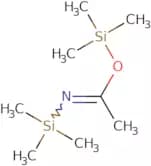
Discontinued productN,O-Bis(trimethylsilyl) acetamide
CAS:N,O-Bis(trimethylsilyl) acetamide is a protein that is used as a reagent for the detection of integrin receptors. It can be used to identify human immunoglobulin and human serum proteins. This compound has been shown to be pluripotent in cells, which means that it can differentiate into any type of cell. N,O-Bis(trimethylsilyl) acetamide has been shown to have surfactant properties and can be used as an alternative in toxicity studies. This compound has been shown to be toxic to bowel disease cells when tested with a dose of 3mg/mL. The disulfide bond within this molecule may be important for its biological activity. Synchronous fluorescence spectroscopy and plasma mass spectrometry are two methods that have been used to study the structure of this molecule. Electrochemical impedance spectroscopy is another method that has been used in the structural analysis of this molecule.
Formula:C8H21NOSi2Purity:Min. 95 Area-%Color and Shape:Colorless Yellow Clear LiquidMolecular weight:203.43 g/molN-[(4-Amino-2-methylpyrimidin-5-yl)methyl]formamide
CAS:N-[(4-Amino-2-methylpyrimidin-5-yl)methyl]formamide (NAMPT) is a triazolo compound that inhibits the ATP binding cassette transporter and blocks the uptake of uridine and pyrimidine compounds. It also inhibits inorganic pyrophosphatase, which is an enzyme that catalyzes the hydrolysis of pyrophosphate to inorganic phosphate. NAMPT has been shown to be a substrate for hypochlorous acid production in neutrophils, suggesting it may play a role in the regulation of oxidative stress. Chemical biology studies have demonstrated that NAMPT plays a physiological function as an intermediate in vitamin B1 biosynthesis.
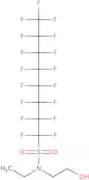
Formula:C7H10N4OPurity:Min. 95%Color and Shape:PowderMolecular weight:166.18 g/molN-Ethyl-N-(2-hydroxyethyl)perfluorooctylsulphonamide
CAS:Controlled ProductN-Ethyl-N-(2-hydroxyethyl)perfluorooctylsulphonamide is a novel glycol ester with cytotoxic effects. It has been shown to inhibit the growth of cancer cells in rat liver microsomes and in vivo. N-Ethyl-N-(2-hydroxyethyl)perfluorooctylsulphonamide inhibits the synthesis of fatty acids by inhibiting the enzyme lipoxygenase. This drug also has a reactive carbon nanotube that may be used as an anticancer agent, which can bind to cell membranes and disrupt their function.
Formula:C12H10F17NO3SPurity:Min. 95%Color and Shape:PowderMolecular weight:571.25 g/molRef: 3D-FE104045
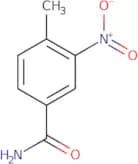
Discontinued product4-Methyl-3-nitrobenzamide
CAS:4-Methyl-3-nitrobenzamide is a nitrile that can be synthesized by the reaction of potassium hydroxide and 3-nitrobenzamide. It has been shown to react with dichloroethane to form 4-methyl-3-nitrobenzoic acid. The optimum temperature for this reaction is 120°C, which leads to a high yield of 4-methyl-3-nitrobenzamide. This product is also available in an isotopic form at high purity.
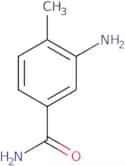
Formula:C8H8N2O3Purity:Min. 95%Color and Shape:PowderMolecular weight:180.16 g/mol3-Amino-4-methylbenzamide
CAS:3-Amino-4-methylbenzamide is an interchemical that can be utilized to synthesize naphthol. 3-Amino-4-methylbenzamide is an amide that has been shown to have a molecular modeling structure of a conformation. The interaction of 3-amino-4-methylbenzamide with the P38 kinase enzyme has been shown to inhibit the activity of this enzyme, which may lead to its use as a drug for the treatment of inflammation.
Formula:C8H10N2OPurity:Min. 95%Color and Shape:PowderMolecular weight:150.18 g/molRef: 3D-FA71046
Discontinued productN-[6-Chloro-5-(2-methoxyphenoxy)-(2,2-bipyrimidine)4-4-yl]-(1,1-dimethylethyl)-benzenesulfonamide
CAS:N-[6-Chloro-5-(2-methoxyphenoxy)-(2,2-bipyrimidine)4-4-yl]-(1,1-dimethylethyl)-benzenesulfonamide is a reagent that can be used as a reaction component in the synthesis of complex compounds. It has high quality and is a versatile building block for the synthesis of speciality chemicals. N-[6-Chloro-5-(2-methoxyphenoxy)-(2,2-bipyrimidine)4-4-yl]-(1,1-dimethylethyl)-benzenesulfonamide is also a useful intermediate in the synthesis of fine chemicals.
Formula:C25H24ClN5O4SPurity:Min. 95%Color and Shape:White PowderMolecular weight:526.01 g/molRef: 3D-FC20113
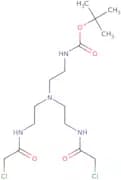
Discontinued product2N-Boc-2',2''-triaminotriethylamine-bis(chloroacetamide)
CAS:2N-Boc-2',2''-triaminotriethylamine-bis(chloroacetamide) is a fine chemical and reagent for the synthesis of pharmaceuticals. It is also a useful building block for the synthesis of complex compounds. This product can be used as a reaction component in organic chemistry, or it can be used as a reagent in research or development laboratories.
Formula:C15H28Cl2N4O4Purity:Min. 95%Molecular weight:399.31 g/mol



![1-[3-(Difluoromethoxy)phenyl]-5-oxopyrrolidine-3-carboxylic acid](/_next/image/?url=https%3A%2Fstatic.cymitquimica.com%2Fproducts%2F10%2Fthumb-webp%2FF402561.webp&w=3840&q=75)
![(S)-2-(4-(2-(2-Amino-4-oxo-4,7-dihydro-1H-pyrrolo[2,3-d]pyrimidin-5-yl)ethyl)benzamido)pentanedioi…](/_next/image/?url=https%3A%2Fstatic.cymitquimica.com%2Fproducts%2F10%2Fthumb-webp%2FF079404.webp&w=3840&q=75)
![4-{[2-methyl-6-(trifluoromethyl)pyridin-3-yl]amino}-4-oxobut-2-enoic acid](/_next/image/?url=https%3A%2Fstatic.cymitquimica.com%2Fproducts%2F10%2Fthumb-webp%2FF518653.webp&w=3840&q=75)
![N-[4-Bromo-2-nitro-5-(trifluoromethyl)phenyl]-acetamide](/_next/image/?url=https%3A%2Fstatic.cymitquimica.com%2Fproducts%2F10%2Fthumb-webp%2FF217923.webp&w=3840&q=75)
![1-[4-(methylthio)phenyl]-5-oxopyrrolidine-3-carboxylic acid](/_next/image/?url=https%3A%2Fstatic.cymitquimica.com%2Fproducts%2F10%2Fthumb-webp%2FF350818.webp&w=3840&q=75)
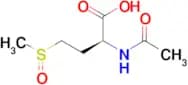
![2-((4-Fluorophenyl)sulfonyl)hexahydropyrrolo[1,2-a]pyrazin-6(2H)-one](/_next/image/?url=https%3A%2Fstatic.cymitquimica.com%2Fproducts%2F10%2Fthumb-webp%2FF606066.webp&w=3840&q=75)
![3-AMINO-6,7-DIHYDROPYRAZOLO[1,5-A]PYRAZIN-4(5H)-ONE](/_next/image/?url=https%3A%2Fstatic.cymitquimica.com%2Fproducts%2F10%2Fthumb-webp%2FF537367.webp&w=3840&q=75)

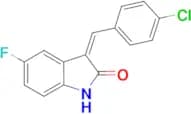
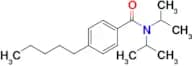
![2-(4-CHLOROPHENYL)-6,7-DIHYDROPYRAZOLO[1,5-A]PYRAZIN-4(5H)-ONE](/_next/image/?url=https%3A%2Fstatic.cymitquimica.com%2Fproducts%2F10%2Fthumb-webp%2FF388535.webp&w=3840&q=75)




![N-[(4-Amino-2-methylpyrimidin-5-yl)methyl]formamide](/_next/image/?url=https%3A%2Fstatic.cymitquimica.com%2Fproducts%2F3D%2Fthumb-webp%2FFA31702.webp&w=3840&q=75)
![N-[6-Chloro-5-(2-methoxyphenoxy)-(2,2-bipyrimidine)4-4-yl]-(1,1-dimethylethyl)-benzenesulfonamide](/_next/image/?url=https%3A%2Fstatic.cymitquimica.com%2Fproducts%2F3D%2Fthumb-webp%2FFC20113.webp&w=3840&q=75)