Amides
Found 16513 products of "Amides"
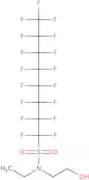
N-Ethyl-N-(2-hydroxyethyl)perfluorooctylsulphonamide
CAS:Controlled ProductN-Ethyl-N-(2-hydroxyethyl)perfluorooctylsulphonamide is a novel glycol ester with cytotoxic effects. It has been shown to inhibit the growth of cancer cells in rat liver microsomes and in vivo. N-Ethyl-N-(2-hydroxyethyl)perfluorooctylsulphonamide inhibits the synthesis of fatty acids by inhibiting the enzyme lipoxygenase. This drug also has a reactive carbon nanotube that may be used as an anticancer agent, which can bind to cell membranes and disrupt their function.
Formula:C12H10F17NO3SPurity:Min. 95%Color and Shape:PowderMolecular weight:571.25 g/molRef: 3D-FE104045
Discontinued productNipecotamide
CAS:Nipecotamide is a water-soluble drug that inhibits the activity of α1-acid glycoprotein, which is a blood protein that regulates the concentration of hydrogen ions in the body. It has been shown to inhibit the growth of amyloid protein and decrease camp levels in erythrocytes. Nipecotamide is used as an inhibitor for infectious diseases, such as leprosy, tuberculosis, and malaria. The chemical structure of nipecotamide contains nitrogen atoms and an amide bond with carbonyl oxygens. It is also an inhibitor binding to hydrochloric acid and hydrogen bonds with amide groups.
Formula:C6H12N2OPurity:Min. 95%Color and Shape:PowderMolecular weight:128.17 g/molN-(Phenylsulfonyl)palmitamide
N-(Phenylsulfonyl)palmitamide is a versatile building block that can be used to create complex compounds for research. CAS No. is 527-87-2 and it is a reagent and speciality chemical with high quality. It is also useful as a reaction component in the synthesis of other compounds, or as a scaffold for the synthesis of new derivatives.
Formula:C22H37NO3SMolecular weight:395.61 g/mol2-Cyanobenzamide
CAS:2-Cyanobenzamide is a corrosion inhibitor that is used in the electrochemical industry to protect metals from corrosion. It has been shown to be suitable for use as a corrosion inhibitor in salt water and other corrosive environments. 2-Cyanobenzamide has been shown to have light sensitive properties, which is why it should not be exposed to direct light or stored in dark containers. It also inhibits enzymes that are involved in the production of reactive oxygen species (ROS) such as superoxide anion and hydrogen peroxide. The reaction of 2-cyanobenzamide with aluminium, sodium sulfide, and polymeric matrices has also been studied extensively.
2-Cyanobenzamide can be synthesized by reacting benzoyl chloride with ammonia and cyanogen bromide. This reaction produces a mixture of mono-, di-, tri-, and tetramers of 2-cyanobenzamide. These products can then be separated using analytical methods such asFormula:C8H6N2OPurity:Min. 95%Molecular weight:146.15 g/molRef: 3D-FC67714
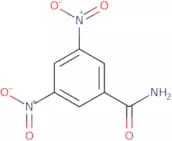
Discontinued product3,5-Dinitrobenzamide
CAS:3,5-Dinitrobenzamide is a sulfa drug that inhibits the growth of bacteria by inhibiting 3-dehydroquinate synthase (EC 4.2.1.23) and 3-dehydroquinate dehydratase (EC 4.2.1.46). The enzyme catalyzes the conversion of 3-dehydroquinic acid to quinic acid, which is an intermediate in the biosynthesis of benzoic acid from glucose. This inhibition occurs because 3,5-dinitrobenzamide forms a glycosidic bond with Cys34 in these enzymes, which prevents their function. This drug has been shown to have significant cytotoxicity against human pathogens and model organisms such as Salmonella typhimurium and Escherichia coli, but not against Saccharomyces cerevisiae or Candida albicans.
Formula:C7H5N3O5Purity:Min. 95%Color and Shape:PowderMolecular weight:211.13 g/molRef: 10-F987928
Discontinued product4-[(1E)-3,3-dimethyltriaz-1-en-1-yl]-1H-imidazole-5-carboxamide
CAS:Purity:98%Color and Shape:SolidMolecular weight:182.1869965Ref: 10-F801113
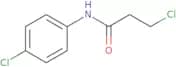
Discontinued product3-Chloro-N-(4-chlorophenyl)propanamide
CAS:Please enquire for more information about 3-Chloro-N-(4-chlorophenyl)propanamide including the price, delivery time and more detailed product information at the technical inquiry form on this page
Formula:C9H9Cl2NOPurity:Min. 95%Color and Shape:PowderMolecular weight:218.08 g/molRef: 3D-FC125304
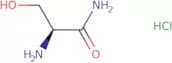
Discontinued productL-Serine amide hydrochloride
CAS:L-Serine amide hydrochloride is a synthetic, anti-HIV drug that is used as an antiviral agent. It inhibits the viral life cycle by inhibiting the activity of acyclic nucleoside phosphonates, which are vital to viral DNA synthesis. L-Serine amide hydrochloride binds to the cyclopentane ring of guanosine and prevents its interaction with the enzyme ribonucleotide reductase. This binding prevents the conversion of guanosine into GTP, thereby preventing HIV from using this molecule in their life cycle. L-Serine amide hydrochloride is not active against cellular proteins or prostaglandins.
Formula:C3H8N2O2·HClPurity:Min. 95%Molecular weight:140.57 g/molRef: 3D-FS49352
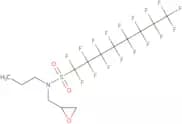
Discontinued productN-Propyl-N-(2,3-epoxypropyl)perfluoro-n-octylsulfonamide
CAS:Controlled ProductPlease enquire for more information about N-Propyl-N-(2,3-epoxypropyl)perfluoro-n-octylsulfonamide including the price, delivery time and more detailed product information at the technical inquiry form on this page
Formula:C14H12F17NO3SPurity:Min. 95%Molecular weight:597.29 g/molGlucagon-like peptide 1 (7-36) amide
CAS:Glucagon-like peptide 1 (7-36) amide is a peptide hormone produced by the ileum and colon of the small intestine in response to food intake. It stimulates insulin release from the pancreas, inhibits glucagon secretion, and slows gastric emptying. GLP-1 is also a potent regulator of glucose homeostasis. The GLP-1 analogues are used for treatment of type 2 diabetes mellitus. These analogues are either injected or taken orally and mimic the effect of natural GLP-1 on blood sugar regulation and appetite control. The long duration of action means that daily injections or multiple oral doses are required to maintain therapeutic levels.
Formula:C149H226N40O45Purity:Min. 95%Molecular weight:3,297.63 g/molRef: 3D-FG109975
Discontinued product







![4-[(1E)-3,3-dimethyltriaz-1-en-1-yl]-1H-imidazole-5-carboxamide](/_next/image/?url=https%3A%2Fstatic.cymitquimica.com%2Fproducts%2F10%2Fthumb-webp%2FF801113.webp&w=3840&q=75)