Amides
Found 16513 products of "Amides"
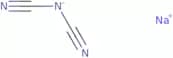
Sodium dicyanamide
CAS:Sodium dicyanamide is a diphenyl ether that has been shown to be effective in the treatment of polycystic ovarian syndrome. It binds to picolinic acid, which is a cofactor for the enzyme phenylalanine hydroxylase, and inhibits the production of tyrosine. This leads to an increase in the levels of luteinizing hormone and follicle-stimulating hormone, which helps ovulation. Sodium dicyanamide also interacts with hydrogen bond interactions and chelate ligands. The reaction mechanism of this compound is not well understood, but it is known that it can react with oxygen at high temperatures.
Formula:C2N3NaPurity:Min. 95%Color and Shape:White PowderMolecular weight:89.03 g/molRef: 3D-FS16102
Discontinued productDynorphin A (1-13) amide trifluoroacetate salt
CAS:Please enquire for more information about Dynorphin A (1-13) amide trifluoroacetate salt including the price, delivery time and more detailed product information at the technical inquiry form on this page
Formula:C75H127N25O14Purity:Min. 95%Molecular weight:1,602.97 g/molRef: 3D-FD110159
Discontinued product(D-Ala2)-GRF (1-29) amide (human)
CAS:Please enquire for more information about (D-Ala2)-GRF (1-29) amide (human) including the price, delivery time and more detailed product information at the technical inquiry form on this pageFormula:C149H246N44O42SPurity:Min. 95%Molecular weight:3,357.88 g/molRef: 3D-FA109070
Discontinued productPhenylacetyl-(D-Arg2·28,p-chloro-Phe6, Homoarg 9·29,Tyr(Me)10, Abu 15, Nle 27)-GRF (1-29) amide (human)
CAS:Please enquire for more information about Phenylacetyl-(D-Arg2·28,p-chloro-Phe6, Homoarg 9·29,Tyr(Me)10, Abu 15, Nle 27)-GRF (1-29) amide (human) including the price, delivery time and more detailed product information at the technical inquiry form on this pageFormula:C172H284ClN53O41Purity:Min. 95%Molecular weight:3,785.88 g/molRef: 3D-FP109391
Discontinued product3-Nitro-4-[[(tetrahydropyran-4-yl)methyl]amino]benzenesulfonamide
CAS:Please enquire for more information about 3-Nitro-4-[[(tetrahydropyran-4-yl)methyl]amino]benzenesulfonamide including the price, delivery time and more detailed product information at the technical inquiry form on this page
Formula:C12H17N3O5SPurity:Min. 95%Molecular weight:315.35 g/molGRF (1-29) amide (rat)
CAS:Growth hormone-releasing factor (GRF) is a peptide fragment of amino acids 1–2 from GHRH (growth hormone-releasing hormone). This 1-29 region is the shortest fully functional fragment of GHRH. GRF is also known as sermorelin. Sermorelin binds to the growth hormone-releasing hormone receptor (GHRH-R), and acts as a surrogate for GHRH, causing growth hormone secretion.human: H-YADAIFTNSYRKVLGQLSARKLLQDIMSR-NH2rat: H-HADAIFTSSYRR I LGQLYARKLLHEIMNR-NH2Formula:C155H251N49O40SPurity:Min. 95%Molecular weight:3,473.02 g/molRef: 3D-FG108550
Discontinued productGlucagon-like peptide 1 (7-36) amide
CAS:Glucagon-like peptide 1 (7-36) amide is a peptide hormone produced by the ileum and colon of the small intestine in response to food intake. It stimulates insulin release from the pancreas, inhibits glucagon secretion, and slows gastric emptying. GLP-1 is also a potent regulator of glucose homeostasis. The GLP-1 analogues are used for treatment of type 2 diabetes mellitus. These analogues are either injected or taken orally and mimic the effect of natural GLP-1 on blood sugar regulation and appetite control. The long duration of action means that daily injections or multiple oral doses are required to maintain therapeutic levels.
Formula:C149H226N40O45Purity:Min. 95%Molecular weight:3,297.63 g/molRef: 3D-FG109975
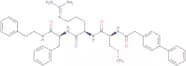
Discontinued product4-Biphenylac-Cys(Me)-D-Arg-Phe-(2-phenylethyl)amide
CAS:4-Biphenylac-Cys(Me)-D-Arg-Phe-(2-phenylethyl)amide is a tetrapeptide that has been shown to have antihypertensive properties. This drug binds to the regulatory proteins of the renin angiotensin system and blocks the production of angiotensin II, which decreases blood pressure. 4-Biphenylac-Cys(Me)-D-Arg-Phe-(2-phenylethyl)amide has also shown to be an effective treatment for skin care products, especially those used for inflammatory skin diseases. 4-Biphenylac-Cys(Me)-D-Arg-Phe-(2-phenylethyl)amide has been shown to be a potent inhibitor of serine proteases and can inhibit cellular proliferation and induce apoptosis in cancer cells.
Formula:C41H49N7O4SPurity:Min. 95%Molecular weight:735.94 g/molRef: 3D-FB111103
Discontinued product(Phe4)-Dermorphin (1-4) amide
CAS:Dermorphin is a peptide that is derived from the proenkephalin gene. It is an opioid analgesic and has been shown to be effective in the treatment of hernias. Dermorphin has also been shown to inhibit platelet aggregation and blood coagulation, making it an antithrombotic therapy. The structure of dermorphin has been determined using a hydroxy group as the reactive site for synthesis and molecular modelling techniques. Dermorphin has also been shown to have an active oxygen species selectivity index (a measure of antioxidant activity) higher than those of other drugs in its class, which makes it suitable for use as a sealant in abdominal surgery.Formula:C30H35N5O5Purity:Min. 95%Molecular weight:545.63 g/molRef: 3D-FP110359
Discontinued productpTH (1-31) amide (human)
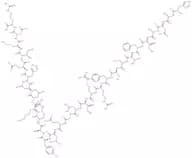
CAS:pTH (1-31) amide is a polymer conjugate that is used to treat osteoporosis. It has been shown to be effective in reducing the risk of fracture and increasing bone mineral density in animals. The compound binds to the extracellular domain of the estrogen receptor, altering its conformation and preventing it from interacting with other proteins in the nucleus. pTH (1-31) amide has also been shown to reduce blood pressure in animals by inhibiting angiotensin-converting enzyme. Clinical data on this drug are limited, but it has been well tolerated so far.Formula:C162H270N50O46S2Purity:Min. 95%Molecular weight:3,718.32 g/molRef: 3D-FP108995
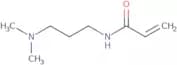
Discontinued productN-(3-Dimethylaminopropyl)acrylamide, stabilized with MEHQ
CAS:N-(3-Dimethylaminopropyl)acrylamide is a polymerization initiator that is used in the synthesis of polymers. It is also a model protein, which can be used to study bacterial growth rates and tissue metabolism. N-(3-Dimethylaminopropyl)acrylamide has been shown to have biological properties similar to human serum, as well as to serve as a model for primary cells. The FT-IR spectroscopy of N-(3-Dimethylaminopropyl)acrylamide reveals the presence of chloride ions in its molecular structure. The reaction mechanism for this compound has been determined by deionized water and ionic reactions with chloride ions.
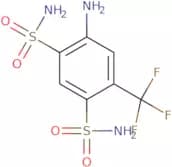
Formula:C8H16N2OPurity:Min. 95%Molecular weight:156.23 g/mol4-Amino-6-(trifluoromethyl)benzene-1,3-disulfonamide
CAS:4-Amino-6-(trifluoromethyl)benzene-1,3-disulfonamide (4AFBDS) is a chemical compound that can be used for the treatment of wastewater. It has shown to be effective against anhydrase, which is an enzyme that catalyzes the conversion of water to hydrogen peroxide and hydroxide ion. 4AFBDS also attenuates oxidative stress in cardiac cells and inhibits the production of active oxygen species by inhibiting the activity of carbonic anhydrase. The chromatographic method used to detect 4AFBDS was found to be more sensitive than a standard colorimetric assay, making it a better tool for detecting this compound in wastewater samples. br> br> br> br> br> This compound has been shown to have inhibitory effects on e3 ubiquitin ligase, which plays a role in protein degradation via aut
Formula:C7H8F3N3O4S2Purity:Min. 95%Molecular weight:319.28 g/molRef: 3D-FA29652
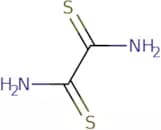
Discontinued productDithiooxamide
CAS:Dithiooxamide is a chemical compound that contains two sulfur atoms, one oxygen atom, and one nitrogen atom. It has been shown to be an effective treatment for wastewater by removing nitrogen and phosphorus. Dithiooxamide binds to metal ions such as copper and iron in the water, forming a complex. This process prevents the metal ions from being available as catalysts in the oxidation of organic pollutants. The binding of dithiooxamide with these metals also removes them from wastewater, preventing them from being taken up by plants or animals. Dithiooxamide can be used to remove malonic acid (a carcinogen) and p-nitrophenyl phosphate (a liver toxin) from blood samples for analysis using electrochemical impedance spectroscopy, which relies on the ability of dithiooxamide to bind to these chemicals. Dithiooxamide is also used as a surfactant in analytical chemistry methods such as gas chromatography or liquid chromatography because it
Formula:C2H4N2S2Purity:Min. 95%Color and Shape:PowderMolecular weight:120.2 g/mol



![3-Nitro-4-[[(tetrahydropyran-4-yl)methyl]amino]benzenesulfonamide](/_next/image/?url=https%3A%2Fstatic.cymitquimica.com%2Fproducts%2F3D%2Fthumb-webp%2FFN145631.webp&w=3840&q=75)