Amides
Amides are a wide range of chemical compounds that contain at least one heterocyclic ring, which has atoms of at least two different elements in the ring structure, and at least one amide group (-CONH2). These compounds are crucial in the synthesis of pharmaceuticals, polymers, and agrochemicals. Amides exhibit unique properties and reactivity, making them valuable intermediates in organic synthesis. At CymitQuimica, we offer a comprehensive selection of high-quality amides to support your research and industrial needs.
Found 16399 products of "Amides"
Sort by
Purity (%)
0
100
|
0
|
50
|
90
|
95
|
100
Acetyl-(Cys(Acm)33·42)-EGF (33-42) amide (mouse)
CAS:<p>Please enquire for more information about Acetyl-(Cys(Acm)33·42)-EGF (33-42) amide (mouse) including the price, delivery time and more detailed product information at the technical inquiry form on this page</p>Formula:C51H82N16O17S2Purity:Min. 95%Molecular weight:1,255.43 g/mol(D-Trp12,Tyr34)-pTH (7-34) amide (bovine) trifluoroacetate salt
CAS:<p>Please enquire for more information about (D-Trp12,Tyr34)-pTH (7-34) amide (bovine) trifluoroacetate salt including the price, delivery time and more detailed product information at the technical inquiry form on this page</p>Formula:C165H251N49O40S2Purity:Min. 95%Molecular weight:3,625.2 g/molTRAP-6 amide trifluoroacetate salt
CAS:<p>Protease-activated receptor 1 (PAR-1) selective activating peptide, TFA salt. 98%.</p>Formula:C34H57N11O8Purity:Min. 95%Color and Shape:PowderMolecular weight:747.89 g/molFmoc-rink amide resin
CAS:<p>Fmoc-rink amide resin is a synthetic, radionuclide, and constant polymer. It is used in chemical ligation to produce peptides from amines and growth factors. Fmoc-rink amide resin also has antimicrobial properties due to its ability to inhibit the growth of bacteria and fungi by binding to their cell membranes. This polymer can be conjugated with growth factor or antimicrobial peptides for use as a therapeutic agent or used in the production of antibodies against a particular protein. Fmoc-rink amide resin has been shown to increase epidermal growth factor (EGF) uptake into cells by targeting EGF receptors on the cell surface.</p>Purity:Min. 95%2-Chloroacetamide
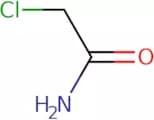
CAS:<p>2-Chloroacetamide is a quaternary ammonium compound that is used as an intermediate in the synthesis of other organic compounds. It has been reported to have anticancer activity and has been studied for use as a herbicide in agriculture. The vibrational, turbidimetric method, amide, and sample preparation are all instrumental in determining the reaction mechanism of 2-chloroacetamide. This molecule has also been studied using FT-IR spectroscopy and molecular modelling techniques. The hydrogen bond is integral to its optical properties and can be determined by nmr spectra.</p>Formula:C2H4ClNOPurity:Min. 98%Color and Shape:White PowderMolecular weight:93.51 g/molNeuropeptide Y (1-24) amide (human, rat) trifluoroacetate salt
CAS:<p>Please enquire for more information about Neuropeptide Y (1-24) amide (human, rat) trifluoroacetate salt including the price, delivery time and more detailed product information at the technical inquiry form on this page</p>Formula:C116H170N30O40SPurity:Min. 95%Molecular weight:2,656.84 g/molN-Des(2-diethylamino) metoclopramide acetic acid
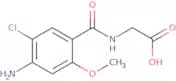
CAS:<p>N-Des(2-diethylamino) metoclopramide acetic acid is a benzyl ester of metoclopramide, a prodrug that is metabolized to the active form in the body. It has been shown to be effective against healthy human subjects and hplc analyses of biological samples have shown it to be a metabolite of metoclopramide. N-Des(2-diethylamino) metoclopramide acetic acid is used as a catalyst for catalytic hydrogenation reactions, such as the conversion of methyl esters into ethyl or butyl esters. It can also be used for catalytic hydrogenation reactions with diazomethane, such as those required for the synthesis of quinolones.</p>Formula:C10H11ClN2O4Purity:Min. 95%Molecular weight:258.66 g/molAntho-RPamide III·HCl Pyr-Val-Lys-Leu-Tyr-Arg-Pro-NH2·HCl
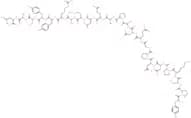
CAS:<p>Please enquire for more information about Antho-RPamide III·HCl Pyr-Val-Lys-Leu-Tyr-Arg-Pro-NH2·HCl including the price, delivery time and more detailed product information at the technical inquiry form on this page</p>Formula:C42H68N12O9·HClPurity:Min. 95%Molecular weight:921.53 g/mol(D-Arg2)-Dermorphin (1-4) amide trifluoroacetate salt
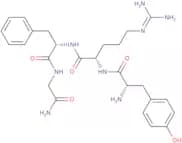
CAS:<p>Please enquire for more information about (D-Arg2)-Dermorphin (1-4) amide trifluoroacetate salt including the price, delivery time and more detailed product information at the technical inquiry form on this page</p>Formula:C26H36N8O5Purity:Min. 95%Molecular weight:540.61 g/mol2-[(4-Chloro-2-nitrophenyl)azo]-N-(2-methoxyphenyl)-3-oxobutanamide
CAS:<p>2-[(4-Chloro-2-nitrophenyl)azo]-N-(2-methoxyphenyl)-3-oxobutanamide is a chelating agent that has been used as a control agent in the manufacture of dyes, plastics, and rubber. It is also used as an additive in paints, textiles, and paper. 2-[(4-Chloro-2-nitrophenyl)azo]-N-(2-methoxyphenyl)-3-oxobutanamide is nonvolatile, nonflammable, and does not produce toxic byproducts when heated. This compound has low molecular weight with a molecular formula of C12H13NO5Cl. The structure of this compound includes two hydroxy groups (OH), one aliphatic hydrocarbon group (CH3), one carboxylic acid group (COOH), and three chlorine atoms (Cl). This product is soluble in water</p>Formula:C17H15ClN4O5Color and Shape:Yellow Clear LiquidMolecular weight:390.78 g/molBiotinyl-LL-37 amide trifluoroacetate salt
CAS:<p>Please enquire for more information about Biotinyl-LL-37 amide trifluoroacetate salt including the price, delivery time and more detailed product information at the technical inquiry form on this page</p>Formula:C215H355N63O54SPurity:Min. 95%Molecular weight:4,718.58 g/mol(D-Arg2,Lys4)-Dermorphin (1-4) amide
CAS:<p>Dermorphin is a neuropeptide that has been shown to reduce cortisol levels in badgers and has been shown to have biological activity in vitro. Dermorphin also has a number of pharmacokinetic properties, including water solubility, lipid solubility, and oral bioavailability. The drug binds to δ receptors and inhibits the enzyme activities of rat liver microsomes. Dermorphin is used as an analgesic for bowel disease, such as inflammatory bowel disease or hypogaea. Dermorphin has antinociceptive properties (pain-relieving).</p>Formula:C30H45N9O5Purity:Min. 95%Molecular weight:611.74 g/molAmyloid b-Protein (1-40) amide trifluoroacetate salt
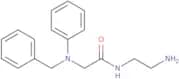
CAS:<p>Please enquire for more information about Amyloid b-Protein (1-40) amide trifluoroacetate salt including the price, delivery time and more detailed product information at the technical inquiry form on this page</p>Formula:C194H296N54O57SPurity:Min. 95%Molecular weight:4,328.82 g/molN-(2-Amino-ethyl)-2-(benzyl-phenyl-amino)-acetamide
CAS:<p>Please enquire for more information about N-(2-Amino-ethyl)-2-(benzyl-phenyl-amino)-acetamide including the price, delivery time and more detailed product information at the technical inquiry form on this page</p>Formula:C17H21N3OPurity:Min. 95%Color and Shape:White PowderMolecular weight:283.37 g/mol(Phe1-psi(CH2NH)Gly2)-Nociceptin (1-13) amide
<p>Please enquire for more information about (Phe1-psi(CH2NH)Gly2)-Nociceptin (1-13) amide including the price, delivery time and more detailed product information at the technical inquiry form on this page</p>Formula:C61H102N22O14Purity:Min. 95%Molecular weight:1,367.6 g/molNociceptin (1-13) amide trifluoroacetate salt
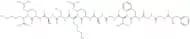
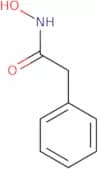
CAS:<p>Please enquire for more information about Nociceptin (1-13) amide trifluoroacetate salt including the price, delivery time and more detailed product information at the technical inquiry form on this page</p>Formula:C61H100N22O15Purity:Min. 95%Molecular weight:1,381.59 g/molN-Hydroxy-2-phenyl-acetamide
CAS:<p>N-Hydroxy-2-phenyl-acetamide is a metalloprotease inhibitor that binds to the active site of the enzyme, thereby preventing it from binding with its natural substrate. This drug has been shown to inhibit the production of TNF-α in mice with autoimmune diseases and may be able to inhibit other proinflammatory mediators. N-Hydroxy-2-phenyl-acetamide has been shown to bind to a water molecule and an aliphatic hydrocarbon in order to form a hydrogen bond. This coordination complex inhibits the activity of matrix metalloproteinases, which are enzymes that break down collagen, elastin, and other proteins in the extracellular matrix. N-Hydroxy-2-phenyl-acetamide is not active against acid complexes or tnfα.</p>Formula:C8H9NO2Purity:Min. 95%Color and Shape:White Yellow PowderMolecular weight:151.16 g/mol2-Chloro-N-[2-(diethylamino)ethyl]-4-quinolinecarboxamide
CAS:<p>2-Chloro-N-[2-(diethylamino)ethyl]-4-quinolinecarboxamide is a carboxamide analog of dibucaine. It is synthesized from chloroacetyl chloride and isatin in the presence of sodium hydroxide. The synthesis has been scaled to an industrial level. 2-Chloro-N-[2-(diethylamino)ethyl]-4-quinolinecarboxamide has been shown to have analgesic properties, similar to those of dibucaine. Radiolysis of this compound gives a carboxylic acid and a heterocyclic ring product.</p>Formula:C16H20ClN3OPurity:95%MinColor and Shape:PowderMolecular weight:305.8 g/mol4-Bromo-2-fluoro-N-methylbenzamide
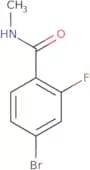
CAS:<p>4-Bromo-2-fluoro-N-methylbenzamide is an impurity in the pharmaceutical drug nilutamide. It is a ligand that binds to the androgen receptor and inhibits the binding of dihydrotestosterone, reducing its effect on prostate cells. 4-Bromo-2-fluoro-N-methylbenzamide has been shown to have pharmacokinetic properties similar to nilutamide, which is a drug used for treating prostate cancer. This impurity is also found in small quantities in other drugs including cyclobutanone, 2-aminoisobutyric acid, and chloral hydrate. The elucidation of these impurities can help regulate the quality of pharmaceutical drugs.</p>Formula:C8H7BrFNOPurity:Min. 95%Color and Shape:White Off-White PowderMolecular weight:232.05 g/mol4-Biphenylac-Cys(Me)-D-Arg-Phe-(2-phenylethyl)amide
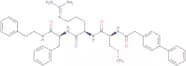
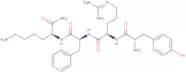
CAS:<p>4-Biphenylac-Cys(Me)-D-Arg-Phe-(2-phenylethyl)amide is a tetrapeptide that has been shown to have antihypertensive properties. This drug binds to the regulatory proteins of the renin angiotensin system and blocks the production of angiotensin II, which decreases blood pressure. 4-Biphenylac-Cys(Me)-D-Arg-Phe-(2-phenylethyl)amide has also shown to be an effective treatment for skin care products, especially those used for inflammatory skin diseases. 4-Biphenylac-Cys(Me)-D-Arg-Phe-(2-phenylethyl)amide has been shown to be a potent inhibitor of serine proteases and can inhibit cellular proliferation and induce apoptosis in cancer cells.</p>Formula:C41H49N7O4SPurity:Min. 95%Molecular weight:735.94 g/mol





![2-[(4-Chloro-2-nitrophenyl)azo]-N-(2-methoxyphenyl)-3-oxobutanamide](/_next/image/?url=https%3A%2Fstatic.cymitquimica.com%2Fproducts%2F3D%2Fthumb-webp%2FFC149929.webp&w=3840&q=75)

![2-Chloro-N-[2-(diethylamino)ethyl]-4-quinolinecarboxamide](/_next/image/?url=https%3A%2Fstatic.cymitquimica.com%2Fproducts%2F3D%2Fthumb-webp%2FFC20289.webp&w=3840&q=75)