Amides
Found 16536 products of "Amides"
Deshydroxy bicalutamide
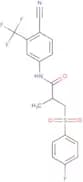
CAS:Deshydroxy bicalutamide is a ligand that has been synthesized to bind to the androgen receptor. It is an antagonist of the androgen receptor. Deshydroxy bicalutamide has been shown to inhibit cancer cell growth in prostate cancer cell lines, which is due to its ability to bind and block the ligand-binding domain of the androgen receptor. Molecular modelling has shown that deshydroxy bicalutamide binds in the hydroxyl group region of the binding site, which blocks it from binding with other ligands such as testosterone. This may lead to decreased levels of testosterone in males, leading to decreased levels of androgens in prostate cancer cells.
Formula:C18H14F4N2O3SPurity:Min. 95%Molecular weight:414.38 g/molBenzenesulphonamide
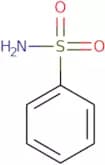
CAS:Benzenesulphonamide is a biologically active compound that has been shown to bind to an integrin receptor, which mediates the attachment of leukocytes to the endothelium. It also binds to a basic protein found in human immunoglobulin. Benzenesulphonamide has been shown to have cytotoxic effects on synchronous fluorescence cells and can be used for the treatment of bowel disease. This drug has also been shown to be toxic in vitro and in vivo, with a moderate acute oral toxicity and low chronic oral toxicity. Benzenesulphonamide has been shown to act as a surfactant by binding with sodium dodecyl sulfate (SDS), which is commonly used in detergents, disinfectants, shampoos, soaps, and other household products. The biological properties of benzenesulphonamide are not well-known due to its low solubility in water.
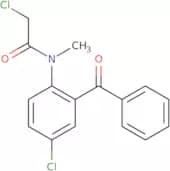
Formula:C6H7NO2SPurity:Min. 95%Molecular weight:157.19 g/molN-(2-Benzoyl-4-chlorophenyl)-2-chloro-N-methylacetamide
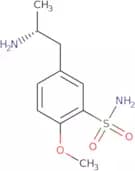
CAS:Please enquire for more information about N-(2-Benzoyl-4-chlorophenyl)-2-chloro-N-methylacetamide including the price, delivery time and more detailed product information at the technical inquiry form on this pageFormula:C16H13Cl2NO2Purity:Min. 95%Molecular weight:322.19 g/mol(R)-5-(2-Aminopropyl)-2-methoxybenzenesulfonamide
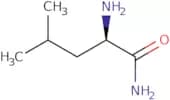
CAS:Controlled Product(R)-5-(2-Aminopropyl)-2-methoxybenzenesulfonamide is an amide. It is a hydrochloric acid salt that can regulate the reaction system and introduce filtration, which can be used to separate the components of the reaction system. The kinetic and chiral properties of this compound are derived from Friedel-Crafts reactions with phosphites and Friedel-Crafts reactions with d-alanine. (R)-5-(2-Aminopropyl)-2-methoxybenzenesulfonamide can also catalyze ammonolysis and catalysis with phenoxy.Formula:C10H16N2O3SPurity:Min. 95%Color and Shape:PowderMolecular weight:244.31 g/molD-Leucine amide
CAS:D-Leucine amide is a hydrophobic, carboxyamide amino acid that is found in the fungus Ochrobactrum anthropi. D-Leucine amide has been shown to catalyze the formation of tripeptides, such as d-alanine and d-tryptophan, from their monomers. The presence of this compound enhances the expression of genes encoding proteins involved in the synthesis of these amino acids. This compound also has been shown to enhance gene analysis by increasing the stability of DNA and RNA molecules.
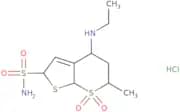
Formula:C6H14N2OPurity:Min. 95%Molecular weight:130.19 g/molDorzolamide hydrochloride related compound A
CAS:Please enquire for more information about Dorzolamide hydrochloride related compound A including the price, delivery time and more detailed product information at the technical inquiry form on this pageFormula:C10H16N2O4S3·HClPurity:Min. 95%Molecular weight:360.9 g/molL-Tryptophanamide hydrochloride
CAS:L-Tryptophanamide hydrochloride is a fluorescent compound that belongs to the amides. It has been shown to have invertase activity and be hydrated in both isooctane and water. L-Tryptophanamide hydrochloride also has an anxiolytic effect on mice, which may be due to its ability to inhibit the production of serotonin at synapses by blocking the enzyme tryptophan hydroxylase. The drug is used for the treatment of anxiety disorders, including generalized anxiety disorder (GAD) and posttraumatic stress disorder (PTSD). This drug has a molecular profile that can be detected by fluorescence spectrometry, with an enhancement factor of 1.5-2.5.
Formula:C11H14ClN3OPurity:Min. 95%Molecular weight:239.7 g/mol(NZ)-4-chloro-N-[1-[2-(4-nitrophenyl)ethyl]piperidin-2-ylidene]benzenesulfonamide
CAS:Controlled ProductPlease enquire for more information about (NZ)-4-chloro-N-[1-[2-(4-nitrophenyl)ethyl]piperidin-2-ylidene]benzenesulfonamide including the price, delivery time and more detailed product information at the technical inquiry form on this page
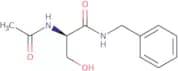
Formula:C19H20ClN3O4SPurity:Min. 95%Molecular weight:421.9 g/molDesmethyl lacosamide
CAS:Lacosamide is an antiepileptic drug that has been shown to be bioequivalent to the reference product, Gabapentin. Lacosamide binds to voltage-gated sodium channels and is thought to have a similar clinical profile as Gabapentin. It is used in the treatment of partial seizures (with or without secondary generalization) and adjunctive therapy for generalized seizures in adults and children aged 2 years or older. Lacosamide can interact with other drugs, such as gabapentin, by increasing their serum concentrations. This interaction may lead to adverse effects such as dizziness and confusion. Lacosamide plasma concentrations are measured using LC-MS/MS methods after a two-way crossover study in healthy human volunteers. This study also showed that lacosamide is excreted unchanged in urine samples at a rate of about 50% over 24 hours, indicating that it does not undergo extensive metabolism in humans.
Formula:C12H16N2O3Purity:Min. 95%Color and Shape:White Off-White PowderMolecular weight:236.27 g/molN'-Hydroxycyclopropanecarboximidamide
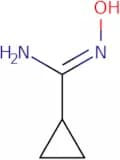
CAS:N'-Hydroxycyclopropanecarboximidamide (N-HCPC) is an alkoxycarbonyl-containing heterocycle that is structurally related to the benzodiazepine class of drugs. It has been shown to have depressant activity in animal models and may be useful as a treatment for epilepsy, but it also has psychoactive properties. N-HCPC can cause epileptic seizures in humans, although this effect appears to be dose dependent. It may also have potential use as a treatment for Alzheimer's disease and depression due to its ability to bind to the benzodiazepine receptor. The drug binds with high affinity to muscle tissue, which may explain its effects on muscle control and movement.Formula:C4H8N2OPurity:Min. 95%Molecular weight:100.12 g/molOxamide
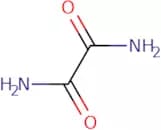
CAS:Oxamide is a chemical compound with the molecular formula CHNO. It is a white solid that is moderately soluble in water and alcohol, but not in ether. Oxamide has been shown to have antioxidative properties and to inhibit the formation of reactive oxygen species. This drug also has an effect on thermal expansion and on the blood flow rate in human serum.
Formula:C2H4N2O2Purity:Min. 95%Molecular weight:88.07 g/molN-Desmethyl loperamide
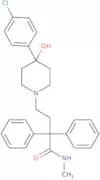
CAS:N-Desmethyl loperamide is a prodrug of loperamide, which is a peripherally acting μ-opioid receptor agonist. It has been shown to be effective in reducing the uptake of radiation in wild-type mice. This drug also inhibits p-glycoprotein (p-gp), and has been shown to reduce the uptake of pyridinium ions and amide substrates. N-Desmethyl loperamide has been shown to have anticancer properties, including resistance to radiation, inhibition of tumor growth and metastasis, and induction of apoptosis, which may be due to its ability to inhibit cellular proliferation and induce cell death. The mechanism by which this drug functions is not yet clear but it may involve inhibition of the expression or function of p-gp or other efflux pumps in cells that are sensitive to these drugs.
Formula:C28H31ClN2O2Purity:Min. 95%Molecular weight:463.01 g/mol2-(Diethylamino)-N-(2,4-dimethylphenyl ) acetamide HCl
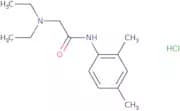
CAS:Please enquire for more information about 2-(Diethylamino)-N-(2,4-dimethylphenyl ) acetamide HCl including the price, delivery time and more detailed product information at the technical inquiry form on this page
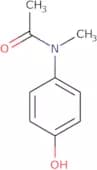
Formula:C14H22N2O·HClPurity:Min. 95 Area-%Molecular weight:270.8 g/molN-(4-Hydroxyphenyl)-N-methylacetamide
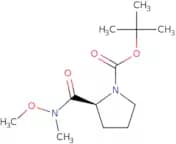
CAS:Please enquire for more information about N-(4-Hydroxyphenyl)-N-methylacetamide including the price, delivery time and more detailed product information at the technical inquiry form on this pageFormula:C9H11NO2Purity:Min. 95%Molecular weight:165.19 g/molBoc-L-proline N,O-dimethylhydroxamide
CAS:Please enquire for more information about Boc-L-proline N,O-dimethylhydroxamide including the price, delivery time and more detailed product information at the technical inquiry form on this page
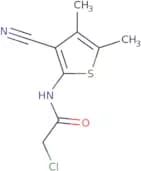
Formula:C12H22N2O4Purity:Min. 95%Molecular weight:258.31 g/mol2-Chloro-N-(3-cyano-4,5-dimethylthien-2-yl)acetamide
CAS:Please enquire for more information about 2-Chloro-N-(3-cyano-4,5-dimethylthien-2-yl)acetamide including the price, delivery time and more detailed product information at the technical inquiry form on this page
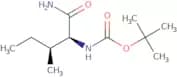
Formula:C9H9ClN2OSPurity:Min. 95%Molecular weight:228.7 g/molN-tert-Butoxycarbonyl-L-isoleucineamide
CAS:Please enquire for more information about N-tert-Butoxycarbonyl-L-isoleucineamide including the price, delivery time and more detailed product information at the technical inquiry form on this page
Formula:C11H22N2O3Purity:Min. 95%Color and Shape:SolidMolecular weight:230.3 g/molN-(6-Phenylhexyl)-5-chloro-1-naphthalenesulfonamide
CAS:N-(6-Phenylhexyl)-5-chloro-1-naphthalenesulfonamide is a dibutyryl camp analog that has been shown to inhibit the L-type calcium channel in a dose-dependent manner. It has an effect on both spermatozoa and glioma cells, with its most significant effect being inhibition of the intracellular calcium ion. This drug inhibits the growth rate of these cells, which may be due to its ability to activate adrenergic receptors and cause increased intracellular calcium ion levels. N-(6-Phenylhexyl)-5-chloro-1-naphthalenesulfonamide also slows the cycle of the cell, which may be due to a kinetic effect.Formula:C22H24ClNO2SPurity:Min. 95%Molecular weight:401.95 g/molN-[2-[4-(Aminosulfonyl)-phenyl]-ethyl]-5-methyl-2-pyrazinecarboxamide
CAS:Fluoxetine is a potent inhibitor of the enzyme cytochrome P450 (CYP) 2C19. The inhibition of CYP2C19 by fluoxetine may lead to an increase in the plasma concentration of other drugs that are metabolized by this enzyme, such as glipizide and hydroxycyclohexyl. Fluoxetine inhibits human uric acid secretion and increases plasma concentrations of uric acid. This drug also inhibits human erythrocyte dihydropyrimidine dehydrogenase, leading to increased blood levels of pyrimidines, especially cytotoxic ones like 6-fluoro-3-indoxyl-beta-D-galactopyranoside. Fluoxetine has been shown to have a protective effect against acetaminophen toxicity in rats because it enhances the conversion of acetaminophen to its less toxic metabolite N-acetylcysteine.Formula:C14H16N4O3SPurity:Min. 95%Color and Shape:White To Off-White SolidMolecular weight:320.37 g/molN-Methoxy-N-methylacetamide
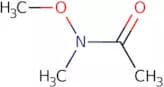
CAS:N-Methoxy-N-methylacetamide is a nucleophilic amide that can be synthesized by the reaction of acetamide with methylmagnesium chloride. It has been used to synthesize an enantiopure derivative of 2-aminopropanol, which is used in the synthesis of potent antitumor agents. N-Methoxy-N-methylacetamide has shown potent anticancer activity in mice and rats. This molecule exhibits a carbonyl group that can act as an enolate, which is a reactive intermediate within chemical reactions. The nucleophilic attack on this carbonyl group leads to intramolecular hydrogen transfer, producing a more stable product.Formula:C4H9NO2Purity:Min. 95%Molecular weight:103.12 g/mol


![(NZ)-4-chloro-N-[1-[2-(4-nitrophenyl)ethyl]piperidin-2-ylidene]benzenesulfonamide](/_next/image/?url=https%3A%2Fstatic.cymitquimica.com%2Fproducts%2F3D%2Fthumb-webp%2FFN154024.webp&w=3840&q=75)

![N-[2-[4-(Aminosulfonyl)-phenyl]-ethyl]-5-methyl-2-pyrazinecarboxamide](/_next/image/?url=https%3A%2Fstatic.cymitquimica.com%2Fproducts%2F3D%2Fthumb-webp%2FFA150607.webp&w=3840&q=75)