Amides
Amides are a wide range of chemical compounds that contain at least one heterocyclic ring, which has atoms of at least two different elements in the ring structure, and at least one amide group (-CONH2). These compounds are crucial in the synthesis of pharmaceuticals, polymers, and agrochemicals. Amides exhibit unique properties and reactivity, making them valuable intermediates in organic synthesis. At CymitQuimica, we offer a comprehensive selection of high-quality amides to support your research and industrial needs.
Found 16485 products of "Amides"
Sort by
Purity (%)
0
100
|
0
|
50
|
90
|
95
|
100
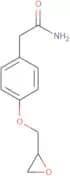
4-(2,3-Epoxypropoxy)phenylacetamide
CAS:<p>Please enquire for more information about 4-(2,3-Epoxypropoxy)phenylacetamide including the price, delivery time and more detailed product information at the technical inquiry form on this page</p>Formula:C11H13NO3Purity:Min. 95%Molecular weight:207.23 g/mol[4-(4-Aminophenoxy)(2-pyridyl)]-N-methylcarboxamide
CAS:4-(4-Aminophenoxy)(2-pyridyl)]-N-methylcarboxamide is a chemical compound that inhibits the growth of cancer cells by binding to the active site of b-raf and blocking its activity. It has been shown in a pharmacokinetics study that 4-(4-aminophenoxy)(2-pyridyl)]-N-methylcarboxamide is absorbed rapidly through the oral administration, excreted in urine, and eliminated rapidly from the body. The optimal reaction for this drug was found to be at pH 7.0 with an ionic strength of 0.1 M (sodium chloride). This drug also has significant inhibitory activities against human cervical carcinoma and breast cancer cell lines (MDA-MB-231).Formula:C13H13N3O2Purity:Min. 95%Color and Shape:Off-White To Beige To Light Brown SolidMolecular weight:243.26 g/molN,N-Dimethyl-2-chloroacetamide
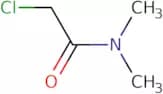
CAS:<p>N,N-Dimethyl-2-chloroacetamide is a chlorinated organic compound that has a reaction rate of 1.4 × 10^6. It is used as a treatment for acrylonitrile poisoning, and it is also used in the synthesis of thienopyridine and cetirizine. N,N-Dimethyl-2-chloroacetamide reacts with an amine to produce an amide; this reaction takes place in an organic solvent with a dicarboxylate, such as ethyl acetate or butyl acetate. This reaction produces a solution that is colorless to pale yellow. The time required for the reaction to complete depends on the concentration of reactants and the type of solvent used.</p>Formula:C4H8ClNOPurity:Min. 95%Molecular weight:121.57 g/molL-Glutamic acid gamma-tert-butyl ester alpha-amide hydrochloride
CAS:<p>Please enquire for more information about L-Glutamic acid gamma-tert-butyl ester alpha-amide hydrochloride including the price, delivery time and more detailed product information at the technical inquiry form on this page</p>Formula:C9H18N2O3·HClPurity:Min. 95%Molecular weight:238.71 g/mol2-[(Diphenylmethyl)sulfinyl]-N-hydroxyacetamide
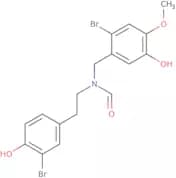
CAS:Controlled Product<p>Adrafinil is a prodrug. It is primarily metabolized in vivo to modafinil, resulting in very similar pharmacological effects.</p>Formula:C15H15NO3SPurity:Min. 98 Area-%Molecular weight:289.35 g/molN-(3-Bromo-4-hydroxyphenethyl)-N-(2-bromo-5-hydroxy-4-methoxybenzyl)formamide
CAS:Controlled Product<p>Please enquire for more information about N-(3-Bromo-4-hydroxyphenethyl)-N-(2-bromo-5-hydroxy-4-methoxybenzyl)formamide including the price, delivery time and more detailed product information at the technical inquiry form on this page</p>Formula:C17H17Br2NO4Purity:Min. 95%Molecular weight:459.13 g/molN-(p-Hydroxyphenethyl)-N-(3-hydroxy-4-methoxybenzyl)formamide
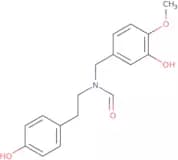
CAS:Controlled Product<p>Please enquire for more information about N-(p-Hydroxyphenethyl)-N-(3-hydroxy-4-methoxybenzyl)formamide including the price, delivery time and more detailed product information at the technical inquiry form on this page</p>Formula:C17H19NO4Purity:Min. 95%Molecular weight:301.34 g/molN-Acetylglycinamide
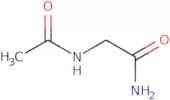
CAS:Controlled Product<p>N-Acetylglycinamide is an amide that is structurally similar to the amino acid glycine. It has been shown to have anti-inflammatory properties by inhibiting prostaglandin synthesis in vitro. In vivo, N-acetylglycinamide is metabolized and excreted as the non-polar solvents n-acetylglycine and chloride. This amide is soluble in non-polar solvents such as chloroform, dichloromethane, or ether. N-acetylglycinamide also has a pairwise orientational order with respect to solvent molecules and exhibits a low degree of hydrogen bonding interactions with water molecules.</p>Purity:Min. 95%2-Oxo-3-hydroxy-N-methyl-N-propyl D-lysergamide
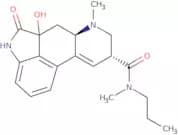
CAS:Controlled Product<p>2-Oxo-3-hydroxy-N-methyl-N-propyl D-lysergamide (2OMD) is a metabolite of the drug lysergic acid diethylamide (LSD). It can be detected in urine, blood, and saliva. The detection time in urine is approximately 3 hours after ingestion. 2OMD can be found by chromatography techniques, such as thin layer chromatography or high performance liquid chromatography. It can also be detected using mass spectrometric techniques, such as gas chromatography/mass spectrometry or liquid chromatography/mass spectrometry. 2OMD can also be detected in urine samples by calibrations with standards of known concentration and by the use of analytical methods such as gas chromatography/mass spectroscopy.</p>Formula:C20H25N3O3Purity:Min. 95%Molecular weight:355.43 g/molOxamide
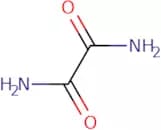
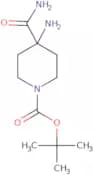
CAS:<p>Oxamide is a chemical compound with the molecular formula CHNO. It is a white solid that is moderately soluble in water and alcohol, but not in ether. Oxamide has been shown to have antioxidative properties and to inhibit the formation of reactive oxygen species. This drug also has an effect on thermal expansion and on the blood flow rate in human serum.</p>Formula:C2H4N2O2Purity:Min. 95%Molecular weight:88.07 g/mol4-Amino-1-Boc-piperidine-4-carboxamide
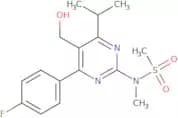
CAS:<p>Please enquire for more information about 4-Amino-1-Boc-piperidine-4-carboxamide including the price, delivery time and more detailed product information at the technical inquiry form on this page</p>Formula:C11H21N3O3Purity:Min. 95%Molecular weight:243.3 g/molN-(4-(4-Fluorophenyl)-5-(hydroxymethyl)-6-isopropylpyrimidin-2-yl)-Nmethylmethanesulfonamide
CAS:<p>Please enquire for more information about N-(4-(4-Fluorophenyl)-5-(hydroxymethyl)-6-isopropylpyrimidin-2-yl)-Nmethylmethanesulfonamide including the price, delivery time and more detailed product information at the technical inquiry form on this page</p>Formula:C16H20FN3O3SPurity:Min. 95%Molecular weight:353.41 g/molC8-Ceramide
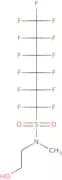
CAS:<p>C8-Ceramide is a glucosylceramide that is involved in the production of C8-ceramides. It has shown to have potent apoptosis activity and inhibit p21, an inhibitor of cell cycle progression. C8-Ceramide also has been shown to be an inhibitor of tumor necrosis factor alpha (TNF-α) induced inflammation and apoptosis in mouse tumor cells. In addition, it can induce apoptosis by inhibiting the epidermal growth factor receptor (EGFR) pathway. This polymerase chain reaction (PCR) product was found to bind to DNA in a model system using calf thymus DNA as well as bacterial DNA gyrase and topoisomerase IV enzymes.</p>Formula:C26H51NO3Purity:Min. 95%Molecular weight:425.69 g/molTridecafluoro-N-(2-Hydroxyethyl)-N-Methylhexanesulphonamide
CAS:Please enquire for more information about Tridecafluoro-N-(2-Hydroxyethyl)-N-Methylhexanesulphonamide including the price, delivery time and more detailed product information at the technical inquiry form on this pageFormula:C9H8F13NO3SPurity:Min. 95%Molecular weight:457.21 g/molPyridine-3-sulfonamide
CAS:<p>Pyridine-3-sulfonamide is a diazonium salt that has shown anticancer activity against human colon HCT116 cells. It inhibits the proliferation of leukemia cells by inhibiting the uptake of glucose, and it also has inhibitory properties on l1210 murine leukemia cells. Pyridine-3-sulfonamide binds to metal surfaces and accumulates in the cytoplasm of cancer cells, which may be due to its structural formula consisting of a pyridine group and a sulfonamide group. This compound can be used as an anticancer drug for cancer treatment.</p>Formula:C5H6N2O2SPurity:Min. 95%Color and Shape:PowderMolecular weight:158.18 g/molN-[(1S)-1-(Aminocarbonyl)propyl]-4-chlorobutanamide
CAS:<p>Please enquire for more information about N-[(1S)-1-(Aminocarbonyl)propyl]-4-chlorobutanamide including the price, delivery time and more detailed product information at the technical inquiry form on this page</p>Formula:C8H15ClN2O2Purity:Min. 95%Color and Shape:PowderMolecular weight:206.67 g/mol(D-Trp12,Tyr34)-pTH (7-34) amide (bovine) trifluoroacetate salt
CAS:<p>Please enquire for more information about (D-Trp12,Tyr34)-pTH (7-34) amide (bovine) trifluoroacetate salt including the price, delivery time and more detailed product information at the technical inquiry form on this page</p>Formula:C165H251N49O40S2Purity:Min. 95%Molecular weight:3,625.2 g/molpTH-Related Protein (7-34) amide (human, mouse, rat) trifluoroacetate salt
CAS:<p>Please enquire for more information about pTH-Related Protein (7-34) amide (human, mouse, rat) trifluoroacetate salt including the price, delivery time and more detailed product information at the technical inquiry form on this page</p>Formula:C153H247N49O37Purity:Min. 95%Molecular weight:3,364.91 g/molAcetyl-(D-Phe2)-GRF (1-29) amide (human) trifluoroacetate salt
CAS:<p>Please enquire for more information about Acetyl-(D-Phe2)-GRF (1-29) amide (human) trifluoroacetate salt including the price, delivery time and more detailed product information at the technical inquiry form on this page</p>Formula:C157H252N44O43SPurity:Min. 95%Molecular weight:3,476.02 g/molGRF (1-29) amide (rat)
CAS:<p>Growth hormone-releasing factor (GRF) is a peptide fragment of amino acids 1–2 from GHRH (growth hormone-releasing hormone). This 1-29 region is the shortest fully functional fragment of GHRH. GRF is also known as sermorelin. Sermorelin binds to the growth hormone-releasing hormone receptor (GHRH-R), and acts as a surrogate for GHRH, causing growth hormone secretion.human: H-YADAIFTNSYRKVLGQLSARKLLQDIMSR-NH2rat: H-HADAIFTSSYRR I LGQLYARKLLHEIMNR-NH2</p>Formula:C155H251N49O40SPurity:Min. 95%Molecular weight:3,473.02 g/mol

![[4-(4-Aminophenoxy)(2-pyridyl)]-N-methylcarboxamide](/_next/image/?url=https%3A%2Fstatic.cymitquimica.com%2Fproducts%2F3D%2Fthumb-webp%2FFA17813.webp&w=3840&q=75)

![2-[(Diphenylmethyl)sulfinyl]-N-hydroxyacetamide](/_next/image/?url=https%3A%2Fstatic.cymitquimica.com%2Fproducts%2F3D%2Fthumb-webp%2FW-104904.webp&w=3840&q=75)


![N-[(1S)-1-(Aminocarbonyl)propyl]-4-chlorobutanamide](/_next/image/?url=https%3A%2Fstatic.cymitquimica.com%2Fproducts%2F3D%2Fthumb-webp%2FFA171302.webp&w=3840&q=75)