


Amides
Amides are a wide range of chemical compounds that contain at least one heterocyclic ring, which has atoms of at least two different elements in the ring structure, and at least one amide group (-CONH2). These compounds are crucial in the synthesis of pharmaceuticals, polymers, and agrochemicals. Amides exhibit unique properties and reactivity, making them valuable intermediates in organic synthesis. At CymitQuimica, we offer a comprehensive selection of high-quality amides to support your research and industrial needs.
Found 16485 products of "Amides"
Sort by
Purity (%)
0
100
|
0
|
50
|
90
|
95
|
100
4-Amino-N-(4-methylpyrimidin-2-yl)benzenesulfonamide
CAS:4-Amino-N-(4-methylpyrimidin-2-yl)benzenesulfonamide (AMBPS) is a sulfonamide antimicrobial agent that belongs to the group of sulfa drugs. It is a potent inhibitor of tetracycline resistance in bacterial cells, and has been shown to be effective against infectious diseases such as tuberculosis, leprosy and pneumonia. AMBPS has also been used in wastewater treatment and biological studies with high values. This drug binds to sulfamerazine, which inhibits bacterial growth by inhibiting RNA synthesis. The hydrogen bonding interactions between AMBPS and sulfadiazine are thought to be responsible for the effects on congestive heart failure.Formula:C11H12N4O2SPurity:Min. 95%Molecular weight:264.3 g/mol(2R)-2-Aminopropanamide
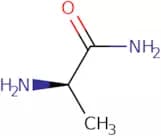
CAS:<p>(2R)-2-Aminopropanamide is a chemical compound that is classified as an amide. It has been shown to inhibit bacterial growth and induce apoptosis in mammalian cells, but not in bacteria. This drug has a number of hydrogen bonding interactions with the carbonyl group and amide functional groups and can bind to affinity ligands with hydrogen bonding interactions. (2R)-2-Aminopropanamide inhibits the activity of enzymes that are involved in the synthesis of d-alanine, which is a precursor for protein synthesis. It also inhibits the enzyme glutamine synthase, which plays a key role in building up nitrogen reserves in bacteria. The drug binds to DNA by forming hydrogen bonds with the phosphate backbone and intercalates into double-stranded DNA by forming van der Waals interactions with base pairs.</p>Formula:C3H8N2OPurity:Min. 95%Molecular weight:88.11 g/mol5-Fmoc-amino-10,11-dihydro-5H-dibenzo[a,d]-cycloheptenyl-2-oxyacetyl-DL-Nle-4- methyl-benzhydrylamide resin
<p>Please enquire for more information about 5-Fmoc-amino-10,11-dihydro-5H-dibenzo[a,d]-cycloheptenyl-2-oxyacetyl-DL-Nle-4- methyl-benzhydrylamide resin including the price, delivery time and more detailed product information at the technical inquiry form on this page</p>Purity:Min. 95%PAR-2 (1-6) amide (mouse, rat) trifluoroacetate salt
CAS:<p>PAR-2 agonist is a synthetic peptide that activates PAR-2. It binds to PAR-2 receptors, which are present in the mesenteric vasculature and in various other tissues. Activation of PAR-2 leads to an increase in intracellular calcium concentration, activation of protein kinase C, cytosolic calcium ion release, phosphorylation of myosin light chain, muscle cell proliferation, transcription and translation initiation, and increased production of vasoactive intestinal peptide. This drug also has anti-inflammatory effects and stimulates epidermal growth factor (EGF) and thrombin receptor expression as well as growth factor production.</p>Formula:C29H56N10O7Purity:Min. 95%Molecular weight:656.82 g/molSyndyphalin SD-33
CAS:<p>Please enquire for more information about Syndyphalin SD-33 including the price, delivery time and more detailed product information at the technical inquiry form on this page</p>Formula:C25H34N4O5SPurity:Min. 95%Molecular weight:502.63 g/molN-Allyl-n-(2-chloro-5-cyanophenyl)acetamide
CAS:<p>N-Allyl-n-(2-chloro-5-cyanophenyl)acetamide is a fine chemical that is used as a building block in the synthesis of other compounds. It is also used in research and as a reagent or speciality chemical. N-Allyl-n-(2-chloro-5-cyanophenyl)acetamide has been shown to be an excellent intermediate for complex organic reactions, such as coupling reactions with amines, alcohols, and thiols. In addition, this compound can be used to form new scaffolds for biological studies.</p>Formula:C12H11ClN2OPurity:Min. 95%Color and Shape:PowderMolecular weight:234.68 g/molN-Acetyl-L-norleucyl-L-glutaminyl-L-histidyl-D-phenylalanyl-L-arginyl-D-tryptophylglycinamide
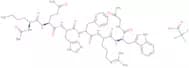
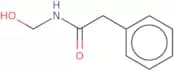
CAS:<p>Please enquire for more information about N-Acetyl-L-norleucyl-L-glutaminyl-L-histidyl-D-phenylalanyl-L-arginyl-D-tryptophylglycinamide including the price, delivery time and more detailed product information at the technical inquiry form on this page</p>Formula:C47H65N15O9Purity:Min. 95%Molecular weight:984.11 g/molN-(Hydroxymethyl)-phenylacetamide
CAS:<p>N-(Hydroxymethyl)-phenylacetamide is an organic solvent that is used in the synthesis of certain antibiotics. It is a synthetic compound and can be obtained by reacting toluene with benzene, using a strong acid catalyst such as sulfuric acid. N-(Hydroxymethyl)-phenylacetamide has been used in the synthesis of isoquinolones, which are also antibiotics. This organic solvent can also be used for recrystallization, which is a process that helps purify solids from liquids or liquids from solids. The yield of this reaction is high, making it an efficient way to synthesize these compounds.</p>Formula:C9H11NO2Purity:Min. 95%Molecular weight:165.19 g/molPAR-2 (1-6) amide (human) trifluoroacetate salt
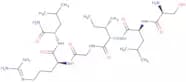
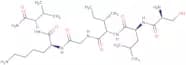
CAS:<p>PAR-2 (1-6) amide (human) trifluoroacetate salt H-Ser-Leu-Ile-Gly-Lys-Val-NH2 trifluoroacetate salt is a protease inhibitor that inhibits the activity of PAR2, a protein receptor. PAR2 is implicated in cancer and inflammation. It has been shown to inhibit growth factor signaling, as well as activate toll-like receptor 4 and other inflammatory pathways. PAR2 inhibition has also been studied in vivo and found to be effective in treating wild type mice with melanoma cells. In vitro studies have shown that PAR2 inhibition by PAR 2 (1-6) amide (human) trifluoroacetate salt H-Ser-Leu-Ile-Gly-Lys-Val NH2 trifluoroacetate salt blocks the production of tumour necrosis factor alpha and interleukin 6.</p>Formula:C28H54N8O7Purity:Min. 95%Molecular weight:614.78 g/mol(D-Ala2)-GRF (1-29) amide (human)
CAS:<p>Please enquire for more information about (D-Ala2)-GRF (1-29) amide (human) including the price, delivery time and more detailed product information at the technical inquiry form on this page</p>Formula:C149H246N44O42SPurity:Min. 95%Molecular weight:3,357.88 g/mol(D-Trp6)-LHRH (1-6) amide
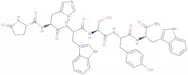
CAS:<p>Please enquire for more information about (D-Trp6)-LHRH (1-6) amide including the price, delivery time and more detailed product information at the technical inquiry form on this page</p>Formula:C45H49N11O9Purity:Min. 95%Molecular weight:887.94 g/molLeu-Enkephalin amide acetate salt
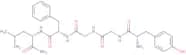
CAS:<p>Leu-Enkephalin amide acetate salt H-Tyr-Gly-Gly-Phe-Leu-NH2 acetate salt is a peptide that is used as an analgesic and antipyretic drug. It is a synthetic form of endogenous enkephalins, which are natural pain relievers. The chemical stability of Leu-Enkephalin amide acetate salt H-Tyr-Gly-Gly-Phe-Leu-NH2 acetate salt makes it an effective drug for chronic use, and it has been shown to have a low side effect profile. This compound also has been shown to block the synthesis of histamine in vivo, but its bioavailability in vivo is not high due to its rapid degradation by proteases.</p>Formula:C28H38N6O6Purity:Min. 95%Color and Shape:PowderMolecular weight:554.64 g/molN-(1-Adamantyl)-acetamide
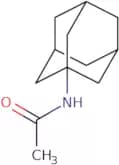
CAS:<p>Adamantane is a cyclic hydrocarbon with 18 carbon atoms. It is a colorless, crystalline compound that is soluble in organic solvents. Adamantane has been used as an anti-influenza drug for the treatment of pandemic influenza. Adamantane binds to the virus and inhibits its ability to bind to the host cell surface receptor, preventing viral entry into the cell. Adamantane has been shown to be effective against both influenza A and B viruses in animal studies. Adamantane also has an inhibitory effect on amine metabolism and aryl halide reactions, which may be due to its hydrogen bond forming abilities.</p>Purity:Min. 95%Color and Shape:PowderMolecular weight:193.29 g/molLeptin (116-130) amide (mouse) trifluoroacetate salt
CAS:<p>Amide; Trifluoroacetate salt</p>Formula:C64H109N19O24SPurity:Min. 95%Molecular weight:1,560.73 g/mol4-Biphenylac-Cys(Me)-D-Arg-Phe-(2-phenylethyl)amide
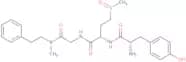
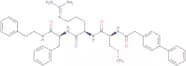
CAS:<p>4-Biphenylac-Cys(Me)-D-Arg-Phe-(2-phenylethyl)amide is a tetrapeptide that has been shown to have antihypertensive properties. This drug binds to the regulatory proteins of the renin angiotensin system and blocks the production of angiotensin II, which decreases blood pressure. 4-Biphenylac-Cys(Me)-D-Arg-Phe-(2-phenylethyl)amide has also shown to be an effective treatment for skin care products, especially those used for inflammatory skin diseases. 4-Biphenylac-Cys(Me)-D-Arg-Phe-(2-phenylethyl)amide has been shown to be a potent inhibitor of serine proteases and can inhibit cellular proliferation and induce apoptosis in cancer cells.</p>Formula:C41H49N7O4SPurity:Min. 95%Molecular weight:735.94 g/mol(Deamino-Cys3, Nle 4,Arg5,D-2-Nal 7,Cys11)-a-MSH (3-11) amide trifluoroacetate salt
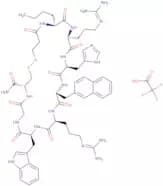
CAS:<p>Please enquire for more information about (Deamino-Cys3, Nle 4,Arg5,D-2-Nal 7,Cys11)-a-MSH (3-11) amide trifluoroacetate salt including the price, delivery time and more detailed product information at the technical inquiry form on this page</p>Formula:C56H76N18O9S2Purity:Min. 95%Molecular weight:1,209.45 g/mol(Nle 27)-GRF (1-29) amide (human)
CAS:<p>Please enquire for more information about (Nle 27)-GRF (1-29) amide (human) including the price, delivery time and more detailed product information at the technical inquiry form on this page</p>Formula:C150H248N44O42Purity:Min. 95%Molecular weight:3,339.85 g/molAbz-Ala-Gly-Leu-Ala-p-nitrobenzylamide
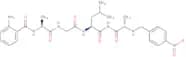
CAS:<p>Benzamidine is a benzamidase inhibitor that competitively binds to bacterial enzymes such as metalloendopeptidases and matrix metalloproteinases. It inhibits the degradation of collagen, resulting in a higher concentration of soluble extract. This drug also has an effect on spermatozoa, which may be due to its ability to inhibit bacterial enzymes that are involved with uptake and preload. Benzamidine has been shown to have a pH optimum of 8-9 and is most active at this pH range.</p>Formula:C28H37N7O7Purity:Min. 95%Molecular weight:583.64 g/molMetorphamide (free acid)
CAS:<p>Please enquire for more information about Metorphamide (free acid) including the price, delivery time and more detailed product information at the technical inquiry form on this page</p>Formula:C44H68N14O10SPurity:Min. 95%Molecular weight:985.17 g/mol3-[[[2-[(Aminoiminomethyl)amino]-4-thiazolyl]methyl]sulfinyl]-N-(aminosulfonyl)propanamide
CAS:<p>Please enquire for more information about 3-[[[2-[(Aminoiminomethyl)amino]-4-thiazolyl]methyl]sulfinyl]-N-(aminosulfonyl)propanamide including the price, delivery time and more detailed product information at the technical inquiry form on this page</p>Formula:C8H14N6O4S3Purity:Min. 95%Molecular weight:354.43 g/mol


![5-Fmoc-amino-10,11-dihydro-5H-dibenzo[a,d]-cycloheptenyl-2-oxyacetyl-DL-Nle-4- methyl-benzhydrylam…](/_next/image/?url=https%3A%2Fstatic.cymitquimica.com%2Fproducts%2F3D%2Fthumb-webp%2FFT111711.webp&w=3840&q=75)




![3-[[[2-[(Aminoiminomethyl)amino]-4-thiazolyl]methyl]sulfinyl]-N-(aminosulfonyl)propanamide](/_next/image/?url=https%3A%2Fstatic.cymitquimica.com%2Fproducts%2F3D%2Fthumb-webp%2FFA21487.webp&w=3840&q=75)