Amides
Amides are a wide range of chemical compounds that contain at least one heterocyclic ring, which has atoms of at least two different elements in the ring structure, and at least one amide group (-CONH2). These compounds are crucial in the synthesis of pharmaceuticals, polymers, and agrochemicals. Amides exhibit unique properties and reactivity, making them valuable intermediates in organic synthesis. At CymitQuimica, we offer a comprehensive selection of high-quality amides to support your research and industrial needs.
Found 16485 products of "Amides"
Sort by
Purity (%)
0
100
|
0
|
50
|
90
|
95
|
100
2-Chloro-N-[2-(diethylamino)ethyl]-4-quinolinecarboxamide
CAS:<p>2-Chloro-N-[2-(diethylamino)ethyl]-4-quinolinecarboxamide is a carboxamide analog of dibucaine. It is synthesized from chloroacetyl chloride and isatin in the presence of sodium hydroxide. The synthesis has been scaled to an industrial level. 2-Chloro-N-[2-(diethylamino)ethyl]-4-quinolinecarboxamide has been shown to have analgesic properties, similar to those of dibucaine. Radiolysis of this compound gives a carboxylic acid and a heterocyclic ring product.</p>Formula:C16H20ClN3OPurity:95%MinColor and Shape:PowderMolecular weight:305.8 g/molMidodrine
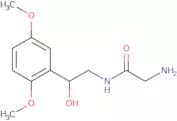
CAS:Controlled Product<p>2-Amino-N-[2-(2,5-dimethoxyphenyl)-2-hydroxyethyl]-acetamide is a drug that has been used to treat a variety of diseases and conditions. It is an alpha adrenergic agonist that works by stimulating the alpha receptors in the body, which increase blood pressure and improve blood flow. This drug also has significant effects on energy metabolism, including the production of ATP. 2-Amino-N-[2-(2,5-dimethoxyphenyl)-2-hydroxyethyl]-acetamide is used to treat patients with congestive heart failure who are taking low doses of midodrine hydrochloride or nonsteroidal antiinflammatory drugs.</p>Formula:C12H18N2O4Purity:Min. 95%Color and Shape:PowderMolecular weight:254.28 g/mol(D-Arg2,Lys4)-Dermorphin (1-4) amide
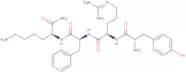
CAS:<p>Dermorphin is a neuropeptide that has been shown to reduce cortisol levels in badgers and has been shown to have biological activity in vitro. Dermorphin also has a number of pharmacokinetic properties, including water solubility, lipid solubility, and oral bioavailability. The drug binds to δ receptors and inhibits the enzyme activities of rat liver microsomes. Dermorphin is used as an analgesic for bowel disease, such as inflammatory bowel disease or hypogaea. Dermorphin has antinociceptive properties (pain-relieving).</p>Formula:C30H45N9O5Purity:Min. 95%Molecular weight:611.74 g/molLHRH (1-6) amide Pyr-His-Trp-Ser-Tyr-Gly-NH2
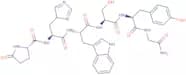
CAS:<p>Please enquire for more information about LHRH (1-6) amide Pyr-His-Trp-Ser-Tyr-Gly-NH2 including the price, delivery time and more detailed product information at the technical inquiry form on this page</p>Formula:C36H42N10O9Purity:Min. 95%Molecular weight:758.78 g/molPAR-3 (1-6) amide (mouse) trifluoroacetate salt
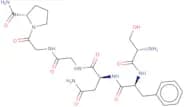
CAS:<p>Please enquire for more information about PAR-3 (1-6) amide (mouse) trifluoroacetate salt including the price, delivery time and more detailed product information at the technical inquiry form on this page</p>Formula:C25H36N8O8Purity:Min. 95%Molecular weight:576.6 g/molN-(3-Dimethylaminopropyl)acrylamide, stabilized with MEHQ
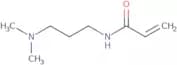
CAS:<p>N-(3-Dimethylaminopropyl)acrylamide is a polymerization initiator that is used in the synthesis of polymers. It is also a model protein, which can be used to study bacterial growth rates and tissue metabolism. N-(3-Dimethylaminopropyl)acrylamide has been shown to have biological properties similar to human serum, as well as to serve as a model for primary cells. The FT-IR spectroscopy of N-(3-Dimethylaminopropyl)acrylamide reveals the presence of chloride ions in its molecular structure. The reaction mechanism for this compound has been determined by deionized water and ionic reactions with chloride ions.</p>Formula:C8H16N2OPurity:Min. 95%Molecular weight:156.23 g/mol(Nle 8·18,Tyr34)-pTH (7-34) amide (bovine)
CAS:<p>Please enquire for more information about (Nle 8·18,Tyr34)-pTH (7-34) amide (bovine) including the price, delivery time and more detailed product information at the technical inquiry form on this page</p>Formula:C158H248N48O49Purity:Min. 95%Molecular weight:3,603.95 g/molDnp-(Leu421)-Collagen Type VIII a1 Chain (419-426) amide (human, mouse) trifluoroacetate salt
<p>Please enquire for more information about Dnp-(Leu421)-Collagen Type VIII a1 Chain (419-426) amide (human, mouse) trifluoroacetate salt including the price, delivery time and more detailed product information at the technical inquiry form on this page</p>Formula:C40H64N14O12SPurity:Min. 95%Molecular weight:965.09 g/molDynorphin A (1-10) amide
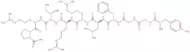
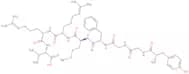
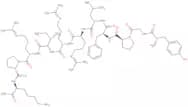
CAS:<p>Dynorphin A (1-10) amide H-Tyr-Gly-Gly-Phe-Leu-Arg-Arg-Ile-Arg-Pro-NH2 is an analog of dynorphin A. It is a peptide that has been shown to be effective in reducing blood pressure and stress levels in animals. Dynorphin A (1-10) amide H-Tyr-Gly-Gly-Phe-Leu-Arg - Arg - Ile - Arg - Pro - NH2 also has analgesic properties and may be useful for the treatment of cardiac diseases.</p>Formula:C57H92N20O11Purity:Min. 95%Molecular weight:1,233.47 g/molMetorphamide (free acid)
CAS:<p>Please enquire for more information about Metorphamide (free acid) including the price, delivery time and more detailed product information at the technical inquiry form on this page</p>Formula:C44H68N14O10SPurity:Min. 95%Molecular weight:985.17 g/molGalanin Message Associated Peptide (44-59) amide
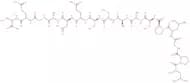
CAS:<p>Please enquire for more information about Galanin Message Associated Peptide (44-59) amide including the price, delivery time and more detailed product information at the technical inquiry form on this page</p>Formula:C61H100N18O25Purity:Min. 95%Molecular weight:1,485.55 g/mol4-Methylsalicylamide
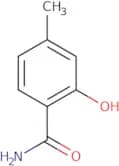
CAS:<p>4-Methylsalicylamide is a chemical compound that belongs to the class of isonicotinic amides. It is a potent anti-inflammatory agent with minimal inhibitory concentration (MIC) values of 4 µg/mL for gram-positive bacteria and 8 µg/mL for gram-negative bacteria. This compound has been shown to be effective against methicillin-resistant Staphylococcus aureus (MRSA) and Clostridium perfringens, although is not active against acid-fast bacteria such as Mycobacterium tuberculosis or Mycobacterium avium complex. 4-Methylsalicylamide has been shown to have an inhibitory effect on ring-opening, which may be due to its ability to acetylate mitochondrial membranes, altering the membrane potential. The molecular modeling studies also showed that 4MSAM binds at the same site as antibiotics such as penicillin and erythromycin in bacterial ribos</p>Formula:C8H9NO2Purity:Min. 95%Color and Shape:PowderMolecular weight:151.16 g/molN-Des(2-diethylamino) metoclopramide acetic acid
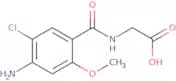
CAS:<p>N-Des(2-diethylamino) metoclopramide acetic acid is a benzyl ester of metoclopramide, a prodrug that is metabolized to the active form in the body. It has been shown to be effective against healthy human subjects and hplc analyses of biological samples have shown it to be a metabolite of metoclopramide. N-Des(2-diethylamino) metoclopramide acetic acid is used as a catalyst for catalytic hydrogenation reactions, such as the conversion of methyl esters into ethyl or butyl esters. It can also be used for catalytic hydrogenation reactions with diazomethane, such as those required for the synthesis of quinolones.</p>Formula:C10H11ClN2O4Purity:Min. 95%Molecular weight:258.66 g/mol(Pro3)-Dynorphin A (1-11) amide trifluoroacetate salt
CAS:<p>Please enquire for more information about (Pro3)-Dynorphin A (1-11) amide trifluoroacetate salt including the price, delivery time and more detailed product information at the technical inquiry form on this page</p>Formula:C66H108N22O12Purity:Min. 95%Molecular weight:1,401.7 g/molN-[2-[(2-Bromo-4,6-dinitrophenyl)azo]-5-(diethylamino)phenyl]acetamide
CAS:N-2-[(2-bromo-4,6-dinitrophenyl)azo]-5-(diethylamino)phenyl]acetamide (NBDPA) is a yellowish solid that is soluble in water. It has a molecular weight of 308.3 and chemical formula C14H21BrN2O4. NBDPA is used as an analytical reagent for the kinetic data of liver cells and in wastewater treatment. This compound has been shown to exhibit carcinogenic potential in rats, causing genetic damage to the DNA of liver cells and kidney tissue. NBDPA has also been shown to be toxic to fish embryos and larvae, with significant effects on the development of larvae at high concentrations.Formula:C18H19BrN6O5Purity:90%MinMolecular weight:479.28 g/molpTH-Related Protein (1-34) amide (human, mouse, rat) trifluoroacetate salt
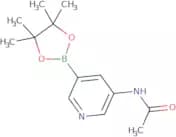
CAS:<p>Parathyroid hormone-related protein (PTHrP) is a peptide hormone produced by the parathyroid gland that functions as a phosphatase, inhibiting alkaline phosphatase. It also has an inhibitory effect on osteoclastic bone resorption and stimulates osteoblastic bone formation. PTHrP has been shown to be useful in treating osteoporosis and Paget's disease. It also has been used in conjunction with dexamethasone to treat patients with malignancies of the head and neck. PTHrP is an inhibitor of protein kinase A and phosphodiesterases, which are enzymes that regulate cellular processes such as proliferation and differentiation.</p>Formula:C180H288N58O47Purity:Min. 95%Molecular weight:4,016.58 g/molN-(5-(4,4,5,5-Tetramethyl-1,3,2-dioxaborolan-2-yl)pyridin-3-yl)acetamide
CAS:<p>Please enquire for more information about N-(5-(4,4,5,5-Tetramethyl-1,3,2-dioxaborolan-2-yl)pyridin-3-yl)acetamide including the price, delivery time and more detailed product information at the technical inquiry form on this page</p>Formula:C13H19BN2O3Purity:Min. 95%Molecular weight:262.11 g/molAcetyl-(Pro18,Asp21)-Amyloid b-Protein (17-21) amide
CAS:<p>Acetyl-(Pro18,Asp21)-Amyloid b-Protein (17-21) amide is a peptide that was generated by incubating β-amyloid with the protease papain. This peptide has been shown to induce population and biochemical changes in cells, including focusing of β-amyloid aggregates. It also induces reactive oxygen species and promotes extracellular protofibril formation. Acetyl-(Pro18,Asp21)-Amyloid b-Protein (17-21) amide is a conjugate of acetylated lysine residues and amyloid β-protein that can be used as an anti-amyloid therapeutic. The peptide is characterized by dichroism spectroscopy, which has revealed its specific binding to the fibrils' surface.</p>Formula:C35H46N6O8Purity:Min. 95%Molecular weight:678.78 g/molDynorphin A (1-11) amide trifluoroacetate salt
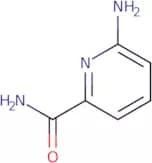
CAS:<p>Dynorphin A (1-11) amide trifluoroacetate salt is a modified form of the opioid peptide dynorphin, which is a natural ligand for kappa-opioid receptors. It has affinity for the surface receptors and can be used to study the modifications that occur in cell function. Dynorphin A (1-11) amide trifluoroacetate salt has been shown to decrease cell function when it interacts with these surface receptors, which are found in brain homogenates and other tissues. Dynorphin A (1-11) amide trifluoroacetate salt also has an effect on brain cells, which may be due to its ability to alter conformational changes in proteins by binding to them. This can lead to alterations in the structure of certain enzymes or receptor proteins.</p>Formula:C63H104N22O12Purity:Min. 95%Molecular weight:1,361.64 g/mol6-Aminopicolinamide
CAS:<p>6-Aminopicolinamide is a metabolite of nicotinamide, which can be found in the urine of humans and animals. 6-Aminopicolinamide has been shown to have anti-leukemic activity against experimental leukemias in animals. The mechanism of action is not well understood but may involve inhibition of nucleotide synthesis or the inhibition of dehydrogenase activity. Clinical trials are underway to determine its efficacy as an anti-tumor agent.</p>Formula:C6H7N3OPurity:Min. 95%Molecular weight:137.14 g/mol
![2-Chloro-N-[2-(diethylamino)ethyl]-4-quinolinecarboxamide](/_next/image/?url=https%3A%2Fstatic.cymitquimica.com%2Fproducts%2F3D%2Fthumb-webp%2FFC20289.webp&w=3840&q=75)



![N-[2-[(2-Bromo-4,6-dinitrophenyl)azo]-5-(diethylamino)phenyl]acetamide](/_next/image/?url=https%3A%2Fstatic.cymitquimica.com%2Fproducts%2F3D%2Fthumb-webp%2FFB151321.webp&w=3840&q=75)