Amides
Amides are a wide range of chemical compounds that contain at least one heterocyclic ring, which has atoms of at least two different elements in the ring structure, and at least one amide group (-CONH2). These compounds are crucial in the synthesis of pharmaceuticals, polymers, and agrochemicals. Amides exhibit unique properties and reactivity, making them valuable intermediates in organic synthesis. At CymitQuimica, we offer a comprehensive selection of high-quality amides to support your research and industrial needs.
Found 16399 products of "Amides"
Sort by
Purity (%)
0
100
|
0
|
50
|
90
|
95
|
100
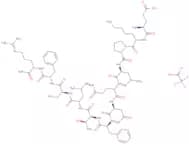
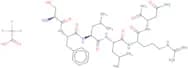
Amyloid P Component (27-38) amide trifluoroacetate salt
CAS:<p>Please enquire for more information about Amyloid P Component (27-38) amide trifluoroacetate salt including the price, delivery time and more detailed product information at the technical inquiry form on this page</p>Formula:C68H107N19O17SPurity:Min. 95%Molecular weight:1,494.76 g/molGlibenclamide
CAS:<p>ATP-sensitive K+ channel blocker</p>Formula:C23H28ClN3O5SPurity:Min. 98 Area-%Color and Shape:White PowderMolecular weight:494 g/molTRAP-5 amide trifluoroacetate salt
CAS:<p>Please enquire for more information about TRAP-5 amide trifluoroacetate salt including the price, delivery time and more detailed product information at the technical inquiry form on this page</p>Formula:C30H51N9O6Purity:Min. 95%Molecular weight:633.78 g/mol(2R)-2-Aminopropanamide
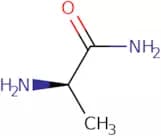
CAS:<p>(2R)-2-Aminopropanamide is a chemical compound that is classified as an amide. It has been shown to inhibit bacterial growth and induce apoptosis in mammalian cells, but not in bacteria. This drug has a number of hydrogen bonding interactions with the carbonyl group and amide functional groups and can bind to affinity ligands with hydrogen bonding interactions. (2R)-2-Aminopropanamide inhibits the activity of enzymes that are involved in the synthesis of d-alanine, which is a precursor for protein synthesis. It also inhibits the enzyme glutamine synthase, which plays a key role in building up nitrogen reserves in bacteria. The drug binds to DNA by forming hydrogen bonds with the phosphate backbone and intercalates into double-stranded DNA by forming van der Waals interactions with base pairs.</p>Formula:C3H8N2OPurity:Min. 95%Molecular weight:88.11 g/mol(Deamino-Cys3, Nle 4,Arg5,D-2-Nal 7,Cys11)-a-MSH (3-11) amide trifluoroacetate salt
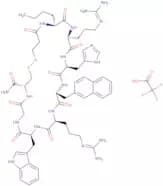
CAS:<p>Please enquire for more information about (Deamino-Cys3, Nle 4,Arg5,D-2-Nal 7,Cys11)-a-MSH (3-11) amide trifluoroacetate salt including the price, delivery time and more detailed product information at the technical inquiry form on this page</p>Formula:C56H76N18O9S2Purity:Min. 95%Molecular weight:1,209.45 g/molOsteostatin amide trifluoroacetate
CAS:<p>Please enquire for more information about Osteostatin amide trifluoroacetate including the price, delivery time and more detailed product information at the technical inquiry form on this page</p>Formula:C142H229N43O57•(C2HF3O2)xPurity:Min. 95%Molecular weight:3,450.59 g/mol2-Amino-5-chloro-N,3-dimethylbenzamide
CAS:<p>2-Amino-5-chloro-N,3-dimethylbenzamide is a synthetic compound. It has been shown to induce necrotic cell death in mammalian cells. This compound was synthesized by the reaction of 2-aminoquinoline with a Grignard reagent, followed by nitration of the resultant amine. The synthesis of this compound was thermodynamically favorable and exhibited good solubility in water. The chlorantraniliprole and anthranilic acid moieties are activated with an acylation reaction, which allows them to bind to the ryanodine receptor and inhibit calcium release from the sarcoplasmic reticulum (SR) with ammonolysis. This inhibition leads to ferroptosis, a type of programmed necrosis.</p>Formula:C9H11ClN2OPurity:Min. 95%Color and Shape:PowderMolecular weight:198.65 g/molGastric Inhibitory Polypeptide (6-30) amide (human) trifluoroacetate salt
CAS:<p>Please enquire for more information about Gastric Inhibitory Polypeptide (6-30) amide (human) trifluoroacetate salt including the price, delivery time and more detailed product information at the technical inquiry form on this page</p>Formula:C139H209N35O38SPurity:Min. 95%Molecular weight:3,010.43 g/molβ-Casomorphin (1-3) amide acetate salt
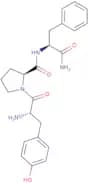
CAS:<p>Beta-casomorphin (1-3) amide acetate salt (BCMA) is a peptide that belongs to the class of opioid compounds. It is an amino acid and has been shown to be a potent agonist at opioid receptors. BCMA is used in vivo as a tritiated ligand for mapping the distribution of opioid receptors in rat brain. The affinity of BCMA for opioid receptors increases with dose, and its antinociceptive effects are dose-dependent. Beta-casomorphin (1-3) amide acetate salt has also been shown to have affinity for enkephalins, which are naturally occurring peptides that bind to opioid receptors.</p>Formula:C23H28N4O4Purity:Min. 95%Molecular weight:424.49 g/molpTH (1-34) amide (human) trifluoroacetate salt
CAS:<p>Parathyroid hormone (PTH) is a peptide hormone that regulates calcium and phosphate balance in the body. PTH is secreted by the parathyroid glands, located near the thyroid gland in the neck. It is also known as parathormone or parathyrin. The active form of PTH, called pTH (1-34) amide, has been shown to stimulate bone resorption and to inhibit bone formation. The amino acid sequence of this hormone starts with arginine and ends with phenylalanine. The N-terminal amino acid residue is an aspartic acid or asparagine and histidine is the only basic residue in this molecule. This molecule has two acidic residues, glutamic acid and aspartic acid, which are found on the side chains of two amino acids: aspartic acid and glutamic acid. Valine is found at position 3 and phenylalanine at position 34.</p>Formula:C181H292N56O50S2Purity:Min. 95%Molecular weight:4,116.73 g/molN-(1-Adamantyl)-acetamide
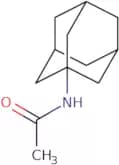
CAS:<p>Adamantane is a cyclic hydrocarbon with 18 carbon atoms. It is a colorless, crystalline compound that is soluble in organic solvents. Adamantane has been used as an anti-influenza drug for the treatment of pandemic influenza. Adamantane binds to the virus and inhibits its ability to bind to the host cell surface receptor, preventing viral entry into the cell. Adamantane has been shown to be effective against both influenza A and B viruses in animal studies. Adamantane also has an inhibitory effect on amine metabolism and aryl halide reactions, which may be due to its hydrogen bond forming abilities.</p>Purity:Min. 95%Color and Shape:PowderMolecular weight:193.29 g/molTyr-Amyloid P Component (27-38) amide trifluoroacetate salt
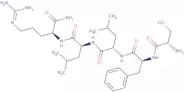
CAS:<p>Please enquire for more information about Tyr-Amyloid P Component (27-38) amide trifluoroacetate salt including the price, delivery time and more detailed product information at the technical inquiry form on this page</p>Formula:C77H116N20O19SPurity:Min. 95%Molecular weight:1,657.93 g/molTRAP-6 amide trifluoroacetate salt
CAS:<p>Protease-activated receptor 1 (PAR-1) selective activating peptide, TFA salt. 98%.</p>Formula:C34H57N11O8Purity:Min. 95%Color and Shape:PowderMolecular weight:747.89 g/molMet-Enkephalin-Arg-Phe amide
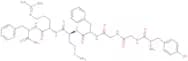
CAS:<p>Met-Enkephalin-Arg-Phe amide H-Tyr-Gly-Gly-Phe-Met-Arg-Phe is a subunit of the endogenous opioid peptide Met-enkephalin. It is a proteolytic cleavage product of proenkephalin A and is also known as Tyr2, Phe2, or Arg6. Met-enkephalin has been shown to participate in signal transduction pathways that regulate blood pressure and exocrine secretion. Metenkephalin is an amide containing two cysteine residues with a hydrophobic side chain, which can bind metal ions such as calcium ions. Metenkephalin binds to the membrane of cells, altering membrane potential and naloxone binding sites.<br>Met enkephalin has been shown to be involved in serotonin release from platelets and inhibition of serotonin uptake by platelets.</p>Formula:C42H57N11O8SPurity:Min. 95%Molecular weight:876.04 g/molDynorphin A (1-11) amide trifluoroacetate salt
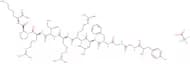
CAS:<p>Dynorphin A (1-11) amide trifluoroacetate salt is a modified form of the opioid peptide dynorphin, which is a natural ligand for kappa-opioid receptors. It has affinity for the surface receptors and can be used to study the modifications that occur in cell function. Dynorphin A (1-11) amide trifluoroacetate salt has been shown to decrease cell function when it interacts with these surface receptors, which are found in brain homogenates and other tissues. Dynorphin A (1-11) amide trifluoroacetate salt also has an effect on brain cells, which may be due to its ability to alter conformational changes in proteins by binding to them. This can lead to alterations in the structure of certain enzymes or receptor proteins.</p>Formula:C63H104N22O12Purity:Min. 95%Molecular weight:1,361.64 g/molChorionic Gonadotropin-β (109-119) amide (human)
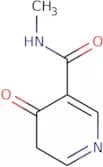
CAS:<p>Please enquire for more information about Chorionic Gonadotropin-beta (109-119) amide (human) including the price, delivery time and more detailed product information at the technical inquiry form on this page</p>Formula:C50H76N16O21SPurity:Min. 95%Molecular weight:1,269.3 g/molN-Methyl-4-oxo-4,5-dihydropyridine-3-carboxamide
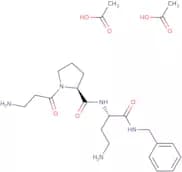
CAS:<p>N-Methyl-4-oxo-4,5-dihydropyridine-3-carboxamide is a fine chemical that can be used as a reagent or intermediate. It is a versatile building block that can be used in the production of useful scaffolds or useful intermediates. This compound has been shown to react with many different types of chemicals, including alcohols and amines. N-Methyl-4-oxo-4,5-dihydropyridine-3-carboxamide can also be used as a reaction component in the synthesis of diverse compounds.</p>Formula:C7H8N2O2Purity:Min. 95%Color and Shape:White to grey solid.Molecular weight:152.15 g/mol(2S)-β-Alanyl-L-prolyl-2,4-diamino-N-(phenylmethyl)butanamideacetate
CAS:Controlled Product<p>(2S)-beta-Alanyl-L-prolyl-2,4-diamino-N-(phenylmethyl)butanamideacetate (BAP) is a skin care product that can be applied topically to the skin. BAP is an amino acid derivative that has been shown in clinical studies to hydrate the skin. It acts as a humectant and binds to water molecules, thus increasing the moisture content of the skin. This product also has antioxidant and anti-inflammatory properties, as well as anti-aging effects. BAP is often used in cosmetic products for its film forming properties and ability to form polymeric films on the surface of cells.</p>Formula:C21H33N5O5Purity:Min. 95%Molecular weight:435.52 g/molPep-1-cysteamide trifluoroacetate salt
CAS:<p>Please enquire for more information about Pep-1-cysteamide trifluoroacetate salt including the price, delivery time and more detailed product information at the technical inquiry form on this page</p>Formula:C140H202N36O33SPurity:Min. 95%Molecular weight:2,949.39 g/molSorbin (147-153) amide (porcine) trifluoroacetate salt
CAS:<p>Please enquire for more information about Sorbin (147-153) amide (porcine) trifluoroacetate salt including the price, delivery time and more detailed product information at the technical inquiry form on this page</p>Formula:C33H58N10O9Purity:Min. 95%Molecular weight:738.88 g/mol