Amides
Amides are a wide range of chemical compounds that contain at least one heterocyclic ring, which has atoms of at least two different elements in the ring structure, and at least one amide group (-CONH2). These compounds are crucial in the synthesis of pharmaceuticals, polymers, and agrochemicals. Amides exhibit unique properties and reactivity, making them valuable intermediates in organic synthesis. At CymitQuimica, we offer a comprehensive selection of high-quality amides to support your research and industrial needs.
Found 16401 products of "Amides"
Sort by
Purity (%)
0
100
|
0
|
50
|
90
|
95
|
100
N-Hydroxy-2-phenyl-acetamide
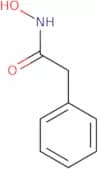
CAS:<p>N-Hydroxy-2-phenyl-acetamide is a metalloprotease inhibitor that binds to the active site of the enzyme, thereby preventing it from binding with its natural substrate. This drug has been shown to inhibit the production of TNF-α in mice with autoimmune diseases and may be able to inhibit other proinflammatory mediators. N-Hydroxy-2-phenyl-acetamide has been shown to bind to a water molecule and an aliphatic hydrocarbon in order to form a hydrogen bond. This coordination complex inhibits the activity of matrix metalloproteinases, which are enzymes that break down collagen, elastin, and other proteins in the extracellular matrix. N-Hydroxy-2-phenyl-acetamide is not active against acid complexes or tnfα.</p>Formula:C8H9NO2Purity:Min. 95%Color and Shape:White Yellow PowderMolecular weight:151.16 g/mol1-(2-Fluorobenzyl)-1H-pyrazolo[3,4-b]pyridine-3-carboximidamide hydrochloride
CAS:Controlled Product<p>Please enquire for more information about 1-(2-Fluorobenzyl)-1H-pyrazolo[3,4-b]pyridine-3-carboximidamide hydrochloride including the price, delivery time and more detailed product information at the technical inquiry form on this page</p>Formula:C14H12FN5•HClPurity:Min. 95%Color and Shape:PowderMolecular weight:305.74 g/molDnp-(Leu421)-Collagen Type VIII a1 Chain (419-426) amide (human, mouse) trifluoroacetate salt
<p>Please enquire for more information about Dnp-(Leu421)-Collagen Type VIII a1 Chain (419-426) amide (human, mouse) trifluoroacetate salt including the price, delivery time and more detailed product information at the technical inquiry form on this page</p>Formula:C40H64N14O12SPurity:Min. 95%Molecular weight:965.09 g/molPAR-2 (1-6) amide (human) (scrambled) trifluoroacetate salt
CAS:<p>Please enquire for more information about PAR-2 (1-6) amide (human) (scrambled) trifluoroacetate salt including the price, delivery time and more detailed product information at the technical inquiry form on this page</p>Formula:C28H54N8O7Purity:Min. 95%Molecular weight:614.78 g/molSyndyphalin SD-33
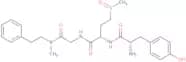
CAS:<p>Please enquire for more information about Syndyphalin SD-33 including the price, delivery time and more detailed product information at the technical inquiry form on this page</p>Formula:C25H34N4O5SPurity:Min. 95%Molecular weight:502.63 g/mol(S)-2-Aminobutyramide hydrochloride
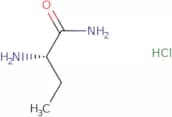
CAS:(S)-2-Aminobutyramide hydrochloride is a chiral amide compound, which is utilized primarily in scientific research settings. This compound is typically synthesized through the resolution of racemic mixtures or other specialized chemical processes that ensure the purity and stereospecificity required for research purposes.The mode of action of (S)-2-Aminobutyramide hydrochloride revolves around its role as an intermediate in chemical synthesis, serving as a building block for the production of more complex molecules. It has a noteworthy chiral configuration, which makes it an essential component in the formation of enantiomerically pure substances. This aspect is crucial in fields like pharmaceuticals, where stereochemistry can significantly impact biological activity.Its applications extend to various domains such as the synthesis of therapeutic agents, biochemical research, and the development of novel materials. Researchers value it for its ability to contribute to the fine-tuning of molecular assemblies, making it indispensable in studies focused on the interaction and function of chiral molecules. The hydrochloride form aids in its stability and solubility, which are important attributes for laboratory manipulation and experimentation.Formula:C4H10N2O•HClPurity:Min. 95%Color and Shape:White PowderMolecular weight:138.6 g/mol(Tyr36)-pTH-Related Protein (1-36) amide (chicken)
CAS:<p>Please enquire for more information about (Tyr36)-pTH-Related Protein (1-36) amide (chicken) including the price, delivery time and more detailed product information at the technical inquiry form on this page</p>Formula:C184H301N57O55Purity:Min. 95%Molecular weight:4,191.71 g/molOsteostatin amide trifluoroacetate
CAS:<p>Please enquire for more information about Osteostatin amide trifluoroacetate including the price, delivery time and more detailed product information at the technical inquiry form on this page</p>Formula:C142H229N43O57•(C2HF3O2)xPurity:Min. 95%Molecular weight:3,450.59 g/molH-Tyr-L-1,2,3,4-tetrahydroisoquinoline-3-carboxamide·HCl
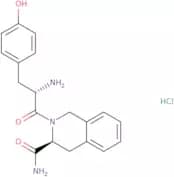
CAS:<p>H-Tyr-L-1,2,3,4-tetrahydroisoquinoline-3-carboxamide·HCl is a monoclinic crystalline compound. It has a molecular weight of 607.14 and contains the dipeptide Tyr-Lys in its structure. H-Tyr-L-1,2,3,4-tetrahydroisoquinoline-3-carboxamide·HCl crystallizes in the P21/c space group and has an asymmetric unit cell with dimensions a=8.851 Å, b=7.965 Å and c=5.98 Å. This compound has been shown to have antibacterial properties against methicillin resistant Staphylococcus aureus (MRSA) isolates and Clostridium perfringens strains by inhibiting bacterial protein synthesis through inhibition of peptidyl transferase activity.</p>Formula:C19H21N3O3·HClPurity:Min. 95%Molecular weight:375.85 g/molHIV-1 env Protein gp41 (1-23) amide (isolates BRU/JRCSF)
CAS:<p>Please enquire for more information about HIV-1 env Protein gp41 (1-23) amide (isolates BRU/JRCSF) including the price, delivery time and more detailed product information at the technical inquiry form on this page</p>Formula:C95H155N27O26SPurity:Min. 95%Molecular weight:2,123.48 g/molPAR-2 (1-6) amide (mouse, rat) trifluoroacetate salt
CAS:<p>PAR-2 agonist is a synthetic peptide that activates PAR-2. It binds to PAR-2 receptors, which are present in the mesenteric vasculature and in various other tissues. Activation of PAR-2 leads to an increase in intracellular calcium concentration, activation of protein kinase C, cytosolic calcium ion release, phosphorylation of myosin light chain, muscle cell proliferation, transcription and translation initiation, and increased production of vasoactive intestinal peptide. This drug also has anti-inflammatory effects and stimulates epidermal growth factor (EGF) and thrombin receptor expression as well as growth factor production.</p>Formula:C29H56N10O7Purity:Min. 95%Molecular weight:656.82 g/molDynorphin A (1-10) amide
CAS:<p>Dynorphin A (1-10) amide H-Tyr-Gly-Gly-Phe-Leu-Arg-Arg-Ile-Arg-Pro-NH2 is an analog of dynorphin A. It is a peptide that has been shown to be effective in reducing blood pressure and stress levels in animals. Dynorphin A (1-10) amide H-Tyr-Gly-Gly-Phe-Leu-Arg - Arg - Ile - Arg - Pro - NH2 also has analgesic properties and may be useful for the treatment of cardiac diseases.</p>Formula:C57H92N20O11Purity:Min. 95%Molecular weight:1,233.47 g/mol(2S)-beta-Alanyl-L-prolyl-2,4-diamino-N-(phenylmethyl)butanamideacetate
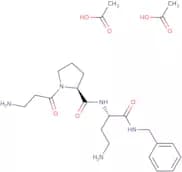
CAS:Controlled Product<p>(2S)-beta-Alanyl-L-prolyl-2,4-diamino-N-(phenylmethyl)butanamideacetate (BAP) is a skin care product that can be applied topically to the skin. BAP is an amino acid derivative that has been shown in clinical studies to hydrate the skin. It acts as a humectant and binds to water molecules, thus increasing the moisture content of the skin. This product also has antioxidant and anti-inflammatory properties, as well as anti-aging effects. BAP is often used in cosmetic products for its film forming properties and ability to form polymeric films on the surface of cells.</p>Formula:C21H33N5O5Purity:Min. 95%Molecular weight:435.52 g/molPhenylacetyl-(D-Arg2·28,p-chloro-Phe6, Homoarg 9·29,Tyr(Me)10, Abu 15, Nle 27)-GRF (1-29) amide (human)
CAS:<p>Please enquire for more information about Phenylacetyl-(D-Arg2·28,p-chloro-Phe6, Homoarg 9·29,Tyr(Me)10, Abu 15, Nle 27)-GRF (1-29) amide (human) including the price, delivery time and more detailed product information at the technical inquiry form on this page</p>Formula:C172H284ClN53O41Purity:Min. 95%Molecular weight:3,785.88 g/molPhenylacetyl-(D-Arg2·28,p-chloro-Phe6,Arg9, Abu 15, Nle 27, Homoarg 29)-GRF (1-29) amide (human)
CAS:Please enquire for more information about Phenylacetyl-(D-Arg2·28,p-chloro-Phe6,Arg9, Abu 15, Nle 27, Homoarg 29)-GRF (1-29) amide (human) including the price, delivery time and more detailed product information at the technical inquiry form on this pageFormula:C170H280ClN53O41Purity:Min. 95%Molecular weight:3,757.83 g/molGRF (1-29) amide (human) acetate salt
CAS:<p>Growth hormone-releasing factor (GRF) is a peptide fragment of amino acids 1–2 from GHRH (growth hormone-releasing hormone). This 1-29 region is the shortest fully functional fragment of GHRH. GRF is also known as sermorelin. Sermorelin binds to the growth hormone-releasing hormone receptor (GHRH-R), and acts as a surrogate for GHRH, causing growth hormone secretion.human: H-YADAIFTNSYRKVLGQLSARKLLQDIMSR-NH2rat: H-HADAIFTSSYRR I LGQLYARKLLHEIMNR-NH2</p>Formula:C149H246N44O42SPurity:Min. 95%Molecular weight:3,357.88 g/molN-(3-Aminopropyl)-2,2,3,3,4,4,5,5,6,6,7,7,8,8,8-pentadecafluorooctanamide
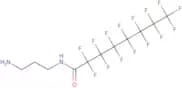
CAS:Controlled Product<p>Please enquire for more information about N-(3-Aminopropyl)-2,2,3,3,4,4,5,5,6,6,7,7,8,8,8-pentadecafluorooctanamide including the price, delivery time and more detailed product information at the technical inquiry form on this page</p>Formula:C11H9F15N2OPurity:Min. 95%Molecular weight:470.18 g/molL-Isoleucine β-naphthylamide
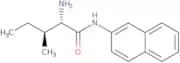
CAS:<p>L-Isoleucine beta-naphthylamide is an amide derivative of L-isoleucine and 2-naphthylamine, which are carboxylic acid derivatives. The condensation of these two substances leads to the formation of a new compound with a carboxy group and an amino group.</p>Formula:C16H20N2OPurity:Min. 95%Molecular weight:256.34 g/molCefpiramide sodium
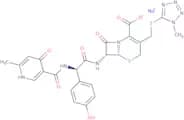
CAS:<p>Cefpiramide sodium is a cephalosporin antibiotic that has been shown to be effective against a wide range of bacteria, including those which are resistant to other antibiotics. Cefpiramide sodium is used for the treatment of skin and soft tissue infections in infants or for the treatment of respiratory tract infections in adults. The antibiotic binds to bacterial cell membranes and inhibits bacterial growth by inhibiting fatty acid synthesis, which is important for the production of cell walls. Cefpiramide sodium has been shown to have antiviral properties as well as antibacterial properties. These effects may be due to its ability to inhibit viral protein synthesis or by binding directly to the virus itself. Cefpiramide Sodium is an anti-infective drug that belongs to a group called cephalosporins, which are antibiotics that inhibit growth of bacteria by binding to their cell walls and preventing them from synthesizing essential fatty acids required for building their cell walls. It also has antiviral properties.</p>Purity:Min. 95%tert-Butylsulfinamide
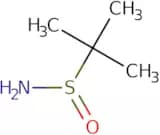
CAS:<p>tert-Butylsulfinamide is a model system for the synthesis of enantiopure amines and esters. The synthesis of tert-butylsulfinamide starts with the reaction of an allyl bromide with a sulfinic acid chloride to form an allyl sulfonate, which is then hydrolyzed to produce tert-butylsulfinamide. The yield for this type of reaction is usually low, but tert-butylsulfinamide can be isolated in good yields if it is prepared in a stereoselective manner. Tert-butylsulfinamide has been shown to inhibit the growth of human hair follicles in cell culture experiments, which may be due to its ability to inhibit the formation of hydrogen peroxide by inhibiting an enzyme called tyrosine hydroxylase.</p>Formula:C4H11NOSPurity:Min. 95%Color and Shape:White PowderMolecular weight:121.2 g/mol

![1-(2-Fluorobenzyl)-1H-pyrazolo[3,4-b]pyridine-3-carboximidamide hydrochloride](/_next/image/?url=https%3A%2Fstatic.cymitquimica.com%2Fproducts%2F3D%2Fthumb-webp%2FFF104255.webp&w=3840&q=75)