Amides
Amides are a wide range of chemical compounds that contain at least one heterocyclic ring, which has atoms of at least two different elements in the ring structure, and at least one amide group (-CONH2). These compounds are crucial in the synthesis of pharmaceuticals, polymers, and agrochemicals. Amides exhibit unique properties and reactivity, making them valuable intermediates in organic synthesis. At CymitQuimica, we offer a comprehensive selection of high-quality amides to support your research and industrial needs.
Found 16485 products of "Amides"
Sort by
Purity (%)
0
100
|
0
|
50
|
90
|
95
|
100
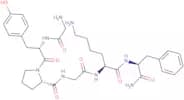
PAR-4 (1-6) amide (mouse) trifluoroacetate salt
CAS:<p>PAR-4 (1-6) amide (mouse) trifluoroacetate salt H-Gly-Tyr-Pro-Gly-Lys-Phe-NH2 trifluoroacetate salt is a guanine nucleotide binding protein that belongs to the PAR family of proteins. It is expressed in wild type mice and binds to the cytosolic calcium, which regulates polymerase chain reaction. PAR-4 (1-6) amide (mouse) trifluoroacetate salt H-Gly-Tyr-Pro-Gly-Lys-Phe NH2 trifluoroacetate salt can be used as a potential drug target for epidermal growth factor. It has been shown to activate transcription polymerase chain and transcriptase polymerase chain during transcriptional regulation of messenger RNA.</p>Formula:C33H46N8O7Purity:Min. 95%Molecular weight:666.77 g/molPAR-2 (1-6) amide (mouse, rat) trifluoroacetate salt
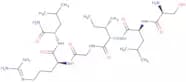
CAS:<p>PAR-2 agonist is a synthetic peptide that activates PAR-2. It binds to PAR-2 receptors, which are present in the mesenteric vasculature and in various other tissues. Activation of PAR-2 leads to an increase in intracellular calcium concentration, activation of protein kinase C, cytosolic calcium ion release, phosphorylation of myosin light chain, muscle cell proliferation, transcription and translation initiation, and increased production of vasoactive intestinal peptide. This drug also has anti-inflammatory effects and stimulates epidermal growth factor (EGF) and thrombin receptor expression as well as growth factor production.</p>Formula:C29H56N10O7Purity:Min. 95%Molecular weight:656.82 g/molN-Hydroxy-2-phenyl-acetamide
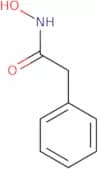
CAS:<p>N-Hydroxy-2-phenyl-acetamide is a metalloprotease inhibitor that binds to the active site of the enzyme, thereby preventing it from binding with its natural substrate. This drug has been shown to inhibit the production of TNF-α in mice with autoimmune diseases and may be able to inhibit other proinflammatory mediators. N-Hydroxy-2-phenyl-acetamide has been shown to bind to a water molecule and an aliphatic hydrocarbon in order to form a hydrogen bond. This coordination complex inhibits the activity of matrix metalloproteinases, which are enzymes that break down collagen, elastin, and other proteins in the extracellular matrix. N-Hydroxy-2-phenyl-acetamide is not active against acid complexes or tnfα.</p>Formula:C8H9NO2Purity:Min. 95%Color and Shape:White Yellow PowderMolecular weight:151.16 g/molAcetyl-L-leucine amide
CAS:<p>Acetyl-L-leucine amide is a drug used to treat symptoms of depression in geriatric patients. It is an amide form of acetyl-L-leucine, which is an amino acid that plays a role in the synthesis of proteins and lipids. Acetyl-L-leucine amide has been shown to have antidepressant effects in geriatric patients with mild to moderate depression. This drug can be used as part of a combination therapy for infectious diseases, such as tuberculosis, when there is no infection or when resistance to other antibiotics has occurred. Acetyl-L-leucine amide has also been shown to be effective against cervical cancer and breast cancer cells. The synthesis of this drug involves two steps: first, reacting L-leucine with acetyl chloride; second, reacting the product with aqueous ammonia solution.</p>Formula:C8H16N2O2Purity:Min. 95%Molecular weight:172.22 g/molN,N-Bis(2-hydroxyethyl)dodecanamide
CAS:<p>N,N-Bis(2-hydroxyethyl)dodecanamide is a surfactant that is used in the treatment of wastewater. It has been shown to be effective at removing p-hydroxybenzoic acid from water and at reducing the concentration of this compound in the environment. N,N-Bis(2-hydroxyethyl)dodecanamide also has antimicrobial properties and synergizes with other antimicrobial agents to provide a more potent effect than when it is used alone. This surfactant has been shown to have an effect on congestive heart failure by blocking the action of angiotensin II receptors.</p>Formula:C16H33NO3Color and Shape:Clear LiquidMolecular weight:287.44 g/molAmyloid b-Protein (1-40) amide trifluoroacetate salt
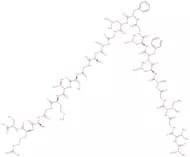
CAS:<p>Please enquire for more information about Amyloid b-Protein (1-40) amide trifluoroacetate salt including the price, delivery time and more detailed product information at the technical inquiry form on this page</p>Formula:C194H296N54O57SPurity:Min. 95%Molecular weight:4,328.82 g/molN,N'-Bis(2-mercaptoethyl)isophthalamide
CAS:N,N'-Bis(2-mercaptoethyl)isophthalamide is a peptide hormone that belongs to the group of imines. It is the active substance in fulminant hepatitis and has been used as a diagnostic agent. It has been shown to increase serum alanine levels and decrease intracellular glutathione levels in the brain. N,N'-Bis(2-mercaptoethyl)isophthalamide has also been used as a pharmaceutical formulation for treatment of liver disease. The dosage ranges from 10 mg/kg to 20 mg/kg body weight per day.Formula:C12H16N2O2S2Purity:Min. 95%Molecular weight:284.4 g/molHIV-1 env Protein gp41 (1-23) amide (isolates BRU/JRCSF)
CAS:<p>Please enquire for more information about HIV-1 env Protein gp41 (1-23) amide (isolates BRU/JRCSF) including the price, delivery time and more detailed product information at the technical inquiry form on this page</p>Formula:C95H155N27O26SPurity:Min. 95%Molecular weight:2,123.48 g/mol(Nle 8·18,Tyr34)-pTH (1-34) amide (bovine) trifluoroacetate salt
CAS:<p>Please enquire for more information about (Nle 8·18,Tyr34)-pTH (1-34) amide (bovine) trifluoroacetate salt including the price, delivery time and more detailed product information at the technical inquiry form on this page</p>Formula:C185H293N55O50Purity:Min. 95%Molecular weight:4,087.65 g/mol2-Amino-5-chloro-N,3-dimethylbenzamide
CAS:<p>2-Amino-5-chloro-N,3-dimethylbenzamide is a synthetic compound. It has been shown to induce necrotic cell death in mammalian cells. This compound was synthesized by the reaction of 2-aminoquinoline with a Grignard reagent, followed by nitration of the resultant amine. The synthesis of this compound was thermodynamically favorable and exhibited good solubility in water. The chlorantraniliprole and anthranilic acid moieties are activated with an acylation reaction, which allows them to bind to the ryanodine receptor and inhibit calcium release from the sarcoplasmic reticulum (SR) with ammonolysis. This inhibition leads to ferroptosis, a type of programmed necrosis.</p>Formula:C9H11ClN2OPurity:Min. 95%Color and Shape:PowderMolecular weight:198.65 g/mol4-Amino-N-(4-methylpyrimidin-2-yl)benzenesulfonamide
CAS:4-Amino-N-(4-methylpyrimidin-2-yl)benzenesulfonamide (AMBPS) is a sulfonamide antimicrobial agent that belongs to the group of sulfa drugs. It is a potent inhibitor of tetracycline resistance in bacterial cells, and has been shown to be effective against infectious diseases such as tuberculosis, leprosy and pneumonia. AMBPS has also been used in wastewater treatment and biological studies with high values. This drug binds to sulfamerazine, which inhibits bacterial growth by inhibiting RNA synthesis. The hydrogen bonding interactions between AMBPS and sulfadiazine are thought to be responsible for the effects on congestive heart failure.Formula:C11H12N4O2SPurity:Min. 95%Molecular weight:264.3 g/molN-Methyl-4-oxo-4,5-dihydropyridine-3-carboxamide
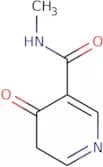
CAS:<p>N-Methyl-4-oxo-4,5-dihydropyridine-3-carboxamide is a fine chemical that can be used as a reagent or intermediate. It is a versatile building block that can be used in the production of useful scaffolds or useful intermediates. This compound has been shown to react with many different types of chemicals, including alcohols and amines. N-Methyl-4-oxo-4,5-dihydropyridine-3-carboxamide can also be used as a reaction component in the synthesis of diverse compounds.</p>Formula:C7H8N2O2Purity:Min. 95%Color and Shape:White to grey solid.Molecular weight:152.15 g/molDnp-Pro-TNF-alpha (71-82) amide (human) trifluoroacetate salt
CAS:<p>Please enquire for more information about Dnp-Pro-TNF-alpha (71-82) amide (human) trifluoroacetate salt including the price, delivery time and more detailed product information at the technical inquiry form on this page</p>Formula:C57H94N22O21Purity:Min. 95%Molecular weight:1,423.49 g/mol(S)-2-Aminobutyramide hydrochloride
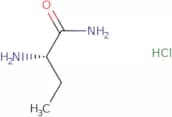
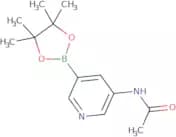
CAS:(S)-2-Aminobutyramide hydrochloride is a chiral amide compound, which is utilized primarily in scientific research settings. This compound is typically synthesized through the resolution of racemic mixtures or other specialized chemical processes that ensure the purity and stereospecificity required for research purposes.The mode of action of (S)-2-Aminobutyramide hydrochloride revolves around its role as an intermediate in chemical synthesis, serving as a building block for the production of more complex molecules. It has a noteworthy chiral configuration, which makes it an essential component in the formation of enantiomerically pure substances. This aspect is crucial in fields like pharmaceuticals, where stereochemistry can significantly impact biological activity.Its applications extend to various domains such as the synthesis of therapeutic agents, biochemical research, and the development of novel materials. Researchers value it for its ability to contribute to the fine-tuning of molecular assemblies, making it indispensable in studies focused on the interaction and function of chiral molecules. The hydrochloride form aids in its stability and solubility, which are important attributes for laboratory manipulation and experimentation.Formula:C4H10N2O•HClPurity:Min. 95%Color and Shape:White PowderMolecular weight:138.6 g/molN-(5-(4,4,5,5-Tetramethyl-1,3,2-dioxaborolan-2-yl)pyridin-3-yl)acetamide
CAS:<p>Please enquire for more information about N-(5-(4,4,5,5-Tetramethyl-1,3,2-dioxaborolan-2-yl)pyridin-3-yl)acetamide including the price, delivery time and more detailed product information at the technical inquiry form on this page</p>Formula:C13H19BN2O3Purity:Min. 95%Molecular weight:262.11 g/molDynorphin A (1-13) amide trifluoroacetate salt
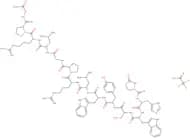
CAS:<p>Please enquire for more information about Dynorphin A (1-13) amide trifluoroacetate salt including the price, delivery time and more detailed product information at the technical inquiry form on this page</p>Formula:C75H127N25O14Purity:Min. 95%Molecular weight:1,602.97 g/mol(D-Trp6)-LHR
<p>Please enquire for more information about (D-Trp6)-LHR including the price, delivery time and more detailed product information at the technical inquiry form on this page</p>Formula:C83H115N25O17Purity:Min. 95%Molecular weight:1,734.96 g/molPAR-3 (1-6) amide (human) trifluoroacetate salt
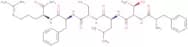
<p>Please enquire for more information about PAR-3 (1-6) amide (human) trifluoroacetate salt including the price, delivery time and more detailed product information at the technical inquiry form on this page</p>Formula:C29H46N10O7Purity:Min. 95%Molecular weight:646.74 g/molAmyloid P Component (33-38) amide trifluoroacetate salt
CAS:<p>Please enquire for more information about Amyloid P Component (33-38) amide trifluoroacetate salt including the price, delivery time and more detailed product information at the technical inquiry form on this page</p>Formula:C37H56N10O7SPurity:Min. 95%Molecular weight:784.97 g/molN,N-Dimethylformamide dibenzyl acetal
CAS:<p>N,N-Dimethylformamide dibenzyl acetal is an organic solvent that has a low volatility and high solubility in water. It is used as a cosolvent for reactions involving carboxylic acids, formamides, and epoxides. N,N-Dimethylformamide dibenzyl acetal can be used to produce peroxide as a reagent for oxidation reactions. Hydrogen peroxide can be produced from this compound by treatment with thionyl chloride or alkanoic acid. This chemical is also derivatized by the mesoporous method to provide mesoporous silica nanoparticles with enhanced surface area.</p>Purity:Min. 95%