Carboxylic Acids
Found 12457 products of "Carboxylic Acids"
7b-Hydroxy cholesterol 3b-acetate
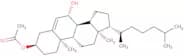
CAS:Controlled Product7b-Hydroxy cholesterol 3b-acetate is an allylic compound that is catalyzed by molybdenum, which eliminates the acetyl group at position 7 to form a double bond with the 3-position. The reaction temperature of 7b-hydroxy cholesterol 3b-acetate can be increased to high temperatures (i.e., >100°C) for the elimination process, and allylic acetates are obtained as products. The reaction starts with the addition of hexacarbonyl, which leads to a diene intermediate. This is then eliminated by adding acetamide in presence of high concentration of acetic acid and catalytic amounts of molybdenum. The low yield and efficiency, however, are major drawbacks of this process.Formula:C29H48O3Purity:Min. 95%Molecular weight:444.69 g/mol5-(5-Chloro-1-methyl-1H-benzimidazol-2-yl)pentanoic acid
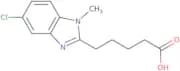
CAS:Controlled ProductPlease enquire for more information about 5-(5-Chloro-1-methyl-1H-benzimidazol-2-yl)pentanoic acid including the price, delivery time and more detailed product information at the technical inquiry form on this page
Formula:C13H15ClN2O2Purity:Min. 95%Molecular weight:266.72 g/molMethyl 1,5-diphenyl-1H-pyrazole-3-carboxylate
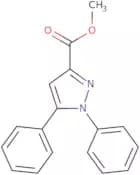
CAS:Controlled ProductPlease enquire for more information about Methyl 1,5-diphenyl-1H-pyrazole-3-carboxylate including the price, delivery time and more detailed product information at the technical inquiry form on this pageFormula:C17H14N2O2Purity:Min. 95%Molecular weight:278.31 g/molBromoacetic acid
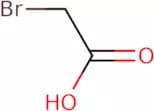
CAS:Bromoacetic acid is a brominated carboxylic acid that has been shown to bind to response elements and inhibit the synthesis of proteins. It has been shown to inhibit the growth of bacteria in human serum at concentrations of 1-5 mM. Bromoacetic acid also binds to metals, such as copper and zinc, and inhibits their activity. This compound has also been shown to have anti-inflammatory properties in experimental models. Bromoacetic acid is not toxic in rats, but it may cause myocardial infarction in humans.Formula:C2H3BrO2Purity:Min. 95%Color and Shape:Clear LiquidMolecular weight:138.95 g/mol1-Methyl-pyrrolidine-3-carboxylic acid
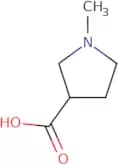
CAS:1-Methyl-pyrrolidine-3-carboxylic acid is a hepatoprotective agent that has been shown to inhibit the growth of cervical glands in animals. It also has anticarcinogenic and locomotor activity, as well as antidiabetic and depressant activities. The alkaloid 1-methyl-pyrrolidine-3-carboxylic acid can be found in many medicinal plants, including Ganoderma lucidum and Semen erythrophlei. In vitro assays show that this compound inhibits the enzyme lipase, which is involved in fat digestion and pancreatic function. The compound also has a depressant effect on the central nervous system, as shown by animal studies.Formula:C6H11NO2Purity:Min. 95%Color and Shape:PowderMolecular weight:129.16 g/mol4-(Trifluoromethoxy)phenylboronic Acid (contains varying amounts of Anhydride)
CAS:4-(Trifluoromethoxy)phenylboronic acid is a boron-containing compound that has been shown to be a potent inhibitor of the histone deacetylase (HDAC) enzyme. It also has surfactant properties and can be used as a photochemical reagent. 4-(Trifluoromethoxy)phenylboronic acid is orally bioavailable and may have therapeutic potential for neurodegenerative diseases, such as Alzheimer's disease, Parkinson's disease, and Huntington's disease. It also has the ability to inhibit cancer cell growth by inhibiting HDAC activity. This drug has been found to cross-couple with organosilicon compounds in order to form new compounds with potent inhibitory activity against HDAC enzymes.
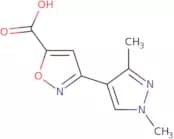
Formula:C7H6BF3O3Purity:Min. 95%Molecular weight:205.93 g/mol3-(1,3-Dimethyl-1H-pyrazol-4-yl)isoxazole-5-carboxylic acid
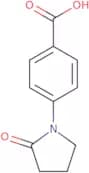
CAS:Please enquire for more information about 3-(1,3-Dimethyl-1H-pyrazol-4-yl)isoxazole-5-carboxylic acid including the price, delivery time and more detailed product information at the technical inquiry form on this pageFormula:C9H9N3O3Purity:Min. 95%Molecular weight:207.19 g/mol4-(2-Oxopyrrolidin-1-yl)benzoic acid
CAS:4-(2-Oxopyrrolidin-1-yl)benzoic acid (4-OPBA) is a hydrogen bonding inhibitor that is used to study the interactions of cavity proteins. It has shown to interact with glutathione and prostaglandin D2, which are important for hematopoietic and inflammatory responses. 4-OPBA has been observed to bind with a water molecule in the cavity, which may explain its affinity for these molecular targets. The crystal structure of 4-OPBA shows that it forms an interaction with two water molecules and one other molecule in the cavity. This may be due to its ability to form hydrogen bonds with both water molecules as well as the molecule in the cavity.
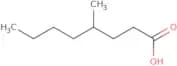
Formula:C11H11NO3Purity:Min. 95%Molecular weight:205.21 g/mol4-Methyloctanoic acid
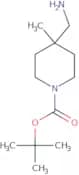
CAS:4-Methyloctanoic acid is a fatty acid that is synthesized from adipose tissue in animals. It can be used as a matrix effect for the production of enantiopure chemical compounds by chemical ionization, and it has been used in magnetic resonance spectroscopy to analyze kinetic data. 4-Methyloctanoic acid has been shown to have a number of biological effects, including an ability to inhibit the growth of type strain bacteria such as Escherichia coli and Staphylococcus aureus. The synthesis pathway for 4-methyloctanoic acid is not known, but it may be derived from hydrogenated octanoic acid.Formula:C9H18O2Purity:Min. 95%Color and Shape:Clear LiquidMolecular weight:158.24 g/moltert-Butyl 4-(aminomethyl)-4-methylpiperidine-1-carboxylate
CAS:Please enquire for more information about tert-Butyl 4-(aminomethyl)-4-methylpiperidine-1-carboxylate including the price, delivery time and more detailed product information at the technical inquiry form on this pageFormula:C12H24N2O2Purity:Min. 95%Molecular weight:228.33 g/mol6-(Methoxycarbonyl)spiro[3.3]heptane-2-carboxylic acid
CAS:Please enquire for more information about 6-(Methoxycarbonyl)spiro[3.3]heptane-2-carboxylic acid including the price, delivery time and more detailed product information at the technical inquiry form on this pageFormula:C10H14O4Purity:Min. 95%Molecular weight:198.22 g/mol2,3-Diketogulonic acid potassium
CAS:Please enquire for more information about 2,3-Diketogulonic acid potassium including the price, delivery time and more detailed product information at the technical inquiry form on this page
Formula:C6H7KO7Purity:Min. 95%Color and Shape:SolidMolecular weight:230.21 g/molHydrocortisone Acetate Impurity G
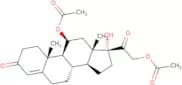
CAS:Controlled ProductHydrocortisone is a corticosteroid that is used to treat inflammation, allergies and skin diseases. It is also used to treat adrenal gland disorders. Hydrocortisone Acetate Impurity G (HA) is a drug that has anti-inflammatory properties, which may be due to its inhibition of prostaglandin synthesis. HA was the first hydrocortisone impurity found in prednisolone tablets. This discovery led to the development of corticosteroids and their use in medicine for the treatment of inflammation and allergies.Formula:C25H34O7Purity:Min. 95%Molecular weight:446.53 g/mol(3a,5b,7a,12a)-3-Amino-7,12-dihydroxycholan-24-oic acidmethylester
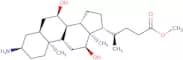
CAS:Controlled ProductPlease enquire for more information about (3a,5b,7a,12a)-3-Amino-7,12-dihydroxycholan-24-oic acidmethylester including the price, delivery time and more detailed product information at the technical inquiry form on this pageFormula:C25H43NO4Purity:Min. 95%Molecular weight:421.61 g/mol(2S,3S,5S)-5-[(N-Formyl-L-leucyl)oxy]-2-hexyl-3-hydroxyhexadecanoic acid
CAS:Please enquire for more information about (2S,3S,5S)-5-[(N-Formyl-L-leucyl)oxy]-2-hexyl-3-hydroxyhexadecanoic acid including the price, delivery time and more detailed product information at the technical inquiry form on this pageFormula:C29H55NO6Purity:Min. 95%Molecular weight:513.75 g/mol3-{[(3,4-Dichlorophenyl)amino]carbonyl}bicyclo[2.2.1]hept-5-ene-2-carboxylic acid
CAS:Please enquire for more information about 3-{[(3,4-Dichlorophenyl)amino]carbonyl}bicyclo[2.2.1]hept-5-ene-2-carboxylic acid including the price, delivery time and more detailed product information at the technical inquiry form on this pageFormula:C15H13Cl2NO3Purity:Min. 95%Molecular weight:326.17 g/mol(2Z,4E,6Z,8E)-3,7-Dimethyl-9-(2,6,6-trimethyl-1-cyclohexenyl)nona-2,4,6,8-tetraenoic acid
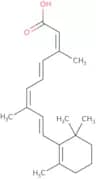
CAS:Controlled Product2,4-Dienoylglycerol (2,4-DG) is a metabolite of arachidonic acid and is a potent activator of protein kinase C. It has been shown that 2,4-DG binds to the liver cell membrane and causes a cytoskeletal reorganization. This is an analytical method for measuring the binding constants between 2,4-DG and various proteins in human liver cells. The redox potentials of 2,4-DG are -0.17 V in the pH range of 7 to 8 and -0.12 V in the pH range of 4 to 5. This means that 2,4-DG will be reduced by NADH at pH 7 to 8 and oxidized by NADH at pH 4 to 5. The growth factor activity of 2,4-DG has been demonstrated using human liver cells as well as other cell types such as viruses and cancer cells. The ability ofFormula:C20H28O2Purity:Min. 95%Color and Shape:Yellow PowderMolecular weight:300.44 g/mol4-(Bromomethyl)benzeneboronic acid pinacol ester
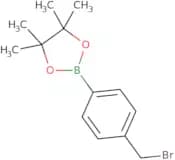
CAS:4-(Bromomethyl)benzeneboronic acid pinacol ester (BBBA) is a hypochlorous acid derivative with a structural formula of C6H5BrOCH2. It is used as a fluorophore and has been shown to have anticancer activity. 4-Bromomethylbenzeneboronic acid pinacol ester reacts with hydrophobic molecules in the cell membrane, leading to disruption of the membrane and ultimately cell death. This compound can be used as an active oxygen source in biological assays, such as functional assays, because it generates reactive oxygen species and can act as a fluorescence probe for detection of biological samples.Formula:C13H18BBrO2Purity:Min. 95 Area-%Color and Shape:White PowderMolecular weight:297 g/molMethyl 3-formyl-4,6-dimethoxy-1-methyl-1H-indole-2-carboxylate
CAS:Controlled ProductPlease enquire for more information about Methyl 3-formyl-4,6-dimethoxy-1-methyl-1H-indole-2-carboxylate including the price, delivery time and more detailed product information at the technical inquiry form on this pageFormula:C14H15NO5Purity:Min. 95%Molecular weight:277.27 g/mol(2,4-Dichlorophenoxy)acetic acid sodium salt monohydrate
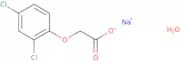
CAS:(2,4-Dichlorophenoxy)acetic acid sodium salt monohydrate is a chemical that belongs to the phenoxy herbicides. It is used as a selective herbicide for control of annual and perennial grasses and broadleaf weeds in noncrop areas. This compound has been detected by gas chromatography/mass spectrometric analysis after a dispersive solid-phase extraction procedure. The target analytes were found to be acidic with an unknown molecular weight.Formula:C8H5Cl2O3·Na·H2OPurity:Min. 95%Color and Shape:PowderMolecular weight:261.03 g/mol


![6-(Methoxycarbonyl)spiro[3.3]heptane-2-carboxylic acid](/_next/image/?url=https%3A%2Fstatic.cymitquimica.com%2Fproducts%2F3D%2Fthumb-webp%2FFM161396.webp&w=3840&q=75)
![(2S,3S,5S)-5-[(N-Formyl-L-leucyl)oxy]-2-hexyl-3-hydroxyhexadecanoic acid](/_next/image/?url=https%3A%2Fstatic.cymitquimica.com%2Fproducts%2F3D%2Fthumb-webp%2FFF23586.webp&w=3840&q=75)
![3-{[(3,4-Dichlorophenyl)amino]carbonyl}bicyclo[2.2.1]hept-5-ene-2-carboxylic acid](/_next/image/?url=https%3A%2Fstatic.cymitquimica.com%2Fproducts%2F3D%2Fthumb-webp%2FFD136060.webp&w=3840&q=75)