Carboxylic Acids
Carboxylic acids are organic molecules characterized by having a carboxyl-type functional group (-COOH). These acids are fundamental in various chemical reactions, including esterification, amidation, and decarboxylation. Carboxylic acids are widely used in the production of pharmaceuticals, polymers, and agrochemicals. In this section, you can find a large number of carboxylic acids ready to be used. At CymitQuimica, we provide a broad range of high-quality carboxylic acids to support your research and industrial applications.
Found 12453 products of "Carboxylic Acids"
Sort by
Purity (%)
0
100
|
0
|
50
|
90
|
95
|
100
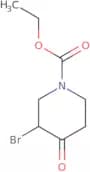
3-Bromo-4-oxo-piperidine-1-carboxylic acid ethyl ester
CAS:<p>3-Bromo-4-oxo-piperidine-1-carboxylic acid ethyl ester is a monoclinic crystal of the salt of 3-bromo-4-oxo-piperidine and 1,2-ethanediol. It is used as an intermediate in the synthesis of cisapride, a medication that regulates gastrointestinal motility. 3BOCEP has been shown to hydrolyze in the stomach with a rate constant of 2 x 10 M s. The bromination product is cisapride, which has been shown to regulate gastrointestinal motility by stimulating GI smooth muscle contractions.</p>Formula:C8H12BrNO3Purity:Min. 95%Molecular weight:250.09 g/molMethyl 6-methyl-2-oxo-4-phenyl-1,2,3,4-tetrahydropyrimidine-5-carboxylate
CAS:<p>Please enquire for more information about Methyl 6-methyl-2-oxo-4-phenyl-1,2,3,4-tetrahydropyrimidine-5-carboxylate including the price, delivery time and more detailed product information at the technical inquiry form on this page</p>Formula:C13H14N2O3Purity:Min. 95%Molecular weight:246.26 g/molHydroxymethanesulfinic acid monosodium salt dihydrate
CAS:<p>Hydroxymethanesulfinic acid monosodium salt dihydrate (HMSD) is a chemical that can be used to remove sulfoxylate and formaldehyde in wastewater. It can also be used as a polymerization catalyst, an activator for epoxy resins, and as a stabilizer of glycol ethers. HMSD is formed by the reaction of methyl ethyl sulfoxide with copper chloride. This chemical has been shown to have thermal expansion properties and high chemical stability, making it useful for industrial processes involving polymerization or glycol esters.</p>Formula:CH3NaO3S·2H2OPurity:Min. 95%Color and Shape:White/Off-White SolidMolecular weight:154.12 g/mol1-Methylcyclopropane-1-carboxylic acid
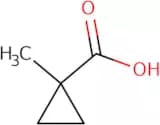
CAS:<p>1-Methylcyclopropane-1-carboxylic acid is a reactive, stereoisomeric amide with an alkaline metal. It can be prepared by the reaction of methoxide and nitrobenzene in the presence of a base such as potassium hydroxide. 1-Methylcyclopropane-1-carboxylic acid has been shown to have potent antitumor activity against solid tumors in vivo. This compound was also shown to inhibit the growth of human prostate cancer cells in vitro. Additionally, 1-methylcyclopropane-1-carboxylic acid has been shown to inhibit the generation of reactive oxygen species (ROS) from xylene and other aromatic hydrocarbons, which may be due to its ability to nitrosylate these compounds and prevent them from reacting with oxygen.</p>Formula:C5H8O2Purity:Min. 95%Molecular weight:100.12 g/mol1-BOC-2,3-Dihydropyrrole-4-boronic acid, pinacol ester
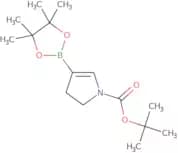
CAS:<p>Please enquire for more information about 1-BOC-2,3-Dihydropyrrole-4-boronic acid, pinacol ester including the price, delivery time and more detailed product information at the technical inquiry form on this page</p>Formula:C15H26BNO4Purity:Min. 95%Molecular weight:295.18 g/molBetamethasone 21-acetate-17-propionate
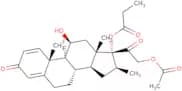
CAS:Controlled Product<p>Betamethasone 21-acetate-17-propionate is a drug product that is a mixture of betamethasone and betamethasone dipropionate. It is used to treat inflammatory skin conditions such as dermatitis, eczema, psoriasis, and other conditions. Betamethasone 21-acetate-17-propionate is one of the most potent corticosteroids available for topical use. The validation process has been completed on the acetonitrile phase and the reversed phase mobile phase. The validation was successful for both the acetonitrile and reversed phases. A validated HPLC method was developed for this drug product in order to monitor its production process.</p>Formula:C27H35FO7Purity:Min. 95%Color and Shape:PowderMolecular weight:490.56 g/mol2-Methoxy-4-amino-5-ethylthiobenzoic acid
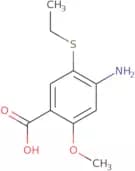
CAS:<p>Please enquire for more information about 2-Methoxy-4-amino-5-ethylthiobenzoic acid including the price, delivery time and more detailed product information at the technical inquiry form on this page</p>Formula:C10H13NO3SPurity:Min. 95%Molecular weight:227.28 g/mol4-Aminobenzenesulfonic acid
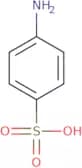
CAS:<p>4-Aminobenzenesulfonic acid is a sulfonic acid that is used in wastewater treatment. It has been shown to be an excellent water permeability agent and can be used as an additive to the process of making sulfonated polymers for use in water filtration. 4-Aminobenzenesulfonic acid has been shown to have enzyme inhibitory effects on metal hydroxide-dependent enzymes, such as sulphanilic and sulfanilic acid. This compound also has been investigated as a potential therapeutic agent for the treatment of cancer, with some success. It has been shown to stimulate the production of picolinic acid, which is an intermediate in the kynurenine pathway leading to production of nicotinamide adenine dinucleotide (NAD+). In humans, 4-aminobenzenesulfonic acid can bind toll-like receptors (TLRs) and activate TLR4 signaling pathways.</p>Formula:C6H7NO3SPurity:Min. 95%Molecular weight:173.19 g/molL-Cysteinesulfinic acid, monohydrate
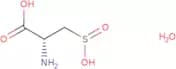
CAS:<p>Please enquire for more information about L-Cysteinesulfinic acid, monohydrate including the price, delivery time and more detailed product information at the technical inquiry form on this page</p>Formula:C3H7NO4S·H2OPurity:Min. 95%Molecular weight:171.17 g/mol[2-(4-Chlorophenyl)-1,3-thiazol-4-yl]acetic acid
CAS:<p>[2-(4-Chlorophenyl)-1,3-thiazol-4-yl]acetic acid is a potent antimicrobial agent that inhibits the growth of bacteria by binding to the 50S ribosomal subunit. It has shown antiinflammatory properties in animal models of bowel disease, skin cancer, and autoimmune diseases. This drug has also been shown to have no observable toxicity in humans at doses up to 5000 mg/day for 28 days. The drug binds to a number of enzymes including reactive oxygen species (ROS) scavengers and metabolic enzymes. There are no known drug interactions with this drug and it can be used safely with other nonsteroidal antiinflammatory drugs (NSAIDs).</p>Formula:C11H8ClNO2SPurity:Min. 95%Molecular weight:253.71 g/molAcetyl-ACTH (3-24) (human, bovine, rat) trifluoroacetate salt
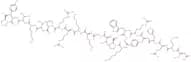
CAS:<p>Please enquire for more information about Acetyl-ACTH (3-24) (human, bovine, rat) trifluoroacetate salt including the price, delivery time and more detailed product information at the technical inquiry form on this page</p>Formula:C126H198N38O28SPurity:Min. 95%Molecular weight:2,725.23 g/molEthyl 2-(2-Amino-4-thiazolyl)-2-(hydroxyimino)acetate
CAS:<p>Ethyl 2-(2-amino-4-thiazolyl)-2-(hydroxyimino)acetate is a phosphomolybdate antibiotic that is used in the treatment of respiratory tract infections. It binds to the bacterial enzyme, phosphomolybdate oxidase, and inhibits the formation of acid in the body. The reaction solution is recycled and activated with an acid catalyst to increase the yield of acetonitrile. The ion-pair formed by ethyl 2-(2-amino-4-thiazolyl)-2-(hydroxyimino)acetate and sodium carbonate is nucleophilic and reacts with nitrous to produce acetonitrile as a side product.</p>Formula:C7H9N3O3SPurity:Min. 95%Molecular weight:215.23 g/mol9-Bromononanoic acid
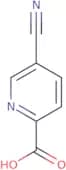
CAS:<p>9-Bromononanoic acid is a conjugate of a brominated fatty acid. It is used in the chemical ionization process to produce ions for mass spectrometry analysis. 9-Bromononanoic acid has an inhibitory effect on the growth of bacteria and was shown to be effective against bacterial cell division by inhibiting the synthesis of proteins vital for cell division. 9-Bromononanoic acid also inhibits the production of fatty acids, which may be due to its ability to bind to fatty acids and form esters with them.</p>Formula:C9H17BrO2Purity:Min. 95%Molecular weight:237.13 g/mol5-Cyanopyridine-2-carboxylic acid
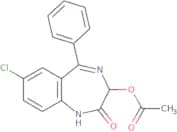
CAS:<p>5-Cyanopyridine-2-carboxylic acid is a small molecule that has been found to have significant biological activity in a number of different areas, including neurotherapeutics. It is the result of a scalable synthesis and is soluble in water. The molecule has two chiral centers and can exist as four different stereoisomers (enantiomers). In vitro studies show that 5-cyanopyridine-2-carboxylic acid inhibits fatty acid uptake by blocking the proton pump, which transports lipids into cells. This compound also binds to the cytosolic protein pyrazine 2-carboxylic acid receptor 1 (PYZR1), which may provide an explanation for its effects on fatty acid uptake.</p>Formula:C7H4N2O2Purity:Min. 95%Molecular weight:148.12 g/molOxazepam acetate
CAS:Controlled Product<p>Oxazepam acetate is a chiral drug that has enantiomeric forms. Oxazepam acetate is converted to the corresponding lorazepam by hydrolysis of the acetate ester group. This drug is an analytical method for determining the concentration of oxazepam in human serum and rat liver microsomes. It also has a stereoselective effect on nucleophilic attack, which means it only reacts with one of two possible sites in the molecule. Oxazepam acetate can be used to treat insomnia, anxiety, and seizure disorders.</p>Formula:C17H13ClN2O3Purity:Min. 95%Molecular weight:328.75 g/mol4-Aminobicyclo[2.2.2]octane-1-carboxylic acid methyl ester
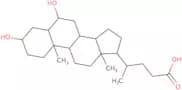
CAS:<p>Please enquire for more information about 4-Aminobicyclo[2.2.2]octane-1-carboxylic acid methyl ester including the price, delivery time and more detailed product information at the technical inquiry form on this page</p>Formula:C10H17NO2Purity:Min. 95%Molecular weight:183.25 g/molMurideoxycholic acid
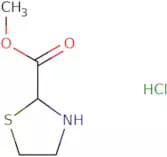
CAS:Controlled Product<p>Murideoxycholic acid is a bile acid that is used in combination with other antibiotics to treat infections caused by bacteria. Murideoxycholic acid inhibits the bacterial transport of bile acids, which are important for the digestion of fats and proteins. Murideoxycholic acid binds to the cytochrome P450 enzyme in humans and rats, inhibiting its activity. This binding prevents the production of bile acids from cholesterol in the liver, which prevents their normal excretion into the intestine and leads to an increased risk for gallstones. Murideoxycholic acid also has been shown to inhibit human CYP3A4 enzyme activity. The hydroxyl group on this molecule reacts with ferrous ions to produce hydroxyl radicals, which can lead to oxidative stress and lipid peroxidation.</p>Formula:C24H40O4Purity:Min. 95%Molecular weight:392.57 g/molMethyl thiazolidine-2-carboxylate hydrochloride
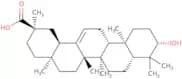
CAS:<p>Please enquire for more information about Methyl thiazolidine-2-carboxylate hydrochloride including the price, delivery time and more detailed product information at the technical inquiry form on this page</p>Formula:C5H9NO2S•HClPurity:Min. 95%Color and Shape:PowderMolecular weight:183.66 g/mol3-Epikatonic acid
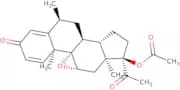
CAS:Controlled Product<p>3-Epikatonic acid is a triterpenoid saponin that can be found in Tripterygium wilfordii. It has immunosuppressive activities and has been used in the treatment of cancer. 3-Epikatonic acid inhibits the production of proinflammatory cytokines such as tumor necrosis factor-α, IL-6, and IL-8. It also inhibits the proliferation of human breast cancer cells by inducing apoptosis. 3-Epikatonic acid is also a fertility agent because it can stimulate ovulation in rats.</p>Formula:C30H48O3Purity:Min. 95%Molecular weight:456.7 g/mol(9b,11b)-Epoxy fluorometholone acetate
CAS:<p>Please enquire for more information about (9b,11b)-Epoxy fluorometholone acetate including the price, delivery time and more detailed product information at the technical inquiry form on this page</p>Formula:C24H30O5Purity:Min. 95%Molecular weight:398.49 g/mol


![[2-(4-Chlorophenyl)-1,3-thiazol-4-yl]acetic acid](/_next/image/?url=https%3A%2Fstatic.cymitquimica.com%2Fproducts%2F3D%2Fthumb-webp%2FFC124498.webp&w=3840&q=75)


![4-Aminobicyclo[2.2.2]octane-1-carboxylic acid methyl ester](/_next/image/?url=https%3A%2Fstatic.cymitquimica.com%2Fproducts%2F3D%2Fthumb-webp%2FFA44258.webp&w=3840&q=75)