Carboxylic Acids
Carboxylic acids are organic molecules characterized by having a carboxyl-type functional group (-COOH). These acids are fundamental in various chemical reactions, including esterification, amidation, and decarboxylation. Carboxylic acids are widely used in the production of pharmaceuticals, polymers, and agrochemicals. In this section, you can find a large number of carboxylic acids ready to be used. At CymitQuimica, we provide a broad range of high-quality carboxylic acids to support your research and industrial applications.
Found 12453 products of "Carboxylic Acids"
Sort by
Purity (%)
0
100
|
0
|
50
|
90
|
95
|
100
1-[2-(Methoxycarbonyl)phenyl]-5-oxopyrrolidine-3-carboxylic acid
CAS:<p>Please enquire for more information about 1-[2-(Methoxycarbonyl)phenyl]-5-oxopyrrolidine-3-carboxylic acid including the price, delivery time and more detailed product information at the technical inquiry form on this page</p>Formula:C13H13NO5Purity:Min. 95%Molecular weight:263.25 g/mol2-(Benzofuran-2-yl)acetic acid
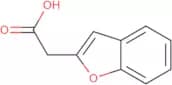
CAS:<p>2-(Benzofuran-2-yl)acetic acid is a glp-1 analogue that has been shown to inhibit fatty acid synthesis in the test tube. It has also shown an inhibitory effect on cardiac arrhythmia and chloride ion channel activity, which may be due to the dipole nature of its structure. 2-(Benzofuran-2-yl)acetic acid is not active against microbial infections. The chemical compound is a tautomer of 2-[(benzofuran-2-yl)amino]acetic acid.</p>Purity:Min. 95%(5-Fluoro-2-methyl-1H-inden-3-yl)acetic acid
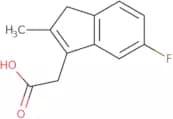
CAS:<p>(5-Fluoro-2-methyl-1H-inden-3-yl)acetic acid (FMIAA) is a phase transfer catalyst that catalyses the condensation of alkyl esters. It can be used in the condensation of aromatic and aliphatic aldehydes in liquid phase with potassium as a reagent and organic solvent. The FMIAA is then removed by dehydrating the product, leaving it in solid form. FMIAA has been shown to be effective for the synthesis of a wide range of compounds, including pharmaceuticals such as cyclopentanone, aminomethylpiperidine, and 4-aminoquinoline.</p>Formula:C12H11FO2Purity:Min. 95%Molecular weight:206.21 g/mol1-Methylindole-3-boronic acid pinacol ester
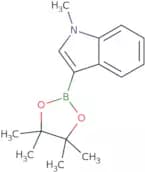
CAS:<p>Please enquire for more information about 1-Methylindole-3-boronic acid pinacol ester including the price, delivery time and more detailed product information at the technical inquiry form on this page</p>Formula:C15H20BNO2Purity:Min. 95%Molecular weight:257.14 g/moltert-Butyl 2-(2-chloroethoxy)acetate
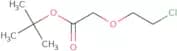
CAS:<p>Please enquire for more information about tert-Butyl 2-(2-chloroethoxy)acetate including the price, delivery time and more detailed product information at the technical inquiry form on this page</p>Formula:C8H15ClO3Purity:Min. 95%Color and Shape:Clear, colourless liquid.Molecular weight:194.66 g/mol3,5-di-tert-Butyl-4-hydroxyphenylacetic acid
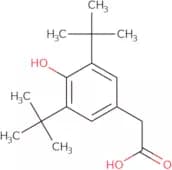
CAS:<p>3,5-Di-tert-butyl-4-hydroxyphenylacetic acid (BHT) is an antiaging agent that has been used in food packaging and cosmetics. BHT is a functionalized triethoxysilane with phenyl groups attached to the silicon atoms. BHT is an antioxidant that protects against lipid peroxidation and prevents the formation of free radicals by reacting with peroxy radicals. It has been shown to have a protective effect on skin cells when applied topically. BHT also has protective effects against environmental stressors such as UV radiation, ozone, and cigarette smoke.</p>Formula:C16H23O3Purity:Min. 95%Molecular weight:263.36 g/mol12-Aminododecanoic acid
CAS:<p>12-Aminododecanoic acid is a fatty acid that is used in the manufacture of magnetic particles. It is synthesized by cationic polymerization of 4-tert-butylbenzoic acid and dodecanedioic acid. The process involves the use of water vapor to remove hydrochloric acid from the solution and form a salt, which then reacts with dodecanedioic acid to produce 12-aminododecanoic acid. This compound has been shown to have transport properties for nitrogen atoms and can be used in exfoliated materials such as nanometals. 12-Aminododecanoic acid has also been shown to exhibit redox activity due to its ability to react with hydrogen peroxide.</p>Formula:C12H25NO2Purity:Min. 95%Color and Shape:White PowderMolecular weight:215.33 g/mol2,2,4-Trimethyl-1,2-dihydroquinolin-6-yl phenylacetate
CAS:Controlled Product<p>Please enquire for more information about 2,2,4-Trimethyl-1,2-dihydroquinolin-6-yl phenylacetate including the price, delivery time and more detailed product information at the technical inquiry form on this page</p>Formula:C20H21NO2Purity:Min. 95%Molecular weight:307.39 g/molMethyl 2-methylpropanimidic acid hydrochloride
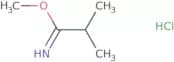
CAS:<p>Methyl 2-methylpropanimidic acid hydrochloride is a neutralizing agent that can be used to react with water, acids, and bases. It has been shown to react with gaseous compounds at temperatures as high as 200°C. Methyl 2-methylpropanimidic acid hydrochloride is soluble in organic solvents such as alcohols, ethers, and acetone and can be used to prepare esters by reacting with the corresponding alcohol or phenol. In addition, it has been shown to interact with haloalkyl groups and oxazinones. This compound also has nod-like receptor binding properties that have been shown to play a role in mediating the transport of organic solutions into cells. A receptor protein that reacts with methyl 2-methylpropanimidic acid hydrochloride has been identified in some organisms. The stereostructure of this compound resembles that of triazines and other organometallic compounds.</p>Formula:C5H11NO·HClPurity:Min. 95%Molecular weight:137.61 g/molTricosafluorododecanoic Acid
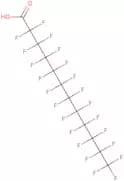
CAS:<p>Tricosafluorododecanoic Acid (TCDA) is a potent cytotoxic agent that has been shown to be effective in killing cancer cells. TCDA is a strong inducer of apoptosis and necrosis, which are processes that cause the death of cells. TCDA also induces cell cycle arrest by binding to mitochondrial membranes and inhibiting the flow of ions across the membrane, leading to a loss of mitochondrial membrane potential. This leads to an accumulation of intracellular calcium and activates signal pathways that activate the cell's death program. TCDA has been shown to have significant cytotoxicity against human breast cancer cells, with little toxicity against healthy human erythrocytes. TCDA is not active against bacteria or fungi, but it is highly toxic to certain protozoans such as Plasmodium falciparum. TCDA can be used as an effective treatment for cancer in combination with radiation therapy because it enhances the therapeutic effects of radiation on tum</p>Formula:C12HF23O2Purity:Min. 95%Molecular weight:614.1 g/mol1-Fluoro-5a-androst-2-en-17b-ol acetate
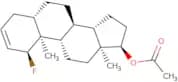
CAS:Controlled Product<p>Please enquire for more information about 1-Fluoro-5a-androst-2-en-17b-ol acetate including the price, delivery time and more detailed product information at the technical inquiry form on this page</p>Formula:C20H28FO2Purity:Min. 95%Molecular weight:319.43 g/mol2-[4-(2-Methylpropenyl)phenyl]propionic acid
CAS:<p>2-[4-(2-Methylpropenyl)phenyl]propionic acid is an analgesic and antipyretic agent. It has been shown to have antiinflammatory properties, which are mediated through inhibition of prostaglandin synthesis. This agent binds to the enzyme cyclooxygenase and inhibits the biosynthesis of prostaglandins that are responsible for inflammation. 2-[4-(2-Methylpropenyl)phenyl]propionic acid also has optical antipyretic activity, which may be due to its ability to inhibit the release of prostaglandins from arachidonic acid in the hypothalamus. The optical antipyretic activity is most likely due to the enantiomers that this drug contains. 2-[4-(2-Methylpropenyl)phenyl]propionic acid has a pharmacologic profile that includes analgesic and antipyretic activities.END>></p>Formula:C13H16O2Purity:Min. 95%Color and Shape:PowderMolecular weight:204.26 g/mol(S)-α-Ethyl-2-oxo-1-pyrrolidineacetic acid(R)-α-methylbenzenemethanaminesalt
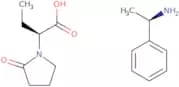
CAS:Controlled Product<p>Please enquire for more information about (S)-alpha-Ethyl-2-oxo-1-pyrrolidineacetic acid(R)-alpha-methylbenzenemethanaminesalt including the price, delivery time and more detailed product information at the technical inquiry form on this page</p>Formula:C16H24N2O3Purity:Min. 95%Molecular weight:292.37 g/molTetrakis[N-tetrachlorophthaloyl-(S)-tert-leucinato]dirhodium Bis(ethyl Acetate) Adduct
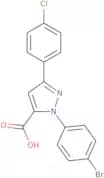
CAS:<p>Please enquire for more information about Tetrakis[N-tetrachlorophthaloyl-(S)-tert-leucinato]dirhodium Bis(ethyl Acetate) Adduct including the price, delivery time and more detailed product information at the technical inquiry form on this page</p>Formula:C56H40Cl16N4O16Rh2·C8H16O4Purity:Min. 95%Molecular weight:1,974.2 g/mol1-(4-Bromophenyl)-3-(4-chlorophenyl)-1H-pyrazole-5-carboxylic acid
CAS:Controlled Product<p>Please enquire for more information about 1-(4-Bromophenyl)-3-(4-chlorophenyl)-1H-pyrazole-5-carboxylic acid including the price, delivery time and more detailed product information at the technical inquiry form on this page</p>Formula:C16H10BrClN2O2Purity:Min. 95%Molecular weight:377.62 g/mol(D-His1)-Exenatide trifluoroacetate salt
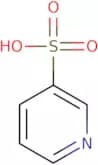
CAS:<p>Please enquire for more information about (D-His1)-Exenatide trifluoroacetate salt including the price, delivery time and more detailed product information at the technical inquiry form on this page</p>Formula:C184H282N50O60SPurity:Min. 95%Molecular weight:4,186.57 g/molPyridine-3-sulfonic acid
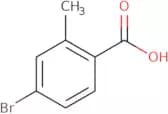
CAS:<p>Pyridine-3-sulfonic acid is a reactive molecule that can exist in two forms. It reacts with iron oxides to form pyridine-3-sulfonic acid amide and reacts with picolinic acid to form pyridine-3-sulfonic acid phosphoric acid complex. Pyridine 3 sulfonic acid is an intermediate in the synthesis of picolinic acid and is involved in the genetic mechanisms of bacteria. It has been shown to be effective at concentrations of 10 mM or higher when used in tissue culture experiments. The optimum concentration for the reaction varies depending on the reactant and its environment, which is why experimentation should be conducted before using it as a reagent.</p>Formula:C5H5NO3SPurity:Min. 95%Molecular weight:159.16 g/mol4-Bromo-2-methylbenzoic acid
CAS:<p>4-Bromo-2-methylbenzoic acid is a nucleophilic compound that can be used for the synthesis of esters, amides and peptides. It is also an intermediate in the synthesis of 4-bromo-2-methylbenzoic acid methyl ester, which can be used as a cardiac marker. The hydroxylamine group on this molecule reacts with electrophiles such as benzoate to form bromoacetic acid derivatives. This reaction is catalyzed by palladium and other metals. The multidimensional nature of this reaction means it can be used for cross-coupling reactions.</p>Formula:C8H7BrO2Purity:Min. 95%Molecular weight:215.04 g/molChlorogenic acid hemihydrate
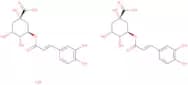
CAS:<p>Chlorogenic acid hemihydrate is a natural phenolic compound that belongs to the family of flavonol glycosides. The molecule has two caffeoylquinic acids and one chlorogenic acid functional groups, which are responsible for its antioxidant properties. Chlorogenic acid hemihydrate is soluble in water and can be used as a solid dispersion. This compound has been shown to have significant interactions with other drugs, including polymeric matrix, protocatechuic acid, and α-amyrin acetate. It also has been shown to have cell culture and in vivo model evidence of efficacy against cancer cells.</p>Purity:Min. 95%1-(2-Naphthylsulfonyl)piperidine-4-carboxylic acid
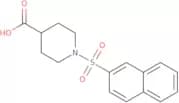
CAS:<p>Please enquire for more information about 1-(2-Naphthylsulfonyl)piperidine-4-carboxylic acid including the price, delivery time and more detailed product information at the technical inquiry form on this page</p>Formula:C16H17NO4SPurity:Min. 95%Molecular weight:319.38 g/mol
![1-[2-(Methoxycarbonyl)phenyl]-5-oxopyrrolidine-3-carboxylic acid](/_next/image/?url=https%3A%2Fstatic.cymitquimica.com%2Fproducts%2F3D%2Fthumb-webp%2FFM123736.webp&w=3840&q=75)



![2-[4-(2-Methylpropenyl)phenyl]propionic acid](/_next/image/?url=https%3A%2Fstatic.cymitquimica.com%2Fproducts%2F3D%2Fthumb-webp%2FFM25939.webp&w=3840&q=75)
![Tetrakis[N-tetrachlorophthaloyl-(S)-tert-leucinato]dirhodium Bis(ethyl Acetate) Adduct](/_next/image/?url=https%3A%2Fstatic.cymitquimica.com%2Fproducts%2F3D%2Fthumb-webp%2FFT60020.webp&w=3840&q=75)