Carboxylic Acids
Carboxylic acids are organic molecules characterized by having a carboxyl-type functional group (-COOH). These acids are fundamental in various chemical reactions, including esterification, amidation, and decarboxylation. Carboxylic acids are widely used in the production of pharmaceuticals, polymers, and agrochemicals. In this section, you can find a large number of carboxylic acids ready to be used. At CymitQuimica, we provide a broad range of high-quality carboxylic acids to support your research and industrial applications.
Found 12457 products of "Carboxylic Acids"
Sort by
Purity (%)
0
100
|
0
|
50
|
90
|
95
|
100
Ac-Asp-Glu-Val-Asp-chloromethylketone trifluoroacetate salt
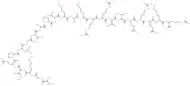
CAS:Ac-Asp-Glu-Val-Asp-chloromethylketone trifluoroacetate salt is a basic protein. It inhibits the neuronal death induced by dopamine and its derivatives, which is caused by overactivation of the mitochondrial membrane potential and release of cytochrome c from mitochondria to cytosol. This compound also inhibits the activation of toll-like receptor 4 (TLR4) and nuclear factor κB (NF-κB) signaling pathways in neuronal cells. Ac-Asp-Glu-Val-Asp-chloromethylketone trifluoroacetate salt has been shown to have antiinflammatory effects when applied topically on skin wounds. The molecule has been used as a model system for studying the molecular mechanism of epidermal growth factor (EGF) activation in hybridoma cell lines and primary cells.Formula:C21H31ClN4O11Purity:Min. 95%Molecular weight:550.94 g/molNociceptin (1-13) amide trifluoroacetate salt
CAS:Please enquire for more information about Nociceptin (1-13) amide trifluoroacetate salt including the price, delivery time and more detailed product information at the technical inquiry form on this pageFormula:C61H100N22O15Purity:Min. 95%Molecular weight:1,381.59 g/molGalanin-Like Peptide (human) trifluoroacetate salt
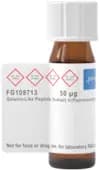
CAS:Please enquire for more information about Galanin-Like Peptide (human) trifluoroacetate salt including the price, delivery time and more detailed product information at the technical inquiry form on this pageFormula:C292H451N83O84SPurity:Min. 95%Molecular weight:6,500.28 g/molDodecylbenzenesulfonic acid, 70% in isopropanol
CAS:Dodecylbenzenesulfonic acid is a sulfonic acid that is used in the production of polyaniline. It is also used as an organic reagent that can be applied in organic synthesis, including polymerization and electrochemical studies. Dodecylbenzenesulfonic acid has been shown to react with sodium salts to form dodecyl benzene, which can be observed by synchronous fluorescence spectroscopy. This chemical has a phase transition temperature of -9°C and a boiling point of 176°C. Dodecylbenzenesulfonic acid is soluble in water vapor, but insoluble in ethanol or acetone.Formula:C18H30O3SPurity:Min. 95%Color and Shape:Clear LiquidMolecular weight:326.5 g/mol(Leu31,Pro34)-Neuropeptide Y (human, rat) trifluoroacetate salt
CAS:Please enquire for more information about (Leu31,Pro34)-Neuropeptide Y (human, rat) trifluoroacetate salt including the price, delivery time and more detailed product information at the technical inquiry form on this page
Formula:C189H284N54O56SPurity:Min. 95%Molecular weight:4,240.67 g/mol3-Methylsalicylic acid
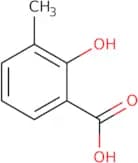
CAS:3-Methylsalicylic acid is a naturally occurring carboxylate that has been shown to be an inhibitor of the hydrogenation of polyunsaturated fatty acids. 3-Methylsalicylic acid inhibits the binding of benzyl groups to intramolecular hydrogen and hydroxyl groups, which are required for the formation of a covalent bond. The antiproliferative effect of 3-methylsalicylic acid on cancer cells is due to its ability to inhibit protein synthesis by blocking the enzyme carboxylase. 3-Methylsalicylic acid also has anti-inflammatory properties and can be used as an antiseptic and analgesic.Formula:C8H8O3Purity:Min. 95%Color and Shape:White PowderMolecular weight:152.15 g/molH-p-Chloro-Phe-D-Cys-b-(3-pyridyl)-Ala-D-Trp-N-Me-Lys-Thr-Cys-2-Nal-NH2 trifluoroacetate salt (Disulfide bond)
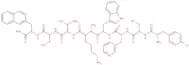
CAS:Please enquire for more information about H-p-Chloro-Phe-D-Cys-b-(3-pyridyl)-Ala-D-Trp-N-Me-Lys-Thr-Cys-2-Nal-NH2 trifluoroacetate salt (Disulfide bond) including the price, delivery time and more detailed product information at the technical inquiry form on this pageFormula:C58H69ClN12O9S2Purity:Min. 95%Molecular weight:1,177.83 g/mol(Gln22,Asn23)-Amyloid b-Protein (1-40) trifluoroacetate salt
CAS:Please enquire for more information about (Gln22,Asn23)-Amyloid b-Protein (1-40) trifluoroacetate salt including the price, delivery time and more detailed product information at the technical inquiry form on this pageFormula:C194H297N55O56SPurity:Min. 95%Molecular weight:4,327.84 g/molH-Lys-Phe-Gly-Lys-OH acetate salt
CAS:Please enquire for more information about H-Lys-Phe-Gly-Lys-OH acetate salt including the price, delivery time and more detailed product information at the technical inquiry form on this page
Formula:C23H38N6O5Purity:Min. 95%Molecular weight:478.59 g/molH-Arg-Ser-OH acetate salt
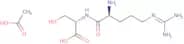
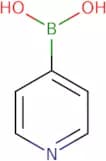
CAS:Controlled ProductPlease enquire for more information about H-Arg-Ser-OH acetate salt including the price, delivery time and more detailed product information at the technical inquiry form on this pageFormula:C9H19N5O4Purity:Min. 95%Molecular weight:261.28 g/mol4-Pyridinylboronic acid
CAS:4-Pyridinylboronic acid is a boron compound that contains two nitrogen atoms. It is an important reagent in organic synthesis and crystallography. 4-Pyridinylboronic acid has been shown to have biological properties, such as hydrogen bonding interactions. It is also used in the suzuki coupling reaction and the photochemical properties of the reaction solution are dependent on its coordination geometry. 4-pyridinylboronic acid has a high pH value, so it must be prepared in anhydrous sodium carbonate before use. The hydrogen bond between 4-pyridinylboronic acid and an azide is shown below: Nnowiki>/nowiki>Hnowiki>/nowiki>nowiki>/nowiki>Nnowiki>/nowiki>nowiki>/nowiki>HFormula:C5H6BNO2Color and Shape:PowderMolecular weight:122.92 g/molBNP-32 (rat) trifluoroacetate
CAS:Trifluoroacetate saltFormula:C146H239N47O44S3Purity:Min. 95%Molecular weight:3,452.95 g/molMca-Pro-Leu-Ala-Nva-Dap (Dnp)-Ala-Arg-NH2 trifluoroacetate salt
CAS:Please enquire for more information about Mca-Pro-Leu-Ala-Nva-Dap (Dnp)-Ala-Arg-NH2 trifluoroacetate salt including the price, delivery time and more detailed product information at the technical inquiry form on this pageFormula:C49H68N14O15Purity:Min. 95%Molecular weight:1,093.15 g/molBoc-epi-statine (3R,4S)-4-(Boc-amino)-3-hydroxy-6-methyl-heptanoic acid
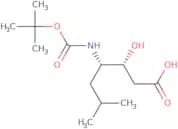
CAS:Please enquire for more information about Boc-epi-statine (3R,4S)-4-(Boc-amino)-3-hydroxy-6-methyl-heptanoic acid including the price, delivery time and more detailed product information at the technical inquiry form on this pageFormula:C13H25NO5Purity:Min. 95%Molecular weight:275.34 g/molBz-Val-Gly-Arg-AMC trifluoroacetate salt
CAS:Bz-Val-Gly-Arg-AMC is a growth factor that activates the extracellular signal-regulated protein kinase (ERK) pathway. The activation of this pathway results in an increase in cellular proliferation and inhibition of tumor growth. Bz-Val-Gly-Arg-AMC has been shown to activate ERK by interacting with VSMCs, which are cells that act as a structural component of blood vessels and play a role in regulating blood flow. This compound also induces phosphorylation of glycogen synthase kinase 3β and inhibits its activity, leading to increased protein synthesis through glycolysis. Bz-Val-Gly-Arg-AMC can be used as an inhibitor to bortezomib, a proteolytic enzyme that is used to treat cancer.Formula:C30H37N7O6Purity:Min. 95%Molecular weight:591.66 g/mol[2-fluoro-4-(trifluoromethyl)phenyl]boronic Acid
CAS:2-Fluoro-4-(trifluoromethyl)phenylboronic acid is a boron compound that can be used to synthesize a variety of target products. 2-Fluoro-4-(trifluoromethyl)phenylboronic acid occurs in the form of an oil and is an impurity in the target product, phenylboronic acid. This impurity can be removed by reacting with lithium benzotrifluoride. Lithiated 2-fluoro-4-(trifluoromethyl)phenylboronic acid is then reacted with phenylboronic acid to give lithiated phenylboronic ester in high yield. The lithiation reaction can be carried out under alkaline conditions or under a condition where the reactants are dissolved in water.Formula:C7H5BF4O2Purity:Min. 95%Molecular weight:207.92 g/molHIV (gp120) Antigenic Peptide trifluoroacetate salt
CAS:Please enquire for more information about HIV (gp120) Antigenic Peptide trifluoroacetate salt including the price, delivery time and more detailed product information at the technical inquiry form on this pageFormula:C117H211N41O31SPurity:Min. 95%Molecular weight:2,720.25 g/molEthyl 4-bromoacetoacetate
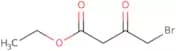
CAS:Ethyl 4-bromoacetoacetate is a chemical compound that is used in the synthesis of quinoline derivatives. It also has antiinflammatory properties and can be used to treat inflammatory diseases such as arthritis. The thermal expansion of this compound is greater than that of water, which can be useful in treating respiratory problems by providing increased oxygen transport. Ethyl 4-bromoacetoacetate is a reactive chemical that reacts with hydrochloric acid to produce hydrogen gas and ethyl bromide gas. It also undergoes nucleophilic substitutions at the carbon atom adjacent to the acetoacetate group. This reaction solution can be analyzed using magnetic resonance spectroscopy, which produces data on the sequences of this compound's atoms and its antiinflammatory activity.Formula:C6H9BrO3Purity:90%NmrMolecular weight:209.04 g/molAc-Arg-Cys-Met-5-aminopentanoyl-Arg-Val-Tyr-5-aminopentanoyl-Cys-NH2 trifluoroacetate salt (Disulfide bond)
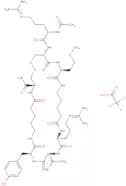
CAS:Please enquire for more information about Ac-Arg-Cys-Met-5-aminopentanoyl-Arg-Val-Tyr-5-aminopentanoyl-Cys-NH2 trifluoroacetate salt (Disulfide bond) including the price, delivery time and more detailed product information at the technical inquiry form on this pageFormula:C49H82N16O11S3Purity:Min. 95%Molecular weight:1,167.47 g/molL-Lysine acetate
CAS:Controlled ProductL-Lysine acetate is a precursor of L-lysine and is used in the treatment of cancers. It has been shown to promote the growth of pluripotent cells, which can differentiate into any tissue type. L-Lysine acetate promotes cellular transformation by increasing the expression of growth factor-β1 in cells. This compound also enhances cellular physiology, energy metabolism, and protein degradation. L-Lysine acetate inhibits the ubiquitin ligases that are involved in protein degradation, leading to an increase in cell proliferation. The use of L-Lysine acetate has shown promising results for the treatment of infectious diseases such as HIV/AIDS and tuberculosis. L-Lysine acetate blocks the replication of human immunodeficiency virus (HIV) by inhibiting reverse transcriptase activity and blocking its DNA chain elongation process.Formula:C8H18N2O4Purity:Min. 95%Color and Shape:PowderMolecular weight:206.24 g/mol







![[2-fluoro-4-(trifluoromethyl)phenyl]boronic Acid](/_next/image/?url=https%3A%2Fstatic.cymitquimica.com%2Fproducts%2F3D%2Fthumb-webp%2FFF105416.webp&w=3840&q=75)