Carboxylic Acids
Found 12454 products of "Carboxylic Acids"
Fmoc-epsilon-aminocaproic acid-Wang resin (200-400 mesh)
Please enquire for more information about Fmoc-epsilon-aminocaproic acid-Wang resin (200-400 mesh) including the price, delivery time and more detailed product information at the technical inquiry form on this pagePurity:Min. 95%(Ser8)-GLP-1 (7-36) amide (human, bovine, guinea pig, mouse, rat) trifluoroacetate salt
CAS:Please enquire for more information about (Ser8)-GLP-1 (7-36) amide (human, bovine, guinea pig, mouse, rat) trifluoroacetate salt including the price, delivery time and more detailed product information at the technical inquiry form on this pageFormula:C149H226N40O46Purity:Min. 95%Molecular weight:3,313.63 g/molHepcidin-24 (human) trifluoroacetate salt
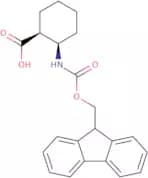
Please enquire for more information about Hepcidin-24 (human) trifluoroacetate salt including the price, delivery time and more detailed product information at the technical inquiry form on this pageFormula:C109H165N33O28S9Purity:Min. 95%Molecular weight:2,674.28 g/mol(1S,2R)-Fmoc-aminocyclohexane carboxylic acid
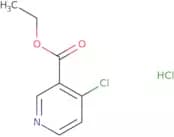
CAS:Please enquire for more information about (1S,2R)-Fmoc-aminocyclohexane carboxylic acid including the price, delivery time and more detailed product information at the technical inquiry form on this pageFormula:C22H23NO4Purity:Min. 95%Molecular weight:365.42 g/mol4-Chloro-Nicotinic acid ethyl ester hydrochloride
CAS:4-Chloro-Niacin is a lead compound for the treatment of diabetes. The drug is an agonist of the G protein coupled receptor, which is involved in glucose homeostasis and insulin secretion. 4-Chloro-Niacin has been shown to decrease blood glucose levels in diabetic rats by activating the G protein coupled receptor, thereby increasing the release of insulin from pancreatic beta cells. This compound also has an affinity for pyridine nucleotide receptors, suggesting that it may be useful for treating metabolic syndromes.
Formula:C8H8ClNO2·HClPurity:Min. 95%Molecular weight:222.07 g/molAcetyl-ACTH (2-24) (human, bovine, rat) trifluoroacetate salt
CAS:Please enquire for more information about Acetyl-ACTH (2-24) (human, bovine, rat) trifluoroacetate salt including the price, delivery time and more detailed product information at the technical inquiry form on this pageFormula:C135H207N39O30SPurity:Min. 95%Molecular weight:2,888.4 g/molMatrix Protein M1 (58-66) (Influenza A virus) trifluoroacetate salt
CAS:Please enquire for more information about Matrix Protein M1 (58-66) (Influenza A virus) trifluoroacetate salt including the price, delivery time and more detailed product information at the technical inquiry form on this pageFormula:C49H75N9O11·C2HF3O2Purity:Min. 95%Molecular weight:1,080.2 g/molH-Val-Ala-pNA acetate salt
CAS:Please enquire for more information about H-Val-Ala-pNA acetate salt including the price, delivery time and more detailed product information at the technical inquiry form on this page
Formula:C14H20N4O4Purity:Min. 95%Molecular weight:308.33 g/molAlpha-Casein (90-96) trifluoroacetate salt
CAS:Please enquire for more information about Alpha-Casein (90-96) trifluoroacetate salt including the price, delivery time and more detailed product information at the technical inquiry form on this pageFormula:C43H64N10O12Purity:Min. 95%Molecular weight:913.03 g/molNeuropeptide Y (1-24) amide (human, rat) trifluoroacetate salt
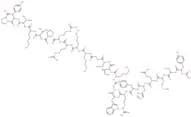
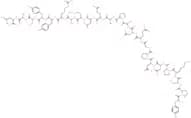
CAS:Please enquire for more information about Neuropeptide Y (1-24) amide (human, rat) trifluoroacetate salt including the price, delivery time and more detailed product information at the technical inquiry form on this pageFormula:C116H170N30O40SPurity:Min. 95%Molecular weight:2,656.84 g/mol2-Pyridineboronic acid
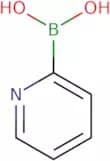
CAS:2-Pyridineboronic acid is a chemical compound that belongs to the group of quinoline derivatives. It is used in pharmaceutical preparations, including as an intermediate for the synthesis of other compounds. 2-Pyridineboronic acid has been shown to have antiproliferative effects on cancer cells and has been found to be active against nicotinic acetylcholine receptors (NAR). The compound also inhibits lipid kinase activity, which is involved in the production of phosphatidylcholine and phosphatidylethanolamine from phosphatidylserine. 2-Pyridineboronic acid can react with hydrochloric acid and electrochemical impedance spectroscopy to produce a solution that has a detection time of about 10 minutes.Formula:C5H6BNO2Purity:Min. 95%Molecular weight:122.92 g/mol(Tyr0)-BNP-32 (human) trifluoroacetate salt
CAS:Please enquire for more information about (Tyr0)-BNP-32 (human) trifluoroacetate salt including the price, delivery time and more detailed product information at the technical inquiry form on this pageFormula:C152H253N51O44S4Purity:Min. 95%Molecular weight:3,627.22 g/mol2,5-Anhydro-3,4-dideoxy-erythro-hexaric acid - 98%
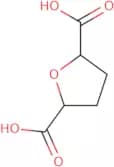
CAS:The synthesis of 2,5-anhydro-3,4-dideoxy-erythro-hexaric acid (2,5AHDHE) is described in detail. The reaction starts with the condensation of 3,4-dideoxy-erythro-hexose with aldehyde and furfural to give the hemiacetal. The ring opening of this hemiacetal leads to the formation of 2,5AHDHE and furfural. The protonation of 2,5AHDHE leads to proton release and bond cleavage. Furfural is reduced to 5-hydroxymethylfurfural (HMF). HMF is then oxidized to hydroxyl group by H2O2. The hydroxyl group reacts with a second molecule of 2,5AHDHE to form a new molecule of 2,5AHDHE and H2O2. This process can be repeated untilFormula:C6H8O5Purity:Min. 98 Area-%Color and Shape:White PowderMolecular weight:160.12 g/mol([13C6]Leu5)-Ghrelin (human) trifluoroacetate salt
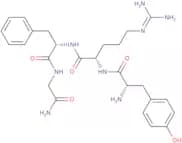
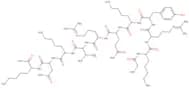
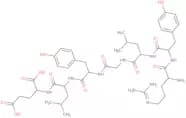
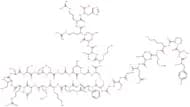
CAS:Please enquire for more information about ([13C6]Leu5)-Ghrelin (human) trifluoroacetate salt including the price, delivery time and more detailed product information at the technical inquiry form on this pagePurity:Min. 95%(D-Arg2)-Dermorphin (1-4) amide trifluoroacetate salt
CAS:Please enquire for more information about (D-Arg2)-Dermorphin (1-4) amide trifluoroacetate salt including the price, delivery time and more detailed product information at the technical inquiry form on this pageFormula:C26H36N8O5Purity:Min. 95%Molecular weight:540.61 g/molZ-Gly-Pro-Arg-4MbNA acetate salt
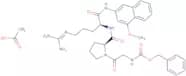
CAS:Controlled ProductPlease enquire for more information about Z-Gly-Pro-Arg-4MbNA acetate salt including the price, delivery time and more detailed product information at the technical inquiry form on this pageFormula:C32H39N7O6·C2H4O2Purity:Min. 95%Molecular weight:677.75 g/molGalanin-Like Peptide (human) trifluoroacetate salt
CAS:Please enquire for more information about Galanin-Like Peptide (human) trifluoroacetate salt including the price, delivery time and more detailed product information at the technical inquiry form on this pageFormula:C292H451N83O84SPurity:Min. 95%Molecular weight:6,500.28 g/molDodecylbenzenesulfonic acid, 70% in isopropanol
CAS:Dodecylbenzenesulfonic acid is a sulfonic acid that is used in the production of polyaniline. It is also used as an organic reagent that can be applied in organic synthesis, including polymerization and electrochemical studies. Dodecylbenzenesulfonic acid has been shown to react with sodium salts to form dodecyl benzene, which can be observed by synchronous fluorescence spectroscopy. This chemical has a phase transition temperature of -9°C and a boiling point of 176°C. Dodecylbenzenesulfonic acid is soluble in water vapor, but insoluble in ethanol or acetone.Formula:C18H30O3SPurity:Min. 95%Color and Shape:Clear LiquidMolecular weight:326.5 g/mol1-Naphthylphosphoric acid calcium
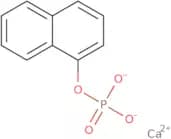
CAS:1-Naphthylphosphoric acid calcium salt (1NPAC) is a fine chemical that has been used as a building block in the synthesis of complex organic compounds. 1NPAC has been shown to be useful in the production of research chemicals and speciality chemicals. It is also employed as an intermediate for the production of high quality reagents. 1NPAC has versatile uses, as it can be used to synthesize other compounds, such as pharmaceuticals and agrochemicals.Formula:C20H18O8P2•CaPurity:Min. 95%Color and Shape:PowderMolecular weight:488.38 g/molPACAP-38 (28-38) (human, chicken, mouse, ovine, porcine, rat) trifluoroacetate salt
CAS:PACAP-38 (28-38) is a peptide hormone that is produced in the brain and regulates various physiological processes. It has been shown to have effects on intestinal, pancreatic, and lung cells. PACAP-38 (28-38) is a potent antagonist of vasoactive intestinal polypeptide (VIP), which has been implicated in the regulation of gastrointestinal motility and fluid secretion. The peptide also inhibits cancer cell proliferation by activating cell death pathways.
Formula:C61H110N24O14Purity:Min. 95%Molecular weight:1,403.68 g/mol



![([13C6]Leu5)-Ghrelin (human) trifluoroacetate salt](/_next/image/?url=https%3A%2Fstatic.cymitquimica.com%2Fproducts%2F3D%2Fthumb-webp%2FFL110022.webp&w=3840&q=75)