Carboxylic Acids
Carboxylic acids are organic molecules characterized by having a carboxyl-type functional group (-COOH). These acids are fundamental in various chemical reactions, including esterification, amidation, and decarboxylation. Carboxylic acids are widely used in the production of pharmaceuticals, polymers, and agrochemicals. In this section, you can find a large number of carboxylic acids ready to be used. At CymitQuimica, we provide a broad range of high-quality carboxylic acids to support your research and industrial applications.
Found 12454 products of "Carboxylic Acids"
Sort by
Purity (%)
0
100
|
0
|
50
|
90
|
95
|
100
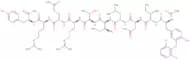
PYX-1 trifluoroacetate salt
CAS:<p>Please enquire for more information about PYX-1 trifluoroacetate salt including the price, delivery time and more detailed product information at the technical inquiry form on this page</p>Formula:C70H105Cl2N19O16Purity:Min. 95%Molecular weight:1,539.61 g/molAmyloid β-Protein (25-35) amide trifluoroacetate salt
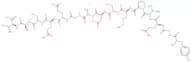
CAS:Please enquire for more information about Amyloid beta-Protein (25-35) amide trifluoroacetate salt including the price, delivery time and more detailed product information at the technical inquiry form on this pageFormula:C45H82N14O13SPurity:Min. 95%Molecular weight:1,059.29 g/molH-Gly-His-Arg-Pro-OH acetate salt
CAS:<p>H-Gly-His-Arg-Pro-OH acetate salt is a synthetic monoclonal antibody that binds to fibrinogen. It has been used in the production of a model protein and as an anticoagulant. H-Gly-His-Arg-Pro-OH acetate salt has been shown to inhibit the growth of tissue plasminogen activator, which is a growth factor for cells involved in blood clotting. This drug also inhibits the release of acetylcholine from nerve cells, which may be due to its ability to bind to plasma proteins.</p>Formula:C19H31N9O5Purity:Min. 95%Molecular weight:465.51 g/molAnnexin A1 (1-11) (dephosphorylated) (human, bovine, chicken, porcine) trifluoroacetate salt
CAS:<p>Annexin A1 (1-11) is a peptide that is part of the annexin family. It is involved in the degranulation of cells and inhibits inflammation by inhibiting the production of pro-inflammatory cytokines. Annexin A1 (1-11) has been shown to be an anti-inflammatory compound as it binds to phospholipids on the surface of neutrophils, leading to inhibition of their chemotaxis and phagocytosis. This peptide also interacts with other annexins and prevents apoptosis by blocking caspase activity. Finally, it has been found that annexin A1 (1-11) can promote the healing of wounds in mice by accelerating reepithelialization and reducing scar formation. The concentration required for these effects are nanomolar concentrations.</p>Formula:C63H94N14O17SPurity:Min. 95%Molecular weight:1,351.57 g/mol(Des-Pyr 1,Des-Gly10,D-Leu6,Pro-NHEt 9)-LHRH trifluoroacetate salt
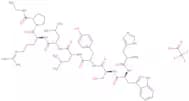
CAS:<p>Please enquire for more information about (Des-Pyr 1,Des-Gly10,D-Leu6,Pro-NHEt 9)-LHRH trifluoroacetate salt including the price, delivery time and more detailed product information at the technical inquiry form on this page</p>Formula:C54H79N15O10Purity:Min. 95%Molecular weight:1,098.3 g/molMercuric acetate
CAS:Controlled Product<p>Mercuric acetate is a salt of mercuric and acetic acid. It is used as an antiseptic, disinfectant, and preservative in the food industry. Mercuric acetate has been shown to have anti-inflammatory properties and is used for the treatment of inflammatory bowel disease. The ester linkage between the two molecules allows it to be hydrolysed into its components by enzymes such as esterases or glucuronidases, which may be one of the reasons for its therapeutic effects. Mercuric acetate also reacts with biological molecules, including proteins, nucleic acids, and carbohydrates. This reaction mechanism may contribute to its other biological properties such as lowering blood sugar levels and inhibiting glycolysis in cells that depend on sodium-dependent glucose transport mechanisms.</p>Formula:C4H6HgO4Purity:Min. 95%Molecular weight:318.68 g/molDibenzoyl-D-(+)-tartaric acid monohydrate
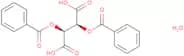
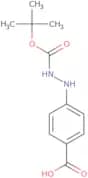
CAS:Dibenzoyl-D-(+)-tartaric acid monohydrate is a weak organic acid that can be used as a neutralizing agent. It has been shown to react with hydrochloric acid, calcium carbonate, and other inorganic acids to form water soluble salts. This compound is also useful for the separation of enantiomers in chromatography and for the determination of the rate of reaction between an organic molecule and an inorganic acid. Dibenzoyl-D-(+)-tartaric acid monohydrate has been used as a template molecule for determining thermodynamic data on various molecules.Formula:C18H14O8·H2OPurity:Min. 95%Color and Shape:White To Off-White SolidMolecular weight:376.31 g/mol4-(2'-N-Boc-hydrazino)benzoic acid
CAS:Please enquire for more information about 4-(2'-N-Boc-hydrazino)benzoic acid including the price, delivery time and more detailed product information at the technical inquiry form on this pageFormula:C12H16N2O4Purity:Min. 95%Molecular weight:252.27 g/molAmyloid β-Protein (1-15) trifluoroacetate salt
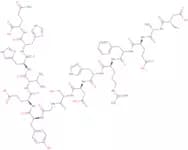
CAS:Amyloid beta-protein (1-15) is a peptide fragment of the amyloid protein that is associated with Alzheimer's disease. Amyloid beta-Protein (1-15) activates the transcription of a number of genes, including those that encode neurotrophic factors and growth factors. It has been shown to have neurotrophic properties and to increase the survival rate of neurons in vitro. It also protects against neuronal death induced by oxidative stress and high concentrations of glutamate. The structure of amyloid beta-protein (1-15) has been elucidated using molecular modeling techniques and X-ray crystallography. The trifluoroacetate salt form is stable at physiological pH levels and shows good solubility in water, making it an attractive therapeutic drug candidate.Formula:C78H107N25O27Purity:Min. 95%Molecular weight:1,826.84 g/molDocosahexaenoic acid
CAS:<p>Docosahexaenoic acid (DHA) is a fatty acid that is usually obtained from fish oil. DHA has been shown to decrease the production of prostaglandin E2 (PGE2), which can lead to inflammation in various parts of the body. The synthesis and release of PGE2 is regulated by toll-like receptor 4 (TLR4). DHA has also been shown to reduce tumor size and improve survival rates in mice with breast cancer. DHA is a long-chain polyunsaturated fatty acid that can be found in many types of cells, including neurons. It has been shown to have beneficial effects on neuronal death during experimental models of stroke and traumatic brain injury.</p>Formula:C22H32O2Purity:Min. 95%Color and Shape:PowderMolecular weight:328.49 g/molOzarelix acetate salt
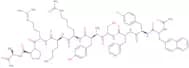
CAS:<p>Ozarelix acetate salt is a synthetic androgen that has been shown to have pharmacological activity in the treatment of prostate cancer. It binds to albumin, which is found in high concentrations in the prostate, and is then released slowly over time. In rat studies, it has been shown to improve symptoms of depression by binding to serotonin receptors. This drug also binds with fatty acids in blood plasma and can be used as a biomarker for the presence of cancer. Ozarelix acetate salt has not been studied extensively in humans, but has shown promising results when used for the treatment of diabetic neuropathy and for cancer prevention.</p>Formula:C72H96ClN17O14Purity:Min. 95%Molecular weight:1,459.09 g/molpTH (2-34) (human) acetate salt
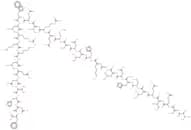
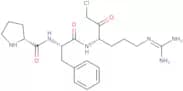
CAS:<p>Please enquire for more information about pTH (2-34) (human) acetate salt including the price, delivery time and more detailed product information at the technical inquiry form on this page</p>Formula:C178H286N54O49S2Purity:Min. 95%Molecular weight:4,030.64 g/molH-D-Pro-Phe-Arg-chloromethylketone trifluoroacetate salt
CAS:H-D-Pro-Phe-Arg-chloromethylketone trifluoroacetate salt is a polyvalent antivenom that is used in the treatment of snakebites and insect stings. It has been shown to be effective in the treatment of life-threatening envenomations, including bites from cobras and other rattlesnakes. This drug is not active against nonactivated venom, such as those from bees or spiders. H-D-Pro-Phe-Arg-chloromethylketone trifluoroacetate salt binds to the cytolysin, which prevents its activity by inactivating it. The drug also has a vasoconstrictive effect, which limits blood flow to tissues and may reduce tissue damage caused by venom toxins.Formula:C21H31ClN6O3Purity:Min. 95%Molecular weight:450.96 g/molCART (62-76) (human, rat) trifluoroacetate salt
CAS:<p>Please enquire for more information about CART (62-76) (human, rat) trifluoroacetate salt including the price, delivery time and more detailed product information at the technical inquiry form on this page</p>Formula:C64H99N17O23S3Purity:Min. 95%Molecular weight:1,570.77 g/molAngiotensin (1-12) (mouse, rat) trifluoroacetate salt
CAS:Please enquire for more information about Angiotensin (1-12) (mouse, rat) trifluoroacetate salt including the price, delivery time and more detailed product information at the technical inquiry form on this pageFormula:C77H109N19O17Purity:Min. 95%Molecular weight:1,572.81 g/molBeta-Bag Cell Peptide (Aplysia californica) trifluoroacetate salt
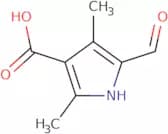
CAS:<p>Aplysia californica is a species of sea slug that produces a peptide, beta-Bag Cell Peptide (BACP), which has been shown to have depolarizing effects on neurons. BACP can be synthesized from the amino acid sequence of the Aplysia californica cell membrane protein, and this synthetic peptide has been shown to have maximal depolarizing effects at high concentrations. The depolarizing effect of BACP can be seen in populations of neurons as well as individual neurons. This peptide also desensitizes autoreceptors for acetylcholine and serotonin, which may play a role in its electrophysiological effects.</p>Formula:C33H53N13O6Purity:Min. 95%Molecular weight:727.86 g/mol5-Formyl-2,4-dimethyl-1H-pyrrole-3-carboxylic acid
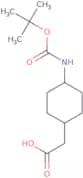
CAS:<p>5-Formyl-2,4-dimethyl-1H-pyrrole-3-carboxylic acid is a chemical compound that is used in the formylation of amines to produce formamides. It has been optimized for industrial production by optimizing reaction time, formylation conditions, and solvents. It has also been shown that 5-formyl-2,4-dimethyl-1H-pyrrole-3-carboxylic acid produces good yields and high product purity.</p>Formula:C8H9NO3Purity:Min. 95%Molecular weight:167.16 g/molBoc-trans-4-aminocyclohexane acetic acid
CAS:Please enquire for more information about Boc-trans-4-aminocyclohexane acetic acid including the price, delivery time and more detailed product information at the technical inquiry form on this pageFormula:C13H23NO4Molecular weight:257.33 g/molMyelin Proteolipid Protein (139-151) (depalmitoylated) (human, bovine, dog, mouse, rat) trifluoroacetate salt
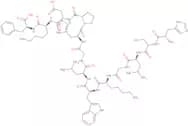
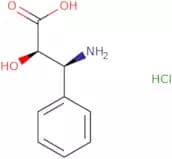
CAS:<p>MPLP(139-151) is a peptide that is derived from the myelin proteolipid protein (PLP). MPLP(139-151) has been shown to inhibit macrophage inflammatory in vitro and brain inflammation in vivo. The inhibition of macrophages was mediated by the induction of apoptosis and inhibition of NF-κB. MPLP(139-151) also induced regression of experimental autoimmune encephalomyelitis in mice, which suggests that it might be useful as a therapeutic agent for multiple sclerosis or other inflammatory diseases.</p>Formula:C72H104N20O16SPurity:Min. 95%Molecular weight:1,537.79 g/mol(2R,3S)-3-Amino-2-hydroxy-3-phenylpropanoic acid hydrochloride
CAS:<p>(2R,3S)-3-Amino-2-hydroxy-3-phenylpropanoic acid hydrochloride is an organic compound that is used in the manufacture of taxol, an anticancer drug. It is synthesized by reacting chloroacetic acid with a metal hydroxide, such as sodium hydroxide or potassium hydroxide. The reaction proceeds spontaneously to form the enantiomerically pure (2R,3S) form and unreacted (2S,3R) form. The (2R,3S) enantiomer has been found to be more reactive than the (2S,3R) form. Quaternary ammonium salts are formed when the (2R,3S) enantiomer reacts with quaternary ammonium compounds such as benzyltrimethylammonium chloride. This compound can also be used in catalytic reactions to produce drugs such as carbapenems and pen</p>Formula:C9H12ClNO3Purity:Min. 95%Molecular weight:217.65 g/mol