Carboxylic Acids
Carboxylic acids are organic molecules characterized by having a carboxyl-type functional group (-COOH). These acids are fundamental in various chemical reactions, including esterification, amidation, and decarboxylation. Carboxylic acids are widely used in the production of pharmaceuticals, polymers, and agrochemicals. In this section, you can find a large number of carboxylic acids ready to be used. At CymitQuimica, we provide a broad range of high-quality carboxylic acids to support your research and industrial applications.
Found 12454 products of "Carboxylic Acids"
Sort by
Purity (%)
0
100
|
0
|
50
|
90
|
95
|
100
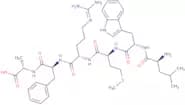
H-Leu-Trp-Met-Arg-Phe-Ala-OH acetate salt
CAS:<p>H-Leu-Trp-Met-Arg-Phe-Ala-OH acetate salt is a synthetic amino acid. It has been shown to be a substrate for peptidases and proteolytic enzymes, including serine protease. H-Leu-Trp-Met-Arg-Phe-Ala-OH acetate salt also has catalytic activity, which leads to the formation of methyl ketones. This product is used as an analytical reagent in the determination of specificities of proteolytic enzymes. It is also used to measure the activity of amyloid protein and peptidases.</p>Formula:C40H58N10O7SPurity:Min. 95%Molecular weight:823.02 g/molGambogic acid
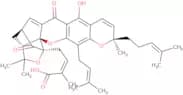
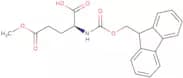
CAS:<p>Gambogic acid is a xanthonoid compound, which is a naturally occurring product derived from the resin of Garcinia hanburyi, a tree found in Southeast Asia. It functions primarily through its apoptotic and anti-proliferative effects on cancer cells. Mechanistically, Gambogic acid binds to transferrin receptors, leading to the disruption of cell survival pathways, inhibition of the NF-kB signaling pathway, and induction of apoptosis by activating caspases and influencing mitochondrial pathways.</p>Purity:Min. 95%Fmoc-L-glutamic acid gamma-methyl ester
CAS:<p>Please enquire for more information about Fmoc-L-glutamic acid gamma-methyl ester including the price, delivery time and more detailed product information at the technical inquiry form on this page</p>Formula:C21H21NO6Purity:Min. 95%Molecular weight:383.39 g/mol(7-Diethylaminocoumarin-3-yl)carbonyl-Amyloid b-Protein (1-40) trifluoroacetate salt
CAS:<p>Please enquire for more information about (7-Diethylaminocoumarin-3-yl)carbonyl-Amyloid b-Protein (1-40) trifluoroacetate salt including the price, delivery time and more detailed product information at the technical inquiry form on this page</p>Formula:C208H308N54O61SPurity:Min. 95%Molecular weight:4,573.06 g/mol(Pro34)-Neuropeptide Y (porcine) trifluoroacetate salt
CAS:<p>Please enquire for more information about (Pro34)-Neuropeptide Y (porcine) trifluoroacetate salt including the price, delivery time and more detailed product information at the technical inquiry form on this page</p>Formula:C190H286N54O56Purity:Min. 95%Molecular weight:4,222.63 g/molH-Arg-Phe-Ala-OH acetate salt
CAS:Please enquire for more information about H-Arg-Phe-Ala-OH acetate salt including the price, delivery time and more detailed product information at the technical inquiry form on this pageFormula:C18H28N6O4Purity:Min. 95%Molecular weight:392.45 g/molLinoleic acid - powder
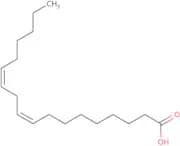
CAS:<p>Linoleic acid is a polyunsaturated fatty acid that is an important component of cell membranes. It has been shown to inhibit oxidative injury and improve mitochondrial functions. Linoleic acid also has a role in energy metabolism, as it is the precursor for biosynthesis of eicosanoids and arachidonic acid. The physiological effects of linoleic acid have been studied using a model system consisting of isolated rat adipose tissue and mitochondria. This model system has been used to investigate the inhibitory properties of linoleic acid on caproic acid-induced lipid peroxidation. Linoleic acid has also been shown to have anion radical scavenging activity when in the presence of iron. This compound can be analyzed using gas chromatography-mass spectrometry (GC-MS) based on its chemical composition, which consists mainly of linear 18-carbon chains with two double bonds at positions 9 and 12.</p>Formula:C18H32O2Purity:Min. 95%Color and Shape:PowderMolecular weight:280.45 g/molEnterostatin (human, mouse, rat) acetate salt
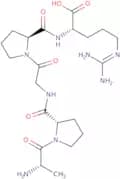
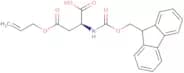
CAS:<p>Enterostatin is a peptide hormone that inhibits the release of insulin, gastric acid and pancreatic juices. Enterostatin has been shown to have a number of biological properties, including an anti-obesity effect in humans. In mice, enterostatin has been shown to decrease food intake, increase energy expenditure and weight loss. Enterostatin also decreases the levels of serum cholesterol and triglycerides in rats. This drug has a number of pharmacological activities including inhibition of platelet aggregation and vasodilation. Enterostatin is related to peptide hormones such as ghrelin, which stimulates appetite, and cholecystokinin (CCK), which reduces appetite. It may be used as an alternative treatment for obesity or metabolic disorders like diabetes mellitus type 2 or hyperlipidaemia.</p>Formula:C21H36N8O6Purity:Min. 95%Molecular weight:496.56 g/molFmoc-L-aspartic acid beta-allyl ester
CAS:<p>Fmoc-L-aspartic acid beta-allyl ester is a specific interaction between an amide and an enzyme target. It has been shown to have anti-inflammatory properties by inhibiting the activity of COX-2, which inhibits the production of prostaglandins. Fmoc-L-aspartic acid beta-allyl ester is a cyclic peptide with a lactam ring system that has been synthesized in a stepwise manner on a solid phase. This molecule interacts with cell line A549 and blocks the proliferation of cancer cells. Fmoc-L-aspartic acid beta-allyl ester also contains a disulfide bond that stabilizes its structure.</p>Formula:C22H21NO6Purity:Min. 95%Molecular weight:395.41 g/molH-Gly-Arg-Gly-Asp-Ser-Pro-Cys-OH trifluoroacetate salt
CAS:<p>H-Gly-Arg-Gly-Asp-Ser-Pro-Cys-OH trifluoroacetate salt is a peptide that has been shown to inhibit the growth of tumor cells. It has also been shown to have biological properties in a number of experimental models, including in vitro and in vivo studies. H-Gly-Arg-Gly-Asp-Ser-Pro-Cys-OH trifluoroacetate salt inhibits muscle cell proliferation by binding to the extracellular matrix protein collagen type I. This inhibition leads to reduced tissue formation and body growth. This peptide also inhibits the proliferation of cancer cells by blocking the production of growth factor beta 1 (GFβ1).</p>Formula:C25H42N10O11SPurity:Min. 95%Molecular weight:690.73 g/molAcetyl-(Asn30,Tyr32)-Calcitonin (8-32) (salmon I) trifluoroacetate salt
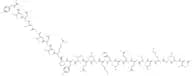
CAS:<p>Please enquire for more information about Acetyl-(Asn30,Tyr32)-Calcitonin (8-32) (salmon I) trifluoroacetate salt including the price, delivery time and more detailed product information at the technical inquiry form on this page</p>Formula:C127H205N37O40Purity:Min. 95%Molecular weight:2,890.21 g/molent-[Amyloid b-Protein (20-16)]-b-Ala-D-Lys(ent-[Amyloid b-Protein (16-20)]) trifluoroacetate salt
CAS:<p>Please enquire for more information about ent-[Amyloid b-Protein (20-16)]-b-Ala-D-Lys(ent-[Amyloid b-Protein (16-20)]) trifluoroacetate salt including the price, delivery time and more detailed product information at the technical inquiry form on this page</p>Formula:C79H119N15O13Purity:Min. 95%Molecular weight:1,486.88 g/molAmyloid beta-Protein (1-42) (scrambled) trifluoroacetate salt
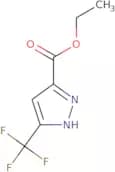
CAS:<p>Please enquire for more information about Amyloid beta-Protein (1-42) (scrambled) trifluoroacetate salt including the price, delivery time and more detailed product information at the technical inquiry form on this page</p>Formula:C203H311N55O60SPurity:Min. 95%Molecular weight:4,514.04 g/mol5-(Trifluoromethyl)-1H-Pyrazole-3-carboxylic Acid Ethyl Ester
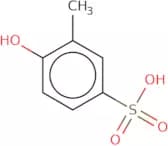
CAS:<p>Please enquire for more information about 5-(Trifluoromethyl)-1H-Pyrazole-3-carboxylic Acid Ethyl Ester including the price, delivery time and more detailed product information at the technical inquiry form on this page</p>Formula:C7H7F3N2O2Purity:Min. 95%Molecular weight:208.14 g/molo-Cresol-4-sulphonic acid
CAS:<p>o-Cresol-4-sulphonic acid is a fine chemical with the CAS number 7134-04-5. It is a versatile building block that can be used as a reagent in research, as a speciality chemical and as an intermediate in the production of other compounds. o-Cresol-4-sulphonic acid has been used to synthesize pharmaceuticals, agrochemicals, dyes, perfumes and many more products. This compound has also been used as a reaction component in organic synthesis to form new compounds and scaffolds.</p>Formula:C7H8O4SPurity:Min. 95%Color and Shape:PowderMolecular weight:188.2 g/mol(Lys15,Arg16,Leu27)-VIP (1-7)-GRF (8-27) trifluoroacetate salt
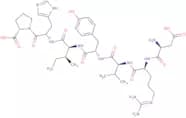
CAS:<p>Please enquire for more information about (Lys15,Arg16,Leu27)-VIP (1-7)-GRF (8-27) trifluoroacetate salt including the price, delivery time and more detailed product information at the technical inquiry form on this page</p>Formula:C142H240N44O38Purity:Min. 95%Molecular weight:3,171.7 g/molAngiotensin I/II (1-7) trifluoroacetate salt
CAS:<p>Angiotensin I/II (1-7) trifluoroacetate salt is a selective inhibitor of angiotensin II. It blocks the activity of angiotensin II, and thereby prevents the activation of growth factor-β1, which leads to a decrease in pulmonary hypertension. The drug has also been shown to be effective in blocking dextran sulfate absorption, as well as preventing bowel disease by inhibiting receptor activity. Angiotensin I/II (1-7) trifluoroacetate salt has been shown to have an anti-inflammatory effect on the cardiovascular system by blocking cell signaling pathways and reducing blood pressure. This drug is used for treatment of metabolic disorders such as atherosclerotic lesion, cardiac diseases such as coronary heart diseases, and bowel disease.</p>Formula:C41H62N12O11Purity:Min. 95%Molecular weight:899.01 g/molC5a Anaphylatoxin (human) trifluoroacetate salt )
CAS:<p>Please enquire for more information about C5a Anaphylatoxin (human) trifluoroacetate salt ) including the price, delivery time and more detailed product information at the technical inquiry form on this page</p>Formula:C350H578N108O107S8Purity:Min. 95%Molecular weight:8,267.53 g/molH-Glu(Glu(Glu-OH)-OH)-OH trifluoroacetate salt
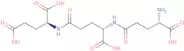
CAS:H-Glu(Glu(Glu-OH)-OH)-OH trifluoroacetate salt is a casein that is used as a model system for pancreatic β-cells. It has been shown to induce cell apoptosis in malignant cells and sequences that are associated with the development of pancreatic cancer. H-Glu(Glu(Glu-OH)-OH)-OH trifluoroacetate salt also induces endothelial cell proliferation and decreases cell function, which may be due to its ability to promote uptake of this compound.Formula:C15H23N3O10Purity:Min. 95%Molecular weight:405.36 g/mol1-(Mercaptomethyl)cyclopropaneacetic acid
CAS:<p>1-(Mercaptomethyl)cyclopropaneacetic acid is a reaction product of hydrolysis, transfer, and industrialization. It is used in the synthesis of organic compounds such as quinolinediols and thioureas. 1-(Mercaptomethyl)cyclopropaneacetic acid is typically prepared by the reaction of an alkylsulfonyl chloride with an inorganic base such as lithium or sodium carbonate in an organic solvent such as acetonitrile. The compound is also used to produce other organosulfur compounds, including imino sulfides and disulfides.</p>Formula:C6H10O2SPurity:Min. 95%Color and Shape:PowderMolecular weight:146.21 g/mol



![ent-[Amyloid b-Protein (20-16)]-b-Ala-D-Lys(ent-[Amyloid b-Protein (16-20)]) trifluoroacetate salt](/_next/image/?url=https%3A%2Fstatic.cymitquimica.com%2Fproducts%2F3D%2Fthumb-webp%2FFE109711.webp&w=3840&q=75)