Carboxylic Acids
Carboxylic acids are organic molecules characterized by having a carboxyl-type functional group (-COOH). These acids are fundamental in various chemical reactions, including esterification, amidation, and decarboxylation. Carboxylic acids are widely used in the production of pharmaceuticals, polymers, and agrochemicals. In this section, you can find a large number of carboxylic acids ready to be used. At CymitQuimica, we provide a broad range of high-quality carboxylic acids to support your research and industrial applications.
Found 12453 products of "Carboxylic Acids"
Sort by
Purity (%)
0
100
|
0
|
50
|
90
|
95
|
100
Docosahexaenoic acid ethyl ester
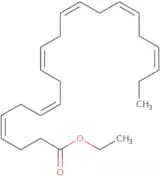
CAS:<p>Docosahexaenoic acid ethyl ester (DHAEE) is a biologically active form of docosahexaenoic acid (DHA), which is an omega-3 polyunsaturated fatty acid. DHAEE is synthesized from DHA through the process of acylation with ethanol. It has been shown to have antioxidant and anti-inflammatory properties in animal studies, as well as improved brain functions. When given to rats, it prevents neuronal death and has been shown to reduce the risk of congestive heart failure.</p>Formula:C24H36O2Purity:Min. 95%Color and Shape:Colorless Yellow Clear LiquidMolecular weight:356.54 g/molMercaptoacetic acid sodium salt
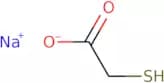
CAS:<p>Mercaptoacetic acid sodium salt (MAS) is an oxidation catalyst that is used to convert ethyl alcohol into acetic acid. It has been shown to be a good catalyst for the oxidation of hydroxyl groups in the presence of metal hydroxides or inorganic acids, such as sodium carbonate. MAS has also been shown to be toxic to human serum and is not recommended for use in humans. The toxicity of MAS may be due to its ability to react with fatty acids and form mercaptans, which are volatile compounds that can cause irritation. Mercaptoacetic acid sodium salt reacts with potassium dichromate and forms mercaptans and other products, which may contribute to its toxicity.</p>Formula:C2H3NaO2SPurity:(Titration) Min. 90%Color and Shape:PowderMolecular weight:114.1 g/molMca-Amyloid β/A4 Protein Precursor770 (667-676)-Lys(Dnp)-Arg-Arg amide trifluoroacetate salt
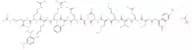
CAS:<p>Please enquire for more information about Mca-Amyloid beta/A4 Protein Precursor770 (667-676)-Lys(Dnp)-Arg-Arg amide trifluoroacetate salt including the price, delivery time and more detailed product information at the technical inquiry form on this page</p>Formula:C87H129N27O28SPurity:Min. 95%Molecular weight:2,033.19 g/mol5-Aminopyridine-3-carboxylic acid
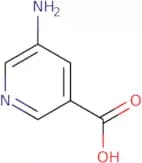
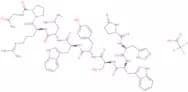
CAS:<p>5-Aminopyridine-3-carboxylic acid (5APC) is a structural analog of nicotinic acid that has been shown to have anti-inflammatory effects. 5APC inhibits the production of inflammatory cytokines, such as IL-10 and IL-17, by inhibiting the activation of NFκB and MAPK pathways. This drug also has significant inhibitory activities against dextran sulfate sodium (DSS)-induced acute colitis in experimental models. 5APC is thought to act by interrupting the assembly of p38 mitogen activated protein kinase (MAPK) and nuclear factor kappa B (NFκB) signaling complexes.</p>Formula:C6H6N2O2Purity:Min. 95%Molecular weight:138.12 g/mol(Trp6)-LHRH trifluoroacetate salt Pyr-His-Trp-Ser-Tyr-Trp-Leu-Arg-Pro-Gly-NH2 trifluoroacetate salt
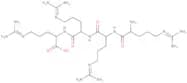
CAS:<p>Please enquire for more information about (Trp6)-LHRH trifluoroacetate salt Pyr-His-Trp-Ser-Tyr-Trp-Leu-Arg-Pro-Gly-NH2 trifluoroacetate salt including the price, delivery time and more detailed product information at the technical inquiry form on this page</p>Formula:C64H82N18O13Purity:Min. 95%Molecular weight:1,311.45 g/molH-Arg-Arg-Arg-Arg-OH acetate salt
CAS:<p>Acetate salt</p>Formula:C24H50N16O5Purity:Min. 95%Molecular weight:642.76 g/mol16-Hydroxyhexadecanoic acid
CAS:<p>16-Hydroxyhexadecanoic acid is a fatty acid that contains 16 carbons and 2 hydroxyl groups. It can be found in rat liver microsomes, where it binds to the cytochrome P450 enzyme, inhibiting its activity. The structural analysis of this compound has been shown to have intermolecular hydrogen bonding between the nitrogen atoms and the oxygen atoms in the hydroxyl group. 16-Hydroxyhexadecanoic acid also exhibits phase transition temperatures, which are increased by adding water molecules. This compound also has an inhibitory effect on recombinant cytochrome P450 enzymes from p. pastoris and can be used as a substrate for methyl myristate metabolism. In addition, 16-hydroxyhexadecanoic acid binds to dinucleotide phosphate (NADPH) and fluoresces when excited at 340 nm using a fluorescence detector.</p>Formula:C16H32O3Purity:Min. 95%Color and Shape:White PowderMolecular weight:272.42 g/mol1,2-Distearoyl-sn-glycero-3-phosphatidic acid·disodium salt
CAS:<p>Please enquire for more information about 1,2-Distearoyl-sn-glycero-3-phosphatidic acid·disodium salt including the price, delivery time and more detailed product information at the technical inquiry form on this page</p>Formula:C39H75Na2O8PPurity:Min. 95%Molecular weight:748.96 g/molConjugated linoleic acid - liquid
CAS:<p>Conjugated linoleic acid (CLA) is a fatty acid found in beef and dairy products. It is a conjugated form of linoleic acid, which means it has two or more double bonds in its chemical structure. CLA may help to regulate energy metabolism by inhibiting the activity of enzymes involved in fat and carbohydrate metabolism. CLA has also been shown to have inhibitory properties against polymerase chain reaction (PCR), an enzyme that copies DNA during cell division. CLA has also been shown to reduce the symptoms of bowel disease, including reducing inflammation and improving insulin sensitivity. CLA may suppress body weight gain and fat accumulation in humans, as well as reduce the development of type 2 diabetes mellitus. In addition, CLA may be effective against infectious diseases such as tuberculosis and HIV/AIDS because it can lower levels of pro-inflammatory cytokines like tumor necrosis factor-α (TNF-α)</p>Formula:C18H32O2Purity:Min. 95%Color and Shape:Slightly Yellow Clear LiquidMolecular weight:280.45 g/molAmyloid Dan Protein (1-34) trifluoroacetate salt
CAS:<p>Please enquire for more information about Amyloid Dan Protein (1-34) trifluoroacetate salt including the price, delivery time and more detailed product information at the technical inquiry form on this page</p>Formula:C185H268N48O51S2Purity:Min. 95%Molecular weight:4,044.53 g/molMca-(Asn670,Leu671)-Amyloid β/A4 Protein Precursor770 (667-674)-Dap (Dnp) ammonium acetate salt
CAS:<p>Please enquire for more information about Mca-(Asn670,Leu671)-Amyloid beta/A4 Protein Precursor770 (667-674)-Dap (Dnp) ammonium acetate salt including the price, delivery time and more detailed product information at the technical inquiry form on this page</p>Formula:C56H73N13O26Purity:Min. 95%Molecular weight:1,344.25 g/molAmyloid β-Protein (1-38) trifluoroacetate salt
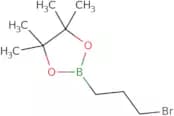
CAS:<p>Please enquire for more information about Amyloid beta-Protein (1-38) trifluoroacetate salt including the price, delivery time and more detailed product information at the technical inquiry form on this page</p>Formula:C184H277N51O56SPurity:Min. 95%Molecular weight:4,131.54 g/mol3-Bromopropylboronic acid pinacol ester
CAS:<p>Please enquire for more information about 3-Bromopropylboronic acid pinacol ester including the price, delivery time and more detailed product information at the technical inquiry form on this page</p>Formula:C9H18BBrO2Purity:Min. 95%Molecular weight:248.95 g/molβ-Casomorphin (1-4) (bovine) acetate salt
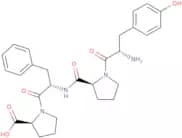
CAS:<p>Beta-Casomorphin (1-4) is a tetrapeptide that is derived from the amino acid sequence of bovine beta-casein. It inhibits the binding of opioid receptors and has been shown to have an inhibitory effect on muscle activity. Beta-Casomorphin (1-4) has also been shown to have a stabilizing effect on the genotype, which may be due to its ability to bind to DNA. Beta-Casomorphin (1-4) is detectable in urine and can be used as a marker for assessing the effectiveness of treatments in infants with Colic.</p>Formula:C28H34N4O6Purity:Min. 95%Molecular weight:522.59 g/molPAR-2 (1-6) (human) trifluoroacetate salt
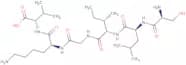
CAS:<p>PAR-2 is a cytosolic protein that is activated by calcium. PAR-2 activation induces the synthesis of prostaglandins and other inflammatory mediators, which stimulate the release of substances from cells such as cytokines and chemokines. PAR-2 also has an important role in cell proliferation, differentiation, apoptosis, and cancer development. PAR-2 activation is induced by proteases such as trypsin or soybean trypsin inhibitor. The trifluoroacetate salt form of PAR-2 (1-6) has been used to inhibit protease activity in colon cancer cells and prostate cancer cells.<br>PAR-2 (1-6) (human) trifluoroacetate salt H-Ser-Leu-Ile-Gly-Lys-Val-OH trifluoroacetate salt is a potent chemical inhibitor of trypsin activity with IC50 values of 0.5 µM for soybean trypsin inhibitor</p>Formula:C28H53N7O8Purity:Min. 95%Molecular weight:615.76 g/mol2-Amino-a-(methoxyimino)-4-thiazoleacetic acid
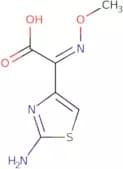
CAS:<p>2-Amino-a-(methoxyimino)-4-thiazoleacetic acid is a reaction product of cefotaxime and n-dimethyl formamide. It has been shown to be an effective agent for the treatment of wastewater with a high organic content. 2-Amino-a-(methoxyimino)-4-thiazoleacetic acid also reacts with chloride ions to form cleavage products that are soluble in water, making it an ideal choice for wastewater treatment. This compound is not toxic and can be used as a drug to treat patients with infections caused by bacteria resistant to other antibiotics. 2-Amino-a-(methoxyimino)-4-thiazoleacetic acid binds to mismatched base pairs in DNA, inhibiting DNA synthesis and causing cell death by apoptosis.</p>Formula:C6H7N3O3SPurity:Min. 95%Molecular weight:201.2 g/molAxltide trifluoroacetate salt
CAS:<p>Please enquire for more information about Axltide trifluoroacetate salt including the price, delivery time and more detailed product information at the technical inquiry form on this page</p>Formula:C63H107N19O20S2Purity:Min. 95%Molecular weight:1,514.77 g/molH-Arg-Ile-OH acetate salt
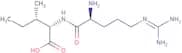
CAS:<p>H-Arg-Ile-OH acetate salt is a regulatory protein that is found in plant cells. It has been shown to be involved in the regulation of cancer, as well as having some anti-inflammatory activities. H-Arg-Ile-OH acetate salt also has been shown to inhibit the production of fatty acids and coagulation factors by inhibiting serine proteases and thromboplastin activity, respectively. H-Arg-Ile-OH acetate salt may have an important role in regulating blood clotting by preventing fibrinogen from converting to fibrin, which leads to clot formation.</p>Formula:C12H25N5O3Purity:Min. 95%Molecular weight:287.36 g/molO-Hippuryl-L-b-phenyllactic acid sodium salt
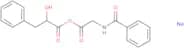
CAS:<p>Please enquire for more information about O-Hippuryl-L-b-phenyllactic acid sodium salt including the price, delivery time and more detailed product information at the technical inquiry form on this page</p>Formula:C18H16NNaO5Purity:Min. 95%Molecular weight:349.31 g/molH-Gly-Arg-Gly-Asp-Ser-Cys-OH trifluoroacetate salt
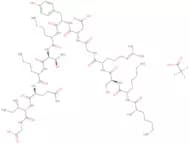
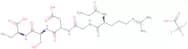
CAS:<p>H-Gly-Arg-Gly-Asp-Ser-Cys-OH trifluoroacetate salt is a photoelectron that binds to the integrin receptor. It has been shown that H-Gly-Arg-Gly-Asp-Ser-Cys-OH trifluoroacetate salt can inhibit protein synthesis in mesenchymal stromal cells. H Gly Arg Gly Asp Ser Cys OH trifluoroacetate salt can also be used as a reagent to determine the presence of amide bonds and to identify proteins. This compound may have biotechnological applications due to its biochemical properties.</p>Formula:C20H35N9O10SPurity:Min. 95%Molecular weight:593.61 g/mol