Carboxylic Acids
Carboxylic acids are organic molecules characterized by having a carboxyl-type functional group (-COOH). These acids are fundamental in various chemical reactions, including esterification, amidation, and decarboxylation. Carboxylic acids are widely used in the production of pharmaceuticals, polymers, and agrochemicals. In this section, you can find a large number of carboxylic acids ready to be used. At CymitQuimica, we provide a broad range of high-quality carboxylic acids to support your research and industrial applications.
Found 12453 products of "Carboxylic Acids"
Sort by
Purity (%)
0
100
|
0
|
50
|
90
|
95
|
100
Mercaptoacetic acid sodium salt
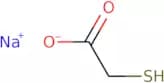
CAS:<p>Mercaptoacetic acid sodium salt (MAS) is an oxidation catalyst that is used to convert ethyl alcohol into acetic acid. It has been shown to be a good catalyst for the oxidation of hydroxyl groups in the presence of metal hydroxides or inorganic acids, such as sodium carbonate. MAS has also been shown to be toxic to human serum and is not recommended for use in humans. The toxicity of MAS may be due to its ability to react with fatty acids and form mercaptans, which are volatile compounds that can cause irritation. Mercaptoacetic acid sodium salt reacts with potassium dichromate and forms mercaptans and other products, which may contribute to its toxicity.</p>Formula:C2H3NaO2SPurity:(Titration) Min. 90%Color and Shape:PowderMolecular weight:114.1 g/molH-Asn-Gln-Glu-Gln-Glu(EDANS)-Arg-OH trifluoroacetate salt
<p>Please enquire for more information about H-Asn-Gln-Glu-Gln-Glu(EDANS)-Arg-OH trifluoroacetate salt including the price, delivery time and more detailed product information at the technical inquiry form on this page</p>Formula:C42H62N14O16SPurity:Min. 95%Molecular weight:1,051.09 g/mol1-Methylpiperidine-4-carboxylic acid hydrochloride
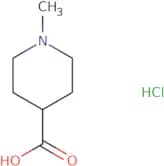
CAS:<p>1-Methylpiperidine-4-carboxylic acid hydrochloride is a betaine. Betaines are intermediates in the biosynthesis of phosphocholine, which is an important component of all cell membranes. 1-Methylpiperidine-4-carboxylic acid hydrochloride has been analyzed and quantified in fruits and plants such as beets, bananas, oranges, and tomatoes. It can be found in the roots of plants and has been shown to inhibit abiotic stress. This compound is also present in the human body as a result of its ingestion from food sources. 1-Methylpiperidine-4-carboxylic acid hydrochloride inhibits proline synthesis by competing with glycine for the enzyme choline acetyltransferase. It also inhibits synthesis of pipecolic acid (a precursor for histamine) by competing with glycine for the enzyme choline acetyltransferase.</p>Formula:C7H14NO2ClPurity:Min. 95%Molecular weight:179.64 g/molPYX-1 trifluoroacetate salt
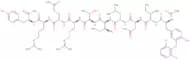
CAS:<p>Please enquire for more information about PYX-1 trifluoroacetate salt including the price, delivery time and more detailed product information at the technical inquiry form on this page</p>Formula:C70H105Cl2N19O16Purity:Min. 95%Molecular weight:1,539.61 g/molFluorogenic Human CMV Protease Substrate trifluoroacetate salt
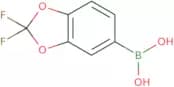
CAS:<p>Please enquire for more information about Fluorogenic Human CMV Protease Substrate trifluoroacetate salt including the price, delivery time and more detailed product information at the technical inquiry form on this page</p>Formula:C73H109N23O18SPurity:Min. 95%Molecular weight:1,628.86 g/mol2,2-Difluoro-1,3-Benzodioxol-5-Ylboronic Acid
CAS:<p>Please enquire for more information about 2,2-Difluoro-1,3-Benzodioxol-5-Ylboronic Acid including the price, delivery time and more detailed product information at the technical inquiry form on this page</p>Formula:C7H5BF2O4Purity:Min. 95%Molecular weight:201.92 g/mol(Des-Gly10,D-Ser(tBu)6,Pro-NHNH29)-LHRH trifluoroacetate salt
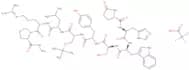
CAS:<p>Please enquire for more information about (Des-Gly10,D-Ser(tBu)6,Pro-NHNH29)-LHRH trifluoroacetate salt including the price, delivery time and more detailed product information at the technical inquiry form on this page</p>Formula:C58H83N17O13Purity:Min. 95%Molecular weight:1,226.39 g/mol5-Ethylpyridine-2-carboxylic acid
CAS:<p>5-Ethylpyridine-2-carboxylic acid is a biologically active compound that is biosynthesized from the amino acid tryptophan. This compound is also known as 5-ethylpicolinic acid or 5-ethylpyridin-2-yl carboxylic acid. It is a phytoalexin, which is an antimicrobial agent produced by plants to inhibit pathogen growth. 5-Ethylpyridine-2-carboxylic acid has been shown to be effective against picolinic acid phosphoribosyltransferase and flavopereirine reductase in vitro, and has also been shown to have antimicrobial properties against Escherichia coli, Staphylococcus aureus, and Bacillus cereus. 5-Ethylpyridine-2-carboxylic acid can be prepared by reacting ethyl acetoacetate with pyridine</p>Formula:C8H9NO2Purity:Min. 95%Color and Shape:Off-White PowderMolecular weight:151.16 g/mol2-Bromopropionic acid benzyl ester
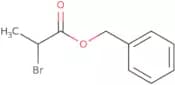
CAS:<p>2-Bromopropionic acid benzyl ester is a synthetic compound with a molecular weight of 220.24 g/mol. It is soluble in organic solvents and has a hydroxyl group at its alpha position. 2-Bromopropionic acid benzyl ester is used in the synthesis of beta-cyclodextrin, which is an important biomaterial for drug delivery as well as other applications. 2-Bromopropionic acid benzyl ester also has antioxidant properties and can be used to treat leukemia cells by inhibiting the production of reactive oxygen species (ROS).</p>Formula:C10H11BrO2Purity:Min. 95%Molecular weight:243.1 g/molN,N-Bis(carboxymethyl)-L-glutamic acid
CAS:<p>N,N-bis(Carboxymethyl)-L-glutamic acid is a synthetic compound that functions as a disinfectant. It has been shown to be effective against bacteria and fungi in vitro, with an efficacy of over 90%. N,N-bis(Carboxymethyl)-L-glutamic acid is used as a treatment for tumors due to its ability to penetrate the tumor cells and inhibit fatty acid uptake. This compound also prevents the formation of new blood vessels by inhibiting the synthesis of DNA and RNA. N,N-bis(Carboxymethyl)-L-glutamic acid can be used in coatings for metals or metal surfaces that are exposed to water or air because it is biodegradable and noncorrosive.</p>Formula:C9H13NO8Purity:Min. 95%Color and Shape:Clear LiquidMolecular weight:263.2 g/molMethyl 4- bromo- 5- methyl- 1H- imidazole- 2- carboxylate
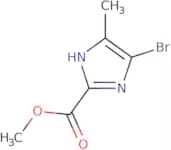
CAS:<p>Please enquire for more information about Methyl 4- bromo- 5- methyl- 1H- imidazole- 2- carboxylate including the price, delivery time and more detailed product information at the technical inquiry form on this page</p>Purity:Min. 95%4-Acetylamino-5-bromo-2-methoxy-benzoic acid methylester
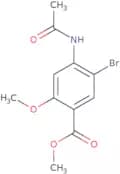
CAS:<p>Please enquire for more information about 4-Acetylamino-5-bromo-2-methoxy-benzoic acid methylester including the price, delivery time and more detailed product information at the technical inquiry form on this page</p>Formula:C11H12BrNO4Purity:Min. 95%Color and Shape:PowderMolecular weight:302.12 g/mol5-(Morpholin-4-ylmethyl)isoxazole-3-carboxylic acid hydrochloride
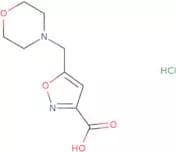
CAS:<p>Please enquire for more information about 5-(Morpholin-4-ylmethyl)isoxazole-3-carboxylic acid hydrochloride including the price, delivery time and more detailed product information at the technical inquiry form on this page</p>Formula:C9H12N2O4•HClPurity:Min. 95%Molecular weight:248.66 g/molGlycodehydrocholic acid
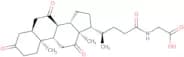
CAS:Controlled Product<p>Glycodehydrocholic acid is a bile acid that is synthesized from cholesterol by the liver and intestine. It is used for the diagnosis of cancer and other medical conditions, such as obesity. Glycodehydrocholic acid inhibits the growth of adipose tissue cells, which may be due to its ability to increase the expression of genes related to lipid metabolism. This drug has also been shown to have an inhibitory effect on mitochondria and tumor cells in human serum. Glycodehydrocholic acid can be measured using chromatographic methods with a sample preparation before analysis. This drug can also be detected in urine samples by gas-liquid chromatography or mass spectrometry. The metabolic profiles of women differ from men, so it is important to take this into account when performing analytical chemistry procedures on this compound.</p>Formula:C26H37NO6Purity:Min. 95%Color and Shape:White/Off-White SolidMolecular weight:459.58 g/molα-MSH (11-13) (free acid) acetate salt
CAS:<p>α-MSH (11-13) (free acid) acetate salt is a synthetic, nonsteroidal compound that binds to and activates α-melanocyte-stimulating hormone receptors. It has been used as an antiinflammatory agent in the treatment of inflammatory bowel disease and bowel disease. α-MSH (11-13) (free acid) acetate salt is also being studied as a contraceptive and an elastase inhibitor. This drug has shown some promise in the treatment of autoimmune diseases, such as rheumatoid arthritis, Crohn's disease, ulcerative colitis, multiple sclerosis, and type 1 diabetes mellitus. It is thought that α-MSH (11-13) (free acid) acetate salt may inhibit the production of inflammatory cells by inhibiting leukocyte elastase activity.</p>Formula:C16H30N4O4Purity:Min. 95%Molecular weight:342.43 g/molIsopropyl 2-amino-4-hydroxy-5,8-dihydropyrido[3,4-d]pyrimidine-7(6H)-carboxylate
CAS:<p>Please enquire for more information about Isopropyl 2-amino-4-hydroxy-5,8-dihydropyrido[3,4-d]pyrimidine-7(6H)-carboxylate including the price, delivery time and more detailed product information at the technical inquiry form on this page</p>Formula:C11H16N4O3Purity:Min. 95%Molecular weight:252.27 g/molAmylin (free acid) (human) trifluoroacetate salt
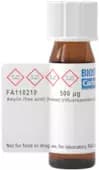
CAS:<p>Please enquire for more information about Amylin (free acid) (human) trifluoroacetate salt including the price, delivery time and more detailed product information at the technical inquiry form on this page</p>Formula:C165H260N50O56S2Purity:Min. 95%Molecular weight:3,904.27 g/molH-Glu-Gly-Arg-chloromethylketone trifluoroacetate salt
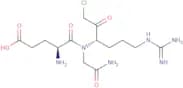
CAS:<p>H-Glu-Gly-Arg-chloromethylketone trifluoroacetate salt is an anticoagulant drug that prevents the formation of blood clots by inhibiting the enzyme thrombin. This drug is effective in enhancing blood flow and oxygen supply to the heart and other organs. H-Glu-Gly-Arg-chloromethylketone trifluoroacetate salt has been shown to have a positive effect on patients with congestive heart failure. It has also been used as an adjuvant therapy in bypassing procedures, where clotting occurs at the site of an artificial conduit placed in the body to allow blood flow between two points. In vitro studies have demonstrated that this drug inhibits protease activity, which may be due to its ability to inhibit fibrinogen and serine protease activity.</p>Formula:C14H25ClN6O5Purity:Min. 95%Molecular weight:392.84 g/molTES
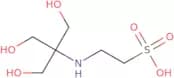
CAS:<p>TES, also known as N-Tris(hydroxymethyl)methyl-2-aminoethanesulfonic acid, is a buffering agent that is used in protein assays and forms complexes with DNA and copper ions. The optimal pH range of this zwitterionic buffer is 6.8-8.2 and its pKa is 7.4.</p>Formula:C6H15NO6SPurity:Min. 95%Color and Shape:PowderMolecular weight:229.25 g/molLysergic acid hydrazide
CAS:Controlled Product<p>Lysergic acid hydrazide is a synthetic drug with an active form of lysergic acid. It is used in the synthesis of ergocryptine and other drugs. The compound can be synthesized using methyl alcohol, trifluoromethyl group, hydroxy group, skeleton, and C1-4 alkyl as reactants. Lysergic acid hydrazide can also be synthesized from an inorganic acid such as nitrous or oxoalkyl. This compound has been used as a pharmaceutical preparation for the treatment of psychotic disorders. Lysergic acid hydrazide has shown to have reactive amide groups that may react with organic amines to form neurotoxic compounds.</p>Formula:C16H18N4OPurity:Min. 95%Molecular weight:282.34 g/mol



![Isopropyl 2-amino-4-hydroxy-5,8-dihydropyrido[3,4-d]pyrimidine-7(6H)-carboxylate](/_next/image/?url=https%3A%2Fstatic.cymitquimica.com%2Fproducts%2F3D%2Fthumb-webp%2FFI135088.webp&w=3840&q=75)