Carboxylic Acids
Carboxylic acids are organic molecules characterized by having a carboxyl-type functional group (-COOH). These acids are fundamental in various chemical reactions, including esterification, amidation, and decarboxylation. Carboxylic acids are widely used in the production of pharmaceuticals, polymers, and agrochemicals. In this section, you can find a large number of carboxylic acids ready to be used. At CymitQuimica, we provide a broad range of high-quality carboxylic acids to support your research and industrial applications.
Found 12453 products of "Carboxylic Acids"
Sort by
Purity (%)
0
100
|
0
|
50
|
90
|
95
|
100
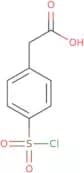
4-Chlorosulfonylphenylacetic acid
CAS:<p>4-Chlorosulfonylphenylacetic acid is a synthetic chemical that inhibits the production of inflammatory mediators. It has been shown to inhibit LPS-induced macrophage activation and inhibitory activity in vitro. 4-Chlorosulfonylphenylacetic acid has been synthesized by the reaction of phenylacetic acid with chlorosulfonic acid. The synthesis of 4-chlorosulfonylphenylacetic acid is shown in Scheme 1 below.</p>Formula:C8H7ClO4SPurity:Min. 95%Color and Shape:White PowderMolecular weight:234.66 g/molRef: 3D-FC20397
Discontinued product1-[4-Methyl-6-(trifluoromethyl)pyrimidin-2-yl]piperidine-3-carboxylic acid
CAS:<p>1-[4-Methyl-6-(trifluoromethyl)pyrimidin-2-yl]piperidine-3-carboxylic acid is a reagent that is used as a complex compound, as a useful intermediate, and as a fine chemical. It has been used in the manufacture of pharmaceuticals, agrochemicals, dyes, and pigments. It also has many applications in research such as its use as a building block for organic synthesis or to synthesize other compounds with potential uses in medicine.</p>Formula:C12H14F3N3O2Purity:Min. 95%Color and Shape:PowderMolecular weight:289.25 g/molRef: 3D-FM129640
Discontinued product5-Methylindole-3-acetic acid
CAS:<p>5-Methylindole-3-acetic acid (5MI3A) is a molecule that has been shown to have antiproliferative properties in bladder cancer cells. 5MI3A binds to the receptor for GABA, which is an inhibitory neurotransmitter. It also inhibits the production of proinflammatory mediators and reactive oxygen species in cancer cells. 5MI3A has anticancer activity in prostate cancer cells and may act by inducing apoptosis and inhibiting cell proliferation. Consumption of 5MI3A may reduce the risk of cancer development by preventing DNA damage from carcinogens, suppressing inflammation, and regulating cell growth through its antagonistic properties.</p>Formula:C11H11NO2Purity:Min. 95%Color and Shape:PowderMolecular weight:189.21 g/molRef: 3D-FM30491
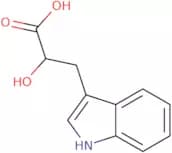
Discontinued productDL-Indole-3-lactic acid
CAS:<p>Indole-3-lactic acid is a plant hormone that is produced in the leaves of the plant when they are under stress. It has been shown to have activity against bowel diseases and metabolic disorders. Indole-3-lactic acid has been isolated from plants like Caproicum album, which is used in vitro to measure its effect on caproic acid production. This compound has also been detected in human serum and wastewater treatment. Indole-3-lactic acid inhibits tryptophan degradation by competing with indolecarboxylase for substrate. The effect of indole-3-lactic acid on dextran sulfate and glomerular filtration rate was studied using a rat model, where it was found that it had no significant effects.</p>Formula:C11H11NO3Purity:Min. 95%Color and Shape:PowderMolecular weight:205.21 g/mol4-Hydroxyphenylacetic acid
CAS:<p>4-Hydroxyphenylacetic acid is a sesquiterpene lactone that is found in the essential oils of plants such as valerian, lemon balm and rosemary. It has been shown to have high antioxidant activity and can inhibit carcinoid syndrome. This compound has also been shown to have properties similar to p-hydroxybenzoic acid, which is an inhibitor of polyphenol oxidase. 4-Hydroxyphenylacetic acid inhibits some enzyme activities, such as polymerase chain reaction (PCR) and DNA synthesis. It also binds to dinucleotide phosphate and can be used for the treatment of diseases related to energy metabolism.</p>Formula:C8H8O3Purity:(%) Min. 98.5%Color and Shape:White PowderMolecular weight:152.15 g/molRef: 3D-FH24475
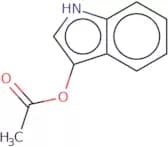
Discontinued product3-Indoxylacetate
CAS:<p>Please enquire for more information about 3-Indoxylacetate including the price, delivery time and more detailed product information at the technical inquiry form on this page</p>Formula:C10H9NO2Color and Shape:White PowderMolecular weight:175.18 g/molRef: 3D-FI10731
Discontinued productBis(2,2,2-trichloroethyl)azodicarboxylate
CAS:<p>Bis(2,2,2-trichloroethyl)azodicarboxylate is a nucleophile that can be used as an alkylating agent in the industrial process. It is also used to prepare chiral amines by adding an amine to the enantiomerically pure bis(2,2,2-trichloroethyl)azodicarboxylate. The anticancer activity of Bis(2,2,2-trichloroethyl)azodicarboxylate is due to its ability to inhibit tumor cell proliferation. Bis(2,2,2-trichloroethyl)azodicarboxylate is not effective against cancerous cells that do not have functional groups such as amino acids.</p>Formula:C6H4Cl6N2O4Purity:Min. 95%Color and Shape:Yellow SolidMolecular weight:380.82 g/molRef: 3D-FB01254
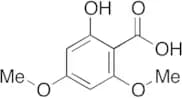
Discontinued product2-Hydroxy-4,6-dimethoxybenzoic Acid
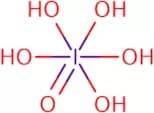
CAS:Controlled Product<p>Applications 2-Hydroxy-4,6-dimethoxybenzoic acid is a reagent used in the synthesis of rac Zearalenone-d6 (Z270502). rac Zearalenone-d6 s an estrogenic mycotoxin produced by Fusarium fungi commonly found in grains. One of a group of compounds known as resorcylic acid lactones.<br>References Tanaka, T., et al.: J. Agric. Food Chem., 36, 979 (1988), Hamilton, S., et al.: Anticancer Res., 16, 3597 (1996), Hecht, S., et al.: Cancer Lett., 150, 49 (2000), Hussein, H., et al.: Toxicology, 167, 101 (2001), Lim, H., et al.: J. Immunol., 175, 4180 (2005),<br></p>Formula:C9H10O5Color and Shape:Light Orange Colour To Light BrownMolecular weight:198.05Periodic acid
CAS:<p>Periodic acid is a natural product that has been used as an antimicrobial agent for more than 100 years. It has been shown to have pro-apoptotic properties in a number of cell systems, including monocyte-like cells, hepatocyte-like cells, and epidermal growth factor receptor-transfected cells. Periodic acid is also effective against inflammatory bowel disease in infants. This drug also has anti-inflammatory effects and may be useful for the treatment of autoimmune diseases. Periodic acid inhibits the metabolic rate in cell cultures by blocking oxidative phosphorylation at complex I and II, leading to increased levels of reactive oxygen species (ROS). This ROS production induces apoptosis through a caspase cascade.</p>Formula:H5IO6Purity:Min. 95%Color and Shape:White Clear LiquidMolecular weight:227.94 g/molRef: 3D-FP16075
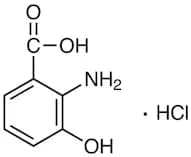
Discontinued product2-Amino-3-hydroxybenzoic Acid Hydrochloride
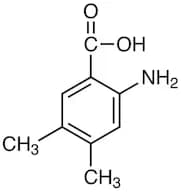
CAS:Formula:C7H7NO3·HClPurity:>98.0%(T)(HPLC)Color and Shape:White to Light yellow to Purple powder to crystalMolecular weight:189.602-Amino-4,5-dimethylbenzoic Acid
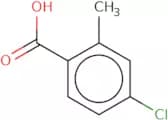
CAS:Formula:C9H11NO2Purity:>97.0%(T)(HPLC)Color and Shape:White to Yellow powder to crystalMolecular weight:165.194-Chloro-2-methylbenzoic acid
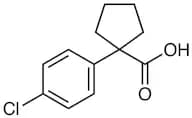
CAS:<p>4-Chloro-2-methylbenzoic acid is a high quality chemical that is used as an intermediate in the preparation of other compounds. It belongs to the group of complex compounds and has CAS No. 7499-07-2. This reagent can be used to synthesize speciality chemicals, research chemicals, and versatile building blocks. 4-Chloro-2-methylbenzoic acid is also useful as a reaction component for the synthesis of fine chemicals, pharmaceuticals, and agrochemicals.</p>Formula:C8H7ClO2Purity:Min. 95%Molecular weight:170.59 g/mol1-(4-Chlorophenyl)-1-cyclopentanecarboxylic Acid
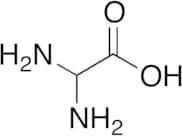
CAS:Formula:C12H13ClO2Purity:>98.0%(GC)(T)Color and Shape:White to Almost white powder to crystalMolecular weight:224.682,2-Diaminoacetic Acid
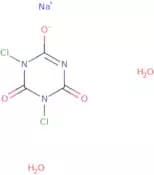
CAS:Controlled ProductFormula:C2H6N2O2Color and Shape:NeatMolecular weight:90.081Dichloroisocyanuric acid sodium dihydrate
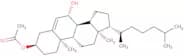
CAS:<p>Dichloroisocyanduric acid sodium salt (DCD) is a disinfectant that is used to control bacteria, fungi, and algae in wastewater treatment plants. DCD has been shown to be an effective antimicrobial agent against bacterial spores and the fungal plant pathogen "Botrytis cinerea" when used at concentrations of 0.1-0.3%. DCD also has a low toxicity for mammals, with LD50 values of 3.5g/kg for rats and 2g/kg for mice. The chemical stability of DCD can be increased by adding sodium carbonate or other alkaline substances in a neutral pH environment.</p>Formula:C3HCl2N3O3•(H2O)2•NaPurity:Min. 95%Color and Shape:PowderMolecular weight:256.98 g/mol7b-Hydroxy cholesterol 3b-acetate
CAS:Controlled Product<p>7b-Hydroxy cholesterol 3b-acetate is an allylic compound that is catalyzed by molybdenum, which eliminates the acetyl group at position 7 to form a double bond with the 3-position. The reaction temperature of 7b-hydroxy cholesterol 3b-acetate can be increased to high temperatures (i.e., >100°C) for the elimination process, and allylic acetates are obtained as products. The reaction starts with the addition of hexacarbonyl, which leads to a diene intermediate. This is then eliminated by adding acetamide in presence of high concentration of acetic acid and catalytic amounts of molybdenum. The low yield and efficiency, however, are major drawbacks of this process.</p>Formula:C29H48O3Purity:Min. 95%Molecular weight:444.69 g/molRef: 3D-FH23948
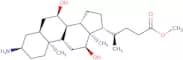
Discontinued product(3a,5b,7a,12a)-3-Amino-7,12-dihydroxycholan-24-oic acidmethylester
CAS:Controlled Product<p>Please enquire for more information about (3a,5b,7a,12a)-3-Amino-7,12-dihydroxycholan-24-oic acidmethylester including the price, delivery time and more detailed product information at the technical inquiry form on this page</p>Formula:C25H43NO4Purity:Min. 95%Molecular weight:421.61 g/molRef: 3D-FA148887
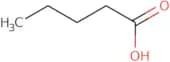
Discontinued productValeric acid
CAS:<p>Valeric acid is a fatty acid that is used in the manufacture of polymers. Valeric acid can be synthesized from caproic acid, which is found in palm oil and coconut oil. Valeric acid has been shown to inhibit the activity of nicotinic acetylcholine receptors at low concentrations and to have an inhibitory effect on the ryanodine receptor at high concentrations. Valeric acid also has a matrix effect on analytical methods such as gas-liquid chromatography, which has been modeled using polymer compositions.</p>Formula:C5H10O2Purity:Min. 95%Molecular weight:102.13 g/molRef: 3D-FV34914
Discontinued product4-Chloro-2-(methyl-phenyl-sulfamoyl)-benzoic acid methylester
CAS:<p>4-Chloro-2-(methyl-phenyl-sulfamoyl)-benzoic acid methylester is an industrial chemical that is used in the production of other chemicals. It can be produced by the esterification of 4-chlorophenylacetic acid with methyl phenyl sulfonyl chloride, followed by diazotization and chlorination. This chemical also has the ability to form a condensation product with hydrazine.</p>Formula:C15H14ClNO4SPurity:Min. 95%Molecular weight:339.79 g/molRef: 3D-FC150757
Discontinued productMethyl 5-chloro-1-methyl-1H-indole-2-carboxylate
CAS:Controlled Product<p>Please enquire for more information about Methyl 5-chloro-1-methyl-1H-indole-2-carboxylate including the price, delivery time and more detailed product information at the technical inquiry form on this page</p>Formula:C11H10ClNO2Purity:Min. 95%Molecular weight:223.66 g/molRef: 3D-FM118368
Discontinued product

![1-[4-Methyl-6-(trifluoromethyl)pyrimidin-2-yl]piperidine-3-carboxylic acid](/_next/image/?url=https%3A%2Fstatic.cymitquimica.com%2Fproducts%2F3D%2Fthumb-webp%2FFM129640.webp&w=3840&q=75)