Carboxylic Acids
Carboxylic acids are organic molecules characterized by having a carboxyl-type functional group (-COOH). These acids are fundamental in various chemical reactions, including esterification, amidation, and decarboxylation. Carboxylic acids are widely used in the production of pharmaceuticals, polymers, and agrochemicals. In this section, you can find a large number of carboxylic acids ready to be used. At CymitQuimica, we provide a broad range of high-quality carboxylic acids to support your research and industrial applications.
Found 12453 products of "Carboxylic Acids"
Sort by
Purity (%)
0
100
|
0
|
50
|
90
|
95
|
100
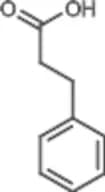
Hydrocinnamic acid
CAS:<p>Hydrocinnamic acid: white, sweet-smelling crystalline solid; used in cosmetics, food, and pharma.</p>Formula:C9H10O2Purity:99.52% - 99.973%Color and Shape:Off-White Solid PowderMolecular weight:150.173,5-Diiodo-L-thyronine
CAS:<p>NSC 90469 (Diiodothyronine) is an iodinated thyronine hormone that regulates gene activity affecting processes such as homeostasis and insulin resistance.</p>Formula:C15H13I2NO4Purity:99.64%Color and Shape:Off-White SolidMolecular weight:525.08NMDA
CAS:<p>N-Methyl-D-aspartic acid is an amino acid that, as the D-isomer, is the defining agonist for the NMDA (N-Methyl-D-aspartic acid) receptor subtype of glutamate</p>Formula:C5H9NO4Purity:99.21% - 99.90%Color and Shape:White SolidMolecular weight:147.13Spaglumic acid
CAS:<p>Spaglumic acid (N-Acetylaspartylglutamic acid) is a neuropeptide found in millimolar concentrations in the brain.</p>Formula:C11H16N2O8Purity:99.92%Color and Shape:White PowderMolecular weight:304.25Creatine
CAS:<p>Creatine, an amino acid in vertebrates, forms phosphocreatine in muscle, aids energy transfer, is made in the liver, and mainly stored in muscles.</p>Formula:C4H9N3O2Purity:99.63% - 99.83%Color and Shape:Colourless To Light Yellow SolidMolecular weight:131.13N-Acetylglycine
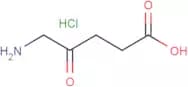
CAS:<p>N-Acetylglycine, non-toxic, found in foods, used in peptidomimetic research.</p>Formula:C4H7NO3Purity:99.82%Color and Shape:SolidMolecular weight:117.15-Aminolevulinic acid hydrochloride
CAS:<p>5-Aminolevulinic acid hydrochloride (5-ALA) serves as an intermediate in the body's heme biosynthesis and is the universal precursor of tetrapyrroles.</p>Formula:C5H10ClNO3Purity:98% - 99.97%Color and Shape:White To Pale Yellow Crystals OrMolecular weight:167.593,4-(Methylenedioxy)cinnamic acid
CAS:<p>3,4-(Methylenedioxy)cinnamic acid (3-(Benzo[d][1,3]dioxol-5-yl)acrylic acid) is a plant-derived compound first extracted from roots of Asparagus officinalis and</p>Formula:C10H8O4Purity:98.95%Color and Shape:SolidMolecular weight:192.17rosmarinate acid
CAS:<p>Rosmarinate acid(Rosemary acid) inhibits MAO-A, MAO-B and COMT enzymes with IC50s of 50.1, 184.6 and 26.7 μM, respectively</p>Formula:C18H16O8Purity:99.69%Color and Shape:SolidMolecular weight:360.31D-Alanine
CAS:<p>Alanine, a nonessential amino acid, is formed from pyruvate or DNA/dipeptides breakdown. D-Alanine stimulates GlyR with an EC50 of 9 mM.</p>Formula:C3H7NO2Purity:99.81%Color and Shape:Orthorhombic Crystals From Water SolidMolecular weight:89.09DSPS
CAS:<p>DSPS (Dioctadecanoylphosphatidylserine) is an important phospholipid membrane component, plays a key role in cell cycle signaling, specifically in apoptosis.</p>Formula:C42H82NO10PPurity:mixture - mixtureColor and Shape:SolidMolecular weight:792.085-Aminovaleric acid
CAS:<p>5-Aminovalerate, a lysine metabolite, can form endogenously or from bacterial lysine catabolism; indicates bacterial overgrowth or tissue necrosis.</p>Formula:C5H11NO2Purity:99.86%Color and Shape:SolidMolecular weight:117.15N-Acetyl-L-aspartic acid
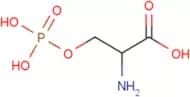
CAS:<p>N-Acetyl-L-aspartic acid: second to glutamate in brain, from aspartate & acetyl CoA, roles in osmoregulation, lipid synthesis, and energy.</p>Formula:C6H9NO5Purity:99.52% - 99.79%Color and Shape:SolidMolecular weight:175.14DL-O-Phosphoserine
CAS:<p>DL-O-Phosphoserine (DL-SOP), a normal metabolite in human biofluid, is an ester of serine and phosphoric acid.</p>Formula:C3H8NO6PPurity:99.83%Color and Shape:SolidMolecular weight:185.07D(-)-2-Aminobutyric acid
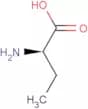
CAS:<p>D(-)-2-Aminobutyric acid is the substrate of D-amino acid oxidase.</p>Formula:C4H9NO2Purity:99.89%Color and Shape:SolidMolecular weight:103.12Glycocyamine
CAS:<p>Glycocyamine, a creatine precursor and dietary arginine substitute, aids in bird energy balance and indicates renal health.</p>Formula:C3H7N3O2Purity:99.42%Color and Shape:SolidMolecular weight:117.112-Ketoglutaric acid Sodium
CAS:2-Ketoglutaric acid Sodium (AKG) is a key molecule in the TCA cycle.Formula:C5H5NaO5Purity:97.77%Color and Shape:SolidMolecular weight:168.08Aminoadipic acid
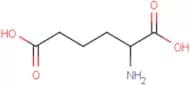
CAS:<p>Aminoadipic acid, a lysine metabolism intermediate, inhibits kynurenic acid production and antagonizes NMDA receptor activity.</p>Formula:C6H11NO4Purity:99.7% - 99.84%Color and Shape:SolidMolecular weight:161.16D-(+)-Phenyllactic acid
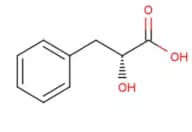
CAS:<p>D-(+)-Phenyllactic acid (D-3-Phenyllactic acid) is an anti-bacterial agent, excreted by Geotrichum candidum, inhibits Gram-positive and Gram-negative bacteria.</p>Formula:C9H10O3Purity:98.99%Color and Shape:SolidMolecular weight:166.17L-Norleucine
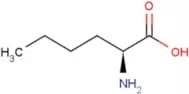
CAS:<p>L-Norleucine ((S)-Norleucine) is an isomer of leucine, specifically affects protein synthesis in skeletal muscle, and has antivirus activity.</p>Formula:C6H13NO2Purity:98.35%Color and Shape:SolidMolecular weight:131.173-Ethoxy-3-oxopropanoic acid
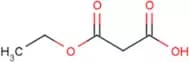
CAS:<p>3-Ethoxy-3-oxopropanoic acid (Monoethyl malonic acid) belongs to the class of organic compounds known as dicarboxylic acids and derivatives.</p>Formula:C5H8O4Purity:99.72%Color and Shape:SolidMolecular weight:132.113-(3-Methoxyphenyl)propionic acid
CAS:<p>3-(3-Methoxyphenyl)propionic acid (3-Methoxyhydrocinnamic acid) is a naturally occurring human metabolite, It is an organic acid and excreted in human urine.</p>Formula:C10H12O3Purity:97.34%Color and Shape:SolidMolecular weight:180.2L-Homocitrulline
CAS:<p>L-Homocitrulline rises in urea cycle disorders, linked to ornithine shortage and carbamyl phosphate buildup.</p>Formula:C7H15N3O3Purity:99.94%Color and Shape:SolidMolecular weight:189.21D-Galacturonic acid hydrate
CAS:<p>D-Galacturonic acid hydrate is used in the synthesis of N-(D-galacturonoyl) amino acids and dipeptides.</p>Formula:C6H12O8Purity:97% - 99.97%Color and Shape:White To Light Beige Fine PowderMolecular weight:212.152-(2-Phenylacetamido)acetic acid
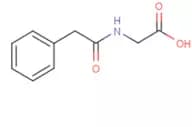
CAS:<p>2-(2-Phenylacetamido)acetic acid (Phenyl-ac-Gly-OH) is an acyl glycine. Acyl glycines are normally minor metabolites of fatty acids.</p>Formula:C10H11NO3Purity:99.43%Color and Shape:SolidMolecular weight:193.2Sodium 2-hydroxybutanoate
CAS:<p>Sodium 2-hydroxybutanoate, a by-product of alpha-ketobutyrate, is formed via LDH or alphaHBDH-catalyzed reactions.</p>Formula:C4H7NaO3Purity:98.92% - 99.96%Color and Shape:SolidMolecular weight:126.09L-Methionine
CAS:<p>L-Methionine (L-Methionin) is the L-isomer of Methionine. Methionine is an essential amino acid for human development and acts as a hepatoprotectant.</p>Formula:C5H11NO2SPurity:99.58% - 99.84%Color and Shape:Colourless Solid CrystallineMolecular weight:149.21N-Isovaleroylglycine
CAS:<p>N-Isovaleroylglycine, a leucine catabolism byproduct, is an acyl glycine elevated in some metabolic disorders and indicates IVA when accumulated.</p>Formula:C7H13NO3Purity:99.95%Color and Shape:SolidMolecular weight:159.18Oxalic acid
CAS:<p>Oxalic acid (Ethanedioic acid) is a strong dicarboxylic acid occurring in many plants and vegetables, produced in the body by metabolism of glyoxylic acid.</p>Formula:C2H2O4Purity:98.51% - 99.39%Color and Shape:White Solid CrystallineMolecular weight:90.03N-Acetyl-L-leucine
CAS:<p>N-Acetylleucine, a water-soluble, weakly acidic derivative of leucine, is found in biofluids like feces and saliva.</p>Formula:C8H15NO3Purity:99.89%Color and Shape:SolidMolecular weight:173.212,2-Dihydroxyacetic acid
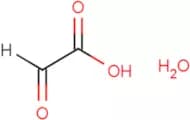
CAS:<p>2,2-Dihydroxyacetic acid (Formylformic acid) is an organic compound that is both an aldehyde and a carboxylic acid, is associated with primary hyperoxaluria.</p>Formula:C2H4O4Purity:99.25%Color and Shape:White To Light Yellow Crystalline PowderMolecular weight:92.054-Methyl-2-oxopentanoic acid
CAS:<p>4-Methyl-2-oxopentanoic acid, an abnormal metabolite and neurotoxin, results from improper branched-chain amino acid metabolism.</p>Formula:C6H10O3Purity:99.09%Color and Shape:LiquidMolecular weight:130.14Maleic acid
CAS:<p>Maleic Acid is a Glutamate Decarboxylase (GAD) inhibitor of L. monocytogenes and E. coli.</p>Formula:C4H4O4Purity:97.44%Color and Shape:White Solid CrystallineMolecular weight:116.07Methylmalonic acid
CAS:<p>Methylmalonic acid (Isosuccinic acid) is a dicarboxylic acid that can be derived from methylmalonyl-coenzyme A.</p>Formula:C4H6O4Purity:98%Color and Shape:SolidMolecular weight:118.09L-Lactic acid
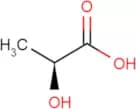
CAS:<p>L-Lactic acid: organic, chiral, prevalent in organisms, vital in biochemistry, forms in muscles during exertion.</p>Formula:C3H6O3Purity:95.05% - 99.85%Color and Shape:Colourless Liquid ViscousMolecular weight:90.08For-Met-OH
CAS:<p>For-Met-OH (N-Formyl-L-methionine) is a type of endogenous metabolite, effective in the initiation of protein synthesis.</p>Formula:C6H11NO3SPurity:99.298% - 99.72%Color and Shape:SolidMolecular weight:177.22DL-Homocysteine
CAS:<p>DL-Homocysteine (2-Amino-4-mercaptobutyric acid) is a potential marker for tumor cell growth.</p>Formula:C4H9NO2SPurity:99.57% - ≥98%Color and Shape:SolidMolecular weight:135.18(R)-pyrrolidine-2-carboxylic acid
CAS:<p>D-Proline, (R)-pyrrolidine-2-carboxylic acid, is L-Proline's isomer, found in human plasma/saliva, possibly from bacteria or racemase activity.</p>Formula:C5H9NO2Purity:99.88%Color and Shape:Flat Needles From Alcohol + Ether; Prisms From Water SolidMolecular weight:115.13α-Lactose
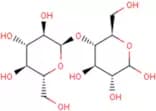
CAS:<p>α-Lactose is the major sugar present in milk and the main source of energy supplied to the newborn mammalian in its mother's milk.</p>Formula:C12H22O11Purity:98.96%Color and Shape:White Hard Crystalline Mass Of White Powder Physical Description White Hard Crystalline Powder (Ntp 1992)Molecular weight:342.3Pyruvic acid
CAS:<p>Pyruvic acid, key in metabolizing carbs, proteins, and fats, builds up in tissue, notably nerves, if thiamine is deficient.</p>Formula:C3H4O3Purity:95.31%Color and Shape:LiquidMolecular weight:88.06Dihydroxyfumaric acid hydrate
CAS:<p>Dihydroxyfumaric acid produces superoxide anions, hydroxyl radicals, can inhibit insulin, and converts to hydroxypyruvate or oxaloglycolate.</p>Formula:C4H6O7Purity:98% - 99.09%Color and Shape:SolidMolecular weight:166.093-Amino-2-methylpropanoic acid
CAS:<p>3-Amino-2-methylpropanoic acid forms by enzyme EC 3.5.1.6 in pyrimidine breakdown; its deficiency causes neurological issues.</p>Formula:C4H9NO2Purity:99.43%Color and Shape:SolidMolecular weight:103.12(S)-2-Hydroxy-3-phenylpropanoic acid
CAS:<p>(S)-2-Hydroxy-3-phenylpropanoic acid (L-(−)-3-Phenyllactic acid) is a chiral aromatic compound involved in phenylalanine metabolism.</p>Formula:C9H10O3Purity:99.73% - 99.86%Color and Shape:SolidMolecular weight:166.17N-Acetyl-L-arginine dihydrate
CAS:<p>N-Acetyl-L-arginine dihydrate (N-Ac-L-arg-OH) is one of the guanidino compounds found elevated in the serum of a hemodialyzed renal insufficient (uremic)</p>Formula:C8H20N4O5Purity:99.95%Color and Shape:SolidMolecular weight:252.27Sarcosine
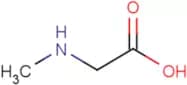
CAS:<p>Sarcosine (Methylglycine) is a competitive inhibitor of the type I glycine transporter (GlyT1) and an N-methyl-D-aspartate receptor (NMDAR) co-agonist.</p>Formula:C3H7NO2Purity:99.90%Color and Shape:Deliquescent Water Soluble Physical Description Deliquescent Crystals Or Powder Has A Sweetish Taste (Ntp 1992)Molecular weight:89.09O-Acetyl-L-serine hydrochloride
CAS:<p>O-Acetylserine (OASS), a cysteine precursor in bacteria/plants, enters humans via gut microbes or diet.</p>Formula:C5H10ClNO4Purity:99.79% - ≥95%Color and Shape:SolidMolecular weight:183.59Oxalic acid dihydrate
CAS:<p>Oxalic acid dihydrate is a plant-derived strong dicarboxylic acid, excreted in urine, used as a reagent and reducing agent.</p>Formula:C2H6O6Purity:98.04% - 99.39%Color and Shape:White Solid CrystallineMolecular weight:126.072-Hydroxyisobutyric acid
CAS:<p>2-Hydroxyisobutyric acid, a MTBE metabolite, is excreted in air & breaks down into TBA, formaldehyde, and others; used as a bactericide.</p>Formula:C4H8O3Purity:98.66%Color and Shape:SolidMolecular weight:104.1Malonic acid
CAS:<p>Malonic acid inhibits succinate dehydrogenase; linked to malonyl-CoA decarboxylase deficiency.</p>Formula:C3H4O4Purity:99.53%Color and Shape:SoildMolecular weight:104.06D-glutamine
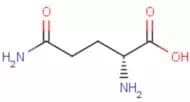
CAS:<p>D-glutamine, an D type stereoisomer of glutamine, is one of the 20 amino acids which is encoded by the standard genetic code.</p>Formula:C5H10N2O3Purity:99.99%Color and Shape:White Or Off-White PowderMolecular weight:146.14