Carboxylic Acids
Carboxylic acids are organic molecules characterized by having a carboxyl-type functional group (-COOH). These acids are fundamental in various chemical reactions, including esterification, amidation, and decarboxylation. Carboxylic acids are widely used in the production of pharmaceuticals, polymers, and agrochemicals. In this section, you can find a large number of carboxylic acids ready to be used. At CymitQuimica, we provide a broad range of high-quality carboxylic acids to support your research and industrial applications.
Found 12453 products of "Carboxylic Acids"
Sort by
Purity (%)
0
100
|
0
|
50
|
90
|
95
|
100
N-Acetylglycine
CAS:<p>N-Acetylglycine, non-toxic, found in foods, used in peptidomimetic research.</p>Formula:C4H7NO3Purity:99.82%Color and Shape:SolidMolecular weight:117.14-Guanidinobutanoic acid
CAS:<p>4-Guanidinobutanoic acid (4-GBA) is an L-arginine metabolite that has been used in the intestinal transport tranport studies. It has been use to hPAT1.</p>Formula:C5H11N3O2Purity:>99.99%Color and Shape:SolidMolecular weight:145.16Methylmalonic acid
CAS:<p>Methylmalonic acid (Isosuccinic acid) is a dicarboxylic acid that can be derived from methylmalonyl-coenzyme A.</p>Formula:C4H6O4Purity:98%Color and Shape:SolidMolecular weight:118.091-Aminocyclopropane-1-carboxylic acid
CAS:<p>1-Aminocyclopropane-1-carboxylic acid (ACC) is an intermediate in the synthesis of ethylene and protects against neuron cell death in vivo models of ischemia.</p>Formula:C4H7NO2Purity:97.91% - 99.76%Color and Shape:CrystallineMolecular weight:101.1Oxaloacetic acid
CAS:<p>Oxaloacetic acid: a four-carbon dicarboxylic acid, an intermediate in the citric acid cycle, forms aspartic acid.</p>Formula:C4H4O5Purity:98.27% - 99.93%Color and Shape:SolidMolecular weight:132.07Acetyl-L-lysine
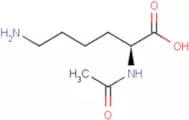
CAS:<p>Acetyl-L-lysine: N-acetylated amino acid, normally found in trace urine amounts, elevated in aminoacylase I deficiency.</p>Formula:C8H16N2O3Purity:99.40% - 99.83%Color and Shape:SolidMolecular weight:188.22L-Pipecolic acid
CAS:<p>L-Pipecolic acid, a lysine metabolite, builds up in infants with peroxisomal genetic disorders like Zellweger syndrome.</p>Formula:C6H11NO2Purity:99.75%Color and Shape:SolidMolecular weight:129.16L-Allothreonine
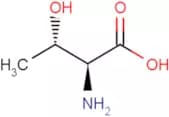
CAS:<p>L-Allothreonine (L-allo-Threonine) is an essential amino acid in humans. L-Allothreonine is abundant in human plasma, particularly in newborns.</p>Formula:C4H9NO3Purity:99.63%Color and Shape:SolidMolecular weight:119.12Mesoxalate sodium (monohydrate)
CAS:<p>Mesoxalate sodium (monohydrate) is primarily located in the cytoplasm within the cell. Mesoxalic acid can be biosynthesized from malonic acid.</p>Formula:C3HNa2O6Purity:99.85%Color and Shape:SolidMolecular weight:180.02Malonic acid
CAS:<p>Malonic acid inhibits succinate dehydrogenase; linked to malonyl-CoA decarboxylase deficiency.</p>Formula:C3H4O4Purity:99.53%Color and Shape:SoildMolecular weight:104.062-Hydroxy-4-methoxybenzoic acid
CAS:2-Hydroxy-4-methoxybenzoic acid (2-Hydroxy-p-anisic Acid) is a predicted metabolite generated by BioTransformer1.Formula:C8H8O4Purity:99.86%Color and Shape:White Crystalline PowderMolecular weight:168.15Nystose
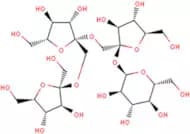
CAS:Nystose (1,1-Kestotetraose) is a tetrasaccharide composed of two fructose molecules linked via beta (1→2) bonds to the fructosyl moiety of sucrose.Formula:C24H42O21Purity:98% - 99.93%Color and Shape:SolidMolecular weight:666.58α-Lactose
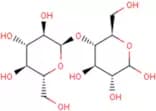
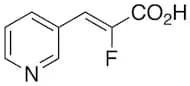
CAS:<p>α-Lactose is the major sugar present in milk and the main source of energy supplied to the newborn mammalian in its mother's milk.</p>Formula:C12H22O11Purity:98.96%Color and Shape:White Hard Crystalline Mass Of White Powder Physical Description White Hard Crystalline Powder (Ntp 1992)Molecular weight:342.3Z-2-Fluoro-3-(3-pyridyl)acrylic Acid
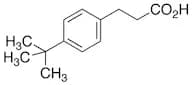
CAS:Controlled Product<p>Applications Z-2-Fluoro-3-(3-pyridyl)acrylic Acid (cas# 359435-42-0) is a compound useful in organic synthesis.<br></p>Formula:C8H6FNO2Color and Shape:NeatMolecular weight:167.143-(4-tert-Butylbenzene)propionic Acid
CAS:Controlled Product<p>Applications 3-(4-tert-Butylbenzene)propionic Acid (cas# 1208-64-6) is a compound useful in organic synthesis.<br></p>Formula:C13H18O2Color and Shape:NeatMolecular weight:206.28rac 3-Hydroxydecanoic Acid
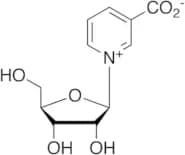
CAS:Controlled Product<p>Applications rac 3-Hydroxydecanoic Acid (cas# 5561-87-5) is a compound useful in organic synthesis.<br></p>Formula:C10H20O3Color and Shape:NeatMolecular weight:188.26Nicotinic Acid Riboside
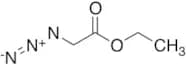
CAS:Controlled Product<p>Applications An effective agent for increasing nicotinamide adenine dinucleotide (NAD) concentrations in mammalian cells.<br>References Yang, T. et al.: J. Med. Chem., 50, 6458 (2007);<br></p>Formula:C11H13NO6Color and Shape:NeatMolecular weight:255.22Ethyl 2-Azidoacetate
CAS:Controlled Product<p>Applications ethyl 2-azidoacetate (cas# 637-81-0) is a useful research chemical.<br></p>Formula:C4H7N3O2Color and Shape:NeatMolecular weight:129.12Cyanuric Acid
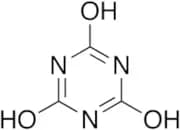
CAS:Controlled Product<p>Applications Diagnostic determination of Melamine and related compounds in kidney tissue.<br>References Mast, R., et al.: Food Chem. Toxicol., 21, 807 (1983), Yokley, R., et al.: J. Agric. Food Chem., 48, 3352 (2000), Ehling, S., et al.: Food Addit. Contam., 24, 1319 (2007), Vail, T., et al.: J. Anal. Toxicol., 31, 304 (2007),<br></p>Formula:C3H3N3O3Color and Shape:WhiteMolecular weight:129.071,11-Undecanedicarboxylic Acid
CAS:<p>Applications 1,11-Undecanedicarboxylic Acid is used in the synthesis of two Bis(tetrahydroisoquinoline) which were highly cytotoxic for cancer-cell cultures and less toxic to healthy cells and exhibited noticeable antimicrobial activity against Gram-positive and Gram-negative bacteria and fungal strain Candida albicans.<br>References Terent’eva, E. O., et al.: Chem. Nat. Compd., 53, 328-332 (2017)<br></p>Formula:C13H24O4Color and Shape:NeatMolecular weight:244.33Mesitoic acid
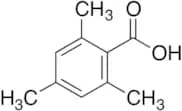
CAS:Controlled Product<p>Applications Mesitoic acid can be used for its antioxidant.<br>References Thomas, P.S., et.al.: Medicines, 4, 1-7, (2017);<br></p>Formula:C10H12O2Color and Shape:Off-WhiteMolecular weight:164.2Heptafluorobutyric Acid
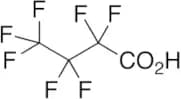
CAS:<p>Stability Hygroscopic<br>Applications Heptafluorobutyric Acid (HFBA) is used in reversed-phase chromatography.<br> E0<br>References Satake, I., et al.: Biopolymers, 15, 2263 (1976), Aso, K., et al.: Biosci. Biotech. Biochem., 56, 755 (1992), Cecchi, T., et al.: J. Chromatogr., 1216, 1789 (2009),<br></p>Formula:C4HF7O2Color and Shape:Colourless LiquidMolecular weight:214.04dl-tartaric acid
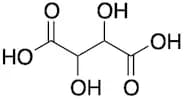
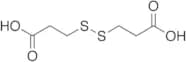
CAS:Controlled Product<p>Applications (cas# 526-83-0) is a useful research chemical.<br></p>Formula:C4H6O6Color and Shape:NeatMolecular weight:150.087Dithiobis-propanoic Acid
CAS:Controlled ProductFormula:C6H10O4S2Color and Shape:White To Off-WhiteMolecular weight:210.072-(2-Butoxyethoxy)acetic Acid
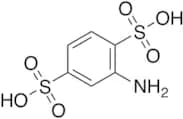
CAS:<p>Applications 2-(2-butoxyethoxy)acetic acid (cas# 82941-26-2) is a useful research chemical.<br></p>Formula:C8H16O4Color and Shape:NeatMolecular weight:176.212-Aminobenzene-1,4-disulfonic Acid (>90%)
CAS:Controlled Product<p>Applications 2-aminobenzene-1,4-disulfonic acid (cas# 98-44-2) is a useful research chemical.<br></p>Formula:C6H7NO6S2Purity:>90%Color and Shape:White To Off-WhiteMolecular weight:253.24tert-Butyl N-[3-(Chlorosulfonyl)propyl]carbamate
CAS:Controlled Product<p>Applications tert-butyl N-[3-(chlorosulfonyl)propyl]carbamate (cas# 1196153-59-9) is a useful research chemical.<br></p>Formula:C8H16ClNO4SColor and Shape:NeatMolecular weight:257.7355-Aminolevulinic Acid Hydrochloride
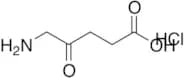
CAS:<p>Applications 5-Aminolevulinic Acid Hydrochloride (cas# CAS:5451-09-2) is a useful research chemical.<br></p>Formula:C5H9NO3·ClHColor and Shape:NeatMolecular weight:167.59DL-3-Aminoisobutyric Acid
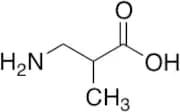
CAS:Controlled Product<p>Applications DL-3-Aminoisobutyric acid (cas# 144-90-1) is a useful research chemical.<br></p>Formula:C4H9NO2Color and Shape:NeatMolecular weight:103.12Butyl Carbamate
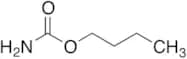
CAS:Controlled Product<p>Applications butyl carbamate (cas# 592-35-8) is a useful research chemical.<br></p>Formula:C5H11NO2Color and Shape:NeatMolecular weight:117.15Ethacrynic Acid Epoxide
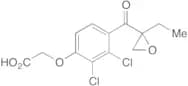
CAS:Controlled Product<p>Applications Ethacrynic Acid Epoxide is an intermediate in the synthesis of Ethacrynic Acid (E676000), a diuretic used to treat high blood pressure and swelling caused by congestive heart failure, liver failure and kidney failure.<br>References Beyer, et al.: J. Pharmacol. Exp. Ther., 147, 1 (1965), Kim., et al.: Am. J. Cardiol., 27, 407 (1971), Williamson, H.E., et al.: J. Clin. Pharmacol., 17, 663 (1977),<br></p>Formula:C13H12Cl2O5Color and Shape:NeatMolecular weight:319.14Trimethyl Orthoacetate
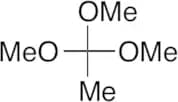
CAS:Controlled Product<p>Applications Trimethyl Orthoacetate is used as a reagent in the synthesis of Pseudomonic Acid D Sodium (P839520); an antibiotic isolated from Pseudomonas fluorescens.<br> Not a dangerous good if item is equal to or less than 1g/ml and there is less than 100g/ml in the package<br>References Banks, R.M., et al.: J. Antibiot., 41, 609 (1988); Sridhar, Y., et al.: Org. Biomol. Chem., 12, 2950 (2014)<br></p>Formula:C5H12O3Color and Shape:NeatMolecular weight:120.153-Hydroxymandelic Acid
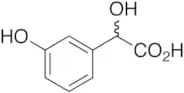
CAS:Controlled Product<p>Applications 3-Hydroxymandelic Acid (cas# 17119-15-2) is a compound useful in organic synthesis.<br></p>Formula:C8H8O4Color and Shape:NeatMolecular weight:168.154-(4-Phenylbutoxy)benzoic Acid
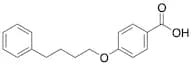
CAS:Controlled Product<p>Applications 4-(4-PHENYLBUTOXY)BENZOIC ACID (cas# 30131-16-9) is a useful research chemical.<br></p>Formula:C17H18O3Color and Shape:NeatMolecular weight:270.32Levulinic Acid
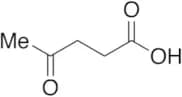
CAS:Controlled Product<p>Applications Levulinic Acid is derived from the degredation of cellulose and is a potential precursor to biofuels. Levulinic acid is also a photosensitizer for photodynamic therapy.<br>References Serrano-Ruiz, J.C., et al.: Catalysis., 195, 162 (2012); Liedtke, A.J. et al.: Tetrahedron., 68, 10049 (2012);<br></p>Formula:C5H8O3Color and Shape:Light Yellow MeltedMolecular weight:116.123-(4-Hydroxyphenyl)propionic Acid
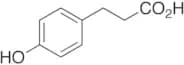
CAS:<p>Applications Antioxidant.<br>References Arnous, A., et al.: J. Agr. Food Chem., 49, 5736 (2001), Guendez, R., et al.: Food Chem., 89, 1 (2005), Proestos, C., et al.: Food Control,16, 319 (2005)<br></p>Formula:C9H10O3Color and Shape:NeatMolecular weight:166.172-Mercaptoisobutyric Acid, 90%
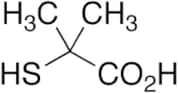
CAS:Controlled Product<p>Applications 2-Mercaptoisobutyric Acid, 90% (cas# 4695-31-2) is a compound useful in organic synthesis.<br>References McIntosh, J.M. and Siddiqui, M.A.: Can. J. Chem., 61, 1872-1875 (1983), Bienlarz, C. and Cornwall, M.J.: Tetrahedron Lett., 34 (6), 939-942 (1993)<br></p>Formula:C4H8O2SPurity:90%Color and Shape:NeatMolecular weight:120.174-Mercaptophenylacetic Acid
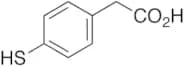
CAS:Controlled Product<p>Applications A redox buffer that increases the folding rate of disulfide-containing proteins realative to traditional buffers such as glutathione and glutathione-disulfide. A useful synthetic intermediate for the preparation of novel antiinflammatory agents.<br> Not a dangerous good if item is equal to or less than 1g/ml and there is less than 100g/ml in the package<br>References Gough, J.D., et al.: JACS, 124 (15), 3885 (2002)<br></p>Formula:C8H8O2SColor and Shape:NeatMolecular weight:168.21Citraconic Acid
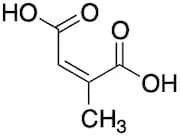
CAS:Controlled Product<p>Applications Citraconic Acid (cas# 498-23-7) is a useful research chemical.<br></p>Formula:C5H6O4Color and Shape:NeatMolecular weight:130.094-(Methoxymethyl)benzoic acid
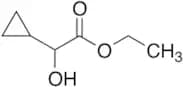
CAS:Controlled Product<p>Applications 4-(Methoxymethyl)benzoic acid<br></p>Formula:C9H10O3Color and Shape:NeatMolecular weight:166.174Ethyl 2-Cyclopropyl-2-hydroxyacetate
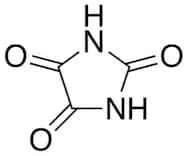
CAS:<p>Applications ethyl 2-cyclopropyl-2-hydroxyacetate (cas# 1185387-66-9) is a useful research chemical.<br></p>Formula:C7H12O3Color and Shape:NeatMolecular weight:144.168Parabanic Acid
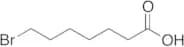
CAS:Controlled Product<p>Applications Parabanic acid appears to be an important marker of free radical reactions in vivo and may be used to monitor free radical activity and to evaluate pharmacological therapy with radical scavengers.<br>References Koumoto, Y., et al.: J. Biol. Chem., 276, 29688 (2001), Gibon, Y., et al.: Plant Cell, 16, 3304 (2004), Kaplan, F., et al.: Plant J., 44, 730 (2005), Ishii, N., et al.: Science, 316, 593 (2007),<br></p>Formula:C3H2N2O3Color and Shape:NeatMolecular weight:114.067-Bromoheptanoic Acid
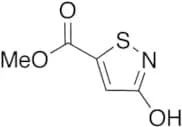
CAS:Controlled Product<p>Applications 7-Bromoheptanoic Acid is a reagent that is used in the synthesis of N-Heptanoic Acid Tianeptine Disodium Salt (H281500) which are metabolite of Tianeptine (T436800), having psychostimulant, anti-ulcer and anti-emetic properties.<br>References Malen, C., et al.: Experientia, 28, 811 (1972), Safa, A., et al.: J. Biol. Chem., 262, 7884 (1987), Ford, J.M., et al.: Pharmacol. Rev., 42, 155, (1990), Pierre, A., et a.: Cancer Res., 51, 2312 (1991),<br></p>Formula:C7H13BrO2Color and Shape:NeatMolecular weight:209.08Methyl-3-hydroxyisothiazole-5-carboxylate
CAS:Controlled Product<p>Applications Methyl-3-hydroxyisothiazole-5-carboxylate (cas# 100241-89-2) is a compound useful in organic synthesis.<br></p>Formula:C5H5NO3SColor and Shape:Off White To YellowMolecular weight:159.162-[(2-Hydroxyethyl)octadecylamino]ethyl ester octadecanoic acid
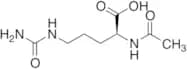
CAS:Controlled Product<p>Applications 2-[(2-Hydroxyethyl)octadecylamino]ethyl ester octadecanoic acid is used as a modifier to Polymer films of LDPE and ethylene-vinyl acetate copolymers (EVA) to enhance antifog properties.<br>References Irusta, L., et al.: J. Appl. Polym. Sci., 111, 2299-2307 (2009);<br></p>Formula:C40H81NO3Color and Shape:NeatMolecular weight:624.076(S)-2-Acetamido-5-ureidopentanoic Acid
CAS:Controlled Product<p>Applications (S)-2-Acetamido-5-ureidopentanoic Acid (cas# 33965-42-3) is a useful research chemical.<br></p>Formula:C8H15N3O4Color and Shape:NeatMolecular weight:217.22Succinic Acid
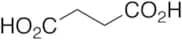
CAS:<p>Applications Succinic Acid was identified in essential oil from Saxifraga stolonifera and has antibacterial activity.<br>References Zhang, Z.: Xibei Nongye Xuebao, 25, 1536 (2016)<br></p>Formula:C4H6O4Color and Shape:NeatMolecular weight:118.09(4R,6R)-6-Hydroxymethyl-2,2-dimethyl-1,3-dioxane-4-acetic Acid 1,1-Dimethylethyl Ester
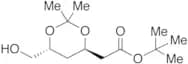
CAS:Controlled ProductFormula:C13H24O5Color and Shape:NeatMolecular weight:260.3273-Hydroxytetradecanoic Acid
CAS:Controlled Product<p>Applications 3-Hydroxytetradecanoic Acid is used in the preparation of liposomes coated with N-acylated molecular-weight. Also used in the synthesis of pseudomycin side-chain analogs. Also used in the study of Lipid A, a major constituent of the lipopolysaccharides, which are responsible for the toxicity of gram negative bacteria.<br>References Naberezhnykh, G. et al.: Chem. Nat. Comp., 46, 852 (2011); Chen, S. et al.: Bioorg. Med. Chem. Lett., 10, 2107 (2000); Carillo, S. et al.: Marine Drugs., 11, 184 (2013);<br></p>Formula:C14H28O3Color and Shape:NeatMolecular weight:244.37Olpadronic Acid Ammonium
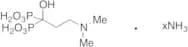
CAS:<p>Applications Used for the preparation of bisphosphonic acid derivatives as anti-osteoporosis agents.<br>References Amin, D., et al.: Drug Res., 46, 759 (1996), Martin, M., et al.: J. Med. Chem., 45, 2904 (2002),<br></p>Formula:C5H15NO7P2·x(NH3)Color and Shape:NeatMolecular weight:263.121703









![tert-Butyl N-[3-(Chlorosulfonyl)propyl]carbamate](/_next/image/?url=https%3A%2Fstatic.cymitquimica.com%2Fproducts%2FTR%2Fthumb-webp%2FB811700.webp&w=3840&q=75)