Carboxylic Acids
Carboxylic acids are organic molecules characterized by having a carboxyl-type functional group (-COOH). These acids are fundamental in various chemical reactions, including esterification, amidation, and decarboxylation. Carboxylic acids are widely used in the production of pharmaceuticals, polymers, and agrochemicals. In this section, you can find a large number of carboxylic acids ready to be used. At CymitQuimica, we provide a broad range of high-quality carboxylic acids to support your research and industrial applications.
Found 12453 products of "Carboxylic Acids"
Sort by
Purity (%)
0
100
|
0
|
50
|
90
|
95
|
100
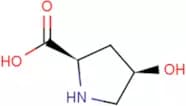
H-D-cis-Hyp-OH
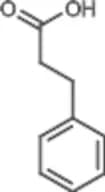
CAS:<p>H-D-cis-Hyp-OH (D-allo-Hydroxyproline) belongs to the class of organic compounds known as proline and derivatives.</p>Formula:C5H9NO3Purity:99.92%Color and Shape:White Crystalline PowderMolecular weight:131.13Hydrocinnamic acid
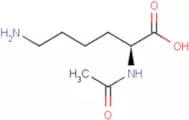
CAS:<p>Hydrocinnamic acid: white, sweet-smelling crystalline solid; used in cosmetics, food, and pharma.</p>Formula:C9H10O2Purity:99.52% - 99.973%Color and Shape:Off-White Solid PowderMolecular weight:150.17Acetyl-L-lysine
CAS:<p>Acetyl-L-lysine: N-acetylated amino acid, normally found in trace urine amounts, elevated in aminoacylase I deficiency.</p>Formula:C8H16N2O3Purity:99.40% - 99.83%Color and Shape:SolidMolecular weight:188.22Creatine
CAS:<p>Creatine, an amino acid in vertebrates, forms phosphocreatine in muscle, aids energy transfer, is made in the liver, and mainly stored in muscles.</p>Formula:C4H9N3O2Purity:99.63% - 99.83%Color and Shape:Colourless To Light Yellow SolidMolecular weight:131.13α,α-Dimethylglycine
CAS:<p>NSC-16590 (2-Aminoisobutyric acid) is a nonprotein amino acid (is an end product of pyrimidine Metabolism) excreted in the urine of about 5% of healthy</p>Formula:C4H9NO2Purity:99.65%Color and Shape:SolidMolecular weight:103.12rosmarinate acid
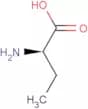
CAS:<p>Rosmarinate acid(Rosemary acid) inhibits MAO-A, MAO-B and COMT enzymes with IC50s of 50.1, 184.6 and 26.7 μM, respectively</p>Formula:C18H16O8Purity:99.69%Color and Shape:SolidMolecular weight:360.31D(-)-2-Aminobutyric acid
CAS:<p>D(-)-2-Aminobutyric acid is the substrate of D-amino acid oxidase.</p>Formula:C4H9NO2Purity:99.89%Color and Shape:SolidMolecular weight:103.12Mesoxalate sodium (monohydrate)
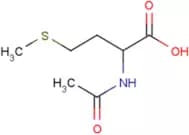
CAS:<p>Mesoxalate sodium (monohydrate) is primarily located in the cytoplasm within the cell. Mesoxalic acid can be biosynthesized from malonic acid.</p>Formula:C3HNa2O6Purity:99.85%Color and Shape:SolidMolecular weight:180.02N-Acetyl-DL-methionine
CAS:<p>N-acetyl-L-methionine equals L-methionine in diet & metabolism, essential for growth and methyl group transfers.</p>Formula:C7H13NO3SPurity:98.94%Color and Shape:White Crystalline PowderMolecular weight:191.25DL-Valine
CAS:<p>DL-Valine (H-DL-Val-OH) is 2-amino-3-methylbutanoic acid.It is synthesized in plants via several steps starting from pyruvic acid.</p>Formula:C5H11NO2Purity:99.84%Color and Shape:Leaflets From Water + Alcohol White CrystalsMolecular weight:117.15L-Alloisoleucine
CAS:<p>L-Alloisoleucine (L-allo-Isoleucine) is a branched chain amino acid and a stereoisomer of L-isoleucine, is produced as a byproduct of isoleucine transamination.</p>Formula:C6H13NO2Purity:99.88% - ≥95%Color and Shape:SolidMolecular weight:131.17NMDA
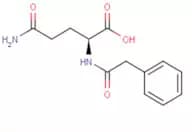
CAS:<p>N-Methyl-D-aspartic acid is an amino acid that, as the D-isomer, is the defining agonist for the NMDA (N-Methyl-D-aspartic acid) receptor subtype of glutamate</p>Formula:C5H9NO4Purity:99.21% - 99.90%Color and Shape:White SolidMolecular weight:147.13Phenylacetylglutamine
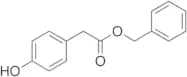
CAS:<p>Phenylacetylglutamine (NSC 203800)is a normal constituent of human urine, but other mammals such as the dog, cat, rat, and horse do not excrete this compound.</p>Formula:C13H16N2O4Purity:96.64% - 99.37%Color and Shape:SolidMolecular weight:264.28Benzyl (4-Hydroxyphenyl)acetate
CAS:Controlled Product<p>Applications Intermediate in the preparation of Camostat metabolites.<br>References Bodor, N., et al.: Pharm. Res., 3, 120 (1984), Han, L., et al.: Biochem., 46, 1432 (2007),<br></p>Formula:C15H14O3Color and Shape:NeatMolecular weight:242.27(±)-Jasmonic Acid
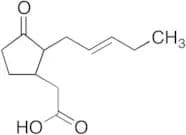
CAS:<p>Applications (±)-Jasmonic Acid can be used as reactant/reagent for synthetic preparation of fluorescent-labeled jasmonate and application to fluorescent imaging in cabbage seedlings.<br>References Liu, S., et al.: Tetrahedron Lett., 53, 4235-4239 (2012)<br></p>Formula:C12H18O3Color and Shape:NeatMolecular weight:210.274-Sulfamoylbutyric Acid
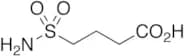
CAS:Controlled Product<p>Applications A solid phase organic linker for synthesis of tethering carboxylic acids to support.<br>References Backes, B.J. and Ellman, J. A.: J. Org. Chem., 64, 2322 (1999)<br></p>Formula:C4H9NO4SColor and Shape:NeatMolecular weight:167.183-Cyclohexenylcarboxylic Acid
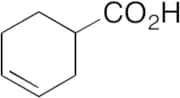
CAS:Controlled Product<p>Applications 3-Cyclohexenylcarboxylic Acid has been found to be an oxidizable, nongrowth substrate and induces the metabolism of cyclohexanecarboxylic acid and benzoic acid in a strain of Pseudomonas putida. 3-Cyclohexenylcarboxylic Acid has been used as food for cultures of Streptomyces sp. KCTC 11604BP fkbO deletion mutant to make 32-dehydroxy-FK506, a FK506 analogue containing a non-natural starter unit.<br> Not a dangerous good if item is equal to or less than 1g/ml and there is less than 100g/ml in the package<br>References Blakley, E.R., Papish, B.: Can. J. Microbiol., 28, 1324 (1982); Ban, Y.H., et. al.: Mol. bioSystems, 9, 944 (2013)<br></p>Formula:C7H10O2Color and Shape:NeatMolecular weight:126.15tert-Butyl N-[3-(Chlorosulfonyl)propyl]carbamate
CAS:Controlled Product<p>Applications tert-butyl N-[3-(chlorosulfonyl)propyl]carbamate (cas# 1196153-59-9) is a useful research chemical.<br></p>Formula:C8H16ClNO4SColor and Shape:NeatMolecular weight:257.7353,4,9,10-Perylenetetracarboxylic Diimide (~85%)
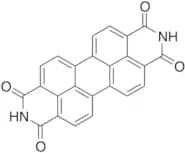
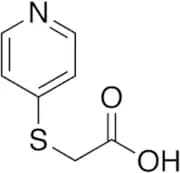
CAS:Controlled Product<p>Applications 3,4,9,10-Perylenetetracarboxylic diimide (cas# 81-33-4) is a useful research chemical.<br></p>Formula:C24H10N2O4Purity:~85%Color and Shape:NeatMolecular weight:390.354-Pyridylthioacetic Acid
CAS:Controlled Product<p>Applications 4-Pyridylthioacetic Acid (cas# 10351-19-6) is a compound useful in organic synthesis.<br></p>Formula:C7H7NO2SColor and Shape:White To Off-WhiteMolecular weight:169.2Ethyl Cyano(hydroxyimino)acetate
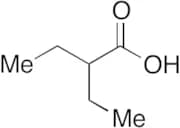
CAS:Controlled Product<p>Applications Ethyl Cyano(hydroxyimino)acetate is used in peptide synthesis and has shown to suppress racemiztion, has high coupling efficiency in both solution and solid phase synthesis and is a non-explosive alternative to 1-hydroxybenzotriazole (HOBt) and 1-hydroxy-7-azabenzotriazole (HOAt).<br>References Khattab, S.N.: Bull. Chem. Soc. Jpn., 83, 1374 (2010)<br></p>Formula:C5H6N2O3Color and Shape:NeatMolecular weight:142.112-Ethylbutyric Acid
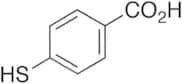
CAS:Controlled Product<p>Applications 2-Ethylbutyric Acid is used in biological studies as a possible descriptor for toxicity prediction through electrophilicity.<br> Not a dangerous good if item is equal to or less than 1g/ml and there is less than 100g/ml in the package<br>References Roy, D.R., et al.: Bioorg. Med. Chem., 13, 3405 (2005); Parthasarathi, R., et al.: J. Phys. Chem. A., 107, 10346 (2003)<br></p>Formula:C6H12O2Color and Shape:ColourlessMolecular weight:116.164-Mercaptobenzoic Acid, Technical Grade
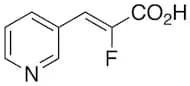
CAS:Controlled Product<p>Stability Store Under Argon; Air Sensitive<br>Applications 4-Mercaptobenzoic Acid, Technical Grade (cas# 1074-36-8) is a compound useful in organic synthesis.<br> Not a dangerous good if item is equal to or less than 1g/ml and there is less than 100g/ml in the package<br></p>Formula:C7H6O2SColor and Shape:NeatMolecular weight:154.19Z-2-Fluoro-3-(3-pyridyl)acrylic Acid
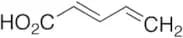
CAS:Controlled Product<p>Applications Z-2-Fluoro-3-(3-pyridyl)acrylic Acid (cas# 359435-42-0) is a compound useful in organic synthesis.<br></p>Formula:C8H6FNO2Color and Shape:NeatMolecular weight:167.14(2E)-2,4-Pentadienoic Acid
CAS:Controlled Product<p>Applications (2E)-2,4-Pentadienoic Acid (cas# 21651-12-7) is a compound useful in organic synthesis.<br> Not a dangerous good if item is equal to or less than 1g/ml and there is less than 100g/ml in the package<br></p>Formula:C5H6O2Color and Shape:NeatMolecular weight:98.12-Tetrahydrofuroic Acid
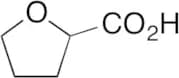
CAS:Controlled Product<p>Applications 2-Tetrahydrofuroic acid is used as a reagent to synthesize Alfuzosin (HCl: A532000), an unselective alpha-1 blocker that is used to treat lower urinary tract symptoms and benign prostatic hyperplasia.<br> Not a dangerous good if item is equal to or less than 1g/ml and there is less than 100g/ml in the package<br>References Grasso, M., et al.: Arch. Esp. Urol., 48, 97 (1994); Roehrborn, C., et al.: BJU Int., 92, 257 (2003)<br></p>Formula:C5H8O3Color and Shape:NeatMolecular weight:116.12Isostearic Acid
CAS:Controlled Product<p>Applications Isostearic Acid may be a useful reagent in the regioselective preparation of alkenes via photoredox/cobaloxime dual-catalytic decarboxylative elimination of carboxylic acids,<br>References Cartwright, K. C., et al.: Chem. Eur. J., 26, 12454 (2020)<br></p>Formula:C18H36O2Color and Shape:NeatMolecular weight:284.47Thioacetic Acid
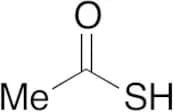
CAS:Controlled Product<p>Stability Light Sensitive<br>Applications Thiacetic Acid is a commonly used reagent in organic synthesis for the introduction of thiol groups in molecules.<br> Not a dangerous good if item is equal to or less than 1g/ml and there is less than 100g/ml in the package<br>References Chapman, J.H. et al.: J. Chem. Soc., 579 (1950); Hoque, A., et al.: Bioorg. Med. Chem. Lett., 22, 6770 (2012)<br></p>Formula:C2H4OSColor and Shape:NeatMolecular weight:76.123-Hydroxyphenylacetic Acid
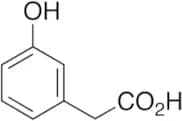
CAS:<p>Applications 3-Hydroxyphenylacetic Acid (cas# 621-37-4) is a compound useful in organic synthesis.<br></p>Formula:C8H8O3Color and Shape:NeatMolecular weight:152.152,2-Dimethylcyclopropylcarboxylic acid
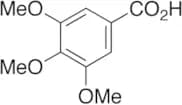
CAS:Controlled Product<p>Stability Stench<br>Applications 2,2-Dimethylcyclopropylcarboxylic acid<br></p>Formula:C6H10O2Color and Shape:NeatMolecular weight:114.143,4,5-Trimethoxybenzoic Acid
CAS:<p>Applications A metabolite of Trimebutine (T795605(P)), which is an opioid receptor agonist and an antispasmodic.<br>References Dieks, H., et al.: J. Labelled Comp. Radiopharm., 28, 1093 (1990), Delvaux, M., et al.: J. Int. Med. Res., 25, 225 (1997), Lavit, M., et al.: Arzneim.-Forsch., 50, 640 (2000),<br></p>Formula:C10H12O5Color and Shape:White To BeigeMolecular weight:212.204-Ethoxycarbonyl-3-ethoxyphenylacetic Acid
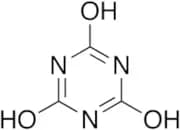
CAS:Controlled Product<p>Applications Repaglinide intermediate.<br>References Wolfenbuttel, B., et al.: Eur. J. Clin. Pharmacol., 45, 113 (1993), Grell, W., et al.: J. Med. Chem., 41, 5219 (1998), Anon., et al.: Drugs Future, 24, 815 (1999),<br></p>Formula:C13H16O5Color and Shape:NeatMolecular weight:252.26Cyanuric Acid
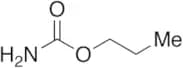
CAS:Controlled Product<p>Applications Diagnostic determination of Melamine and related compounds in kidney tissue.<br>References Mast, R., et al.: Food Chem. Toxicol., 21, 807 (1983), Yokley, R., et al.: J. Agric. Food Chem., 48, 3352 (2000), Ehling, S., et al.: Food Addit. Contam., 24, 1319 (2007), Vail, T., et al.: J. Anal. Toxicol., 31, 304 (2007),<br></p>Formula:C3H3N3O3Color and Shape:WhiteMolecular weight:129.07Carbamic Acid Propyl Ester
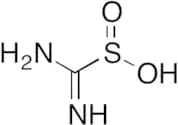
CAS:Controlled Product<p>Applications A metabolite of alkyl carbamate (ethyl or propyl).<br>References Muller, J.P., et al.: J. Chim. Phys. Physicochim. Biol., 71, 893 (1974),<br></p>Formula:C4H9NO2Color and Shape:NeatMolecular weight:103.12Formamidinesulfinic Acid
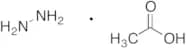
CAS:Controlled Product<p>Applications Formamidine Sulfuric Acid is a reagent used in reduction and synthesis reactions.<br> Not a dangerous good if item is equal to or less than 1g/ml and there is less than 100g/ml in the package<br>References Ma, Q. et al.: Carbon, 54, 36 (2013);<br></p>Formula:CH4N2O2SColor and Shape:White To Off-WhiteMolecular weight:108.12Hydrazine Acetate
CAS:Controlled Product<p>Applications Hydrazine derivative.<br> Not a dangerous good if item is equal to or less than 1g/ml and there is less than 100g/ml in the package<br></p>Formula:C2H8N2O2Color and Shape:NeatMolecular weight:92.1Levulinic Acid
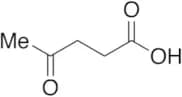
CAS:Controlled Product<p>Applications Levulinic Acid is derived from the degredation of cellulose and is a potential precursor to biofuels. Levulinic acid is also a photosensitizer for photodynamic therapy.<br>References Serrano-Ruiz, J.C., et al.: Catalysis., 195, 162 (2012); Liedtke, A.J. et al.: Tetrahedron., 68, 10049 (2012);<br></p>Formula:C5H8O3Color and Shape:Light Yellow MeltedMolecular weight:116.12Tetradecanedioic Acid
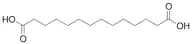
CAS:<p>Applications Tetradecanedioic acid (cas# 821-38-5) is a useful research chemical.<br></p>Formula:C14H26O4Color and Shape:NeatMolecular weight:258.352-Mercaptoisobutyric Acid, 90%
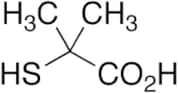
CAS:Controlled Product<p>Applications 2-Mercaptoisobutyric Acid, 90% (cas# 4695-31-2) is a compound useful in organic synthesis.<br>References McIntosh, J.M. and Siddiqui, M.A.: Can. J. Chem., 61, 1872-1875 (1983), Bienlarz, C. and Cornwall, M.J.: Tetrahedron Lett., 34 (6), 939-942 (1993)<br></p>Formula:C4H8O2SPurity:90%Color and Shape:NeatMolecular weight:120.17Hexanedioic Acid Mono(4-hydroxybutyl) Ester
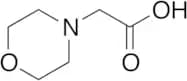
CAS:Controlled Product<p>Applications Hexanedioic Acid Mono(4-hydroxybutyl) Ester is an intermediate in the synthesis of aliphatic polyesters.<br>References McCabe, R. W., et al.: Tetrahedron., 60, 765 (2004);<br></p>Formula:C10H18O5Color and Shape:NeatMolecular weight:218.247Morpholin-4-yl Acetic Acid
CAS:Controlled Product<p>Applications Morpholin-4-yl Acetic Acid was used in preparation of pyrrolidine-fused fullerene multicarboxylates by photoreaction.<br>References Gan, L., et al.: J. Org. Chem., 63, 4240 (1998).<br></p>Formula:C6H11NO3Color and Shape:NeatMolecular weight:145.16Hydrazine Acetate
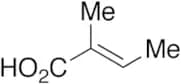
CAS:Controlled Product<p>Applications Hydrazine acetate (cas# 7335-65-1) is a useful research chemical.<br></p>Formula:C2H8N2O2Color and Shape:NeatMolecular weight:92.1Tiglic Acid
CAS:<p>Applications Tiglic acid is the stable isomer of angelic acid. Tiglic acid was found as glyceride in croton oil, as butyl ester in the oil of the Roman camomile, and as geranyl tiglate in oil of geranium. Tiglic acid is formed during the charcoaling of maple wood.<br> Not a dangerous good if item is equal to or less than 1g/ml and there is less than 100g/ml in the package<br>References Bueding, et al.: J. Biol. Chem., 202, 505 (1953),<br></p>Formula:C5H8O2Color and Shape:NeatMolecular weight:100.12tert-Butyl [(1R,2S,5S)-2-Amino-5-[(dimethylamino)carbonyl]cyclohexyl]carbamate Oxalate
CAS:Controlled Product<p>Applications tert-Butyl [(1R,2S,5S)-2-Amino-5-[(dimethylamino)carbonyl]cyclohexyl]carbamate Oxalate is a starting material and useful building block of various pharmaceuticals.<br></p>Formula:C14H27N3O3•C2H2O4Color and Shape:NeatMolecular weight:375.41N,N'-bis(2,6-Diisopropylphenyl)-1,6,7,12-tetraphenoxy-3,4,9,10-perylenetetracarboxylic Diimide
CAS:Controlled Product<p>Applications N,N'-Bis(2,6-diisopropylphenyl)-1,6,7,12-tetraphenoxy-3,4,9,10-perylenetetracarboxylic Diimide has applications in the photosensors and optical detectors.<br>References Wang, Shaojun, et al.: ACS Photonics, 5(6), 2478-2485 (2018);Wang, Hanlin, et al.: Adv. Mat., 29(32), n/a. (2017)<br></p>Formula:C72H58N2O8Color and Shape:NeatMolecular weight:1079.239Dimethylammonium Dimethylcarbamate
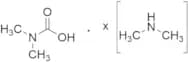
CAS:<p>Applications Dimethylammonium Dimethylcarbamate is a reactant used in the synthesis of vanadium complex implantation on silica surfaces and may be studied for its use in phrmaceutical synthesis.<br>References Bresciani, G. et al.: Eur. J. Inorg. Chem., 10, 1176 (2018);<br></p>Formula:C3H7NO2·xC2H7NColor and Shape:NeatMolecular weight:89.09 + x(45.08)Sebacic Acid
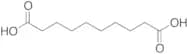
CAS:<p>Applications Sebacic Acid is a urinary metabolite that has been identified as an anti-fatigue biomarker.<br>References Ma, C. et. al.: J. Pharmaceut. Biomed. Anal. 105, 84 (2015)<br></p>Formula:C10H18O4Color and Shape:WhiteMolecular weight:202.254-n-Butoxybenzoic Acid
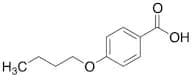
CAS:Controlled Product<p>Applications 4-n-Butoxybenzoic acid<br></p>Formula:C11H14O3Color and Shape:NeatMolecular weight:194.23Urocanic Acid
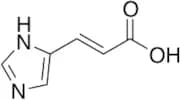
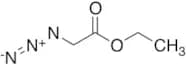
CAS:<p>Applications Urocanic acid (cas# 104-98-3) is a useful research chemical.<br></p>Formula:C6H6N2O2Color and Shape:White PowderMolecular weight:138.12Ethyl 2-Azidoacetate
CAS:Controlled Product<p>Applications ethyl 2-azidoacetate (cas# 637-81-0) is a useful research chemical.<br></p>Formula:C4H7N3O2Color and Shape:NeatMolecular weight:129.12







![tert-Butyl N-[3-(Chlorosulfonyl)propyl]carbamate](/_next/image/?url=https%3A%2Fstatic.cymitquimica.com%2Fproducts%2FTR%2Fthumb-webp%2FB811700.webp&w=3840&q=75)






![tert-Butyl [(1R,2S,5S)-2-Amino-5-[(dimethylamino)carbonyl]cyclohexyl]carbamate Oxalate](/_next/image/?url=https%3A%2Fstatic.cymitquimica.com%2Fproducts%2FTR%2Fthumb-webp%2FB809515.webp&w=3840&q=75)