Carboxylic Acids
Carboxylic acids are organic molecules characterized by having a carboxyl-type functional group (-COOH). These acids are fundamental in various chemical reactions, including esterification, amidation, and decarboxylation. Carboxylic acids are widely used in the production of pharmaceuticals, polymers, and agrochemicals. In this section, you can find a large number of carboxylic acids ready to be used. At CymitQuimica, we provide a broad range of high-quality carboxylic acids to support your research and industrial applications.
Found 12453 products of "Carboxylic Acids"
Sort by
Purity (%)
0
100
|
0
|
50
|
90
|
95
|
100
Ethyl 2-Chloracetoacetate
CAS:<p>Applications Ethyl 2-Chloracetoacetate is used in the preparation of oxazoles and thiazoles as agonists for peroxisome proliferator-activated receptor δ. It is also used to synthesize dimethylimidazothiadiazolecarbohydrazides with anticancer activities.<br> Not a dangerous good if item is equal to or less than 1g/ml and there is less than 100g/ml in the package<br>References Sznaidman, M., et al.: Bioorg. Med. chem. Lett., 13, 1517 (2003); Terzioglu, N., et al.: Eur. J. Med. Chem., 38, 781 (2003)<br></p>Formula:C6H9ClO3Color and Shape:NeatMolecular weight:164.59Sucrose 6,1’,6’-Tricarboxylic Acid Trisodium Salt
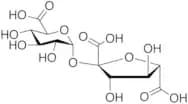
CAS:Controlled ProductFormula:C12H13Na3O14Color and Shape:NeatMolecular weight:450.192Cyanuric Acid
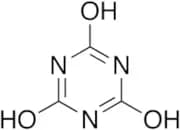
CAS:Controlled Product<p>Applications Diagnostic determination of Melamine and related compounds in kidney tissue.<br>References Mast, R., et al.: Food Chem. Toxicol., 21, 807 (1983), Yokley, R., et al.: J. Agric. Food Chem., 48, 3352 (2000), Ehling, S., et al.: Food Addit. Contam., 24, 1319 (2007), Vail, T., et al.: J. Anal. Toxicol., 31, 304 (2007),<br></p>Formula:C3H3N3O3Color and Shape:WhiteMolecular weight:129.07Nonafluoro-1-butanesulfonic Acid
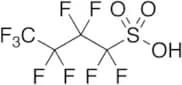
CAS:<p>Stability Moisture Sensitive<br>Applications Perfluorobutanesulfonic acid (PFBS) is a stable fluorosurfactant because of the strength of carbon–fluorine bonds. PFBS has served as a replacement for the persistent, toxic, and bioaccumulative perfluorooctanesulfonic acid (PFOS) in 3M's Scotchgard stain repellents. PFBS is neither toxic nor bioaccumulative.<br> Not a dangerous good if item is equal to or less than 1g/ml and there is less than 100g/ml in the package<br>References Renner R., et al.: Environ. Sci. Technol., 40, 12 (2006), Betts, K.S., et al.: Environ. Health Perspect., 115, 250 (2007),<br></p>Formula:C4HF9O3SColor and Shape:Colourless LiquidMolecular weight:300.102,4-Dihydroxybenzoic Acid
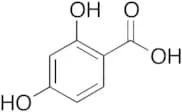
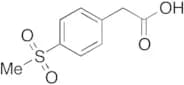
CAS:<p>Applications 2,4-Dihydroxybenzoic acid is a useful synthetic intermediate. An organic building block for plastics and rubber products.<br>References Gautam, R., et al.: Cryst. Growth Des., 18, 1501 (2018); Shvedene, N. V., et al.: J. Anal. Chem., 72, 95 (2017);<br></p>Formula:C7H6O4Color and Shape:White To Off WhiteMolecular weight:154.124-(Methylsulfonyl)phenylacetic Acid
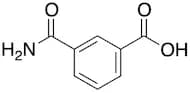
CAS:Controlled Product<p>Applications 4-(Methylsulfonyl)phenylacetic Acid is an intermediate used to prepare heterocyclic diaryl compounds as selective COX-2 inhibitors. It is also used to synthesize hydroxyfuranones as antioxidants and antiinflammatory agents.<br>References Eren, G., et al.: Bioorg. Med. Chem., 18, 6467 (2010); Weber, V., et al.: Bioorg. Med. Chem., 13, 4552 (2005)<br></p>Formula:C9H10O4SColor and Shape:NeatMolecular weight:214.243-Carboxamidobenzoic acid
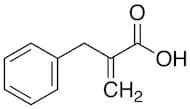
CAS:Controlled Product<p>Stability Hygroscopic<br>Applications 3-Carboxamidobenzoic acid<br></p>Formula:C8H7NO3Color and Shape:NeatMolecular weight:165.152-Benzylacrylic Acid
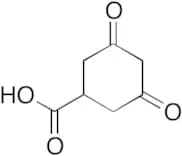
CAS:Controlled Product<p>Stability Light Sensitive<br>Applications 2-Benzylacrylic Acid (cas# 5669-19-2) is a compound useful in organic synthesis.<br></p>Formula:C10H10O2Color and Shape:NeatMolecular weight:162.193,5-Dioxocyclohexanecarboxylic Acid
CAS:<p>Applications Dihydroresorcylic Acid is a useful reagent in detecting proteins in living cells.<br>References Reddie, K., et al.: Mol. Biosys., 4, 521-531 (2008); Seo, Y., et al.: Bioorg. Med. Chem. Lett., 19, 356-359 (2009);<br></p>Formula:C7H8O4Color and Shape:NeatMolecular weight:156.143-Hydroxytetradecanoic Acid
CAS:Controlled Product<p>Applications 3-Hydroxytetradecanoic Acid is used in the preparation of liposomes coated with N-acylated molecular-weight. Also used in the synthesis of pseudomycin side-chain analogs. Also used in the study of Lipid A, a major constituent of the lipopolysaccharides, which are responsible for the toxicity of gram negative bacteria.<br>References Naberezhnykh, G. et al.: Chem. Nat. Comp., 46, 852 (2011); Chen, S. et al.: Bioorg. Med. Chem. Lett., 10, 2107 (2000); Carillo, S. et al.: Marine Drugs., 11, 184 (2013);<br></p>Formula:C14H28O3Color and Shape:NeatMolecular weight:244.37Isopropyl Acetate
CAS:<p>Applications Isopropyl Acetate is a widely used chemical solvent in organic and industrial syntheses. Also used in the dissolution of gallstones.Environmental contaminants; Food contaminants<br> Not a dangerous good if item is equal to or less than 1g/ml and there is less than 100g/ml in the package<br>References Zakko, S. et al.: Gastroenterol., 113, 232 (1997); Loeser, E. et al.: J. Chromatogr. A., 1216, 3409 (2009);<br></p>Formula:C5H10O2Color and Shape:NeatMolecular weight:102.13Cis-Pinic Acid
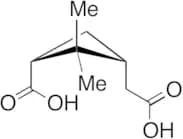
CAS:Controlled Product<p>Applications Cis-Pinic Acid is used to develop an exposure system for the toxicological evaluation of particles derived from coal-fired power plants. It is formed from α-pinene (P466605) oxidation.<br>References Ruiz, P., et al.: Inhal. Toxicol., 19, 607 (2007); Kristensen, K., et al.: Atmos. Chem. Phy., 13, 3763 (2013)<br></p>Formula:C9H14O4Color and Shape:NeatMolecular weight:186.21Opianic Acid
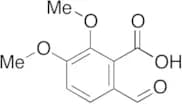
CAS:<p>Applications Opianic Acid is a reagent used in the synthesis of novel 5-arylidene (thio)barbituric acid displaying urease activity.<br>References Vosooghi, M. et al.: J. Iran. Chem. Soc., 12, 1487 (2015);<br></p>Formula:C10H10O5Color and Shape:White SolidMolecular weight:210.184-Mercaptobenzoic Acid, Technical Grade
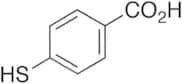
CAS:Controlled Product<p>Stability Store Under Argon; Air Sensitive<br>Applications 4-Mercaptobenzoic Acid, Technical Grade (cas# 1074-36-8) is a compound useful in organic synthesis.<br> Not a dangerous good if item is equal to or less than 1g/ml and there is less than 100g/ml in the package<br></p>Formula:C7H6O2SColor and Shape:NeatMolecular weight:154.19Ethyl Nitroacetate
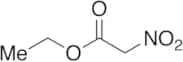
CAS:Controlled Product<p>Applications Ethyl Nitroacetate is an ester of nitrocarboxylic acid used as an intermediate in the preparation of unsubstituted amino acids.<br>References Sidorin, G.I.: Gig. Aspe. Okhr. Zdor. Nasel., 144 (1977);<br></p>Formula:C4H7NO4Color and Shape:NeatMolecular weight:133.13,4-Dimethoxybenzoic Acid (Veratric Acid)
CAS:Controlled Product<p>Applications Veratric Acid is a derivative of Protocatechuic Acid. Veratric Acid is a reagent used in the production of antimicrobial agents, antifeedants, and a variety of other biologically active compounds.<br>References Alissandrakis, E., et al.: Eur. Food Res. Technol., 229, 365 (2009), Spaccini, R., et al.: Soil Biol. Biochem., 41, 1164 (2009), Narasimhan, B., et al.: Eur. J. Med. Chem., 44, 689 (2009), Pereira, L., et al.: J. Biotechnol., 139, 68 (2009),<br></p>Formula:C9H10O4Color and Shape:NeatMolecular weight:182.17Phosphoric Acid Tributyl Ester
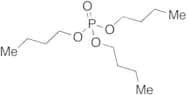
CAS:Controlled Product<p>Stability Moisture Sensitive<br>Applications Phosphoric Acid Tributyl Ester is used as a solvent in the solvent-detergent method for production of immunoglobulin for inactivation of viruses with lipid envelope on the model of duck hepatitis B virus. It is also used as a ligand in the extraction of lanthanide ions from solid and liquid materials by supercritical CO2.This compound is a contaminant of emerging concern (CECs).<br>References Zubkova, N., et al.: Bull. Exp. Biol. Med., 155, 821 (2013); Lin, Y., et al.: Anal. Chem., 66, 1971(1994)<br></p>Formula:C12H27O4PColor and Shape:ColourlessMolecular weight:266.31Isonicotinic Acid
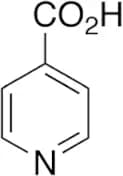
CAS:<p>Applications Used in the biological study of differentiation induced by nicotinic acid, nicotinamide and isonicotinic acid in human leukemia cell lines.<br>References Zeilinger, S., et al.: J. Biol. Chem., 271, 25624 (1996), Panagiotou, G., et al.: J. Biotechnol., 118, 304 (2005),<br></p>Formula:C6H5NO2Color and Shape:Light BrownMolecular weight:123.11Glyoxylic Acid (50% aqueous solution)
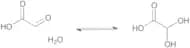
CAS:<p>Applications Glyoxylic Acid is used as a reagent in the synthesis of N-{[6-chloro-4-(2,6-dimethoxyphenyl)quinazolin-2-yl]carbonyl}-L-leucine, a novel nonpeptide chemotype selective for neurotensin receptor 2. Also used as a reagent in the synthesis of elemonic acid derivatives as Pin1 inhibitors.<br>References Thomas, J.B., et al.: Bioorg. Med. Chem. Lett., 25, 292 (2015); Li, X., et al.: Bioorg. Med. Chem. Lett., 24, 5612 (2014)<br></p>Formula:C2H2O3Color and Shape:Colourless LiquidMolecular weight:74.043-(1-Cyanoethyl)benzoic Acid
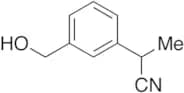
CAS:Controlled Product<p>Applications 3-(1-Cyanoethyl)benzoic Acid is an intermediate for the synthetic preparation of various pharmaceutical compounds. 3-(1-Cyanoethyl)benzoic Acid was used in studies examining the enantioselectivity of nitrile hydratases.<br>References Rzeznicka, K., et al.: App. Microbiol. Biotechnol., 85, 1417 (2010); Van Pelt. S., et al.: Org. Biomole. Chem., 9, 3011 (2011);<br></p>Formula:C10H9NO2Color and Shape:BeigeMolecular weight:175.18DL-2-aminobutyric acid
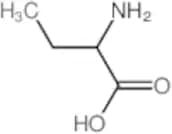
CAS:Controlled Product<p>Applications DL-2-aminobutyric acid<br></p>Formula:C4H9NO2Color and Shape:NeatMolecular weight:103.123,3-Dimethylbutyric Acid
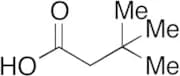
CAS:Controlled Product<p>Applications 3,3-Dimethylbutyric Acid is used in the synthesis of imidazo[4,5-c]pyridine derivatives as anitmicrobial agents.<br> Not a dangerous good if item is equal to or less than 1g/ml and there is less than 100g/ml in the package<br>References Jose. G., et. al.: Eur. J. Med. Chem., 77, 288 (2014)<br></p>Formula:C6H12O2Color and Shape:Clear Colourless To Light YellowMolecular weight:116.162-Hydroxybutanoic Acid
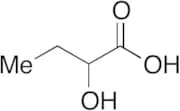
CAS:Controlled Product<p>Applications 2-Hydroxybutanoic Acid is an analyte used in the diagnoses of colorectal cancer as well as Type II diabetes. It is also used in the purification of the major Vibrio autoinducer and the study of its role in virulence factor production for cholera.<br>References Qiu, Y. et al.: J. Proteome Res., 8, 4844 (2009); Salek, R.. et al.: Phys. Genom., 29, 99, (2007); Higgins, D. et al.: Nature, 450, 883 (2007);<br></p>Formula:C4H8O3Color and Shape:NeatMolecular weight:104.14-Hydroxy-2-nitrobenzoic Acid
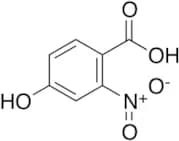
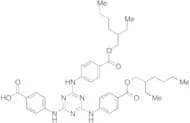
CAS:Controlled Product<p>Applications 4-hydroxy-2-nitrobenzoic acid (cas# 74230-08-3) is a useful research chemical.<br></p>Formula:C7H5NO5Color and Shape:Dark Red To Dark BrownMolecular weight:183.1184-(4,6-Bis(4-((2-ethylhexyloxy)carbonyl)phenylamino)-1,3,5-triazin-2-ylamino)benzoic Acid
CAS:<p>Applications 4-(4,6-Bis(4-((2-ethylhexyloxy)carbonyl)phenylamino)-1,3,5-triazin-2-ylamino)benzoic Acid is an impurity in the synthesis of Ethylhexyl Triazone (E918810), used in sunscreen formulations as a UV filter to block out harmful ultraviolet light.<br>References Potard, G. et al.: Int. J. Pharm., 189, 249 (1999); Couteau, C. et al.: J. Pharm. Biomed. Anal., 44, 270 (2007);<br></p>Formula:C40H50N6O6Color and Shape:NeatMolecular weight:710.86165-Formylfuran-2-carboxylic Acid
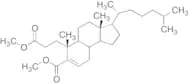
CAS:<p>Applications 5-Formylfuran-2-carboxylic Acid is a compound useful in organic synthesis.<br>References Nocito, F., et al.: ACS Omega, 3, 18724 (2018); Chen, G., et al.: Ind. Eng. Chem. Res., 57, 16172 (2018)<br></p>Formula:C6H4O4Color and Shape:NeatMolecular weight:140.093,4-Secocholest-5-ene-3,4-dioic Acid Dimethyl Ester
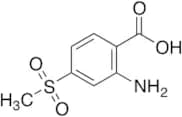
CAS:Controlled Product<p>Applications 3,4-Secocholest-5-ene-3,4-dioic Acid Dimethyl Ester is an intermediate used in the synthesis of 3,4-Seco-solanidine-3,4-dioic Acid (S682410), which is a derivative of Solanidine (S682410).<br></p>Formula:C29H48O4Color and Shape:NeatMolecular weight:460.692-Amino-4-(methylsulfonyl)benzoic Acid
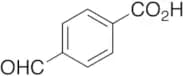
CAS:<p>Applications 2-Amino-4-(methylsulfonyl)benzoic Acid is a reagent used in the synthesis of anthranilic diamides containing fluorinated groups as potential ryanodine receptors activators.<br> Not a dangerous good if item is equal to or less than 1g/ml and there is less than 100g/ml in the package<br>References Wu, C. et al.: Chem. Lett., 28, 1248 (2017);<br></p>Formula:C8H9NO4SColor and Shape:NeatMolecular weight:215.234-Formylbenzoic Acid
CAS:Controlled Product<p>Applications A metabolite of aldehydes.<br>References Shiobara, Y., et al.: Xenobiotica, 9, 157 (1979),<br></p>Formula:C8H6O3Color and Shape:NeatMolecular weight:150.13Octyl 3-Octyloxiraneoctanoic Acid
CAS:Controlled Product<p>Applications Octyl 3-Octyloxiraneoctanoic Acid (cas# 106-84-3) is a compound useful in organic synthesis.<br></p>Formula:C26H50O3Color and Shape:NeatMolecular weight:410.67Cyclopropanecarboxylic Acid
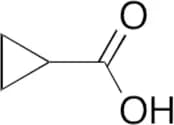
CAS:<p>Applications Cyclopropanecarboxylic Acid is used as a reagent in the synthesis of substituted 4-(thiophen-2-ylmethyl)-2H-phthalazin-1-ones as potent PARP-1 inhibitors. Also used as a reagent in the synthesis of 2-alkyloxazoles as potent and selective PI4KIIIβ inhibitors demonstrating inhibition of HCV replication.<br> Not a dangerous good if item is equal to or less than 1g/ml and there is less than 100g/ml in the package<br>References Wang, L., et al.: Bioorg. Med. Chem. Lett., 24, 3739 (2014); Keaney, E.P., et al.: Bioorg. Med. Chem. Lett., 24, 3714 (2014)<br></p>Formula:C4H6O2Color and Shape:NeatMolecular weight:86.092-Naphthoxyacetic acid
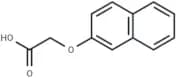
CAS:<p>2-Naphthoxyacetic acid is an endogenous metabolite that is an inhibitor of firefly luciferase (Potency=40 μm).</p>Formula:C12H10O3Purity:99.74%Color and Shape:SolidMolecular weight:202.212-[(2-Hydroxyethyl)octadecylamino]ethyl ester octadecanoic acid
CAS:Controlled Product<p>Applications 2-[(2-Hydroxyethyl)octadecylamino]ethyl ester octadecanoic acid is used as a modifier to Polymer films of LDPE and ethylene-vinyl acetate copolymers (EVA) to enhance antifog properties.<br>References Irusta, L., et al.: J. Appl. Polym. Sci., 111, 2299-2307 (2009);<br></p>Formula:C40H81NO3Color and Shape:NeatMolecular weight:624.076Trifluoroacetic Acid-d
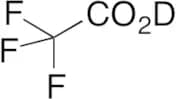
CAS:Controlled Product<p>Applications Isotope labelled Trifluoroacetic Acid used as a solvent in a variety of organic synthesis and chemical processes. Used in the synthesis of anticancer agents as well as phospholipase D inhibitors.<br> E0<br>References Scott, S. et al.: Nat. Chem. Biol., 5, 108 (2009); Minko, T. et al.: Cancer. Chemother. Pharmacol., 50, 143 (2002);<br></p>Formula:C2DF3O2Color and Shape:ColourlessMolecular weight:115.0295(2E,6E)-3,7,11-Trimethyldodeca-2,6,10-trien-1-yl Acetate
CAS:Controlled Product<p>Applications (2E,6E)-3,7,11-Trimethyldodeca-2,6,10-trien-1-yl Acetate is an intermediate in the synthesis of JHSB3 (J211030). JHSB3 is an acyclic sesquiterpenoid that regulates many aspects of insect physiology. Juvenile Hormone regulate development, reproduction, diapause, and polyphenisms.<br>References Kotaki, T., et al.: Org. Let., 11, 5234 (2009); Riddiford, L.: Adv. Insect Physiol., 24, 213 (1994); Wyatt, G., Davey, K.: Adv. Insect Physiol., 26, 1 (1996); Nijhout, H.: Insect Hormones (Princeton Univ. Press, Princeton) (1994)<br></p>Formula:C17H28O2Color and Shape:NeatMolecular weight:264.4trans-2-Octenoic Acid
CAS:Controlled Product<p>Stability Light Sensitive<br>Applications TRANS-2-OCTENOIC ACID (cas# 1871-67-6) is a useful research chemical.<br> Not a dangerous good if item is equal to or less than 1g/ml and there is less than 100g/ml in the package<br></p>Formula:C8H14O2Color and Shape:NeatMolecular weight:142.2Methyl Acetate
CAS:Controlled Product<p>Stability Volatile<br>Applications Methyl Acetate is used as an organic chemical solvent for a multitude of organic processes. Also used in the production of biodiesel.<br> Not a dangerous good if item is equal to or less than 1g/ml and there is less than 100g/ml in the package<br>References Xu, Y. et al.: J. mol. Cat., 32, 241 (2005); Ogino, H. et al.: J. Biosci. Bioeng., 89, 451 (2000);<br></p>Formula:C3H6O2Color and Shape:NeatMolecular weight:74.082,2-dimethyl-4-oxo-4-(propan-2-yloxy)butanoic acid
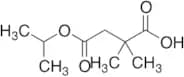
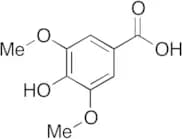
CAS:Controlled Product<p>Applications 2,2-dimethyl-4-oxo-4-(propan-2-yloxy)butanoic acid (cas# 1803601-41-3) is a useful research chemical.<br></p>Formula:C9H16O4Color and Shape:NeatMolecular weight:188.22Syringic Acid
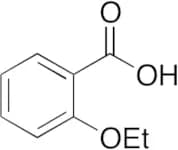
CAS:Controlled Product<p>Applications Syringic Acid is used in biological studies for electron transfer from plant phenolates to carotenoid radical cations with antioxidant interaction entering the Marcus theory inverted region.<br>References Cheng, H., et al.: J. Agric. Food Chem., 62, 942 (2014)<br></p>Formula:C9H10O5Color and Shape:Off-WhiteMolecular weight:198.172-Ethoxybenzoic Acid
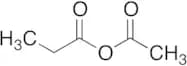
CAS:<p>Applications 2-Ethoxybenzoic Acid is a component of dental cement. Low concentrations of 2-Ethoxybenzoic Acid in combination with Eugenol (E938640), gives a stabilizing effect to liposomes to lower damages to cells.<br>References Fujisawa, S., et al.: J. Dent. Res., 82, 43(2003); Brauer, G.M., et al.: J. Dent. Res., 62, 366 (1983); Brauer, G.M., et al.: J. Dent. Res., 63, 137 (1984); Fujisawa, S., et al.: J. Biomed. Mater. Res., 21, 89 (1987)<br></p>Formula:C9H10O3Color and Shape:NeatMolecular weight:166.17Acetyl Propionate
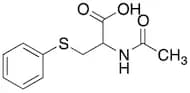
CAS:Controlled Product<p>Applications Acetic propionic anhydride<br></p>Formula:C5H8O3Color and Shape:NeatMolecular weight:116.11522-(Acetylamino)-3-(phenylthio)propanoic Acid
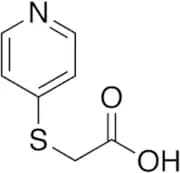
CAS:Controlled Product<p>Applications 2-(Acetylamino)-3-(phenylthio)propanoic acid is a useful chemical in research.<br></p>Formula:C11H13NO3SColor and Shape:NeatMolecular weight:239.294-Pyridylthioacetic Acid
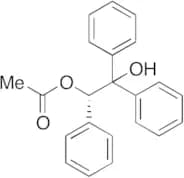
CAS:Controlled Product<p>Applications 4-Pyridylthioacetic Acid (cas# 10351-19-6) is a compound useful in organic synthesis.<br></p>Formula:C7H7NO2SColor and Shape:White To Off-WhiteMolecular weight:169.2(S)-2-Hydroxy-1,2,2-triphenylethyl Acetate
CAS:Controlled ProductFormula:C22H20O3Color and Shape:NeatMolecular weight:332.392rac 2-Aminothiazoline-4-carboxylic Acid
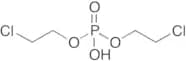
CAS:Controlled Product<p>Stability Hygroscopic<br>Applications Used in the manufacturing of L-tryptophan by enzymic reaction.<br>References Franke, L., et al.: J. Med. Chem., 48, 6997 (2005), Fox, T., et al.: Curr. Top Med. Chem., 6, 1579 (2006),<br></p>Formula:C4H6N2O2SColor and Shape:NeatMolecular weight:146.17Di-β,β'-Chloroethylphosphoric Acid
CAS:<p>Applications Di-β,β'-Chloroethylphosphoric Acid, is a dialkyl hydrogen phosphates, that can undergo the electrophilic trifluor- omethylation to produce trifluoromethyl phosphates in order to increase the lipophilicity of functional groups.<br>References Santschi, N., et al.: J. Fluorine Chem., 135, 83 (2012);<br></p>Formula:C4H9Cl2O4PColor and Shape:NeatMolecular weight:222.99Phenylglyoxylic Acid
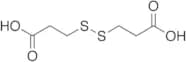
CAS:<p>Applications Phenylglyoxylic Acid (cas# 611-73-4) is a compound useful in organic synthesis.<br></p>Formula:C8H6O3Color and Shape:NeatMolecular weight:150.131Dithiobis-propanoic Acid
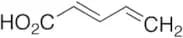
CAS:Controlled ProductFormula:C6H10O4S2Color and Shape:White To Off-WhiteMolecular weight:210.07(2E)-2,4-Pentadienoic Acid
CAS:Controlled Product<p>Applications (2E)-2,4-Pentadienoic Acid (cas# 21651-12-7) is a compound useful in organic synthesis.<br> Not a dangerous good if item is equal to or less than 1g/ml and there is less than 100g/ml in the package<br></p>Formula:C5H6O2Color and Shape:NeatMolecular weight:98.1