Carboxylic Acids
Found 12457 products of "Carboxylic Acids"
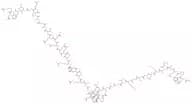
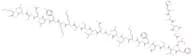
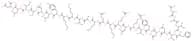
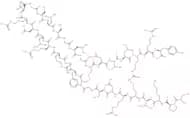
BNP-45 (mouse) trifluoroacetate salt
CAS:Please enquire for more information about BNP-45 (mouse) trifluoroacetate salt including the price, delivery time and more detailed product information at the technical inquiry form on this page
Formula:C209H354N70O63S2Purity:Min. 95%Molecular weight:4,919.61 g/molRef: 3D-FB110157
Discontinued product(Des-Gly10,Ser(Ac)4,D-Leu6,Pro-NHEt 9)-LHRH trifluoroacetate salt
Please enquire for more information about (Des-Gly10,Ser(Ac)4,D-Leu6,Pro-NHEt 9)-LHRH trifluoroacetate salt including the price, delivery time and more detailed product information at the technical inquiry form on this pageFormula:C61H86N16O13Purity:Min. 95%Molecular weight:1,251.44 g/molRef: 3D-FD109745
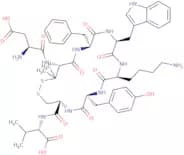
Discontinued product(Pen 5)-Urotensin II (4-11) (human) trifluoroacetate salt
CAS:Please enquire for more information about (Pen 5)-Urotensin II (4-11) (human) trifluoroacetate salt including the price, delivery time and more detailed product information at the technical inquiry form on this page
Formula:C52H68N10O12S2Purity:Min. 95%Molecular weight:1,089.29 g/molRef: 3D-FP109652
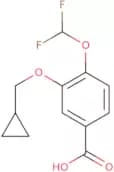
Discontinued product3-Cyclopropylmethoxy-4-difluoromethoxy-benzoic acid
CAS:3-Cyclopropylmethoxy-4-difluoromethoxy-benzoic acid is an industrial chemical that is used as a binding agent in the production of dyes, rubber, and pharmaceuticals. The compound is produced by the acylation of 3-chloromethoxybenzoic acid with cyclopropylmethanol. This reaction requires an inorganic base such as potassium carbonate or sodium bicarbonate to activate the chloride. 3-Cyclopropylmethoxy-4-difluoromethoxybenzoic acid can be used as a reactive alkylating agent for the production of amides and other organic compounds, which increases its versatility.
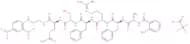
Formula:C12H12O4F2Purity:Min. 95%Color and Shape:White/Off-White SolidMolecular weight:258.22 g/molPz-Pro-Leu-Gly-Pro-D-Arg-OH trifluoroacetate salt
CAS:Pz-Pro-Leu-Gly-Pro-D-Arg-OH trifluoroacetate salt is a synthetic substrate that can be used for the synthesis of cyclic peptides. It has been shown to act as a competitive inhibitor of the serine protease, chymotrypsin, and cytochalasin B. Pz-Pro-Leu-Gly-Pro-D-Arg is a soluble substrate that can be used in tissue culture experiments with caco2 cells. This compound also has high solubility and is stable at pH values between 5 and 12. The optimum pH for this compound is 8.
Formula:C38H52N10O8Purity:Min. 95%Molecular weight:776.88 g/molRef: 3D-FP110878
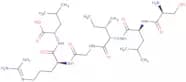
Discontinued productAmyloid beta-Protein (33-42) trifluoroacetate salt
CAS:Please enquire for more information about Amyloid beta-Protein (33-42) trifluoroacetate salt including the price, delivery time and more detailed product information at the technical inquiry form on this pageFormula:C41H74N10O11SPurity:Min. 95%Molecular weight:915.15 g/molRef: 3D-FA109546
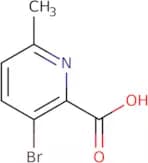
Discontinued product3-Bromo-6-methylpicolinic acid
CAS:Please enquire for more information about 3-Bromo-6-methylpicolinic acid including the price, delivery time and more detailed product information at the technical inquiry form on this page
Formula:C7H6BrNO2Purity:Min. 95%Molecular weight:252.49 g/molRef: 3D-FB46394
Discontinued product(Phe2, Nle 4)-ACTH (1-24) (human, bovine, rat) trifluoroacetate salt
CAS:Please enquire for more information about (Phe2, Nle 4)-ACTH (1-24) (human, bovine, rat) trifluoroacetate salt including the price, delivery time and more detailed product information at the technical inquiry form on this page
Formula:C137H212N40O30Purity:Min. 95%Molecular weight:2,899.4 g/molRef: 3D-FP109714
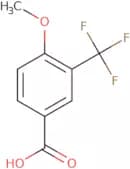
Discontinued product4-Methoxy-3-(trifluoromethyl)benzoic acid
CAS:4-Methoxy-3-(trifluoromethyl)benzoic acid is a useful scaffold that can be used as a building block for the synthesis of complex compounds. It has been shown to react with various reagents and is a versatile building block that can be used in organic synthesis. 4-Methoxy-3-(trifluoromethyl)benzoic acid is a high quality chemical and has been classified as speciality chemicals. This product is also known by the CAS number 213598-09-5.
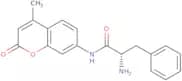
Formula:C9H7F3O3Purity:Min. 98 Area-%Color and Shape:PowderMolecular weight:220.15 g/molH-Phe-AMC trifluoroacetate salt
CAS:H-Phe-AMC Trifluoroacetate salt is a synthetic, protease inhibitor that inhibits the activity of serine and cysteine proteases. It binds to the active site of these enzymes and blocks their function. H-Phe-AMC trifluoroacetate salt has been used in food chemistry to hydrolyze proteins, and can be used to measure enzyme activities. This product also has been shown to have biological functions such as the inhibition of molting, physiological function, and the prevention of carcinogenesis.
Formula:C19H18N2O3Purity:Min. 95%Molecular weight:322.36 g/molRef: 3D-FP110514
Discontinued productH-D-Val-Leu-Lys-AMC acetate salt
CAS:Please enquire for more information about H-D-Val-Leu-Lys-AMC acetate salt including the price, delivery time and more detailed product information at the technical inquiry form on this page
Formula:C27H41N5O5Purity:Min. 95%Molecular weight:515.65 g/molRef: 3D-FV110534
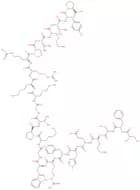
Discontinued productTIP-39 trifluoroacetate salt
CAS:Please enquire for more information about TIP-39 trifluoroacetate salt including the price, delivery time and more detailed product information at the technical inquiry form on this pageFormula:C202H325N61O54SPurity:Min. 95%Molecular weight:4,504.19 g/molRef: 3D-FT109386
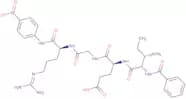
Discontinued productBz-Ile-Glu-Gly-Arg-pNA acetate salt
CAS:Bz-Ile-Glu-Gly-Arg-pNA acetate salt is an anticoagulant that binds to heparin. It has been shown to inhibit protease activity in soybean trypsin by binding to the active site of the enzyme. Bz-Ile-Glu-Gly-Arg-pNA acetate salt has also been shown to have a molecular weight of heparin and a protein synthesis inhibition rate of fibrinogen, which is responsible for coagulation.
Formula:C32H43N9O9Purity:Min. 95%Molecular weight:697.74 g/molRef: 3D-FB110748
Discontinued productOsteostatin (1-5) (human, bovine, dog, horse, mouse, rabbit, rat) trifluoroacetate salt
CAS:Please enquire for more information about Osteostatin (1-5) (human, bovine, dog, horse, mouse, rabbit, rat) trifluoroacetate salt including the price, delivery time and more detailed product information at the technical inquiry form on this page
Formula:C27H41N9O8Purity:Min. 95%Molecular weight:619.67 g/molRef: 3D-FO110332
Discontinued productDihydro-5-furylboronic acid pinacol ester
CAS:Please enquire for more information about Dihydro-5-furylboronic acid pinacol ester including the price, delivery time and more detailed product information at the technical inquiry form on this page
Formula:C10H17BO3Purity:Min. 95%Molecular weight:196.05 g/molRef: 3D-FD159854
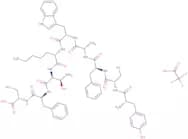
Discontinued productH-Tyr-Cys-Phe-Ala-Trp-Lys-Thr-Phe-Cys-OH trifluoroacetate salt (Disulfide bond)
CAS:Please enquire for more information about H-Tyr-Cys-Phe-Ala-Trp-Lys-Thr-Phe-Cys-OH trifluoroacetate salt (Disulfide bond) including the price, delivery time and more detailed product information at the technical inquiry form on this page
Formula:C57H71N11O12S2Purity:Min. 95%Molecular weight:1,166.37 g/molRef: 3D-FT109717
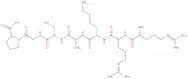
Discontinued productH1-7 acetate salt
CAS:H1-7 acetate salt H-Arg-Arg-Lys-Ala-Ser-Gly-Pro-OH acetate salt is a synthetic, ternary complex of the amino acid histidine, arginine and lysine. It has been shown to inhibit β lactamase enzymes that are responsible for the hydrolysis of penicillin, cephalosporin, and monobactam antibiotics. The inhibition is due to the hydrophobic nature of the substrate binding site on β lactamase. This binding prevents the enzyme from hydrolyzing its substrate and inactivates it. In addition, H1-7 acetate salt H-Arg-Arg-Lys-Ala-Ser-Gly-Pro-OH acetate salt binds to calcium ions and has been shown to have a kinetic effect on β lactamases.Formula:C31H58N14O9Purity:Min. 95%Molecular weight:770.88 g/molRef: 3D-FA108539
Discontinued productAF-16 trifluoroacetate salt
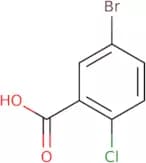
CAS:AF-16 trifluoroacetate salt is a synthetic peptide, which is derived from chemical synthesis with tailored modifications to enhance its stability and efficacy. This compound acts by specifically binding to target receptors or proteins, facilitating the study of biochemical pathways and mechanisms at the molecular level. It is particularly used in biological and biochemical research settings to probe cellular processes, offering insights into protein interactions and signaling pathways.Formula:C71H119N25O25SPurity:Min. 95%Molecular weight:1,754.92 g/mol5-Bromo-2-chlorobenzoic acid
CAS:Intermediate in the synthesis of dapagliflozin
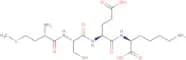
Formula:C7H4BrClO2Purity:Min. 95%Color and Shape:PowderMolecular weight:235.46 g/molH-Met-Cys-Glu-Lys-OH trifluoroacetate salt
CAS:Please enquire for more information about H-Met-Cys-Glu-Lys-OH trifluoroacetate salt including the price, delivery time and more detailed product information at the technical inquiry form on this page
Formula:C19H35N5O7S2Purity:Min. 95%Molecular weight:509.64 g/molRef: 3D-FM109242
Discontinued productAmyloid beta-Protein (40-1) trifluoroacetate salt
CAS:Trifluoroacetate salt
Formula:C194H295N53O58SPurity:Min. 95%Molecular weight:4,329.81 g/molRef: 3D-FA108830
Discontinued productAdrenomedullin (rat) trifluoroacetate salt
CAS:Please enquire for more information about Adrenomedullin (rat) trifluoroacetate salt including the price, delivery time and more detailed product information at the technical inquiry form on this page
Formula:C242H381N77O75S5Purity:Min. 95%Molecular weight:5,729.42 g/molRef: 3D-FA108808
Discontinued productBuccalin trifluoroacetate salt
CAS:Buccalin is a cholinergic pharmaceutical drug that has been shown to have metabolic, growth factor, and chemotactic activities. It has been used in the treatment of various autoimmune diseases and infectious diseases. The mechanism of action for buccalin is unknown. Buccalin has been shown to have receptor activity in a variety of diagnostic agents such as monoclonal antibodies and fatty acids. It binds to acetylcholine receptors at the neuromuscular junction, leading to activation of muscle fibers by acetylcholine release from nerve endings.Formula:C45H72N12O15SPurity:Min. 95%Molecular weight:1,053.19 g/molRef: 3D-FB110404
Discontinued productBiotinyl-Atrial Natriuretic Factor (1-28) (human) trifluoroacetate salt
CAS:Please enquire for more information about Biotinyl-Atrial Natriuretic Factor (1-28) (human) trifluoroacetate salt including the price, delivery time and more detailed product information at the technical inquiry form on this pageFormula:C137H217N47O41S4Purity:Min. 95%Molecular weight:3,306.75 g/molRef: 3D-FB110153
Discontinued productGAP 26 trifluoroacetate salt
CAS:13-mer connexin mimetic peptide, composed of residue numbers 63-75 of the first extracellular loop of connexin 43 (gap junction blocker), containing the SHVR amino acid motif.Formula:C70H107N19O19SPurity:Min. 95%Molecular weight:1,550.78 g/molRef: 3D-FG110169
Discontinued productAbz-Ala-Phe-Arg-Phe-Ser-Gln-EDDnp trifluoroacetate salt
CAS:Please enquire for more information about Abz-Ala-Phe-Arg-Phe-Ser-Gln-EDDnp trifluoroacetate salt including the price, delivery time and more detailed product information at the technical inquiry form on this pageFormula:C50H63N15O13Purity:Min. 95%Molecular weight:1,082.13 g/molRef: 3D-FA110993
Discontinued productPancreastatin (dephosphorylated) (porcine) trifluoroacetate salt
CAS:Pancreastatin is a cytosolic protein that inhibits the production of peptide hormones such as glucagon, insulin, and gastrin. It is used to treat bowel disease, including carcinoid syndrome and inflammatory bowel disease. Pancreastatin has been shown to inhibit the activity of cyclase enzymes that are responsible for the production of these hormones. Pancreatic beta-cells produce pancreatic polypeptide (PP), which is converted by pancreastatin into inactive PP2. Pancreatic alpha-cells produce somatostatin (SS), which is converted by pancreastatin into inactive SS2. Pancreatic delta cells produce pancreatic polypeptide (PP), which is not affected by pancreastatin. Pancreatic somatostatinomas secrete SS, which is not affected by pancreastatin.
Formula:C214H330N68O76SPurity:Min. 95%Molecular weight:5,103.39 g/molRef: 3D-FP109742
Discontinued productPAR-2 (1-6) (mouse, rat) trifluoroacetate salt
CAS:Please enquire for more information about PAR-2 (1-6) (mouse, rat) trifluoroacetate salt including the price, delivery time and more detailed product information at the technical inquiry form on this page
Formula:C29H55N9O8Purity:Min. 95%Molecular weight:657.8 g/molRef: 3D-FP109045
Discontinued productMCH (salmon) trifluoroacetate salt
CAS:Trifluoroacetate salt
Formula:C89H139N27O24S4Purity:Min. 95%Molecular weight:2,099.49 g/molRef: 3D-FM110322
Discontinued productEledoisin acetate salt
CAS:Eledoisin acetate salt is a cell-lysing agent that belongs to the group of potent antagonists. It is an inhibitor of neurokinin-1 receptor which regulates the release of substance P and other inflammatory mediators from nerve terminals. Eledoisin acetate salt has shown to inhibit locomotor activity in rats, as well as nucleotide levels in cells. This drug also has been shown to have carcinoid syndrome-like effects, such as weight loss and diarrhea. These symptoms are caused by the inhibition of substance P at its receptors. The tumor necrosis factor (TNF) may be responsible for these effects, since it causes increased production of substance P in cells.Formula:C54H85N13O15S·xC2H4O2Purity:Min. 95%Molecular weight:1,188.4 g/molRef: 3D-FE108742
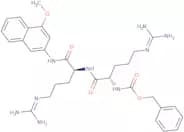
Discontinued productZ-Arg-Arg-4MbetaNA acetate salt
CAS:Please enquire for more information about Z-Arg-Arg-4MbetaNA acetate salt including the price, delivery time and more detailed product information at the technical inquiry form on this page
Formula:C31H41N9O5·C2H4O2Purity:Min. 95%Molecular weight:679.77 g/molRef: 3D-FA110623
Discontinued productPHM-27 (human) trifluoroacetate salt
CAS:PHM-27 is a human protein that contains a c-terminal histidine and n-terminal lysine. It contains an amino acid composition of histidine, valine, alanine, aspartic acid, glycine, serine, threonine, arginine, and methionine. PHM-27 is present in the cardiovascular system, nervous system, gastrointestinal system, and respiratory system. It has been shown to be involved in the synthesis of peptides important for blood clotting.
Formula:C135H214N34O40SPurity:Min. 95%Molecular weight:2,985.41 g/molRef: 3D-FP109808
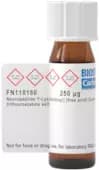
Discontinued productNeuropeptide Y-Lys(biotinyl) (free acid) (human, rat) trifluoroacetate salt
Please enquire for more information about Neuropeptide Y-Lys(biotinyl) (free acid) (human, rat) trifluoroacetate salt including the price, delivery time and more detailed product information at the technical inquiry form on this page
Formula:C205H310N58O61S2Purity:Min. 95%Molecular weight:4,627.14 g/molRef: 3D-FN110180
Discontinued productVIP (3-28) (human, mouse, rat) trifluoroacetate salt
CAS:Please enquire for more information about VIP (3-28) (human, mouse, rat) trifluoroacetate salt including the price, delivery time and more detailed product information at the technical inquiry form on this pageFormula:C138H226N40O39SPurity:Min. 95%Molecular weight:3,101.58 g/molRef: 3D-FV109877
Discontinued product(Des-Gly10,D-His2,D-Ser(tBu)6,Pro-NHEt 9)-LHRH acetate salt
Please enquire for more information about (Des-Gly10,D-His2,D-Ser(tBu)6,Pro-NHEt 9)-LHRH acetate salt including the price, delivery time and more detailed product information at the technical inquiry form on this page
Formula:C60H86N16O13Purity:Min. 95%Molecular weight:1,239.42 g/molRef: 3D-FD110346
Discontinued productAmyloid beta-Protein (1-40) (scrambled) trifluoroacetate salt
CAS:Please enquire for more information about Amyloid beta-Protein (1-40) (scrambled) trifluoroacetate salt including the price, delivery time and more detailed product information at the technical inquiry form on this pageFormula:C194H295N53O58SPurity:Min. 95%Molecular weight:4,329.81 g/molRef: 3D-FA110091
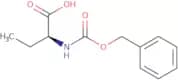
Discontinued productZ-L-alpha-aminobutyric acid
CAS:Z-L-alpha-aminobutyric acid is a homogeneous, optically active, linear phosphinic analogue of alpha-aminobutyric acid. It has been used in the synthesis of phosphinic analogues of cyclosporin and undecapeptides with high yields. The coupling reaction between Z-L-alpha-aminobutyric acid and benzaldehyde was carried out in two steps to produce the desired product. A stepwise condensation between Z-L-alpha-aminobutyric acid and 3,4,5,6 tetrahydropyrimidine was also successful.
Formula:C12H15NO4Purity:Min. 98 Area-%Color and Shape:White PowderMolecular weight:237.25 g/molRef: 3D-FA47262
Discontinued productAmyloid b-Protein (6-20) trifluoroacetate salt
CAS:Please enquire for more information about Amyloid b-Protein (6-20) trifluoroacetate salt including the price, delivery time and more detailed product information at the technical inquiry form on this page
Formula:C86H119N23O23Purity:Min. 95%Molecular weight:1,843.01 g/molRef: 3D-FA109813
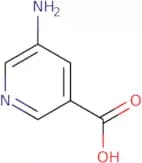
Discontinued product5-Aminopyridine-3-carboxylic acid
CAS:5-Aminopyridine-3-carboxylic acid (5APC) is a structural analog of nicotinic acid that has been shown to have anti-inflammatory effects. 5APC inhibits the production of inflammatory cytokines, such as IL-10 and IL-17, by inhibiting the activation of NFκB and MAPK pathways. This drug also has significant inhibitory activities against dextran sulfate sodium (DSS)-induced acute colitis in experimental models. 5APC is thought to act by interrupting the assembly of p38 mitogen activated protein kinase (MAPK) and nuclear factor kappa B (NFκB) signaling complexes.
Formula:C6H6N2O2Purity:Min. 95%Molecular weight:138.12 g/molRef: 3D-FA66664
Discontinued productBNP-32 (porcine) trifluoroacetate salt
CAS:BNP-32 is a porcine-specific antibody that is used to detect the presence of BNP in human serum. It is biotinylated and can be coated on a plate. The antibody binds to BNP, which has been labeled with peroxidase, and produces a colored reaction product. This product can be visualized by adding 3,3'-diaminobenzidine (DAB) as a substrate. The sealer then prevents the unbound antibody from binding to the plate and interfering with the assay.Formula:C149H250N52O44S3Purity:Min. 95%Molecular weight:3,570.1 g/molRef: 3D-FB108820
Discontinued producta-(Trichloromethyl)benzyl acetate
CAS:a-(Trichloromethyl)benzyl acetate is an organic compound with the formula CHClCOCH. It is a colorless liquid which is soluble in organic solvents. This compound exhibits oxidative carbonylation activity, and has been shown to be used for the coating of particles, detergent compositions, and analytical methods. The microcapsules are prepared by encapsulating a fatty acid in a glycol ether. The health effects of this compound are not well understood but it is believed that it may have some carcinogenic properties.
Formula:C10H9Cl3O2Purity:Min. 95%Molecular weight:267.54 g/molRef: 3D-FR30859
Discontinued product3,5-Diiodothyroformic acid
CAS:3,5-Diiodothyroformic acid is a fine chemical that is used as a versatile building block in organic synthesis. It is also an intermediate for research chemicals and speciality chemicals. In addition to its use as a reagent, 3,5-Diiodothyroformic acid has been shown to be useful as a building block for the synthesis of pharmaceuticals and agricultural chemicals.
Formula:C13H8I2O4Purity:Min. 95%Molecular weight:482.01 g/molRef: 3D-FD66758
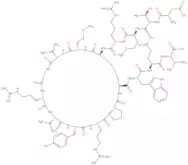
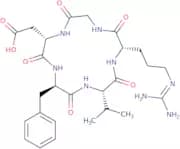
Discontinued productCyclo(-Arg-Gly-Asp-D-Phe-Val) trifluoroacetate salt
CAS:Cyclo(-Arg-Gly-Asp-D-Phe-Val) trifluoroacetate salt is a basic fibroblast growth factor that has been shown to have proliferative effects on diabetic retinopathy and ocular neovascularization. It binds to integrin receptors on the surface of cells, which are involved in cell adhesion. Cyclo(-Arg-Gly-Asp-D-Phe-Val) trifluoroacetate salt also has antiangiogenic effects and blocks the angiogenesis process by inhibiting the production of epidermal growth factor (EGF). This drug may be useful for treating certain types of cancer such as malignant brain tumors or neuroblastomas, because it can cause neuronal death. Cyclo(-Arg-Gly-Asp-D-Phe-Val) trifluoroacetate salt is a cyclic peptide with a reactive amino acid side chain.Formula:C26H38N8O7Purity:Min. 95%Molecular weight:574.63 g/molRef: 3D-FC108714
Discontinued product(Asp371)-Tyrosinase (369-377) (human) trifluoroacetate salt
CAS:Trifluoroacetate saltFormula:C42H66N10O16S2Purity:Min. 95%Molecular weight:1,031.16 g/molRef: 3D-FA110240
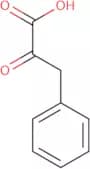
Discontinued productPhenyl pyruvic acid
CAS:Phenyl pyruvic acid is a sodium salt of phenylpyruvic acid that can be synthesized from phenylalanine, an amino acid. It has been shown to have antioxidant and anti-inflammatory properties. Phenyl pyruvic acid was found to inhibit oxidative injury caused by sodium nitroprusside in the rat brain, liver, and heart. Phenyl pyruvic acid also increased the activity of 3t3-l1 preadipocytes and improved energy metabolism in these cells. The synthesis of phenylpyruvate is catalyzed by a decarboxylase enzyme and it can be converted into insulin or phenylalanine.
Formula:C9H8O3Purity:Min. 95%Color and Shape:PowderMolecular weight:164.16 g/molRef: 3D-FP11833
Discontinued productAcetyl-ACTH (7-24) (human, bovine, rat) trifluoroacetate salt
CAS:Please enquire for more information about Acetyl-ACTH (7-24) (human, bovine, rat) trifluoroacetate salt including the price, delivery time and more detailed product information at the technical inquiry form on this page
Formula:C107H170N32O21Purity:Min. 95%Molecular weight:2,240.7 g/molRef: 3D-FA109964
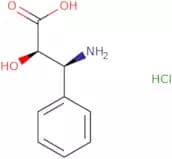
Discontinued product(2R,3S)-3-Amino-2-hydroxy-3-phenylpropanoic acid hydrochloride
CAS:(2R,3S)-3-Amino-2-hydroxy-3-phenylpropanoic acid hydrochloride is an organic compound that is used in the manufacture of taxol, an anticancer drug. It is synthesized by reacting chloroacetic acid with a metal hydroxide, such as sodium hydroxide or potassium hydroxide. The reaction proceeds spontaneously to form the enantiomerically pure (2R,3S) form and unreacted (2S,3R) form. The (2R,3S) enantiomer has been found to be more reactive than the (2S,3R) form. Quaternary ammonium salts are formed when the (2R,3S) enantiomer reacts with quaternary ammonium compounds such as benzyltrimethylammonium chloride. This compound can also be used in catalytic reactions to produce drugs such as carbapenems and pen
Formula:C9H12ClNO3Purity:Min. 95%Molecular weight:217.65 g/molRef: 3D-FA140332
Discontinued productAcetyl-ACTH (4-24) (human, bovine, rat) trifluoroacetate salt
CAS:Please enquire for more information about Acetyl-ACTH (4-24) (human, bovine, rat) trifluoroacetate salt including the price, delivery time and more detailed product information at the technical inquiry form on this pageFormula:C123H193N37O26SPurity:Min. 95%Molecular weight:2,638.15 g/molRef: 3D-FA109962
Discontinued productAdrenomedullin 5 (primate) trifluoroacetate salt
CAS:Please enquire for more information about Adrenomedullin 5 (primate) trifluoroacetate salt including the price, delivery time and more detailed product information at the technical inquiry form on this page
Formula:C253H394N82O71S2Purity:Min. 95%Molecular weight:5,784.48 g/molRef: 3D-FA109901
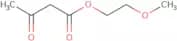
Discontinued product2-Methoxyethyl acetoacetate
CAS:2-Methoxyethyl acetoacetate is used as a raw material for coatings. It has been shown to be an effective calcium antagonist in the treatment of leukemia and other cancers. 2-Methoxyethyl acetoacetate has also been shown to inhibit the growth of HL-60 cells when it is incubated with these cells in the presence of hydrochloric acid, malonic acid, and quinoline derivatives. The reaction produces chlorine gas, which is toxic to cells.
Formula:C7H12O4Purity:Min. 95%Color and Shape:Clear LiquidMolecular weight:160.17 g/mol