Carboxylic Acids
Found 12457 products of "Carboxylic Acids"
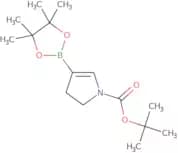
1-BOC-2,3-Dihydropyrrole-4-boronic acid, pinacol ester
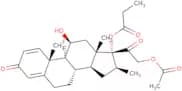
CAS:Please enquire for more information about 1-BOC-2,3-Dihydropyrrole-4-boronic acid, pinacol ester including the price, delivery time and more detailed product information at the technical inquiry form on this pageFormula:C15H26BNO4Purity:Min. 95%Molecular weight:295.18 g/molBetamethasone 21-acetate-17-propionate
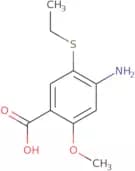
CAS:Controlled ProductBetamethasone 21-acetate-17-propionate is a drug product that is a mixture of betamethasone and betamethasone dipropionate. It is used to treat inflammatory skin conditions such as dermatitis, eczema, psoriasis, and other conditions. Betamethasone 21-acetate-17-propionate is one of the most potent corticosteroids available for topical use. The validation process has been completed on the acetonitrile phase and the reversed phase mobile phase. The validation was successful for both the acetonitrile and reversed phases. A validated HPLC method was developed for this drug product in order to monitor its production process.Formula:C27H35FO7Purity:Min. 95%Color and Shape:PowderMolecular weight:490.56 g/mol2-Methoxy-4-amino-5-ethylthiobenzoic acid
CAS:Please enquire for more information about 2-Methoxy-4-amino-5-ethylthiobenzoic acid including the price, delivery time and more detailed product information at the technical inquiry form on this page
Formula:C10H13NO3SPurity:Min. 95%Molecular weight:227.28 g/mol[2-(4-Chlorophenyl)-1,3-thiazol-4-yl]acetic acid
CAS:[2-(4-Chlorophenyl)-1,3-thiazol-4-yl]acetic acid is a potent antimicrobial agent that inhibits the growth of bacteria by binding to the 50S ribosomal subunit. It has shown antiinflammatory properties in animal models of bowel disease, skin cancer, and autoimmune diseases. This drug has also been shown to have no observable toxicity in humans at doses up to 5000 mg/day for 28 days. The drug binds to a number of enzymes including reactive oxygen species (ROS) scavengers and metabolic enzymes. There are no known drug interactions with this drug and it can be used safely with other nonsteroidal antiinflammatory drugs (NSAIDs).
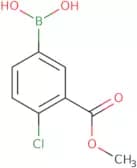
Formula:C11H8ClNO2SPurity:Min. 95%Molecular weight:253.71 g/mol(4-Chloro-3-(methoxycarbonyl)phenyl)boronic acid
CAS:Please enquire for more information about (4-Chloro-3-(methoxycarbonyl)phenyl)boronic acid including the price, delivery time and more detailed product information at the technical inquiry form on this page
Formula:C8H8BClO4Purity:Min. 95%Molecular weight:214.41 g/molFmoc-(S)-3-amino-3-(2-naphthyl)propionic acid
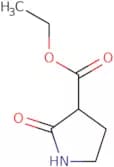
CAS:Please enquire for more information about Fmoc-(S)-3-amino-3-(2-naphthyl)propionic acid including the price, delivery time and more detailed product information at the technical inquiry form on this pageFormula:C28H23NO4Purity:Min. 95%Molecular weight:437.49 g/mol2-Oxopyrrolidine-3-carboxylic acid ethyl ester
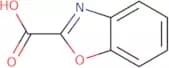
CAS:Please enquire for more information about 2-Oxopyrrolidine-3-carboxylic acid ethyl ester including the price, delivery time and more detailed product information at the technical inquiry form on this pageFormula:C7H11NO3Purity:Min. 95%Molecular weight:157.17 g/molcBenzooxazole-2-carboxylic acid
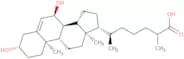
CAS:Benzooxazole-2-carboxylic acid is a chemical compound that has been studied for its potential in the treatment of cancer. It has been shown to bind to estrogen receptors and inhibit the growth of cancer cells. This anti-cancer agent also inhibits the growth of bacteria by binding to metal ions, such as chloride, which are needed for bacterial growth. Benzooxazole-2-carboxylic acid is excreted via urine, which can lead to kidney damage if taken in high doses.Formula:C8H5NO3Purity:Min. 95%Molecular weight:163.13 g/mol3,7-Dihydroxy-5-cholestenoic acid
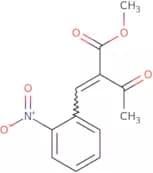
CAS:Controlled ProductPlease enquire for more information about 3,7-Dihydroxy-5-cholestenoic acid including the price, delivery time and more detailed product information at the technical inquiry form on this pageFormula:C27H44O4Purity:Min. 95%Molecular weight:432.64 g/mol2-(2-Nitrobenzylidene)-3-oxobutanoic acid, methyl ester
CAS:Please enquire for more information about 2-(2-Nitrobenzylidene)-3-oxobutanoic acid, methyl ester including the price, delivery time and more detailed product information at the technical inquiry form on this page
Formula:C12H11NO5Purity:Min. 95%Molecular weight:249.22 g/molBenzene-1,3-disulfonic acid disodium
CAS:This is a polynuclear compound that has an electrochemical method for detection. It is catalytic, with a low detection limit. The shape of the crystals are spherical, which is due to the size of the crystals. There are no interferences in these measurements, as well as photomicrographs and dopamine sensor. This compound will have synergistic effects with chloride and glucose sensors. The following are some properties of benzene-1,3-disulfonic acid disodium salt: -It has a molecular weight of 227.2 -It has a melting point of about 237 degrees Celsius -It is soluble in water -It has a boiling point at about 515 degrees Celsius -Benzene-1,3-disulfonic acid disodium salt is not hazardous to humans if it is ingested orally; however, it can be harmful if inhaled or if it comes into contact with skinFormula:C6H4Na2O6S2Purity:Min. 95%Color and Shape:PowderMolecular weight:282.2 g/mol5-Bromo-1-methyl-1H-indole-3-carboxylic acid
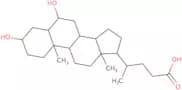
CAS:Controlled ProductPlease enquire for more information about 5-Bromo-1-methyl-1H-indole-3-carboxylic acid including the price, delivery time and more detailed product information at the technical inquiry form on this pageFormula:C10H8BrNO2Purity:Min. 95%Molecular weight:254.08 g/molMurideoxycholic acid
CAS:Controlled ProductMurideoxycholic acid is a bile acid that is used in combination with other antibiotics to treat infections caused by bacteria. Murideoxycholic acid inhibits the bacterial transport of bile acids, which are important for the digestion of fats and proteins. Murideoxycholic acid binds to the cytochrome P450 enzyme in humans and rats, inhibiting its activity. This binding prevents the production of bile acids from cholesterol in the liver, which prevents their normal excretion into the intestine and leads to an increased risk for gallstones. Murideoxycholic acid also has been shown to inhibit human CYP3A4 enzyme activity. The hydroxyl group on this molecule reacts with ferrous ions to produce hydroxyl radicals, which can lead to oxidative stress and lipid peroxidation.
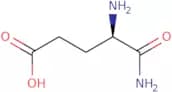
Formula:C24H40O4Purity:Min. 95%Molecular weight:392.57 g/molD-Glutamic acid alpha-amide
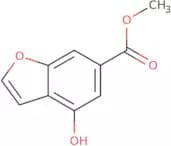
CAS:D-Glutamic acid alpha-amide is a carbohydrate that has been shown to have antibiotic properties. It can be produced by chemoenzymatic synthesis and is used as an animal feed additive. D-Glutamic acid alpha-amide is a conjugate of D-glutamic acid with either glycine or beta-alanine. The residue of this compound on red blood cells is measured in order to assess the amount of D-glutamic acid alpha-amide that has been ingested. This compound has also been shown to have antigenic properties, which can elicit immune responses when injected into animals. The meningococcal vaccine that contains D-glutamic acid alpha-amide was found to be effective at stimulating an immune response in mice against meningitis caused by gram negative species, such as Neisseria meningitidis.Formula:C5H10N2O3Purity:Min. 95%Color and Shape:PowderMolecular weight:146.14 g/molMethyl 4-hydroxy-1-benzofuran-6-carboxylate
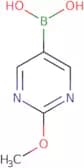
CAS:Please enquire for more information about Methyl 4-hydroxy-1-benzofuran-6-carboxylate including the price, delivery time and more detailed product information at the technical inquiry form on this pageFormula:C10H8O4Purity:Min. 95%Molecular weight:192.17 g/mol2-Methoxypyrimidine-5-boronic acid
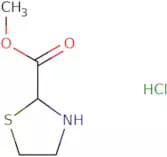
CAS:Please enquire for more information about 2-Methoxypyrimidine-5-boronic acid including the price, delivery time and more detailed product information at the technical inquiry form on this pageFormula:C5H7BN2O3Purity:Min. 95%Molecular weight:153.93 g/molMethyl thiazolidine-2-carboxylate hydrochloride
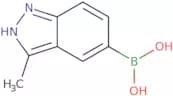
CAS:Please enquire for more information about Methyl thiazolidine-2-carboxylate hydrochloride including the price, delivery time and more detailed product information at the technical inquiry form on this pageFormula:C5H9NO2S•HClPurity:Min. 95%Color and Shape:PowderMolecular weight:183.66 g/mol3-Methyl-1H-indazol-5-yl-5-boronic acid
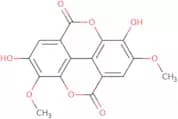
CAS:Please enquire for more information about 3-Methyl-1H-indazol-5-yl-5-boronic acid including the price, delivery time and more detailed product information at the technical inquiry form on this pageFormula:C8H9BN2O2Purity:Min. 95%Molecular weight:175.98 g/mol3,4’-O-dimethylellagic acid
CAS:3,4’-O-dimethylellagic acid is a phenolic compound, which is a type of ellagic acid derivative. It is derived from natural sources, typically found in various fruits, nuts, and vegetables, particularly in certain berries and pomegranates. The compound is formed through the methylation of ellagic acid, which amplifies its lipophilicity and enhances its bioavailability.
Purity:Min. 95%(R)-(-)-3-Hydroxybutyric acid methyl ester
CAS:(R)-(-)-3-Hydroxybutyric acid methyl ester is a monocarboxylic acid that is metabolized by phosphofructokinase and other enzymes to produce the corresponding 3-hydroxybutyrate. This compound is synthesized from tiglic acid, which can be obtained from corynebacterium. The production of (R)-(-)-3-Hydroxybutyric acid methyl ester can be optimized by using a biotransformation process. This process includes enzymatic reactions and chemical transformations, such as hydroxylation, carbonylation, and stereoselective synthesis. The metabolic pathway for this compound has been studied using a DNA microarray analysis.
Formula:C5H10O3Purity:Min. 95%Molecular weight:118.13 g/mol

![[2-(4-Chlorophenyl)-1,3-thiazol-4-yl]acetic acid](/_next/image/?url=https%3A%2Fstatic.cymitquimica.com%2Fproducts%2F3D%2Fthumb-webp%2FFC124498.webp&w=3840&q=75)