Carboxylic Acids
Carboxylic acids are organic molecules characterized by having a carboxyl-type functional group (-COOH). These acids are fundamental in various chemical reactions, including esterification, amidation, and decarboxylation. Carboxylic acids are widely used in the production of pharmaceuticals, polymers, and agrochemicals. In this section, you can find a large number of carboxylic acids ready to be used. At CymitQuimica, we provide a broad range of high-quality carboxylic acids to support your research and industrial applications.
Found 12456 products of "Carboxylic Acids"
Sort by
Purity (%)
0
100
|
0
|
50
|
90
|
95
|
100
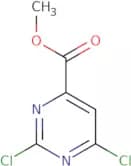
Methyl 2,4-dichloropyrimidine-6-carboxylate
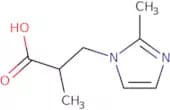
CAS:Please enquire for more information about Methyl 2,4-dichloropyrimidine-6-carboxylate including the price, delivery time and more detailed product information at the technical inquiry form on this pageFormula:C6H4Cl2N2O2Purity:Min. 95%Color and Shape:Off-White To Yellow SolidMolecular weight:207.01 g/mol2-Methyl-3-(2-methyl-1H-imidazol-1-yl)propanoic acid
CAS:Controlled ProductPlease enquire for more information about 2-Methyl-3-(2-methyl-1H-imidazol-1-yl)propanoic acid including the price, delivery time and more detailed product information at the technical inquiry form on this page
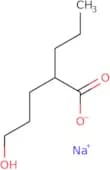
Formula:C8H12N2O2Purity:Min. 95%Molecular weight:168.19 g/molrac 5-Hydroxy valproic acid sodium
CAS:Please enquire for more information about rac 5-Hydroxy valproic acid sodium including the price, delivery time and more detailed product information at the technical inquiry form on this pageFormula:C8H16O3•NaPurity:Min. 95%Color and Shape:PowderMolecular weight:183.2 g/molEthyl 3-{[(1E)-(dimethylamino)methylene]amino}-5-methoxy-1-methyl-1H-indole-2-carboxylate
CAS:Controlled ProductPlease enquire for more information about Ethyl 3-{[(1E)-(dimethylamino)methylene]amino}-5-methoxy-1-methyl-1H-indole-2-carboxylate including the price, delivery time and more detailed product information at the technical inquiry form on this pageFormula:C16H21N3O3Purity:Min. 95%Molecular weight:303.36 g/mol3,6-Dihydro-4-(tributylstannyl)-1(2H)-pyridinecarboxylic acid t-butyl ester
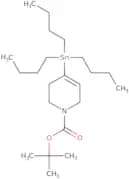
CAS:Controlled ProductPlease enquire for more information about 3,6-Dihydro-4-(tributylstannyl)-1(2H)-pyridinecarboxylic acid t-butyl ester including the price, delivery time and more detailed product information at the technical inquiry form on this pageFormula:C22H43NO2SnPurity:Min. 95%Color and Shape:PowderMolecular weight:472.29 g/molPhenylacetic acid 2-phenylethyl ester
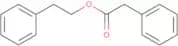
CAS:Controlled ProductPhenylacetic acid 2-phenylethyl ester is an ester of caproic acid and phenylethyl. It is used as a control agent in the manufacture of chemical substances, detergent compositions, and lemongrass oil. Phenylacetic acid 2-phenylethyl ester can be synthesized by reacting methyl anthranilate with benzoic acid in the presence of phosphotungstic acid. The required starting materials are available from commercial sources. The product has a structural formula that can be confirmed by nmr spectroscopy.Formula:C16H16O2Purity:Min. 95%Color and Shape:Clear LiquidMolecular weight:240.3 g/molBeta-CIT-FP
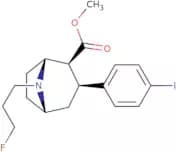
CAS:Controlled ProductMethyl (1R,2S,3S)-8-(3-Fluoropropyl)-3-(4-Iodophenyl)-8-Azabicyclo[3.2.1]Octane-2-Carboxylate is a potent dopamine receptor agonist with a high affinity for the D2 and D3 receptors in the brain. It has been shown to have antiparkinsonian effects in animal models of Parkinson's disease by increasing dopamine levels in the prefrontal cortex and striatum. This drug has also been shown to be effective in clinical studies for the diagnosis of Parkinson's disease. Methyl (1R,2S,3S)-8-(3-Fluoropropyl)-3-(4-Iodophenyl)-8-Azabicyclo[3.2.1]Octane-2-Carboxylate binds to both dopamine and serotonin receptors, which may account for its therapeutic effects on ParkinsonFormula:C18H23FINO2Purity:Min. 95%Molecular weight:431.28 g/mol3-(3,5-Dimethyl-1H-pyrazol-1-yl)-2-methylpropanoic acid
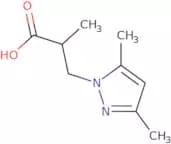
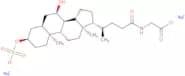
CAS:Controlled ProductPlease enquire for more information about 3-(3,5-Dimethyl-1H-pyrazol-1-yl)-2-methylpropanoic acid including the price, delivery time and more detailed product information at the technical inquiry form on this pageFormula:C9H14N2O2Purity:Min. 95%Molecular weight:182.22 g/molGlycochenodeoxycholic acid 3-sulfate disodium salt
CAS:Please enquire for more information about Glycochenodeoxycholic acid 3-sulfate disodium salt including the price, delivery time and more detailed product information at the technical inquiry form on this pageFormula:C26H41NNa2O8SPurity:Min. 95%Color and Shape:PowderMolecular weight:573.65 g/mol3-(6-Chloro-1-isopropyl-1H-benzimidazol-2-yl)propanoic acid
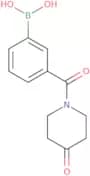
CAS:Controlled ProductPlease enquire for more information about 3-(6-Chloro-1-isopropyl-1H-benzimidazol-2-yl)propanoic acid including the price, delivery time and more detailed product information at the technical inquiry form on this pageFormula:C13H15ClN2O2Purity:Min. 95%Molecular weight:266.72 g/mol3-(4-Oxopiperidine-1-carbonyl)phenylboronic acid
CAS:Controlled ProductPlease enquire for more information about 3-(4-Oxopiperidine-1-carbonyl)phenylboronic acid including the price, delivery time and more detailed product information at the technical inquiry form on this pageFormula:C12H14BNO4Purity:Min. 95%Molecular weight:247.05 g/mol(1R,2R)-Boc-aminocyclopentane carboxylic acid
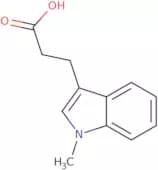
CAS:(1R,2R)-Boc-aminocyclopentane carboxylic acid (BCPC) is a high quality, reagent, and useful intermediate. It is a versatile building block that can be used as a speciality chemical or research chemical. BCPC has been shown to react with amines to form ureas, with nitriles to form oxazolidines, and with epoxides to form aziridinones.Formula:C11H19NO4Purity:Min. 95%Color and Shape:White PowderMolecular weight:229.27 g/mol3-(1-Methyl-1H-indol-3-yl)propanoic acid
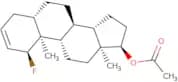
CAS:Controlled Product3-(1-Methyl-1H-indol-3-yl)propanoic acid is a potent inhibitor of serine protease. It has been shown to have no effect on fetal heart rate, but can cause bladder cancer in transgenic animals. 3-(1-Methyl-1H-indol-3-yl)propanoic acid blocks the interaction between mammalian cells and bladder cancer cells, which may be due to its ability to block the activation of serine protease in response to thymidylate. This compound also inhibits DNA synthesis and cell growth. It is highly toxic for tumor cells and normal cells, but less so for normal tissues. It also modifies the regulatory domain of cancer cells, making it possible for 3-(1-Methyl-1H-indol-3-yl)propanoic acid to modify cancer cell activity by configuring it with a different regulatory domain that regulates the expression of proteins involved in cancer development.Formula:C12H13NO2Purity:Min. 95%Molecular weight:203.24 g/mol1-Fluoro-5a-androst-2-en-17b-ol acetate
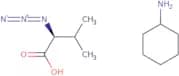
CAS:Controlled ProductPlease enquire for more information about 1-Fluoro-5a-androst-2-en-17b-ol acetate including the price, delivery time and more detailed product information at the technical inquiry form on this pageFormula:C20H28FO2Purity:Min. 95%Molecular weight:319.43 g/mol(S)-2-Azido isovaleric acid cyclohexylammonium
CAS:Please enquire for more information about (S)-2-Azido isovaleric acid cyclohexylammonium including the price, delivery time and more detailed product information at the technical inquiry form on this page
Formula:C6H13N•C5H9N3O2Purity:Min. 95%Color and Shape:PowderMolecular weight:242.32 g/molMAGE-3 Antigen (271-279) (human) trifluoroacetate salt
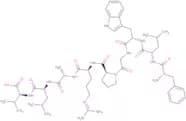
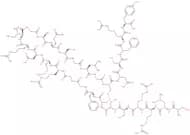
CAS:ALPHA FACTOR SIGNALING PEPTIDEFormula:C53H79N13O10Purity:Min. 95%Molecular weight:1,058.28 g/molAtrial natriuretic factor (1-28) (human) acetate
CAS:Please enquire for more information about Atrial natriuretic factor (1-28) (human) acetate including the price, delivery time and more detailed product information at the technical inquiry form on this pageFormula:C127H203N45O39S3•C2H4O2Purity:Min. 95%Color and Shape:PowderMolecular weight:3,140.5 g/molDecanoic acid
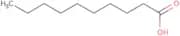
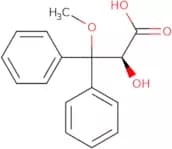
CAS:Decanoic acid is a saturated fatty acid that has been used as a pharmaceutical agent for the treatment of congestive heart failure. Decanoic acid is also used in the production of glycol ethers and as an intermediate in organic synthesis. The melting point of decanoic acid is between 30 and 35 degrees Celsius, which is lower than the melting points of caproic acid (40 degress) or lauric acid (45 degrees Celsius). Decanoic acid has been shown to reduce blood glucose levels in diabetic mice and rats and has also been shown to have antimicrobial activity against c. glabrata, S. aureus, and E. coli. Decanoic acid may be effective as an adjuvant therapy for melanoma by inducing apoptosis through mitochondrial membrane potential disruption.Formula:C10H20O2Purity:Min. 95%Color and Shape:PowderMolecular weight:172.26 g/mol(S)-2-Hydroxy-3-methoxy-3,3-diphenylpropionic acid
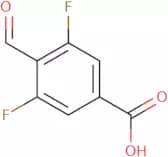
CAS:This is a crystalline form of the pyrimidine derivative (S)-2-Hydroxy-3-methoxy-3,3-diphenylpropionic acid. The compound has been shown to have antiplatelet properties and is currently being developed as an antithrombotic agent. In vitro studies have shown that ambrisentan inhibits platelet aggregation, thromboxane synthesis, and leukocyte adhesion. It also reduces the levels of serum cholesterol and triglycerides in patients with chronic heart failure. Ambrisentan has been studied in clinical trials for the treatment of pulmonary hypertension associated with chronic obstructive pulmonary disease (COPD) and idiopathic pulmonary fibrosis (IPF).Formula:C16H16O4Purity:Min. 95%Molecular weight:272.3 g/mol3,5-difluoro-4-formylbenzoic Acid
CAS:3,5-Difluoro-4-formylbenzoic acid is a sulfamic acid derivative that is used as a catalyst in the synthesis of aldehydes. The catalytic activity of 3,5-difluoro-4-formylbenzoic acid is due to its ability to be oxidized by air and light to give an active form. It also has other uses in the synthesis of dihydropyrans and regioselectivity studies.Formula:C8H4F2O3Purity:Min. 95%Molecular weight:186.11 g/mol

![Ethyl 3-{[(1E)-(dimethylamino)methylene]amino}-5-methoxy-1-methyl-1H-indole-2-carboxylate](/_next/image/?url=https%3A%2Fstatic.cymitquimica.com%2Fproducts%2F3D%2Fthumb-webp%2FFE123273.webp&w=3840&q=75)