Carboxylic Acids
Carboxylic acids are organic molecules characterized by having a carboxyl-type functional group (-COOH). These acids are fundamental in various chemical reactions, including esterification, amidation, and decarboxylation. Carboxylic acids are widely used in the production of pharmaceuticals, polymers, and agrochemicals. In this section, you can find a large number of carboxylic acids ready to be used. At CymitQuimica, we provide a broad range of high-quality carboxylic acids to support your research and industrial applications.
Found 12454 products of "Carboxylic Acids"
Sort by
Purity (%)
0
100
|
0
|
50
|
90
|
95
|
100
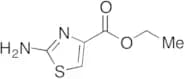
Ethyl 2-Amino-1,3-thiazole-4-carboxylate
CAS:Controlled ProductFormula:C6H8N2O2SColor and Shape:NeatMolecular weight:172.2Ethyl 2-Chloro-2-formylacetateTechnical Grade, 5% Suspension in Benzene
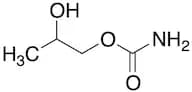
CAS:Controlled Product<p>Stability Store FROZEN<br>Applications Material that was assayed to be approximately 80% pure was diluted to 5% in benzene.<br> Not a dangerous good if item is equal to or less than 1g/ml and there is less than 100g/ml in the package<br></p>Formula:C5H7ClO3Color and Shape:Single SolutionMolecular weight:150.56Carbamic Acid 2-Hydroxypropyl Ester
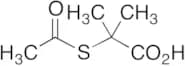
CAS:Controlled Product<p>Applications Carbamic Acid 2-Hydroxypropyl Ester is an organic reagent used in the preparation of polyurethane foams.<br>References Mueller, E. et al.: Angew. Makri, Chem., 34, 111 (1973)<br></p>Formula:C4H9NO3Color and Shape:NeatMolecular weight:119.1192-Acetylthioisobutyric Acid
CAS:Controlled Product<p>Applications 2-Acetylthioisobutyric Acid (cas# 135937-96-1) is a compound useful in organic synthesis.<br>References Souers, A., et al.: Bioorg. Med. Chem. Lett., 8, 2297 (1998), Deaton, D., et al.: Bioorg. Med. Chem. Lett., 18, 732 (2008),<br></p>Formula:C6H10O3SColor and Shape:NeatMolecular weight:162.212,2-Dimethyl-3-(4-mercaptophenyl)propionic Acid
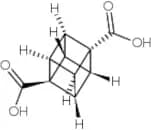
CAS:Controlled Product<p>Applications 2,2-Dimethyl-3-(4-mercaptophenyl)propionic Acid (cas# 887354-80-5) is a compound useful in organic synthesis.<br></p>Formula:C11H14O2SColor and Shape:NeatMolecular weight:210.291,4-Cubanedicarboxylic Acid
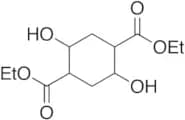
CAS:Controlled Product<p>Applications 1,4-Cubanedicarboxylic acid<br></p>Formula:C10H8O4Color and Shape:NeatMolecular weight:192.1682,5-Dihydroxy-1,4-cyclohexanedicarboxylic Acid 1,4-Diethyl Ester
CAS:Controlled ProductFormula:C12H20O6Color and Shape:NeatMolecular weight:260.2842,2-Diethylhexanoic Acid
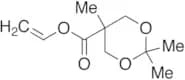
CAS:Controlled Product<p>Applications 2,2-Diethylhexanoic Acid is a pollutant that is found in anaerobic environment of river sediments,<br>References Chau, H., et al.: Appl. Biochem. Biotechnol., 70, 853 (1998); McInerney, M., et al.: Appl. Env. Microbiol., 41, 1029 (1981)<br></p>Formula:C10H20O2Purity:>90%Color and Shape:NeatMolecular weight:172.262,2,5-Trimethyl-1,3-dioxane-5-carboxylic Acid Ethenyl Ester
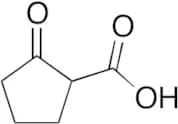
CAS:Controlled Product<p>Applications 2,2,5-Trimethyl-1,3-dioxane-5-carboxylic Acid Ethenyl Ester (cas# 865860-80-6) is a compound useful in organic synthesis.<br></p>Formula:C10H16O4Color and Shape:NeatMolecular weight:200.232-Oxocyclopentanecarboxylic Acid
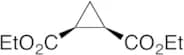
CAS:Controlled Product<p>Stability Temperature Sensitive<br>Applications 2-Oxocyclopentanecarboxylic Acid is a reactant that has been used in the synthesis of Piragliatin, a glucokinase activator.<br>References Sarabu, R., et. al.: J. Med. Chem., 55, 7021 (2012)<br></p>Formula:C6H8O3Color and Shape:NeatMolecular weight:128.13Diethyl cis-1,2-Cyclopropanedicarboxylate
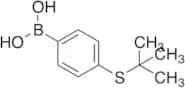
CAS:Controlled ProductFormula:C9H14O4Color and Shape:NeatMolecular weight:186.2054-(tert-Butylthio)phenylboronic Acid
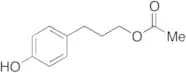
CAS:Controlled ProductFormula:C10H15BO2SColor and Shape:NeatMolecular weight:210.1013-(4-Hydroxyphenyl)propyl Acetate
CAS:Controlled Product<p>Applications 3-(4-Hydroxyphenyl)propyl Acetate is an intermediate used in the synthesis of compounds used in biological studies for biodistribution and elimination of xenoestrogen nonylphenol in Wistar rats.<br>References Shah, M. R., et al.: J. Chem. Soc. Pak., 33, 444 (2011);<br></p>Formula:C11H14O3Color and Shape:NeatMolecular weight:194.23Benzo[b]thien-3-ylboronic Acid
CAS:Controlled Product<p>Applications Benzo[b]thien-3-ylboronic acid is used in the synthesis and evaluation of dual wavelength fluorescent benzo[b]thiophene boronic acid derivatives for sugar/glycoprotein sensing.<br>References Akay, S., et al.: Chem. Biol. Drug Des., 70, 279 (2007)<br></p>Formula:C8H7BO2SColor and Shape:NeatMolecular weight:178.025-Aminoorotic acid
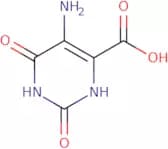
CAS:<p>5-Aminoorotic acid is an antimicrobial agent that has been shown to have anticancer activity. It has a nitrogen atom and two oxygen atoms in the molecule. The chemical structure of 5-aminoorotic acid can be determined using NMR spectroscopy and its biological properties are dependent on hydrogen bonding interactions with other molecules. 5-Aminoorotic acid is a chelate ring, which means it can bind to metal ions such as lanthanum (La3+). 5-Aminoorotic acid has been shown to inhibit the glycol oxidation reaction and may also be able to inhibit other enzymatic reactions. This drug is stable for use in model systems and may also be used for cancer treatment.</p>Formula:C5H5N3O4Purity:Min. 95%Molecular weight:171.11 g/molcBenzooxazole-2-carboxylic acid
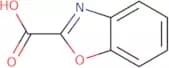
CAS:Benzooxazole-2-carboxylic acid is a chemical compound that has been studied for its potential in the treatment of cancer. It has been shown to bind to estrogen receptors and inhibit the growth of cancer cells. This anti-cancer agent also inhibits the growth of bacteria by binding to metal ions, such as chloride, which are needed for bacterial growth. Benzooxazole-2-carboxylic acid is excreted via urine, which can lead to kidney damage if taken in high doses.Formula:C8H5NO3Purity:Min. 95%Molecular weight:163.13 g/mol1-Trifluoromethylcyclopropane-1-carboxylic acid
CAS:<p>1-Trifluoromethylcyclopropane-1-carboxylic acid is a ketone that is used in research in organic chemistry for the preparation of imidazole. It can be prepared by the transformation of ethyl 2-(trifluoromethyl)acrylate, and is also obtained from 1,4-dichloroacetone. 1-Trifluoromethylcyclopropane carboxylic acid has been shown to have some medicinal properties. It has been used in research on cancer cells and as an anti-inflammatory agent. The compound has a steric effect on the body and can be used as a weight loss drug, with one kilogram of 1-Trifluoromethylcyclopropane carboxylic acid being equivalent to 3 kilograms of weight loss.</p>Formula:C5H5F3O2Purity:Min. 95%Color and Shape:PowderMolecular weight:154.09 g/molMethyl thiazolidine-2-carboxylate hydrochloride
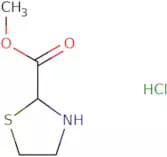
CAS:Please enquire for more information about Methyl thiazolidine-2-carboxylate hydrochloride including the price, delivery time and more detailed product information at the technical inquiry form on this pageFormula:C5H9NO2S•HClPurity:Min. 95%Color and Shape:PowderMolecular weight:183.66 g/moltert-Butyl 4-(6-aminopyridin-3-yl)piperazine-1-carboxylate
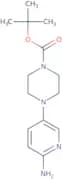
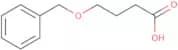
CAS:<p>tert-Butyl 4-(6-aminopyridin-3-yl)piperazine-1-carboxylate is an organic compound that can be synthesized by the reduction of 5-bromo-2-nitro pyridine with a palladium catalyst. It has been shown to inhibit the growth of cancer cells in vitro and in vivo, and is being investigated as a potential treatment for breast cancer.</p>Formula:C14H22N4O2Purity:Min. 95%Molecular weight:278.35 g/mol4-(Benzyloxy)butanoic acid
CAS:Controlled Product<p>4-(Benzyloxy)butanoic acid, also known as 4-BABA, is an organic compound that is a white solid. It has a molecular weight of 128.11 and it can be found in the form of its chloride salt. The compound is used in analytical chemistry and has been shown to have potential use in analytical methods. 4-BABA can be synthesized from 2-hydroxyphenylacetic acid which is obtained through alkylation with benzyl bromide. This reaction yields a molecule with one more carbon atom than the starting material, which is called an epoxide. The epoxide reacts with chloride to produce the desired product along with a molecule of hydrogen chloride gas. The process requires catalysts such as palladium(II) acetate and triethylamine or platinum(IV) oxide and triethylamine. 4-(Benzyloxy)butanoic acid has two functional groups: an alcohol group (-OH) and an ether</p>Formula:C11H14O3Purity:Min. 95%Molecular weight:194.23 g/mol




![Benzo[b]thien-3-ylboronic Acid](/_next/image/?url=https%3A%2Fstatic.cymitquimica.com%2Fproducts%2FTR%2Fthumb-webp%2FB206890.webp&w=3840&q=75)