Carboxylic Acids
Carboxylic acids are organic molecules characterized by having a carboxyl-type functional group (-COOH). These acids are fundamental in various chemical reactions, including esterification, amidation, and decarboxylation. Carboxylic acids are widely used in the production of pharmaceuticals, polymers, and agrochemicals. In this section, you can find a large number of carboxylic acids ready to be used. At CymitQuimica, we provide a broad range of high-quality carboxylic acids to support your research and industrial applications.
Found 12453 products of "Carboxylic Acids"
Sort by
Purity (%)
0
100
|
0
|
50
|
90
|
95
|
100
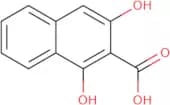
1,3-Dihydroxy-2-naphthoic acid
CAS:<p>1,3-Dihydroxy-2-naphthoic acid is an organic compound that belongs to the binaphthyls. It is a white solid that can be obtained by reacting naphthalene with inorganic phosphite in the presence of acidic potassium carbonate. This reaction system produces 1,3-dihydroxy-2-naphthoic acid and potassium biphosphite as byproducts. The reaction time depends on the concentration of reactants. 1,3-Dihydroxy-2-naphthoic acid has acidic properties and can be used as a catalyst for chemical reactions involving carboxylic compounds. This compound has been shown to be effective at treating abdominal pain caused by intestinal inflammation or infection with a carbon source such as carbohydrates (e.g., glucose) or fats (e.g., oleic acid).</p>Formula:C11H8O4Purity:Min. 95%Molecular weight:204.18 g/mol1-[2-(Methoxycarbonyl)phenyl]-5-oxopyrrolidine-3-carboxylic acid
CAS:<p>Please enquire for more information about 1-[2-(Methoxycarbonyl)phenyl]-5-oxopyrrolidine-3-carboxylic acid including the price, delivery time and more detailed product information at the technical inquiry form on this page</p>Formula:C13H13NO5Purity:Min. 95%Molecular weight:263.25 g/mol(5-bromo-2-fluorophenyl)boronic Acid
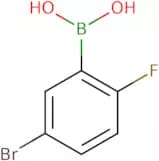
CAS:<p>5-Bromo-2-fluorophenyl)boronic acid is a synthetic chemical that is used in the synthesis of pharmaceuticals and pesticides. This compound is an inhibitor of bace1, which is an enzyme involved in the production of amyloid beta peptide (Aβ) and other proteins implicated in Alzheimer's disease. 5-Bromo-2-fluorophenyl)boronic acid has been shown to be effective at reducing Aβ levels in mice with Alzheimer's disease. It also inhibits pyrethroid, a pesticide that is used on crops to control insects, by binding to the active site of the enzyme. 5-Bromo-2-fluorophenyl)boronic acid has been evaluated for use as a cancer treatment, but these studies have not been completed.</p>Formula:C6H5BBrFO2Purity:Min. 95%Molecular weight:218.82 g/mol3-Chloro-4-methoxyphenylboronic acid
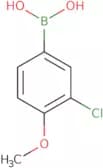
CAS:<p>Please enquire for more information about 3-Chloro-4-methoxyphenylboronic acid including the price, delivery time and more detailed product information at the technical inquiry form on this page</p>Formula:C7H8BClO3Purity:Min. 95%Molecular weight:186.4 g/mol(5-Fluoro-2-methyl-1H-inden-3-yl)acetic acid
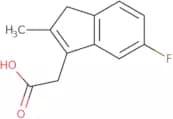
CAS:<p>(5-Fluoro-2-methyl-1H-inden-3-yl)acetic acid (FMIAA) is a phase transfer catalyst that catalyses the condensation of alkyl esters. It can be used in the condensation of aromatic and aliphatic aldehydes in liquid phase with potassium as a reagent and organic solvent. The FMIAA is then removed by dehydrating the product, leaving it in solid form. FMIAA has been shown to be effective for the synthesis of a wide range of compounds, including pharmaceuticals such as cyclopentanone, aminomethylpiperidine, and 4-aminoquinoline.</p>Formula:C12H11FO2Purity:Min. 95%Molecular weight:206.21 g/mol6-Benzyloxy-5-methoxyindole-2-carboxylic acid
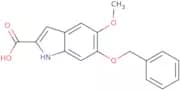
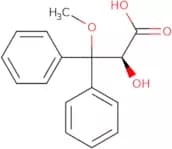
CAS:<p>Please enquire for more information about 6-Benzyloxy-5-methoxyindole-2-carboxylic acid including the price, delivery time and more detailed product information at the technical inquiry form on this page</p>Formula:C17H15NO4Purity:Min. 95%Molecular weight:297.31 g/mol(S)-2-Hydroxy-3-methoxy-3,3-diphenylpropionic acid
CAS:<p>This is a crystalline form of the pyrimidine derivative (S)-2-Hydroxy-3-methoxy-3,3-diphenylpropionic acid. The compound has been shown to have antiplatelet properties and is currently being developed as an antithrombotic agent. In vitro studies have shown that ambrisentan inhibits platelet aggregation, thromboxane synthesis, and leukocyte adhesion. It also reduces the levels of serum cholesterol and triglycerides in patients with chronic heart failure. Ambrisentan has been studied in clinical trials for the treatment of pulmonary hypertension associated with chronic obstructive pulmonary disease (COPD) and idiopathic pulmonary fibrosis (IPF).</p>Formula:C16H16O4Purity:Min. 95%Molecular weight:272.3 g/molDL-3-Aminobutyric acid
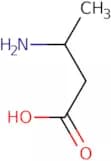
CAS:<p>DL-3-Aminobutyric acid is a natural compound that belongs to the group of amino acids. It is found in human immunoglobulin, enzymes, and proteins. DL-3-Aminobutyric acid has been shown to have an effect on iron homeostasis, signal pathways, and water permeability. It has also been shown to have anti-fungal activity in vitro and can be used as a model system for plant physiology.</p>Formula:C4H9NO2Purity:Min. 95%Molecular weight:103.12 g/mol6-Deschloro-4-chloro cyproterone acetate
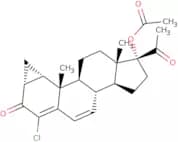
CAS:Controlled Product<p>Please enquire for more information about 6-Deschloro-4-chloro cyproterone acetate including the price, delivery time and more detailed product information at the technical inquiry form on this page</p>Formula:C24H29ClO4Purity:Min. 95%Molecular weight:416.94 g/mol2-Ketobutyric acid
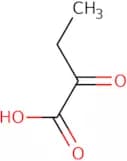
CAS:<p>2-Ketobutyric acid is a chemical compound that is an intermediate in the metabolism of amino acids. It can be synthesized from malic acid and glutamic acid by asymmetric synthesis. 2-Ketobutyric acid inhibits the production of ATP, leading to metabolic inhibition. Sprague-Dawley rats were used to prove this theory. 2-Ketobutyric acid has also been shown to inhibit insulin resistance and cell culture. Hydrogen bonds between 2-ketobutyric acid and the enzyme glutamate dehydrogenase are thought to be responsible for this effect on glucose uptake and conversion into energy.</p>Formula:C4H6O3Purity:Min. 95%Molecular weight:102.09 g/molVitamin B12 e-Monocarboxylic Acid
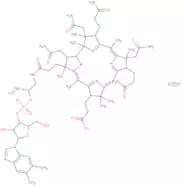
CAS:Controlled Product<p>Please enquire for more information about Vitamin B12 e-Monocarboxylic Acid including the price, delivery time and more detailed product information at the technical inquiry form on this page</p>Formula:C63H87CoN13O15PPurity:Area-% Min. 95 Area-%Color and Shape:PowderMolecular weight:1,356.35 g/molNomegestrol acetate
CAS:Controlled Product<p>Nomegestrol acetate is a nonsteroidal anti-inflammatory drug that binds to the response element of the gene, which leads to an increase in transcription. It is used in women to treat conditions such as endometriosis, menstrual disorders and breast cancer. The apoptosis pathway is activated by nomegestrol acetate by binding to the bcl-2 protein. This then causes a decrease in caspase activity, leading to cell death. Nomegestrol acetate also has been shown to have effects on ovarian activity and may be used as an analytical tool for determining the rate constant of polymerase chain reaction (PCR).</p>Formula:C23H30O4Purity:Min. 95%Molecular weight:370.48 g/molEthyl 1-N-Boc-3-oxopiperidine-4-carboxylate
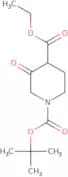
CAS:<p>Please enquire for more information about Ethyl 1-N-Boc-3-oxopiperidine-4-carboxylate including the price, delivery time and more detailed product information at the technical inquiry form on this page</p>Formula:C13H21NO5Purity:Min. 95%Molecular weight:271.31 g/mol3-(4-Methyl-1,4-diazepan-1-yl)propanoic acid
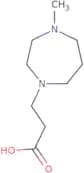
CAS:<p>Please enquire for more information about 3-(4-Methyl-1,4-diazepan-1-yl)propanoic acid including the price, delivery time and more detailed product information at the technical inquiry form on this page</p>Formula:C9H18N2O2Purity:Min. 95%Molecular weight:186.25 g/molIndole-3-acetyl-L-glutamic acid
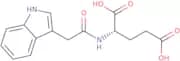
CAS:<p>Indole-3-acetyl-L-glutamic acid is an endogenous substance that is found in plants. It is the conjugated form of indole-3-acetaldehyde and L-glutamic acid. Indole-3-acetylglutamic acid has shown to have antioxidant potential and can be used to regulate plant growth, as well as protect against environmental stresses. Indole-3-acetylglutamic acid also has a role in regulating the production of other hormones, such as ethylene and auxin, which are involved in plant growth regulation.</p>Formula:C15H16N2O5Purity:Min. 98 Area-%Color and Shape:PowderMolecular weight:304.3 g/molDelta-9(11)-Fluorometholone acetate
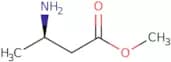
CAS:Controlled Product<p>Please enquire for more information about Delta-9(11)-Fluorometholone acetate including the price, delivery time and more detailed product information at the technical inquiry form on this page</p>Formula:C24H30O4Purity:Min. 95%Molecular weight:382.49 g/mol(R)-3-Amino-butyric acid methyl ester
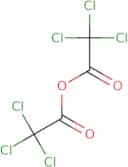
CAS:<p>Please enquire for more information about (R)-3-Amino-butyric acid methyl ester including the price, delivery time and more detailed product information at the technical inquiry form on this page</p>Formula:C5H11NO2Purity:Min. 95%Molecular weight:117.15 g/molTrichloroacetic anhydride
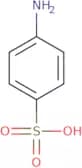
CAS:<p>Trichloroacetic anhydride is a chemical compound that is used in organic synthesis. It is a strong acid that reacts with fatty acids to form trifluoroacetic acid, which can be used as an analytical method for determining the presence of amines in a sample. It also shows inhibitory properties against inflammatory bowel disease and has been shown to have anti-inflammatory activity. Trichloroacetic anhydride is not very soluble in water, but it can be dissolved in alcohols and alkalis. This compound's ability to react with hydroxyl groups makes it useful for the synthesis of esters and ethers. Trichloroacetic anhydride's ability to react with intramolecular hydrogen may lead to metabolic disorders such as diabetes mellitus.</p>Formula:C4Cl6O3Purity:Min. 95%Molecular weight:308.76 g/mol4-Aminobenzenesulfonic acid
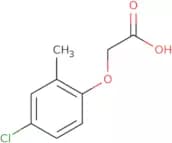
CAS:<p>4-Aminobenzenesulfonic acid is a sulfonic acid that is used in wastewater treatment. It has been shown to be an excellent water permeability agent and can be used as an additive to the process of making sulfonated polymers for use in water filtration. 4-Aminobenzenesulfonic acid has been shown to have enzyme inhibitory effects on metal hydroxide-dependent enzymes, such as sulphanilic and sulfanilic acid. This compound also has been investigated as a potential therapeutic agent for the treatment of cancer, with some success. It has been shown to stimulate the production of picolinic acid, which is an intermediate in the kynurenine pathway leading to production of nicotinamide adenine dinucleotide (NAD+). In humans, 4-aminobenzenesulfonic acid can bind toll-like receptors (TLRs) and activate TLR4 signaling pathways.</p>Formula:C6H7NO3SPurity:Min. 95%Molecular weight:173.19 g/mol2-Methyl-4-chlorophenoxyacetic acid
CAS:<p>2-Methyl-4-chlorophenoxyacetic acid is a sodium salt of 2-methyl-4-chlorophenoxyacetic acid. It is a herbicide that inhibits photosynthesis by disrupting the electron transport chain in chloroplasts. The hydroxyl group on the phenoxy ring is responsible for its herbicidal activity. 2-Methyl-4-chlorophenoxyacetic acid has been shown to cause significant cell death in tissue culture, which may be due to its ability to inhibit enzymes such as acetylcholinesterase, phosphodiesterase, and carboxypeptidase A2. This chemical also has carcinogenic potential, but no toxicological studies have been conducted in humans or animals.</p>Formula:C9H9ClO3Purity:Min. 95%Molecular weight:200.62 g/mol

![1-[2-(Methoxycarbonyl)phenyl]-5-oxopyrrolidine-3-carboxylic acid](/_next/image/?url=https%3A%2Fstatic.cymitquimica.com%2Fproducts%2F3D%2Fthumb-webp%2FFM123736.webp&w=3840&q=75)