


Carboxylic Acids
Carboxylic acids are organic molecules characterized by having a carboxyl-type functional group (-COOH). These acids are fundamental in various chemical reactions, including esterification, amidation, and decarboxylation. Carboxylic acids are widely used in the production of pharmaceuticals, polymers, and agrochemicals. In this section, you can find a large number of carboxylic acids ready to be used. At CymitQuimica, we provide a broad range of high-quality carboxylic acids to support your research and industrial applications.
Found 12454 products of "Carboxylic Acids"
Sort by
Purity (%)
0
100
|
0
|
50
|
90
|
95
|
100
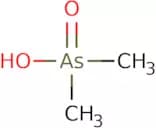
Cacodylic acid
CAS:<p>Cacodylic acid is a white to brown crystalline powder that is soluble in water. It has been used as an analytical reagent, polymerase chain reaction (PCR) inhibitor, and skin cancer treatment. Cacodylic acid inhibits the activity of the bacterial enzyme activities in humans and other mammals. The mechanism of action of cacodylic acid is not completely understood but it appears that it binds to inorganic iron and blocks its availability for use by bacterial enzymes such as dihydropteroate synthase, which is required for DNA synthesis. This leads to cell death. Cacodylic acid has also been shown to inhibit the growth of human HL-60 cells in vitro, suggesting that it may have carcinogenic potential.</p>Formula:C2H7AsO2Purity:Min. 95%Color and Shape:PowderMolecular weight:138 g/mol(S)-tert-Butyl 3-(methylamino)pyrrolidine-1-carboxylate
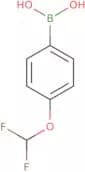
CAS:<p>(S)-tert-Butyl 3-(methylamino)pyrrolidine-1-carboxylate is a research chemical that can be used as a versatile building block for the synthesis of complex compounds. It is also a reaction component in the synthesis of speciality chemicals and useful scaffolds. It has been shown to have high quality, reagent grade and purity.</p>Formula:C10H20N2O2Purity:Min. 95%Color and Shape:PowderMolecular weight:200.28 g/mol4-(Difluoromethoxy)phenylboronic acid
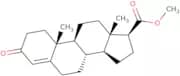
CAS:<p>Please enquire for more information about 4-(Difluoromethoxy)phenylboronic acid including the price, delivery time and more detailed product information at the technical inquiry form on this page</p>Formula:C7H7BF2O3Purity:Min. 95%Molecular weight:187.94 g/mol3-Keto-4-etiocholenic acid methylester
CAS:Controlled Product3-Keto-4-etiocholenic acid methylester is a chemical that has been shown to have insecticidal properties. 3-Keto-4-etiocholenic acid methylester binds to odorant receptors on the antennae of insects and causes an excitatory response. It can be used as a potential environmental pollutant, as well as an insecticide or repellent. 3-Keto-4-etiocholenic acid methylester binds with high affinity to olfactory receptors in the antennae of insects and has been shown to cause excitation when it comes into contact with these receptors. This compound can be used for screening for new materials with similar odorant binding properties, for research purposes, and also as a biosensor for pollution detection. 3-Keto-4-etiocholenic acid methylester has been shown to react with various substances such as oxygen, nitric oxide, nitrous oxide, sulfur dioxide andFormula:C21H30O3Purity:Min. 95%Molecular weight:330.46 g/mol3-Methyl-2-oxo-2,3-dihydro-1H-benzo[d]imidazole-4-carboxylic acid
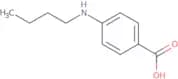
CAS:<p>Please enquire for more information about 3-Methyl-2-oxo-2,3-dihydro-1H-benzo[d]imidazole-4-carboxylic acid including the price, delivery time and more detailed product information at the technical inquiry form on this page</p>Formula:C9H8N2O3Purity:Min. 95%Molecular weight:192.17 g/mol4-(Butylamino)benzoic acid
CAS:<p>4-(Butylamino)benzoic acid is a non-steroidal anti-inflammatory drug (NSAID) that has been used to treat pain. It is a prodrug, which is metabolized in the liver to 4-(butylamino)-phenylacetic acid, its active form. The 4-(butylamino)benzoic acid molecule has a hydrophobic effect and binds to chloride ions. This binding inhibits the production of prostaglandins, which are mediators of pain. 4-(Butylamino)benzoic acid also reduces the activity of plasma cells that produce antibodies and increases the activity of lymphocytes and platelets, leading to an increase in immunoglobulin levels.</p>Formula:C11H15NO2Purity:Min. 95%Color and Shape:PowderMolecular weight:193.24 g/molL-(2S,3aS,7aS)-Octahydro-1H-indole-2-carboxylic acid benzyl ester tosylate salt
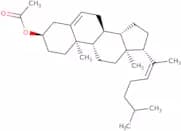
CAS:<p>Please enquire for more information about L-(2S,3aS,7aS)-Octahydro-1H-indole-2-carboxylic acid benzyl ester tosylate salt including the price, delivery time and more detailed product information at the technical inquiry form on this page</p>Formula:C23H29NO5SPurity:Min. 95%Molecular weight:431.55 g/mol20-Dehydro cholesterol 3-acetate
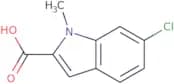
CAS:Controlled Product<p>Please enquire for more information about 20-Dehydro cholesterol 3-acetate including the price, delivery time and more detailed product information at the technical inquiry form on this page</p>Formula:C29H46O2Purity:Min. 95%Molecular weight:426.67 g/mol6-Chloro-1-methyl-1H-indole-2-carboxylic acid
CAS:<p>Please enquire for more information about 6-Chloro-1-methyl-1H-indole-2-carboxylic acid including the price, delivery time and more detailed product information at the technical inquiry form on this page</p>Formula:C10H8ClNO2Purity:Min. 95%Molecular weight:209.63 g/mol3-(6-Chloro-1-methyl-1H-benzimidazol-2-yl)propanoic acid
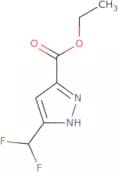
CAS:Controlled ProductPlease enquire for more information about 3-(6-Chloro-1-methyl-1H-benzimidazol-2-yl)propanoic acid including the price, delivery time and more detailed product information at the technical inquiry form on this pageFormula:C11H11ClN2O2Purity:Min. 95%Molecular weight:238.67 g/molEthyl 3-(difluoromethyl)-1H-pyrazole-5-carboxylate
CAS:<p>Please enquire for more information about Ethyl 3-(difluoromethyl)-1H-pyrazole-5-carboxylate including the price, delivery time and more detailed product information at the technical inquiry form on this page</p>Formula:C7H8F2N2O2Purity:Min. 95%Color and Shape:PowderMolecular weight:190.15 g/mol4-(3-Methyl-5-oxo-2-pyrazolin-1-yl)benzoic acid
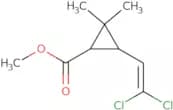
CAS:<p>4-(3-Methyl-5-oxo-2-pyrazolin-1-yl)benzoic acid (PMBA) is a chromatographic and spectroscopic reagent that is used in the analysis of glycosidic bonds. PMBA has been shown to be effective in preventing the formation of advanced glycation end products, which are substances that can cause diabetes. PMBA has also been found to have a protective effect on the kidneys and liver and may prevent damage to cells in these organs. This drug has been tested for pharmacological effects and toxicity in healthy subjects, type 2 diabetic patients, and diabetic patients.</p>Formula:C11H10N2O3Purity:Min. 95%Molecular weight:218.21 g/molMethyl 3-(2,2-dichlorovinyl)-2,2-dimethylcyclopropanecarboxylate
CAS:<p>Methyl 3-(2,2-dichlorovinyl)-2,2-dimethylcyclopropanecarboxylate is a pyrethroid insecticide. It is formulated as an emulsifiable concentrate and applied to the soil surface or injected into the root zone of plants. This insecticide is also used in combination with other pesticides to provide broad spectrum control of insect pests. Methyl 3-(2,2-dichlorovinyl)-2,2-dimethylcyclopropanecarboxylate is chemically synthesized from 2,3-dihydro-1,3-benzodioxole and chloroacetic acid. The mechanism of action for this pesticide is not well understood but may be due to its ability to inhibit hydrolase enzymes. This product also has a low toxicity on mammals and birds that are exposed orally or through inhalation at high concentrations.</p>Formula:C9H12Cl2O2Purity:Min. 95%Color and Shape:LiquidMolecular weight:223.1 g/mol1-Methyl-pyrrolidine-3-carboxylic acid
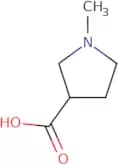
CAS:1-Methyl-pyrrolidine-3-carboxylic acid is a hepatoprotective agent that has been shown to inhibit the growth of cervical glands in animals. It also has anticarcinogenic and locomotor activity, as well as antidiabetic and depressant activities. The alkaloid 1-methyl-pyrrolidine-3-carboxylic acid can be found in many medicinal plants, including Ganoderma lucidum and Semen erythrophlei. In vitro assays show that this compound inhibits the enzyme lipase, which is involved in fat digestion and pancreatic function. The compound also has a depressant effect on the central nervous system, as shown by animal studies.Formula:C6H11NO2Purity:Min. 95%Color and Shape:PowderMolecular weight:129.16 g/mol2-(1-(tert-Butoxycarbonyl)azetidin-3-yl)acetic acid
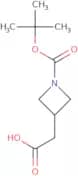
CAS:<p>Please enquire for more information about 2-(1-(tert-Butoxycarbonyl)azetidin-3-yl)acetic acid including the price, delivery time and more detailed product information at the technical inquiry form on this page</p>Formula:C10H17NO4Purity:Min. 95%Molecular weight:215.25 g/mol5-[(3,5-Dimethyl-1H-pyrazol-1-yl)methyl]-2-furoic acid
CAS:<p>Please enquire for more information about 5-[(3,5-Dimethyl-1H-pyrazol-1-yl)methyl]-2-furoic acid including the price, delivery time and more detailed product information at the technical inquiry form on this page</p>Formula:C11H12N2O3Purity:Min. 95%Molecular weight:220.22 g/mol7-Phenylacetamide-3-chloromethyl-3-cephem-4-carboxylic acid diphenylmethyl ester
CAS:<p>7-Phenylacetamide-3-chloromethyl-3-cephem-4-carboxylic acid diphenylmethyl ester is an organic solution that is used in the detoxification of chemical substances. It has a hydroxyl group and is soluble in nonpolar solvents. 7PAMC has been shown to be effective against bone lesions caused by acylation reactions. This drug also binds to the enzyme called cytochrome P450, which is involved in the metabolism of many drugs. It also inhibits bacterial growth by binding to DNA gyrase and topoisomerase IV, enzymes that maintain bacterial DNA integrity. The particle size of this drug is small, with a diameter of less than 10 microns. 7PAMC has a viscosity of 1 cps at 25°C and a melting point of 129°C.</p>Formula:C29H25ClN2O4SPurity:Min. 95%Molecular weight:533.04 g/molDeoxycholic acid-D4
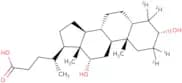
CAS:Controlled Product<p>Deoxycholic acid-D4 is a bile acid that is produced by the liver. It has been shown to be an indicator of insulin resistance in women with breast cancer. Deoxycholic acid-D4 has also been found to have significant interactions with other drugs, such as phenytoin, carbamazepine, and penicillin. The concentration of deoxycholic acid-D4 in the serum may be reduced by taking these drugs. This drug has a detection time of 3 hours and can be detected by liquid chromatography. Deoxycholic acid-D4 is metabolized through the human metabolism pathway, which includes dietary and logistic regression models.</p>Formula:C24H36D4O4Purity:Min. 95%Molecular weight:396.6 g/mol5,6-Epoxy-13-cis retinoic acid
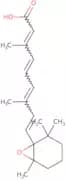
CAS:<p>5,6-Epoxy-13-cis retinoic acid (5,6-ER) is the most active metabolite of all-trans-retinoic acid. 5,6-ER binds to the nuclear receptor and acts as a transcription factor. It has been shown to inhibit the growth of several cancer cell lines in vitro, including T47D cells. 5,6-ER also has antacid properties and can be used for the treatment of inflammatory bowel disease. 5,6-ER is found in low concentrations in plasma and tissues and accumulates in high concentrations in rat liver microsomes. The major metabolic pathway includes hydrolysis by trifluoroacetic acid which produces 5,6 epoxyretinoyl coenzyme A (5,6 epoxyretinoyl CoA). This compound is then converted to 5,6 epoxyretinol by an unknown mechanism.</p>Formula:C20H28O3Purity:Min. 95%Molecular weight:316.43 g/molTetrakis[N-tetrachlorophthaloyl-(S)-tert-leucinato]dirhodium Bis(ethyl Acetate) Adduct
CAS:<p>Please enquire for more information about Tetrakis[N-tetrachlorophthaloyl-(S)-tert-leucinato]dirhodium Bis(ethyl Acetate) Adduct including the price, delivery time and more detailed product information at the technical inquiry form on this page</p>Formula:C56H40Cl16N4O16Rh2·C8H16O4Purity:Min. 95%Molecular weight:1,974.2 g/mol


![3-Methyl-2-oxo-2,3-dihydro-1H-benzo[d]imidazole-4-carboxylic acid](/_next/image/?url=https%3A%2Fstatic.cymitquimica.com%2Fproducts%2F3D%2Fthumb-webp%2FFM143449.webp&w=3840&q=75)



![5-[(3,5-Dimethyl-1H-pyrazol-1-yl)methyl]-2-furoic acid](/_next/image/?url=https%3A%2Fstatic.cymitquimica.com%2Fproducts%2F3D%2Fthumb-webp%2FFD115286.webp&w=3840&q=75)

![Tetrakis[N-tetrachlorophthaloyl-(S)-tert-leucinato]dirhodium Bis(ethyl Acetate) Adduct](/_next/image/?url=https%3A%2Fstatic.cymitquimica.com%2Fproducts%2F3D%2Fthumb-webp%2FFT60020.webp&w=3840&q=75)