Carboxylic Acids
Carboxylic acids are organic molecules characterized by having a carboxyl-type functional group (-COOH). These acids are fundamental in various chemical reactions, including esterification, amidation, and decarboxylation. Carboxylic acids are widely used in the production of pharmaceuticals, polymers, and agrochemicals. In this section, you can find a large number of carboxylic acids ready to be used. At CymitQuimica, we provide a broad range of high-quality carboxylic acids to support your research and industrial applications.
Found 12454 products of "Carboxylic Acids"
Sort by
Purity (%)
0
100
|
0
|
50
|
90
|
95
|
100
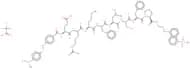
DABCYL-Glu-Arg-Nle-Phe-Leu-Ser-Phe-Pro-EDANS trifluoroacetate salt
CAS:<p>Please enquire for more information about DABCYL-Glu-Arg-Nle-Phe-Leu-Ser-Phe-Pro-EDANS trifluoroacetate salt including the price, delivery time and more detailed product information at the technical inquiry form on this page</p>Formula:C76H98N16O15SPurity:Min. 95%Molecular weight:1,507.76 g/molNocistatin (bovine) trifluoroacetate salt
CAS:<p>Please enquire for more information about Nocistatin (bovine) trifluoroacetate salt including the price, delivery time and more detailed product information at the technical inquiry form on this page</p>Formula:C82H135N21O32Purity:Min. 95%Molecular weight:1,927.07 g/mol(Asp371)-Tyrosinase (369-377) (human) trifluoroacetate salt
CAS:<p>Trifluoroacetate salt</p>Formula:C42H66N10O16S2Purity:Min. 95%Molecular weight:1,031.16 g/molAtrial Natriuretic Factor (3-28) (rat) trifluoroacetate salt
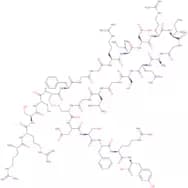
CAS:<p>Natriuretic factor is a peptide hormone that regulates blood pressure. This peptide is encoded by a gene located on chromosome 10 and is made up of 28 amino acids. Natriuretic factor binds to the membrane of mitochondria and zymogen granules, causing them to release their contents into the cytosol. The resulting increase in cytosolic volume causes an increased diastolic pressure, as well as an increased glomerular filtration rate and cardiac output. Natriuretic factors have also been shown to stimulate the production of natriuretic peptides, which are involved in water balance and electrolyte homeostasis.</p>Formula:C119H189N43O36S2Purity:Min. 95%Molecular weight:2,862.17 g/mol(Phenylac 1,D-Tyr(Me)2,Arg6·8,Tyr-NH29)-Vasopressin trifluoroacetate salt Phenylac-D-Tyr(Me)-Phe-Gln-Asn-Arg-Pro-Arg-Tyr-NH2 tri
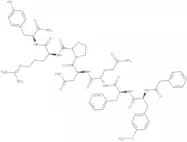
CAS:Please enquire for more information about (Phenylac 1,D-Tyr(Me)2,Arg6·8,Tyr-NH29)-Vasopressin trifluoroacetate salt Phenylac-D-Tyr(Me)-Phe-Gln-Asn-Arg-Pro-Arg-Tyr-NH2 tri including the price, delivery time and more detailed product information at the technical inquiry form on this pageFormula:C62H83N17O13Purity:Min. 95%Color and Shape:PowderMolecular weight:1,274.43 g/mol5,7-Dimethyl-[1,2,4]triazolo[1,5-a]pyrimidine-2-carboxylic acid
CAS:<p>Please enquire for more information about 5,7-Dimethyl-[1,2,4]triazolo[1,5-a]pyrimidine-2-carboxylic acid including the price, delivery time and more detailed product information at the technical inquiry form on this page</p>Formula:C8H8N4O2Purity:Min. 95%Molecular weight:192.17 g/molCys-Gly-Lys-Lys-Gly-Amyloid b-Protein (35-40) trifluoroacetate salt
CAS:<p>Please enquire for more information about Cys-Gly-Lys-Lys-Gly-Amyloid b-Protein (35-40) trifluoroacetate salt including the price, delivery time and more detailed product information at the technical inquiry form on this page</p>Formula:C43H79N13O12S2Purity:Min. 95%Molecular weight:1,034.3 g/moltrans-1,2-Diaminocyclohexane-N,N,N',N'-tetraacetic acid monohydrate
CAS:<p>Trans-1,2-Diaminocyclohexane-N,N,N',N'-tetraacetic acid monohydrate (CDTA) is a chelating agent that has been shown to be effective in the treatment of some cancers. CDTA has been shown to inhibit the growth of tumor cells by binding to lysine residues on histones and DNA and inhibiting their acetylation. CDTA also prevents the genotoxicity induced by irradiation. CDTA can be used as an adjuvant in cancer therapy due to its ability to inhibit histone deacetylase activity. Trans-1,2-Diaminocyclohexane-N,N,N',N'-tetraacetic acid monohydrate is synthesized from two amino acids: lysine and glutamic acid. This molecule is a polymeric compound composed of cyclic molecules linked together through amide bonds. These polymers are linear chains of</p>Formula:C14H22N2O8·H2OColor and Shape:White PowderMolecular weight:364.35 g/molpTH (1-34) amide (human) trifluoroacetate salt
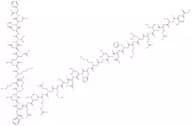
CAS:<p>Parathyroid hormone (PTH) is a peptide hormone that regulates calcium and phosphate balance in the body. PTH is secreted by the parathyroid glands, located near the thyroid gland in the neck. It is also known as parathormone or parathyrin. The active form of PTH, called pTH (1-34) amide, has been shown to stimulate bone resorption and to inhibit bone formation. The amino acid sequence of this hormone starts with arginine and ends with phenylalanine. The N-terminal amino acid residue is an aspartic acid or asparagine and histidine is the only basic residue in this molecule. This molecule has two acidic residues, glutamic acid and aspartic acid, which are found on the side chains of two amino acids: aspartic acid and glutamic acid. Valine is found at position 3 and phenylalanine at position 34.</p>Formula:C181H292N56O50S2Purity:Min. 95%Molecular weight:4,116.73 g/molTyr-α-CGRP (human) trifluoroacetate salt
CAS:Please enquire for more information about Tyr-alpha-CGRP (human) trifluoroacetate salt including the price, delivery time and more detailed product information at the technical inquiry form on this pageFormula:C172H276N52O51S2Purity:Min. 95%Molecular weight:3,952.48 g/molMet(O)14-Exenatide trifluoroacetate salt
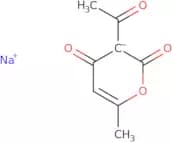
CAS:<p>Please enquire for more information about Met(O)14-Exenatide trifluoroacetate salt including the price, delivery time and more detailed product information at the technical inquiry form on this page</p>Formula:C184H282N50O61SPurity:Min. 95%Molecular weight:4,202.57 g/molDehydroacetic acid sodium salt
CAS:<p>Dehydroacetic acid sodium salt is a chemical compound with the formula CH3COOCH2NaO2. It is an ionic liquid that can be used as a preservative or stabilizer in foods and other products. Dehydroacetic acid sodium salt has been shown to inhibit the growth of bacteria and fungi in biological studies. The analytical method for dehydroacetic acid sodium salt is based on x-ray diffraction data, which is used to identify its purity and concentration. The reaction solution includes dehydroacetic acid, water vapor, sodium salts, phosphorus pentoxide, and control analysis.</p>Formula:C8H7O4NaPurity:Min. 95%Color and Shape:PowderMolecular weight:190.13 g/mol4-Hydroxy-1,3-benzenedisulfonic acid
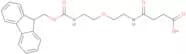
CAS:4-Hydroxy-1,3-benzenedisulfonic acid (4HBDS) is a reactive molecule that is used as a model system for the study of chain reactions. 4HBDS does not undergo hydrolysis or oxidation and is stable in water. It can be prepared by the reaction of nitrate with acetate extract and has been shown to react with diazonium salts to form an analytical method for nitrite ion. 4HBDS reacts with hydrochloric acid to generate proton and significant interactions are observed at pH values between 1 and 3.Purity:Min. 95%N-(Fmoc-5-amino-3-oxa-pentyl)succinamic acid
CAS:<p>N-(Fmoc-5-amino-3-oxa-pentyl)succinamic acid is a high quality chemical that is used as an intermediate in the production of pharmaceuticals and other fine chemicals. It is also a reagent for use in peptide synthesis. N-(Fmoc-5-amino-3-oxa-pentyl)succinamic acid has a CAS No. 669073-62-5 and can be used as a useful scaffold for the production of complex compounds. This compound is also useful for research purposes, due to its versatility as a building block with speciality chemical applications.</p>Formula:C23H26N2O6Purity:Min. 95%Molecular weight:426.46 g/mol(N-Me-Phe7)-Neurokinin B trifluoroacetate salt
CAS:<p>Please enquire for more information about (N-Me-Phe7)-Neurokinin B trifluoroacetate salt including the price, delivery time and more detailed product information at the technical inquiry form on this page</p>Formula:C60H81N13O14S2Purity:Min. 95%Molecular weight:1,272.5 g/molH-Lys-Cys-Thr-Cys-Cys-Ala-OH trifluoroacetate salt
CAS:<p>H-Lys-Cys-Thr-Cys-Cys-Ala-OH trifluoroacetate salt (KCTA) is a peptide that belongs to the group of thioneins and is characterized by a high content of lysine, cysteine and histidine residues. This peptide has been shown to be effective in treating subcutaneous tumors in mice. KCTA binds to metallothionein and gamma amino butyric acid (GABA), which are proteins that regulate energy metabolism in cells. KCTA has also been shown to have antimicrobial effects against human serum, which may be due to its ability to bind with thionein.</p>Formula:C22H41N7O8S3Purity:Min. 95%Molecular weight:627.8 g/mol2-[(5-Chloropyridin-2-yl)amino]-2-oxoacetic acid ethyl ester monohydrochloride
CAS:Intermediate in the synthesis of edoxabanFormula:C9H9ClN2O3·HClPurity:Min. 95%Molecular weight:265.09 g/mol1-Methyl-1-cyclohexanecarboxylic acid
CAS:<p>1-Methyl-1-cyclohexanecarboxylic acid is a fatty acid that is present in the conjugates of natural and synthetic oils. It is an unsaturated fatty acid with a cycloalkane ring structure. The synthesis of 1-methyl-1-cyclohexanecarboxylic acid has been shown to be catalyzed by a carboxylase, which converts acetyl CoA into malonyl CoA. This reaction is irreversible and can be used as the first step in the biosynthesis of fatty acids. 1-Methyl-1-cyclohexanecarboxylic acid has been shown to cause cell death in leukemia cells, as well as inhibit epileptic seizures in rats.</p>Formula:C8H14O2Purity:Min. 95%Molecular weight:142.2 g/molNeuropeptide W-23 (rat) trifluoroacetate salt
CAS:<p>Please enquire for more information about Neuropeptide W-23 (rat) trifluoroacetate salt including the price, delivery time and more detailed product information at the technical inquiry form on this page</p>Formula:C119H183N35O29SPurity:Min. 95%Molecular weight:2,600.01 g/molLHRH II trifluoroacetate salt
CAS:<p>LHRH II trifluoroacetate salt is a peptide hormone that is used to treat prostate cancer, breast cancer, and endometriosis. It binds to the ryanodine receptor in the cell membrane and induces the release of calcium from intracellular stores. LHRH II trifluoroacetate salt also promotes polymerase chain reactions which are important for DNA replication. This drug has been shown to increase epidermal growth factor (EGF) levels in carcinoma cell lines and has transcriptional regulatory activity in a model system. LHRH II trifluoroacetate salt can be used as an experimental model for clinical relevance because it can be used to study how hormones affect cellular processes such as transcriptional regulation.</p>Formula:C60H69N17O13Purity:Min. 95%Molecular weight:1,236.3 g/mol


![5,7-Dimethyl-[1,2,4]triazolo[1,5-a]pyrimidine-2-carboxylic acid](/_next/image/?url=https%3A%2Fstatic.cymitquimica.com%2Fproducts%2F3D%2Fthumb-webp%2FFD12883.webp&w=3840&q=75)




![2-[(5-Chloropyridin-2-yl)amino]-2-oxoacetic acid ethyl ester monohydrochloride](/_next/image/?url=https%3A%2Fstatic.cymitquimica.com%2Fproducts%2F3D%2Fthumb-webp%2FFC63138.webp&w=3840&q=75)