


Carboxylic Acids
Carboxylic acids are organic molecules characterized by having a carboxyl-type functional group (-COOH). These acids are fundamental in various chemical reactions, including esterification, amidation, and decarboxylation. Carboxylic acids are widely used in the production of pharmaceuticals, polymers, and agrochemicals. In this section, you can find a large number of carboxylic acids ready to be used. At CymitQuimica, we provide a broad range of high-quality carboxylic acids to support your research and industrial applications.
Found 12454 products of "Carboxylic Acids"
Sort by
Purity (%)
0
100
|
0
|
50
|
90
|
95
|
100
H-Arg-epsilon-aminocaproyl-Arg-epsilon-aminocaproyl-Arg-epsilon-aminocaproyl-Arg-epsilon-aminocaproyl-Arg-epsilon-aminocaproyl-Arg-e psilon-aminocaproyl-Arg-OH trifluoroacetate salt
CAS:<p>Please enquire for more information about H-Arg-epsilon-aminocaproyl-Arg-epsilon-aminocaproyl-Arg-epsilon-aminocaproyl-Arg-epsilon-aminocaproyl-Arg-epsilon-aminocaproyl-Arg-e psilon-aminocaproyl-Arg-OH trifluoroacetate salt including the price, delivery time and more detailed product information at the technical inquiry form on this page</p>Formula:C78H152N34O14Purity:Min. 95%Molecular weight:1,790.26 g/molTyr-α-CGRP (human) trifluoroacetate salt
CAS:Please enquire for more information about Tyr-alpha-CGRP (human) trifluoroacetate salt including the price, delivery time and more detailed product information at the technical inquiry form on this pageFormula:C172H276N52O51S2Purity:Min. 95%Molecular weight:3,952.48 g/molAngiotensin II trifluoroacetate salt
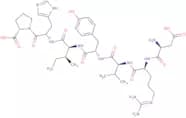
CAS:<p>Angiotensin II is a peptide hormone that may act as a neurotransmitter or neuromodulator. It is one of the most important vasoconstrictor and aldosterone-secreting hormones produced by the renin-angiotensin system in mammals. Angiotensin II has been shown to stimulate cardiac contractility, increase vascular resistance, and regulate blood pressure. The effect of Angiotensin II on cardiac contractility is mediated through its binding to a response element in the promoter region of genes encoding for Ca2+ channels. This binding leads to increased Ca2+ influx into cardiac cells and increased myofibrillar Ca2+ sensitivity. Angiotensin II also activates reactive oxygen species (ROS) production, which causes injury to the renal tubular epithelium and induces tubulointerstitial injury in rats with diabetes. It also stimulates squamous cell carcinoma growth by inducing reactive oxygen species (ROS) production and activating signal trans</p>Formula:C50H71N13O12·xC2HF3O2Purity:Min. 95%Molecular weight:1,046.18 g/molTetrabutylammonium acetate
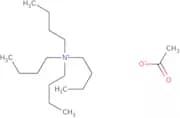
CAS:<p>Tetrabutylammonium acetate is a complex of tetrabutylammonium with the trifluoroacetate anion. It has been used as a reagent for the preparation of α-hydroxylated ketones, including natural products. Tetrabutylammonium acetate can be used in titration calorimetry to measure the heat evolved during the reaction between hydroxyl group and sodium salts. The heat released corresponds to the amount of water produced from this reaction. In this way, it can be determined whether or not a molecule contains an active hydrogen atom. Tetrabutylammonium acetate also reacts with reactive compounds such as dpp-iv inhibitors, forming a reactive intermediate that cannot be isolated due to its instability. This intermediate is detected by analytical methods such as plasma mass spectrometry or infrared spectroscopy. Tetrabutylammonium acetate also reacts with asymmetric synthesis, forming an intram</p>Formula:C16H36N•C2H3O2Purity:Min. 95%Color and Shape:PowderMolecular weight:301.51 g/mol3'-(2-Propylamine)benzoic acid methyl ester
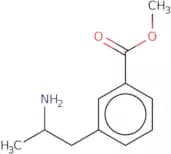
CAS:<p>3'-(2-Propylamine)benzoic acid methyl ester is a high quality, complex compound that can be used as a reagent, speciality chemical, or reaction component. It has a wide range of applications in the synthesis of pharmaceuticals, agrochemicals, and other biologically active compounds. 3'-(2-Propylamine)benzoic acid methyl ester is also a versatile building block and useful intermediate in organic synthesis.</p>Formula:C11H15NO2Purity:Min. 95%Molecular weight:193.24 g/molAlpha-Helical CRF (12-41) trifluoroacetate salt
CAS:<p>Please enquire for more information about Alpha-Helical CRF (12-41) trifluoroacetate salt including the price, delivery time and more detailed product information at the technical inquiry form on this page</p>Formula:C152H251N43O47S2Purity:Min. 95%Molecular weight:3,497.01 g/mol(D-Tyr5,D-Trp6)-LHRH trifluoroacetate salt
CAS:<p>Please enquire for more information about (D-Tyr5,D-Trp6)-LHRH trifluoroacetate salt including the price, delivery time and more detailed product information at the technical inquiry form on this page</p>Formula:C64H82N18O13Purity:Min. 95%Molecular weight:1,311.45 g/molACTH (1-14) trifluoroacetate salt
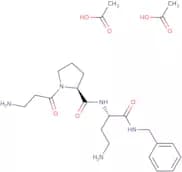
CAS:<p>Please enquire for more information about ACTH (1-14) trifluoroacetate salt including the price, delivery time and more detailed product information at the technical inquiry form on this page</p>Formula:C77H109N21O20SPurity:Min. 95%Molecular weight:1,680.88 g/mol(2S)-beta-Alanyl-L-prolyl-2,4-diamino-N-(phenylmethyl)butanamideacetate
CAS:Controlled Product<p>(2S)-beta-Alanyl-L-prolyl-2,4-diamino-N-(phenylmethyl)butanamideacetate (BAP) is a skin care product that can be applied topically to the skin. BAP is an amino acid derivative that has been shown in clinical studies to hydrate the skin. It acts as a humectant and binds to water molecules, thus increasing the moisture content of the skin. This product also has antioxidant and anti-inflammatory properties, as well as anti-aging effects. BAP is often used in cosmetic products for its film forming properties and ability to form polymeric films on the surface of cells.</p>Formula:C21H33N5O5Purity:Min. 95%Molecular weight:435.52 g/molOrotic acid hydrate
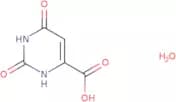
CAS:<p>Orotic acid hydrate is a synthetic compound that is designed to be a growth regulator. Orotic acid hydrate is synthesized by reacting the orotate with pyridoxine hydrochloride, followed by crystallizing the product. Hydrogen bonds form between the water molecules and fatty acids in the crystals of OA hydrate. These hydrogen bonds stabilize the crystal structure and allow for its use as a growth regulator. The stability of this molecule can also be attributed to its ability to form hydrogen bonds with other molecules such as α-tocopherol, calcium carbonate, and synthetic cannabinoids. Orotic acid hydrate has been shown to have an effect on cancer cells because it reacts with daunorubicin in solution and inhibits DNA synthesis, inhibiting cell growth.</p>Formula:C5H4N2O4·H2OPurity:Min. 95 Area-%Color and Shape:PowderMolecular weight:174.11 g/mol(D-His2)-LHRH trifluoroacetate salt
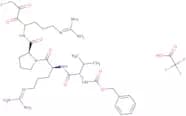
CAS:<p>Please enquire for more information about (D-His2)-LHRH trifluoroacetate salt including the price, delivery time and more detailed product information at the technical inquiry form on this page</p>Formula:C55H75N17O13Purity:Min. 95%Molecular weight:1,182.29 g/molZ-Val-Arg-Pro-DL-Arg-fluoromethylketone trifluoroacetate salt
CAS:<p>Please enquire for more information about Z-Val-Arg-Pro-DL-Arg-fluoromethylketone trifluoroacetate salt including the price, delivery time and more detailed product information at the technical inquiry form on this page</p>Formula:C31H49FN10O6Purity:Min. 95%Molecular weight:676.78 g/molAngiotensin I/II (1-7) trifluoroacetate salt
CAS:<p>Angiotensin I/II (1-7) trifluoroacetate salt is a selective inhibitor of angiotensin II. It blocks the activity of angiotensin II, and thereby prevents the activation of growth factor-β1, which leads to a decrease in pulmonary hypertension. The drug has also been shown to be effective in blocking dextran sulfate absorption, as well as preventing bowel disease by inhibiting receptor activity. Angiotensin I/II (1-7) trifluoroacetate salt has been shown to have an anti-inflammatory effect on the cardiovascular system by blocking cell signaling pathways and reducing blood pressure. This drug is used for treatment of metabolic disorders such as atherosclerotic lesion, cardiac diseases such as coronary heart diseases, and bowel disease.</p>Formula:C41H62N12O11Purity:Min. 95%Molecular weight:899.01 g/mol(Lys15,Arg16,Leu27)-VIP (1-7)-GRF (8-27) trifluoroacetate salt
CAS:Please enquire for more information about (Lys15,Arg16,Leu27)-VIP (1-7)-GRF (8-27) trifluoroacetate salt including the price, delivery time and more detailed product information at the technical inquiry form on this pageFormula:C142H240N44O38Purity:Min. 95%Molecular weight:3,171.7 g/molLys-Thymic Factor trifluoroacetate salt
CAS:Please enquire for more information about Lys-Thymic Factor trifluoroacetate salt including the price, delivery time and more detailed product information at the technical inquiry form on this pageFormula:C39H68N14O17Purity:Min. 95%Molecular weight:1,005.04 g/molNeuroendocrine Regulatory Peptide-4 (human, mouse, rat) trifluoroacetate salt
CAS:<p>Please enquire for more information about Neuroendocrine Regulatory Peptide-4 (human, mouse, rat) trifluoroacetate salt including the price, delivery time and more detailed product information at the technical inquiry form on this page</p>Formula:C87H135N25O24Purity:Min. 95%Molecular weight:1,915.16 g/mol4-Acetyl-piperidine-1-carboxylic acid tert-butyl ester
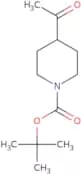
CAS:<p>4-Acetylpiperidine-1-carboxylic acid tert-butyl ester is a tert-butyl ester of 4-acetylpiperidine. It can be prepared by the reaction of sodium azide with chloroform and tert-butyl alcohol. The resulting product is a white solid that can be used as an intermediate in organic synthesis.</p>Formula:C12H21NO3Purity:Min. 95%Molecular weight:227.3 g/mol(3,5-Diiodo-Tyr1,D-Ala2,N-Me-Phe4,glycinol5)-Enkephalin acetate salt
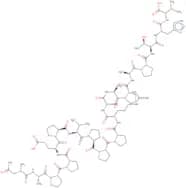
CAS:Controlled Product<p>Please enquire for more information about (3,5-Diiodo-Tyr1,D-Ala2,N-Me-Phe4,glycinol5)-Enkephalin acetate salt including the price, delivery time and more detailed product information at the technical inquiry form on this page</p>Formula:C26H33I2N5O6Purity:Min. 95%Molecular weight:765.38 g/molMca-Gly-Ser-Pro-Ala-Phe-Leu-Ala-Lys(Dnp)-D-Arg-NH2 trifluoroacetate salt
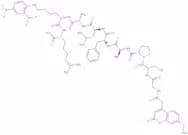
CAS:<p>Please enquire for more information about Mca-Gly-Ser-Pro-Ala-Phe-Leu-Ala-Lys(Dnp)-D-Arg-NH2 trifluoroacetate salt including the price, delivery time and more detailed product information at the technical inquiry form on this page</p>Formula:C61H82N16O18Purity:Min. 95%Molecular weight:1,327.4 g/mol[2-fluoro-4-(trifluoromethyl)phenyl]boronic Acid
CAS:<p>2-Fluoro-4-(trifluoromethyl)phenylboronic acid is a boron compound that can be used to synthesize a variety of target products. 2-Fluoro-4-(trifluoromethyl)phenylboronic acid occurs in the form of an oil and is an impurity in the target product, phenylboronic acid. This impurity can be removed by reacting with lithium benzotrifluoride. Lithiated 2-fluoro-4-(trifluoromethyl)phenylboronic acid is then reacted with phenylboronic acid to give lithiated phenylboronic ester in high yield. The lithiation reaction can be carried out under alkaline conditions or under a condition where the reactants are dissolved in water.</p>Formula:C7H5BF4O2Purity:Min. 95%Molecular weight:207.92 g/mol






![[2-fluoro-4-(trifluoromethyl)phenyl]boronic Acid](/_next/image/?url=https%3A%2Fstatic.cymitquimica.com%2Fproducts%2F3D%2Fthumb-webp%2FFF105416.webp&w=3840&q=75)