Carboxylic Acids
Carboxylic acids are organic molecules characterized by having a carboxyl-type functional group (-COOH). These acids are fundamental in various chemical reactions, including esterification, amidation, and decarboxylation. Carboxylic acids are widely used in the production of pharmaceuticals, polymers, and agrochemicals. In this section, you can find a large number of carboxylic acids ready to be used. At CymitQuimica, we provide a broad range of high-quality carboxylic acids to support your research and industrial applications.
Found 12454 products of "Carboxylic Acids"
Sort by
Purity (%)
0
100
|
0
|
50
|
90
|
95
|
100
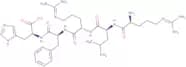
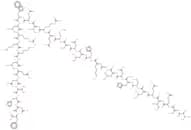
Beta-Bag Cell Peptide (Aplysia californica) trifluoroacetate salt
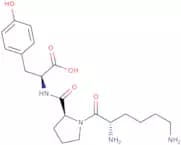
CAS:<p>Aplysia californica is a species of sea slug that produces a peptide, beta-Bag Cell Peptide (BACP), which has been shown to have depolarizing effects on neurons. BACP can be synthesized from the amino acid sequence of the Aplysia californica cell membrane protein, and this synthetic peptide has been shown to have maximal depolarizing effects at high concentrations. The depolarizing effect of BACP can be seen in populations of neurons as well as individual neurons. This peptide also desensitizes autoreceptors for acetylcholine and serotonin, which may play a role in its electrophysiological effects.</p>Formula:C33H53N13O6Purity:Min. 95%Molecular weight:727.86 g/molH-Lys-Pro-Tyr-OH acetate salt
CAS:<p>Please enquire for more information about H-Lys-Pro-Tyr-OH acetate salt including the price, delivery time and more detailed product information at the technical inquiry form on this page</p>Formula:C20H30N4O5Purity:Min. 95%Molecular weight:406.48 g/molAmyloid b-Protein (1-40) amide trifluoroacetate salt
CAS:<p>Please enquire for more information about Amyloid b-Protein (1-40) amide trifluoroacetate salt including the price, delivery time and more detailed product information at the technical inquiry form on this page</p>Formula:C194H296N54O57SPurity:Min. 95%Molecular weight:4,328.82 g/molH-Gly-Arg-Gly-Asp-Ser-Pro-Cys-OH trifluoroacetate salt
CAS:<p>H-Gly-Arg-Gly-Asp-Ser-Pro-Cys-OH trifluoroacetate salt is a peptide that has been shown to inhibit the growth of tumor cells. It has also been shown to have biological properties in a number of experimental models, including in vitro and in vivo studies. H-Gly-Arg-Gly-Asp-Ser-Pro-Cys-OH trifluoroacetate salt inhibits muscle cell proliferation by binding to the extracellular matrix protein collagen type I. This inhibition leads to reduced tissue formation and body growth. This peptide also inhibits the proliferation of cancer cells by blocking the production of growth factor beta 1 (GFβ1).</p>Formula:C25H42N10O11SPurity:Min. 95%Molecular weight:690.73 g/mol4-Hydroxyphenylboronic acid
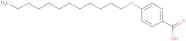
CAS:<p>4-Hydroxyphenylboronic acid is a potential anticancer agent that has been studied in vitro and in vivo. It has been shown to inhibit the activity of p-glycoprotein, which is a protein that pumps drugs out of cells, and it is also an inhibitor of lipid kinase. 4-Hydroxyphenylboronic acid binds to the ATP binding site of the enzyme and forms covalent bonds with Lys residues on the enzyme, inhibiting its function. The compound can be detected at low concentrations using fluorescence or chemiluminescence techniques. This compound may have therapeutic benefits for antimicrobial agents as well as for cancer treatment.</p>Formula:C6H7BO3Purity:Min. 95%Color and Shape:White PowderMolecular weight:137.93 g/mol4-(Dodecyloxy)benzoic Acid
CAS:<p>4-(Dodecyloxy)benzoic acid is a white crystalline solid that can be synthesized from triazine, fatty acid, and 4-hydroxyphenylacetic acid. It has been found to be an efficient photosensitizer for the generation of singlet oxygen in organic systems. The photochemical properties of this compound have been studied using FT-IR spectroscopy and light emission and it has been found to emit in the near infrared region. 4-(Dodecyloxy)benzoic acid also has a mesomorphic phase, which can be seen as a change in its optical properties when heated or cooled. This chemical is hydrophobic with low solubility in water.</p>Purity:Min. 95%Angiotensin (1-12) (mouse, rat) trifluoroacetate salt
CAS:<p>Please enquire for more information about Angiotensin (1-12) (mouse, rat) trifluoroacetate salt including the price, delivery time and more detailed product information at the technical inquiry form on this page</p>Formula:C77H109N19O17Purity:Min. 95%Molecular weight:1,572.81 g/molAmyloid beta-Protein (1-11) trifluoroacetate salt
CAS:<p>Please enquire for more information about Amyloid beta-Protein (1-11) trifluoroacetate salt including the price, delivery time and more detailed product information at the technical inquiry form on this page</p>Formula:C56H76N16O22Purity:Min. 95%Molecular weight:1,325.3 g/molNeuropeptide W-30 (human) trifluoroacetate salt
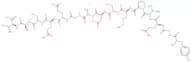
CAS:<p>Please enquire for more information about Neuropeptide W-30 (human) trifluoroacetate salt including the price, delivery time and more detailed product information at the technical inquiry form on this page</p>Formula:C165H249N49O37SPurity:Min. 95%Molecular weight:3,543.12 g/molCART (62-76) (human, rat) trifluoroacetate salt
CAS:<p>Please enquire for more information about CART (62-76) (human, rat) trifluoroacetate salt including the price, delivery time and more detailed product information at the technical inquiry form on this page</p>Formula:C64H99N17O23S3Purity:Min. 95%Molecular weight:1,570.77 g/molSodium fluoroacetate
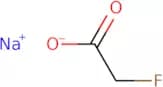
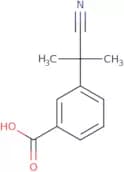
CAS:<p>Sodium fluoroacetate is a salt that is synthesized by the reaction of methyl ethyl and sodium trifluoroacetate. It has been used as an insecticide, but also has been used to treat metabolic disorders such as bowel disease and eye disorders. Sodium fluoroacetate also has been used in natural products for the treatment of autoimmune diseases. The toxicological studies of sodium fluoroacetate have shown that it can cause eye disorders and x-ray crystal structures have revealed its mechanism of action.</p>Formula:C2H2FNaO2Color and Shape:White PowderMolecular weight:100.02 g/mol3-(2-Cyanopropan-2-yl)benzoic acid
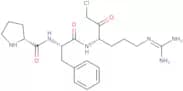
CAS:<p>Please enquire for more information about 3-(2-Cyanopropan-2-yl)benzoic acid including the price, delivery time and more detailed product information at the technical inquiry form on this page</p>Formula:C11H11NO2Purity:Min. 95%Molecular weight:189.21 g/molH-D-Pro-Phe-Arg-chloromethylketone trifluoroacetate salt
CAS:<p>H-D-Pro-Phe-Arg-chloromethylketone trifluoroacetate salt is a polyvalent antivenom that is used in the treatment of snakebites and insect stings. It has been shown to be effective in the treatment of life-threatening envenomations, including bites from cobras and other rattlesnakes. This drug is not active against nonactivated venom, such as those from bees or spiders. H-D-Pro-Phe-Arg-chloromethylketone trifluoroacetate salt binds to the cytolysin, which prevents its activity by inactivating it. The drug also has a vasoconstrictive effect, which limits blood flow to tissues and may reduce tissue damage caused by venom toxins.</p>Formula:C21H31ClN6O3Purity:Min. 95%Molecular weight:450.96 g/mol(Tyr1)-TRAP-7 trifluoroacetate salt
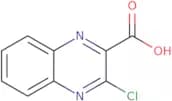
CAS:<p>Please enquire for more information about (Tyr1)-TRAP-7 trifluoroacetate salt including the price, delivery time and more detailed product information at the technical inquiry form on this page</p>Formula:C45H67N11O10Purity:Min. 95%Molecular weight:922.08 g/mol3-Chloroquinoxaline-2-carboxylic acid
CAS:<p>3-Chloroquinoxaline-2-carboxylic acid is a synthetic compound that has been shown to have antimicrobial properties against bacteria. It is a quinoxaline derivative, which is an important class of compounds for the development of new antibiotics. 3-Chloroquinoxaline-2-carboxylic acid has been shown to inhibit bacterial growth through different mechanisms including blocking DNA synthesis, binding to RNA polymerase, and inhibiting protein synthesis. It also has been shown to be effective against drug resistant bacteria such as methicillin resistant Staphylococcus aureus (MRSA).</p>Formula:C9H5ClN2O2Purity:Min. 95%Molecular weight:208.6 g/molDefensin HNP-3 (human) trifluoroacetate salt
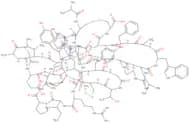
CAS:<p>HNP-3</p>Formula:C151H222N44O40S6Purity:Min. 95%Molecular weight:3,486.05 g/molpTH (2-34) (human) acetate salt
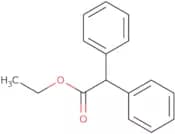
CAS:<p>Please enquire for more information about pTH (2-34) (human) acetate salt including the price, delivery time and more detailed product information at the technical inquiry form on this page</p>Formula:C178H286N54O49S2Purity:Min. 95%Molecular weight:4,030.64 g/molEthyl diphenylacetate
CAS:<p>Ethyl diphenylacetate is a trifluoromethyl group that has the potential for use as a fungicide. The hydrochloride salt of this compound exhibits high activity against various fungi, such as Rhizoctonia solani, Sclerotium rolfsii, and Botrytis cinerea. Ethyl diphenylacetate has also been shown to be an effective herbicide in plants, as it inhibits the enzyme acetolactate synthase and prevents the formation of branched-chain amino acids. It can also inhibit germination of seeds.</p>Formula:C16H16O2Purity:Min. 95%Molecular weight:240.3 g/molH-D-Leu-Thr-Arg-pNA acetate salt
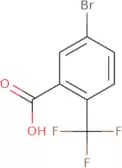
CAS:<p>Please enquire for more information about H-D-Leu-Thr-Arg-pNA acetate salt including the price, delivery time and more detailed product information at the technical inquiry form on this page</p>Formula:C22H36N8O6Purity:Min. 95%Molecular weight:508.57 g/mol5-bromo-2-(trifluoromethyl)benzoic Acid
CAS:<p>Please enquire for more information about 5-bromo-2-(trifluoromethyl)benzoic Acid including the price, delivery time and more detailed product information at the technical inquiry form on this page</p>Formula:C8H4BrF3O2Purity:Min. 95%Molecular weight:269.02 g/mol