Carboxylic Acids
Carboxylic acids are organic molecules characterized by having a carboxyl-type functional group (-COOH). These acids are fundamental in various chemical reactions, including esterification, amidation, and decarboxylation. Carboxylic acids are widely used in the production of pharmaceuticals, polymers, and agrochemicals. In this section, you can find a large number of carboxylic acids ready to be used. At CymitQuimica, we provide a broad range of high-quality carboxylic acids to support your research and industrial applications.
Found 12454 products of "Carboxylic Acids"
Sort by
Purity (%)
0
100
|
0
|
50
|
90
|
95
|
100
Amyloid beta/A4 Protein Precursor770 (586-595) (human, mouse, rat) trifluoroacetate salt
CAS:<p>Please enquire for more information about Amyloid beta/A4 Protein Precursor770 (586-595) (human, mouse, rat) trifluoroacetate salt including the price, delivery time and more detailed product information at the technical inquiry form on this page</p>Formula:C47H73N11O16SPurity:Min. 95%Molecular weight:1,080.21 g/mol4-(3-(Trifluoromethyl)-3H-diazirin-3-yl)benzoic acid
CAS:<p>4-(3-(Trifluoromethyl)-3H-diazirin-3-yl)benzoic acid is a diazirine that is used to form copper complexes. These complexes are then used as diagnostic agents for the detection of nucleic acids in biological samples, such as wheat germ and human tissue. 4-(3-(Trifluoromethyl)-3H-diazirin-3-yl)benzoic acid may also be used in the production of polymer films. It has been shown to have a dihedral angle (C), which is an important factor in the properties of surfactants. The properties of 4-(3-(Trifluoromethyl)-3H-diazirin-3-yl)benzoic acid depend on its functional groups, fatty acids, and dimethylformamide content.</p>Formula:C9H5F3N2O2Purity:Min. 95%Color and Shape:White/Off-White SolidMolecular weight:230.14 g/molN-Acetoacetylcresidine sulfonic acid sodiumsalt
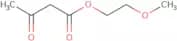
CAS:<p>Please enquire for more information about N-Acetoacetylcresidine sulfonic acid sodiumsalt including the price, delivery time and more detailed product information at the technical inquiry form on this page</p>Formula:C12H14NNaO6SPurity:Min. 95%Molecular weight:323.3 g/mol2-Methoxyethyl acetoacetate
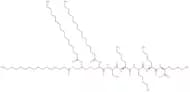
CAS:<p>2-Methoxyethyl acetoacetate is used as a raw material for coatings. It has been shown to be an effective calcium antagonist in the treatment of leukemia and other cancers. 2-Methoxyethyl acetoacetate has also been shown to inhibit the growth of HL-60 cells when it is incubated with these cells in the presence of hydrochloric acid, malonic acid, and quinoline derivatives. The reaction produces chlorine gas, which is toxic to cells.</p>Formula:C7H12O4Purity:Min. 95%Color and Shape:Clear LiquidMolecular weight:160.17 g/molPalmitoyl-Cys((RS)-2,3-di(palmitoyloxy)-propyl)-Ser-Lys-Lys-Lys-Lys-OH trifluoroacetate salt
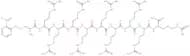
CAS:<p>Agonist of toll-like receptors TLR1/2</p>Formula:C81H156N10O13SPurity:Min. 95%Molecular weight:1,510.23 g/mol([ring-D5]Phe8)-Angiotensin II acetate salt
CAS:<p>Please enquire for more information about ([ring-D5]Phe8)-Angiotensin II acetate salt including the price, delivery time and more detailed product information at the technical inquiry form on this page</p>Formula:C50H66D5N13O12Purity:Min. 95%Molecular weight:1,051.21 g/mol7-Amino-3-vinyl-3-cephem-4-carboxylic acid
CAS:7-Amino-3-vinyl-3-cephem-4-carboxylic acid (AVC) is a synthetic, inorganic acid that is used clinically. It is produced by the hydrolysis of chlorocarboxylic acids and has been shown to be effective as an antihypertensive agent. AVC has also been used as a catalyst for acylation reactions with chlorides and trifluoroacetic acid. This process yields a reaction yield that can be up to 95% with the use of catalysts such as aluminum chloride or zinc chloride. AVC has been shown to be an environmentally safe alternative to hydrogen chloride, which has been linked to environmental pollution.Formula:C9H10N2O3SPurity:Min. 95 Area-%Color and Shape:PowderMolecular weight:226.25 g/molTGF alpha (1-50) (rat) trifluoroacetate salt
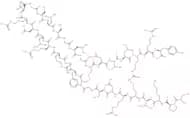
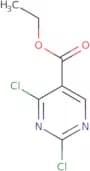
CAS:<p>Please enquire for more information about TGF alpha (1-50) (rat) trifluoroacetate salt including the price, delivery time and more detailed product information at the technical inquiry form on this page</p>Formula:C244H361N71O71S6Purity:Min. 95%Molecular weight:5,617.31 g/molEthyl 2,4-dichloropyrimidine-5-carboxylate
CAS:<p>Please enquire for more information about Ethyl 2,4-dichloropyrimidine-5-carboxylate including the price, delivery time and more detailed product information at the technical inquiry form on this page</p>Formula:C7H6Cl2N2O2Purity:Min. 95%Molecular weight:221.04 g/molD,L-Benzylsuccinic acid
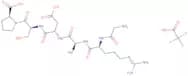
CAS:<p>D,L-Benzylsuccinic acid is an oral hypoglycemic agent that belongs to the group of antidiabetic agents. It is a crystalline cellulose-based drug with a hypoglycemic effect. D,L-Benzylsuccinic acid has been shown to be effective in the treatment of autoimmune diseases, such as diabetes mellitus and rheumatoid arthritis. The mechanism of action of this drug is not yet fully understood.</p>Formula:C11H12O4Purity:Min. 95%Molecular weight:208.21 g/molH-Gly-Arg-Ala-Asp-Ser-Pro-OH trifluoroacetate salt
CAS:<p>H-Gly-Arg-Ala-Asp-Ser-Pro-OH trifluoroacetate salt is a peptide that binds to the α5β1 integrin receptor. It has been shown to inhibit the growth of carcinoma cell lines and induce apoptosis in tumor cells by binding to receptors on the surface of cancer cells. H-Gly-Arg-Ala-Asp-Ser-Pro-OH trifluoroacetate salt has also been shown to be effective against damaged tissue, such as adhesions, and promote wound healing by stimulating collagen production. This agent also has genotoxic effects and can cause DNA damage. H-Gly-Arg-Ala-Asp-Ser-Pro -OH trifluoroacetate salt may also have an antiapoptotic effect through its ability to bind with basic proteins, proapoptotic proteins, and epidermal growth factor receptor.</p>Formula:C23H39N9O10Purity:Min. 95%Molecular weight:601.61 g/molBenzopyrazine-6-boronic acidHCl
CAS:<p>Please enquire for more information about Benzopyrazine-6-boronic acidHCl including the price, delivery time and more detailed product information at the technical inquiry form on this page</p>Formula:C8H8BClN2O2Purity:Min. 95%Molecular weight:210.43 g/moltert-Butyl6-[(1e)-2-[4-(4-fluorophenyl)-6-(1-methylethyl)-2-[methyl(methylsulfonyl)amino]-5-pyrimidinyl]ethenyl]-2,2-dimethyl-1,3-di oxane-4-acetate
CAS:<p>Please enquire for more information about tert-Butyl6-[(1e)-2-[4-(4-fluorophenyl)-6-(1-methylethyl)-2-[methyl(methylsulfonyl)amino]-5-pyrimidinyl]ethenyl]-2,2-dimethyl-1,3-di oxane-4-acetate including the price, delivery time and more detailed product information at the technical inquiry form on this page</p>Formula:C29H40FN3O6SPurity:Min. 95%Molecular weight:577.71 g/molH-Cys(NPys)-Arg-Arg-Arg-Arg-Arg-Arg-Arg-Arg-Arg-NH2 trifluoroacetate salt
CAS:<p>Please enquire for more information about H-Cys(NPys)-Arg-Arg-Arg-Arg-Arg-Arg-Arg-Arg-Arg-NH2 trifluoroacetate salt including the price, delivery time and more detailed product information at the technical inquiry form on this page</p>Formula:C62H118N40O12S2Purity:Min. 95%Molecular weight:1,679.99 g/molBNP-32 (porcine) trifluoroacetate salt
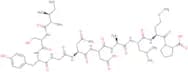
CAS:<p>BNP-32 is a porcine-specific antibody that is used to detect the presence of BNP in human serum. It is biotinylated and can be coated on a plate. The antibody binds to BNP, which has been labeled with peroxidase, and produces a colored reaction product. This product can be visualized by adding 3,3'-diaminobenzidine (DAB) as a substrate. The sealer then prevents the unbound antibody from binding to the plate and interfering with the assay.</p>Formula:C149H250N52O44S3Purity:Min. 95%Molecular weight:3,570.1 g/molAmyloid beta-Protein (1-11) trifluoroacetate salt
CAS:<p>Please enquire for more information about Amyloid beta-Protein (1-11) trifluoroacetate salt including the price, delivery time and more detailed product information at the technical inquiry form on this page</p>Formula:C56H76N16O22Purity:Min. 95%Molecular weight:1,325.3 g/mol5-Aminopyridine-3-carboxylic acid
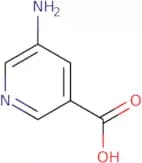
CAS:<p>5-Aminopyridine-3-carboxylic acid (5APC) is a structural analog of nicotinic acid that has been shown to have anti-inflammatory effects. 5APC inhibits the production of inflammatory cytokines, such as IL-10 and IL-17, by inhibiting the activation of NFκB and MAPK pathways. This drug also has significant inhibitory activities against dextran sulfate sodium (DSS)-induced acute colitis in experimental models. 5APC is thought to act by interrupting the assembly of p38 mitogen activated protein kinase (MAPK) and nuclear factor kappa B (NFκB) signaling complexes.</p>Formula:C6H6N2O2Purity:Min. 95%Molecular weight:138.12 g/mol2-Cyclohexyl-2-hydroxy-phenylacetic acid
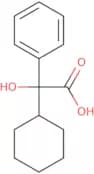
CAS:<p>2-Cyclohexyl-2-hydroxy-phenylacetic acid is a potent inhibitor of the cholinergic muscarinic receptors. It has been used as an anticholinergic drug and in pharmaceutical preparations for the treatment of inflammatory diseases. 2-Cyclohexyl-2-hydroxy-phenylacetic acid is used to treat urinary incontinence, although it can also cause constipation. Side effects of 2-cyclohexyl-2-hydroxy phenylacetic acid include headache, drowsiness, dry mouth, and blurred vision. 2 CPHPA is an inorganic acid that reacts with phosphorus pentachloride to form an organic phosphate ester called pentachlorophosphoric acid (PCPA). This reaction can be reversed by adding hydrochloric acid. The PCPA salt of 2 CPHPA is called diethylamine salt.</p>Formula:C14H18O3Purity:Min. 95%Molecular weight:234.29 g/molpTH (1-84) (dog) trifluoroacetate salt
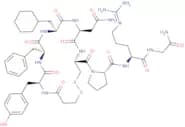
<p>Please enquire for more information about pTH (1-84) (dog) trifluoroacetate salt including the price, delivery time and more detailed product information at the technical inquiry form on this page</p>Formula:C414H672N122O128S2Purity:Min. 95%Molecular weight:9,470.64 g/mol(Deamino-Cys1,b-cyclohexyl-Ala4,Arg8)-Vasopressin trifluoroacetate salt
CAS:<p>Desmopressin is a synthetic analogue of vasopressin, which is used to treat disorders associated with insufficient secretion of vasopressin. It has been shown that desmopressin binds to the vasopressin V2 receptor subtype and stimulates the release of arginine-vasopressin in corticotropin-releasing hormone (CRH)-treated rat pituitary cells. This stimulation was mediated by a residue on the Cys1,b-cyclohexyl residue. The binding of desmopressin to this site was demonstrated in vitro using binding experiments on rat brain synaptosomes. Desmopressin has also been shown to stimulate ovulation in rats and humans, and it has been shown to be effective for treating nocturnal enuresis in children.</p>Formula:C50H71N13O11S2Purity:Min. 95%Molecular weight:1,094.31 g/mol


![([ring-D5]Phe8)-Angiotensin II acetate salt](/_next/image/?url=https%3A%2Fstatic.cymitquimica.com%2Fproducts%2F3D%2Fthumb-webp%2FFR110025.webp&w=3840&q=75)



![tert-Butyl6-[(1e)-2-[4-(4-fluorophenyl)-6-(1-methylethyl)-2-[methyl(methylsulfonyl)amino]-5-pyrimi…](/_next/image/?url=https%3A%2Fstatic.cymitquimica.com%2Fproducts%2F3D%2Fthumb-webp%2FFB148489.webp&w=3840&q=75)