Carboxylic Acids
Carboxylic acids are organic molecules characterized by having a carboxyl-type functional group (-COOH). These acids are fundamental in various chemical reactions, including esterification, amidation, and decarboxylation. Carboxylic acids are widely used in the production of pharmaceuticals, polymers, and agrochemicals. In this section, you can find a large number of carboxylic acids ready to be used. At CymitQuimica, we provide a broad range of high-quality carboxylic acids to support your research and industrial applications.
Found 12453 products of "Carboxylic Acids"
Sort by
Purity (%)
0
100
|
0
|
50
|
90
|
95
|
100
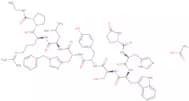
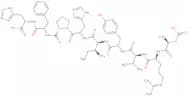
(Des-Gly10,D-His(Bzl)6,D-Leu7,Pro-NHEt 9)-LHRH acetate salt
CAS:Controlled Product<p>Please enquire for more information about (Des-Gly10,D-His(Bzl)6,D-Leu7,Pro-NHEt 9)-LHRH acetate salt including the price, delivery time and more detailed product information at the technical inquiry form on this page</p>Formula:C66H86N18O12Purity:Min. 95%Molecular weight:1,323.5 g/molD,L-Benzylsuccinic acid
CAS:<p>D,L-Benzylsuccinic acid is an oral hypoglycemic agent that belongs to the group of antidiabetic agents. It is a crystalline cellulose-based drug with a hypoglycemic effect. D,L-Benzylsuccinic acid has been shown to be effective in the treatment of autoimmune diseases, such as diabetes mellitus and rheumatoid arthritis. The mechanism of action of this drug is not yet fully understood.</p>Formula:C11H12O4Purity:Min. 95%Molecular weight:208.21 g/molMAGE-1 Antigen (161-169) (human) acetate salt
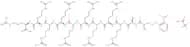
CAS:<p>MAGE-1 is a costimulatory molecule that is expressed on the surface of antigen presenting cells. It has been shown to be a very potent target for monoclonal antibodies. MAGE-1 can be used as an antigen in diagnostic tests, such as ELISA and Western blotting. It can also be used to generate monoclonal antibodies for use as therapeutic agents in cancer therapy and for the treatment of viral infections such as influenza virus. The MAGE-1 antigen has been shown to have high affinity binding with the paratope of Papilloma virus, which may help explain its clinical relevance in these diseases.</p>Formula:C41H57N11O17Purity:Min. 95%Molecular weight:975.96 g/molH-Cys(NPys)-D-Arg-D-Arg-D-Arg-D-Arg-D-Arg-D-Arg-D-Arg-D-Arg-D-Arg-NH2 trifluoroacetate salt
CAS:<p>Please enquire for more information about H-Cys(NPys)-D-Arg-D-Arg-D-Arg-D-Arg-D-Arg-D-Arg-D-Arg-D-Arg-D-Arg-NH2 trifluoroacetate salt including the price, delivery time and more detailed product information at the technical inquiry form on this page</p>Formula:C62H118N40O12S2Purity:Min. 95%Molecular weight:1,679.99 g/molNeuropeptide VF (56-92) (human) trifluoroacetate salt
<p>Please enquire for more information about Neuropeptide VF (56-92) (human) trifluoroacetate salt including the price, delivery time and more detailed product information at the technical inquiry form on this page</p>Formula:C195H304N52O51S2Purity:Min. 95%Molecular weight:4,256.95 g/molMAGE-3 Antigen (168-176) (human) acetate salt
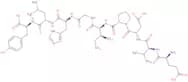
CAS:<p>Please enquire for more information about MAGE-3 Antigen (168-176) (human) acetate salt including the price, delivery time and more detailed product information at the technical inquiry form on this page</p>Formula:C48H71N11O15Purity:Min. 95%Molecular weight:1,042.14 g/moltert-Butyl carbamate
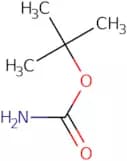
CAS:<p>tert-Butyl carbamate is a chemical compound that has been shown to inhibit the ubiquitin ligases, which are enzymes responsible for protein degradation. It binds to the active site of these enzymes and inhibits their activity. Tert-butyl carbamate has also been shown to have anti-inflammatory properties due to its ability to inhibit prostaglandin synthesis. This drug has been shown to be safe in humans at high doses and has a low toxicity profile.</p>Formula:C5H11NO2Purity:Min. 95%Color and Shape:White PowderMolecular weight:117.15 g/molPAR-4 (1-6) amide (human) trifluoroacetate salt
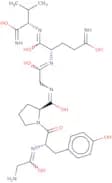
CAS:<p>Please enquire for more information about PAR-4 (1-6) amide (human) trifluoroacetate salt including the price, delivery time and more detailed product information at the technical inquiry form on this page</p>Formula:C28H42N8O8Purity:Min. 95%Molecular weight:618.68 g/molPrepro VIP (81-122) (human) trifluoroacetate salt
CAS:<p>Please enquire for more information about Prepro VIP (81-122) (human) trifluoroacetate salt including the price, delivery time and more detailed product information at the technical inquiry form on this page</p>Formula:C202H325N53O64SPurity:Min. 95%Molecular weight:4,552.13 g/molFmoc-L-aspartic acid β-allyl ester
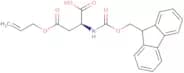
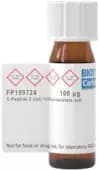
CAS:<p>Fmoc-L-aspartic acid beta-allyl ester is a specific interaction between an amide and an enzyme target. It has been shown to have anti-inflammatory properties by inhibiting the activity of COX-2, which inhibits the production of prostaglandins. Fmoc-L-aspartic acid beta-allyl ester is a cyclic peptide with a lactam ring system that has been synthesized in a stepwise manner on a solid phase. This molecule interacts with cell line A549 and blocks the proliferation of cancer cells. Fmoc-L-aspartic acid beta-allyl ester also contains a disulfide bond that stabilizes its structure.</p>Formula:C22H21NO6Purity:Min. 95%Molecular weight:395.41 g/molC-Peptide 2 (rat) trifluoroacetate salt
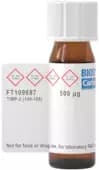
CAS:<p>Please enquire for more information about C-Peptide 2 (rat) trifluoroacetate salt including the price, delivery time and more detailed product information at the technical inquiry form on this page</p>Formula:C135H222N38O49Purity:Min. 95%Molecular weight:3,161.43 g/molTIMP-2 (145-168) (human, bovine) trifluoroacetate salt
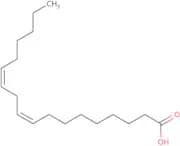
<p>Please enquire for more information about TIMP-2 (145-168) (human, bovine) trifluoroacetate salt including the price, delivery time and more detailed product information at the technical inquiry form on this page</p>Formula:C131H189N33O35S3Purity:Min. 95%Molecular weight:2,882.3 g/molLinoleic acid - powder
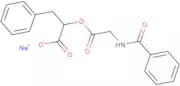
CAS:<p>Linoleic acid is a polyunsaturated fatty acid that is an important component of cell membranes. It has been shown to inhibit oxidative injury and improve mitochondrial functions. Linoleic acid also has a role in energy metabolism, as it is the precursor for biosynthesis of eicosanoids and arachidonic acid. The physiological effects of linoleic acid have been studied using a model system consisting of isolated rat adipose tissue and mitochondria. This model system has been used to investigate the inhibitory properties of linoleic acid on caproic acid-induced lipid peroxidation. Linoleic acid has also been shown to have anion radical scavenging activity when in the presence of iron. This compound can be analyzed using gas chromatography-mass spectrometry (GC-MS) based on its chemical composition, which consists mainly of linear 18-carbon chains with two double bonds at positions 9 and 12.</p>Formula:C18H32O2Purity:Min. 95%Color and Shape:PowderMolecular weight:280.45 g/molO-Hippuryl-DL-b-phenyllactic acid sodium salt
CAS:<p>Please enquire for more information about O-Hippuryl-DL-b-phenyllactic acid sodium salt including the price, delivery time and more detailed product information at the technical inquiry form on this page</p>Formula:C18H16NNaO5Purity:Min. 95%Molecular weight:349.31 g/molAngiotensin I (1-9) trifluoroacetate salt
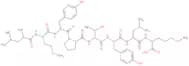
CAS:<p>Please enquire for more information about Angiotensin I (1-9) trifluoroacetate salt including the price, delivery time and more detailed product information at the technical inquiry form on this page</p>Formula:C56H78N16O13Purity:Min. 95%Molecular weight:1,183.32 g/molVIP Receptor-Binding Inhibitor L-8-K trifluoroacetate salt
CAS:<p>Please enquire for more information about VIP Receptor-Binding Inhibitor L-8-K trifluoroacetate salt including the price, delivery time and more detailed product information at the technical inquiry form on this page</p>Formula:C50H77N9O12SPurity:Min. 95%Molecular weight:1,028.27 g/molpTH (1-84) (rat) trifluoroacetate salt
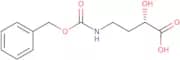
<p>Please enquire for more information about pTH (1-84) (rat) trifluoroacetate salt including the price, delivery time and more detailed product information at the technical inquiry form on this page</p>Formula:C406H670N122O126S3Purity:Min. 95%Molecular weight:9,372.61 g/mol(S)-N-Carbobenzyloxy-4-amino-2-hydroxybutyric acid
CAS:<p>(S)-N-Carbobenzyloxy-4-amino-2-hydroxybutyric acid is a benzene ring with a carboxylic acid group. It has the ability to modify polylactic acid, polycarbonate, and other polymers. The chain can be modified to include amino groups or antibacterial groups. (S)-N-Carbobenzyloxy-4-amino-2-hydroxybutyric acid also has antibacterial properties and is compatible with polylactic acid, which makes it ideal for use in polymer modifications.</p>Formula:C12H15NO5Purity:Min. 95%Molecular weight:253.25 g/mol(Asn670,Leu671)-Amyloid b/A4 Protein Precursor770 (667-675) trifluoroacetate salt
CAS:<p>Please enquire for more information about (Asn670,Leu671)-Amyloid b/A4 Protein Precursor770 (667-675) trifluoroacetate salt including the price, delivery time and more detailed product information at the technical inquiry form on this page</p>Formula:C44H66N10O18Purity:Min. 95%Molecular weight:1,023.05 g/molω-Agatoxin IVa trifluoroacetate
CAS:<p>Omega-agatoxin IVa trifluoroacetate is a neurotoxin that inhibits voltage-dependent calcium channels. It blocks the opening of these channels, leading to an increase in cytosolic calcium. This toxin has been shown to be effective in treating autoimmune diseases and also has shown antimicrobial effects against bacteria. Omega-agatoxin IVa trifluoroacetate has a pathogenic mechanism that involves the inhibition of neuronal death by glutamate through its ability to block the release of glutamate from the presynaptic neuron. This toxin also binds to cerebellar Purkinje neurons and prevents them from firing, which leads to paralysis. Omega-agatoxin IVa trifluoroacetate is a glycosylated peptide with a disulfide bond that can be isolated using preparative high performance liquid chromatography (HPLC).</p>Formula:C217H360N68O60S10Purity:Min. 95%Molecular weight:5,202.26 g/mol