Carboxylic Acids
Carboxylic acids are organic molecules characterized by having a carboxyl-type functional group (-COOH). These acids are fundamental in various chemical reactions, including esterification, amidation, and decarboxylation. Carboxylic acids are widely used in the production of pharmaceuticals, polymers, and agrochemicals. In this section, you can find a large number of carboxylic acids ready to be used. At CymitQuimica, we provide a broad range of high-quality carboxylic acids to support your research and industrial applications.
Found 12453 products of "Carboxylic Acids"
Sort by
Purity (%)
0
100
|
0
|
50
|
90
|
95
|
100
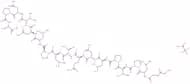
(Met(O)35)-Amyloid b-Protein (1-40) trifluoroacetate salt
CAS:<p>Please enquire for more information about (Met(O)35)-Amyloid b-Protein (1-40) trifluoroacetate salt including the price, delivery time and more detailed product information at the technical inquiry form on this page</p>Formula:C194H295N53O59SPurity:Min. 95%Molecular weight:4,345.81 g/molN-Boc-L-pyroglutamic acid ethyl ester
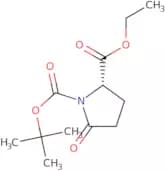
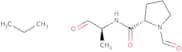
CAS:<p>N-Boc-L-pyroglutamic acid ethyl ester is a chiral building block that can be used for the preparation of amides. It is a good activating agent and is used to synthesize amide bonds from carboxylic acids. N-Boc-L-pyroglutamic acid ethyl ester can be used to synthesize sulfoxides and piperidines, which are ligands. It is also an amido, stereoselective and DPP-4 inhibitor. This chemical simplifies catalysis reactions by replacing the use of toxic solvents.</p>Formula:C12H19NO5Purity:Min. 95%Molecular weight:257.28 g/molAmyloid β-Protein (1-24) trifluoroacetate salt
CAS:<p>Please enquire for more information about Amyloid beta-Protein (1-24) trifluoroacetate salt including the price, delivery time and more detailed product information at the technical inquiry form on this page</p>Formula:C130H183N35O40Purity:Min. 95%Molecular weight:2,876.06 g/mol(Gly1,Ser3·22,Gln4·34,Thr6,Arg19,Tyr21,Ala23·31, Aib 32)-Pancreatic Polypeptide (human) trifluoroacetate salt
CAS:<p>Please enquire for more information about (Gly1,Ser3·22,Gln4·34,Thr6,Arg19,Tyr21,Ala23·31, Aib 32)-Pancreatic Polypeptide (human) trifluoroacetate salt including the price, delivery time and more detailed product information at the technical inquiry form on this page</p>Formula:C183H281N57O54S2Purity:Min. 95%Molecular weight:4,207.67 g/molBz-Ile-Glu-Gly-Arg-pNA acetate salt
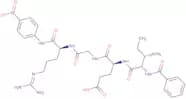
CAS:<p>Bz-Ile-Glu-Gly-Arg-pNA acetate salt is an anticoagulant that binds to heparin. It has been shown to inhibit protease activity in soybean trypsin by binding to the active site of the enzyme. Bz-Ile-Glu-Gly-Arg-pNA acetate salt has also been shown to have a molecular weight of heparin and a protein synthesis inhibition rate of fibrinogen, which is responsible for coagulation.</p>Formula:C32H43N9O9Purity:Min. 95%Molecular weight:697.74 g/molBNP-32 (rat) trifluoroacetate
CAS:<p>Trifluoroacetate salt</p>Formula:C146H239N47O44S3Purity:Min. 95%Molecular weight:3,452.95 g/molIDR-1 trifluoroacetate salt
CAS:<p>IDR-1 is a peptide that is derived from the sequence of the human typhimurium protein. IDR-1 has been shown to have anti-inflammatory properties and modulates immune responses in mice. In particular, IDR-1 inhibits neutrophil chemotaxis by inhibiting formyl peptide receptor signaling. This peptide also inhibits bacterial chemokines, which are important for the recruitment of neutrophils. IDR-1 also has been shown to be effective against methicillin-resistant Staphylococcus aureus (MRSA) and pertussis.</p>Formula:C65H118N18O15Purity:Min. 95%Molecular weight:1,391.74 g/mol2-Amino-a-(methoxyimino)-4-thiazoleacetic acid
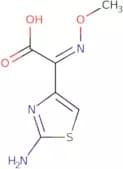
CAS:<p>2-Amino-a-(methoxyimino)-4-thiazoleacetic acid is a reaction product of cefotaxime and n-dimethyl formamide. It has been shown to be an effective agent for the treatment of wastewater with a high organic content. 2-Amino-a-(methoxyimino)-4-thiazoleacetic acid also reacts with chloride ions to form cleavage products that are soluble in water, making it an ideal choice for wastewater treatment. This compound is not toxic and can be used as a drug to treat patients with infections caused by bacteria resistant to other antibiotics. 2-Amino-a-(methoxyimino)-4-thiazoleacetic acid binds to mismatched base pairs in DNA, inhibiting DNA synthesis and causing cell death by apoptosis.</p>Formula:C6H7N3O3SPurity:Min. 95%Molecular weight:201.2 g/molH-Asn-AMC trifluoroacetate salt
CAS:<p>Please enquire for more information about H-Asn-AMC trifluoroacetate salt including the price, delivery time and more detailed product information at the technical inquiry form on this page</p>Formula:C14H15N3O4Purity:Min. 95%Molecular weight:289.29 g/mol2,2-Dimethyl-4-oxo-3,8,11,14-tetraoxa-5-azahexadecan-16-oic acid
CAS:<p>2,2-Dimethyl-4-oxo-3,8,11,14-tetraoxa-5-azahexadecan-16-oic acid (DMTA) is a versatile building block that can be used in the synthesis of a wide variety of compounds. DMTA is an important intermediate for the synthesis of complex molecules and is a useful scaffold for drug development. It has been shown to be an effective reagent for the synthesis of 2,4,6-trinitrobenzenesulfonic acid as well as other useful compounds. DMTA also has high quality and purity with CAS No. 462100-06-7 and is a speciality chemical.</p>Formula:C13H25NO7Purity:Min. 95%Color and Shape:Colorless PowderMolecular weight:307.34 g/molSPLUNC1 (22-39) trifluoroacetate salt
CAS:<p>Please enquire for more information about SPLUNC1 (22-39) trifluoroacetate salt including the price, delivery time and more detailed product information at the technical inquiry form on this page</p>Formula:C82H135N21O25Purity:Min. 95%Molecular weight:1,815.08 g/mol16-Hydroxyhexadecanoic acid
CAS:<p>16-Hydroxyhexadecanoic acid is a fatty acid that contains 16 carbons and 2 hydroxyl groups. It can be found in rat liver microsomes, where it binds to the cytochrome P450 enzyme, inhibiting its activity. The structural analysis of this compound has been shown to have intermolecular hydrogen bonding between the nitrogen atoms and the oxygen atoms in the hydroxyl group. 16-Hydroxyhexadecanoic acid also exhibits phase transition temperatures, which are increased by adding water molecules. This compound also has an inhibitory effect on recombinant cytochrome P450 enzymes from p. pastoris and can be used as a substrate for methyl myristate metabolism. In addition, 16-hydroxyhexadecanoic acid binds to dinucleotide phosphate (NADPH) and fluoresces when excited at 340 nm using a fluorescence detector.</p>Formula:C16H32O3Purity:Min. 95%Color and Shape:White PowderMolecular weight:272.42 g/molPancreatic Polypeptide (1-17)-(Ala31, Aib 32)-Neuropeptide Y (18-36) (human) trifluoroacetate salt
CAS:<p>Please enquire for more information about Pancreatic Polypeptide (1-17)-(Ala31, Aib 32)-Neuropeptide Y (18-36) (human) trifluoroacetate salt including the price, delivery time and more detailed product information at the technical inquiry form on this page</p>Formula:C189H287N55O53SPurity:Min. 95%Molecular weight:4,209.71 g/mol5-Aminopyridine-3-carboxylic acid
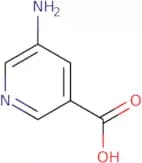
CAS:<p>5-Aminopyridine-3-carboxylic acid (5APC) is a structural analog of nicotinic acid that has been shown to have anti-inflammatory effects. 5APC inhibits the production of inflammatory cytokines, such as IL-10 and IL-17, by inhibiting the activation of NFκB and MAPK pathways. This drug also has significant inhibitory activities against dextran sulfate sodium (DSS)-induced acute colitis in experimental models. 5APC is thought to act by interrupting the assembly of p38 mitogen activated protein kinase (MAPK) and nuclear factor kappa B (NFκB) signaling complexes.</p>Formula:C6H6N2O2Purity:Min. 95%Molecular weight:138.12 g/molTAT 2-4 trifluoroacetate salt
CAS:<p>Trifluoroacetate salt</p>Formula:C132H240N66O29Purity:Min. 95%Molecular weight:3,215.75 g/molGLP-1 (1-36) amide (human, bovine, guinea pig, mouse, rat) trifluoroacetate salt
CAS:<p>Please enquire for more information about GLP-1 (1-36) amide (human, bovine, guinea pig, mouse, rat) trifluoroacetate salt including the price, delivery time and more detailed product information at the technical inquiry form on this page</p>Formula:C184H273N51O57Purity:Min. 95%Molecular weight:4,111.45 g/molMethyl benzofuran-6-carboxylate
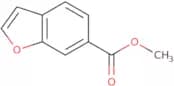
CAS:<p>Methyl benzofuran-6-carboxylate is a synthetic retinoid that is a conformationally constrained analogue of retinoic acid, which is one of the most powerful biological molecules. Methyl benzofuran-6-carboxylate has been shown to be an effective anti-inflammatory agent and may be useful in the treatment of inflammatory skin diseases. It also inhibits the production of proinflammatory cytokines and chemokines, such as TNF-α, IL-1β, IL-8, CCL2, CXCL1, and CXCL2. Methyl benzofuran-6-carboxylate binds to specific receptors on cell surfaces to inhibit the production of inflammatory mediators. The drug also has been shown to have antiangiogenic activity. This property may be due to its ability to inhibit the production of vascular endothelial growth factor (VEGF) and other angiogenic factors.</p>Formula:C10H8O3Purity:Min. 95%Molecular weight:176.17 g/molCathelicidin LL 37
CAS:<p>LL-37 is a potent antimicrobial peptide that has been shown to be effective against cancer cells and is currently being investigated as a potential antineoplastic agent. LL-37 binds to the leukocyte receptor, which leads to chemotaxis, increased expression of p53 and apoptosis. LL-37 also induces apoptotic cell death in epithelial tissues, both in vitro and in vivo. This peptide has been shown to induce death in cancer cells, as well as cell death in other types of cells.</p>Formula:C205H340N60O53Purity:Min. 95%Molecular weight:4,493.27 g/molAmyloid β-Protein (16-20) trifluoroacetate salt
CAS:<p>Amyloid beta-protein (Aβ) is a peptide that is associated with the development of Alzheimer's disease. The Aβ(16-20) trifluoroacetate salt (ATF) has been used in the diagnosis of Alzheimer's disease by fluorescence microscopy. This compound binds to hyaluronic acid and has been used as a coating for optical fibers and other materials, such as coatings for mitochondria for use in live cell imaging. The ATF also interacts with mitochondria and alters mitochondrial membrane potential, which may be due to its ability to displace cardiolipin from the inner mitochondrial membrane. ATF binds to unsymmetrical dimethylarginine (DMA), an endogenous nitric oxide synthase inhibitor, and selectively inhibits only cancer cells that have elevated levels of DMA. ATFP also induces spontaneous apoptosis in human carcinoma cells when bound to these cells via a photoconjugation reaction with bioconjugate chemistry.</p>Formula:C35H52N6O6Purity:Min. 95%Molecular weight:652.82 g/molAc-Ala-Ala-Val-Ala-Leu-Leu-Pro-Ala-Val-Leu-Leu-Ala-Leu-Leu-Ala-Pro-Ile-Glu-Thr-Asp-aldehyde trifluoroacetate salt
CAS:<p>Please enquire for more information about Ac-Ala-Ala-Val-Ala-Leu-Leu-Pro-Ala-Val-Leu-Leu-Ala-Leu-Leu-Ala-Pro-Ile-Glu-Thr-Asp-aldehyde trifluoroacetate salt including the price, delivery time and more detailed product information at the technical inquiry form on this page</p>Formula:C95H162N20O26Purity:Min. 95%Molecular weight:2,000.42 g/mol