Carboxylic Acids
Carboxylic acids are organic molecules characterized by having a carboxyl-type functional group (-COOH). These acids are fundamental in various chemical reactions, including esterification, amidation, and decarboxylation. Carboxylic acids are widely used in the production of pharmaceuticals, polymers, and agrochemicals. In this section, you can find a large number of carboxylic acids ready to be used. At CymitQuimica, we provide a broad range of high-quality carboxylic acids to support your research and industrial applications.
Found 12453 products of "Carboxylic Acids"
Sort by
Purity (%)
0
100
|
0
|
50
|
90
|
95
|
100
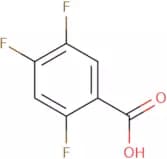
2,4,5-Trifluorobenzoic acid
CAS:<p>2,4,5-Trifluorobenzoic acid is a synthetic compound that is used as an organic solvent. It has been detected in the environment at low concentrations, but can be detected by gas chromatography. 2,4,5-Trifluorobenzoic acid is also used in the synthesis of fluoroquinolones and other pharmaceuticals. The detection time for 2,4,5-trifluorobenzoic acid is about one day. This compound can be decarboxylated to produce benzoic acid and hydrogen fluoride (HF). 2,4,5-Trifluorobenzoic acid decomposes to form chlorine gas when heated with hydrochloric acid or sodium hypochlorite. This substance reacts with copper oxide and forms copper trifluoride. Analytical methods for this compound include ionisation mass spectrometry and expressed gas analysis.</p>Formula:C7H3F3O2Purity:Min. 95%Color and Shape:PowderMolecular weight:176.09 g/molAmylin (8-37) (human) trifluoroacetate salt
CAS:<p>Please enquire for more information about Amylin (8-37) (human) trifluoroacetate salt including the price, delivery time and more detailed product information at the technical inquiry form on this page</p>Formula:C138H216N42O45Purity:Min. 95%Molecular weight:3,183.45 g/mol5-Phenylisoxazole-3-carboxylic acid
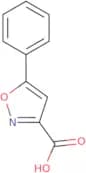
CAS:<p>5-Phenylisoxazole-3-carboxylic acid is a phenoxy compound that has been shown to inhibit the growth of tuberculosis bacteria. This drug binds to the postsynaptic potential in the cell membrane and inhibits the effector proteins from interacting with the receptor, preventing neurotransmitter release. The molecular modeling study showed that 5-Phenylisoxazole-3-carboxylic acid interacts with ethyl esters and rifampin, which inhibits xanthine oxidase. Xanthine oxidase inhibitors are used as a treatment for gout and hyperuricemia. 5-Phenylisoxazole-3-carboxylic acid also has fluorimetric properties, which can be used to measure its concentration in biological samples such as urine or plasma. Nitro groups in this drug make it susceptible to oxidation by nitric oxide, which can be monitored using nmr spectra.</p>Formula:C10H7NO3Purity:Min. 95%Molecular weight:189.17 g/molH-p-Chloro-Phe-D-Cys-b-(3-pyridyl)-Ala-D-Trp-N-Me-Lys-Thr-Cys-2-Nal-NH2 trifluoroacetate salt (Disulfide bond)
CAS:<p>Please enquire for more information about H-p-Chloro-Phe-D-Cys-b-(3-pyridyl)-Ala-D-Trp-N-Me-Lys-Thr-Cys-2-Nal-NH2 trifluoroacetate salt (Disulfide bond) including the price, delivery time and more detailed product information at the technical inquiry form on this page</p>Formula:C58H69ClN12O9S2Purity:Min. 95%Molecular weight:1,177.83 g/molDnp-(Leu421)-Collagen Type VIII a1 Chain (419-426) amide (human, mouse) trifluoroacetate salt
<p>Please enquire for more information about Dnp-(Leu421)-Collagen Type VIII a1 Chain (419-426) amide (human, mouse) trifluoroacetate salt including the price, delivery time and more detailed product information at the technical inquiry form on this page</p>Formula:C40H64N14O12SPurity:Min. 95%Molecular weight:965.09 g/mol2-Methylpyridine-4-boronic acid
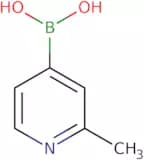
CAS:<p>2-Methylpyridine-4-boronic acid is a reactive molecule that has been used in post-column derivatization and vivo studies. It has been shown to be reactive with mass spectrometric analysis, cancer assays, proteomics, and tumorigenic sample preparation. It also has been shown to have a molecular target of the cytochrome P450 reductase (CPR), which is involved in the metabolism of drugs and other xenobiotics. 2-Methylpyridine-4-boronic acid binds to CPR and inhibits its enzymatic activity, thereby affecting the metabolism of xenobiotics.</p>Formula:C6H8BNO2Purity:Min. 95%Color and Shape:White PowderMolecular weight:136.94 g/molGastric Inhibitory Polypeptide (porcine) trifluoroacetate salt
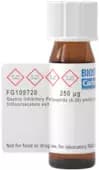
CAS:<p>Please enquire for more information about Gastric Inhibitory Polypeptide (porcine) trifluoroacetate salt including the price, delivery time and more detailed product information at the technical inquiry form on this page</p>Formula:C225H342N60O66SPurity:Min. 95%Molecular weight:4,975.55 g/molH-Cys-Ser-Arg-Ala-Arg-Lys-Gln-Ala-Ala-Ser-Ile-Lys-Val-Ala-Val-Ser-Ala-Asp-Arg-OH trifluoroacetate salt
CAS:<p>Please enquire for more information about H-Cys-Ser-Arg-Ala-Arg-Lys-Gln-Ala-Ala-Ser-Ile-Lys-Val-Ala-Val-Ser-Ala-Asp-Arg-OH trifluoroacetate salt including the price, delivery time and more detailed product information at the technical inquiry form on this page</p>Formula:C82H149N31O26SPurity:Min. 95%Molecular weight:2,017.32 g/molBis-ACV trifluoroacetate salt
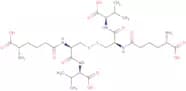
CAS:<p>Bis-ACV trifluoroacetate salt is a regulatory compound that belongs to the class of bis-acids. It is a cytosolic calcium ionophore that binds to the cytosolic calcium ion channel and regulates its activity. Bis-ACV trifluoroacetate salt also has nucleophilic attack on phosphate groups, which are essential for biosynthesis. The enzyme activity of this compound has been studied in various strains of bacteria such as E. coli and S. cerevisiae, and it was found to be involved in the synthesis of oligosaccharides and polysaccharides. This compound can be solubilized by the addition of sodium bicarbonate or urea, which facilitates its use in synthetic reactions. The synthase gene for this compound has been identified from various strains of bacteria such as E. coli and S. cerevisiae, but not from mammalian cells or plants.</p>Formula:C28H48N6O12S2Purity:Min. 95%Molecular weight:724.85 g/molGastric Inhibitory Polypeptide (6-30) amide (human) trifluoroacetate salt
CAS:<p>Please enquire for more information about Gastric Inhibitory Polypeptide (6-30) amide (human) trifluoroacetate salt including the price, delivery time and more detailed product information at the technical inquiry form on this page</p>Formula:C139H209N35O38SPurity:Min. 95%Molecular weight:3,010.43 g/molpTH-Related Protein (7-34) amide (human, mouse, rat) trifluoroacetate salt
CAS:<p>Please enquire for more information about pTH-Related Protein (7-34) amide (human, mouse, rat) trifluoroacetate salt including the price, delivery time and more detailed product information at the technical inquiry form on this page</p>Formula:C153H247N49O37Purity:Min. 95%Molecular weight:3,364.91 g/molTumor Targeted Pro-Apoptotic Peptide trifluoroacetate salt
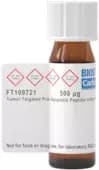
<p>Please enquire for more information about Tumor Targeted Pro-Apoptotic Peptide trifluoroacetate salt including the price, delivery time and more detailed product information at the technical inquiry form on this page</p>Formula:C94H174N32O22S2Purity:Min. 95%Molecular weight:2,168.72 g/molC-Type Natriuretic Peptide (1-53) (human) acetate salt
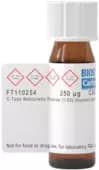
CAS:<p>Acetate salt</p>Formula:C251H417N81O71S3Purity:Min. 95%Molecular weight:5,801.7 g/mol3-Fluoro-2-nitrobenzoic acid
CAS:<p>3-Fluoro-2-nitrobenzoic acid is an anhydrous nitrating agent that reacts with 5-fluoro-2-nitrobenzoic acid to produce 3,5-difluoronitrobenzene. This reaction mixture is introduced into a reaction vessel and heated in the presence of sulfuric acid. 3-Fluoro-2-nitrobenzoic acid is used in the production of dyes and pharmaceuticals.</p>Formula:C7H4FNO4Purity:Min. 95%Color and Shape:PowderMolecular weight:185.11 g/molL-Lysine acetate
CAS:Controlled Product<p>L-Lysine acetate is a precursor of L-lysine and is used in the treatment of cancers. It has been shown to promote the growth of pluripotent cells, which can differentiate into any tissue type. L-Lysine acetate promotes cellular transformation by increasing the expression of growth factor-β1 in cells. This compound also enhances cellular physiology, energy metabolism, and protein degradation. L-Lysine acetate inhibits the ubiquitin ligases that are involved in protein degradation, leading to an increase in cell proliferation. The use of L-Lysine acetate has shown promising results for the treatment of infectious diseases such as HIV/AIDS and tuberculosis. L-Lysine acetate blocks the replication of human immunodeficiency virus (HIV) by inhibiting reverse transcriptase activity and blocking its DNA chain elongation process.</p>Formula:C8H18N2O4Purity:Min. 95%Color and Shape:PowderMolecular weight:206.24 g/mol5-Acenaphthenecarboxylic acid
CAS:<p>5-Acenaphthenecarboxylic acid is a xylene derivative that has been characterized as an organometallic compound. The cyclopentane ring is the central feature of this molecule and it can be used in the synthesis of other organic compounds. 5-Acenaphthenecarboxylic acid is toxic to humans and animals and has been shown to induce liver tumors in rats. It also has been shown to inhibit the growth of some bacteria, including Mycobacterium tuberculosis, which causes tuberculosis. 5-Acenaphthenecarboxylic acid inhibits protein synthesis by binding to ribosomes and interfering with the biosynthesis of proteins. This binding prevents formation of a complex with the enzyme cell wall synthesis that is required for cell wall biosynthesis, inhibiting protein synthesis and cell division.</p>Formula:C13H10O2Purity:Min. 95%Color and Shape:PowderMolecular weight:198.22 g/molH-Glu-Gly-Arg-pNA acetate salt
CAS:Controlled Product<p>Please enquire for more information about H-Glu-Gly-Arg-pNA acetate salt including the price, delivery time and more detailed product information at the technical inquiry form on this page</p>Formula:C19H28N8O7Purity:Min. 95%Molecular weight:480.48 g/molCys-Gly-His-Gly-Asn-Lys-Ser-Amyloid b-Protein (33-40) trifluoroacetate salt
CAS:<p>Please enquire for more information about Cys-Gly-His-Gly-Asn-Lys-Ser-Amyloid b-Protein (33-40) trifluoroacetate salt including the price, delivery time and more detailed product information at the technical inquiry form on this page</p>Formula:C58H99N19O18S2Purity:Min. 95%Molecular weight:1,414.66 g/molBenzopyrazine-6-boronic acidHCl
CAS:<p>Please enquire for more information about Benzopyrazine-6-boronic acidHCl including the price, delivery time and more detailed product information at the technical inquiry form on this page</p>Formula:C8H8BClN2O2Purity:Min. 95%Molecular weight:210.43 g/molBiotinyl-Amyloid b-Protein (1-40) trifluoroacetate salt
CAS:<p>Please enquire for more information about Biotinyl-Amyloid b-Protein (1-40) trifluoroacetate salt including the price, delivery time and more detailed product information at the technical inquiry form on this page</p>Formula:C204H309N55O60S2Purity:Min. 95%Molecular weight:4,556.1 g/mol