Carboxylic Acids
Carboxylic acids are organic molecules characterized by having a carboxyl-type functional group (-COOH). These acids are fundamental in various chemical reactions, including esterification, amidation, and decarboxylation. Carboxylic acids are widely used in the production of pharmaceuticals, polymers, and agrochemicals. In this section, you can find a large number of carboxylic acids ready to be used. At CymitQuimica, we provide a broad range of high-quality carboxylic acids to support your research and industrial applications.
Found 12453 products of "Carboxylic Acids"
Sort by
Purity (%)
0
100
|
0
|
50
|
90
|
95
|
100
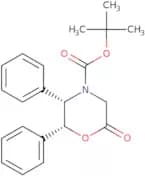
tert-Butyl (2R,3S)-(-)-6-oxo-2,3-diphenyl-4-morpholinecarboxylate
CAS:<p>tert-Butyl (2R,3S)-(-)-6-oxo-2,3-diphenyl-4-morpholinecarboxylate is a chiral compound that contains two stereogenic centers. It is a racemate of enantiomers. The enantiomeric purity can be determined by the preparative method. This compound is soluble in water and is stable in neutral or acidic conditions. It has been shown to act as an α-amino acid and to inhibit glycine uptake by neurons.</p>Formula:C21H23NO4Purity:Min. 95%Color and Shape:SolidMolecular weight:353.41 g/molLysergic acid hydrazide
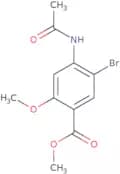
CAS:Controlled Product<p>Lysergic acid hydrazide is a synthetic drug with an active form of lysergic acid. It is used in the synthesis of ergocryptine and other drugs. The compound can be synthesized using methyl alcohol, trifluoromethyl group, hydroxy group, skeleton, and C1-4 alkyl as reactants. Lysergic acid hydrazide can also be synthesized from an inorganic acid such as nitrous or oxoalkyl. This compound has been used as a pharmaceutical preparation for the treatment of psychotic disorders. Lysergic acid hydrazide has shown to have reactive amide groups that may react with organic amines to form neurotoxic compounds.</p>Formula:C16H18N4OPurity:Min. 95%Molecular weight:282.34 g/mol4-Acetylamino-5-bromo-2-methoxy-benzoic acid methylester
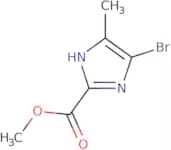
CAS:<p>Please enquire for more information about 4-Acetylamino-5-bromo-2-methoxy-benzoic acid methylester including the price, delivery time and more detailed product information at the technical inquiry form on this page</p>Formula:C11H12BrNO4Purity:Min. 95%Color and Shape:PowderMolecular weight:302.12 g/molMethyl 4- bromo- 5- methyl- 1H- imidazole- 2- carboxylate
CAS:<p>Please enquire for more information about Methyl 4- bromo- 5- methyl- 1H- imidazole- 2- carboxylate including the price, delivery time and more detailed product information at the technical inquiry form on this page</p>Purity:Min. 95%5,7-Docosadiynoic acid
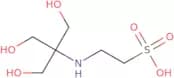
CAS:<p>5,7-Docosadiynoic acid is a fluorescent molecule that has been found to have low molecular weight, which makes it ideal for use in a variety of strategies. This compound can be used as a fluorescent probe for the detection of membrane interactions and also has many potential applications in polymerized optical devices. 5,7-Docosadiynoic acid is able to fluoresce when irradiated with light at wavelengths above 500 nm and has been shown to be excited by UV light. The chemical properties of 5,7-docosadiynoic acid make it an excellent candidate for use in sensors and optical devices.</p>Formula:C22H36O2Purity:Min. 95%Molecular weight:332.52 g/molTES
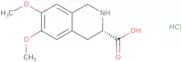
CAS:<p>TES, also known as N-Tris(hydroxymethyl)methyl-2-aminoethanesulfonic acid, is a buffering agent that is used in protein assays and forms complexes with DNA and copper ions. The optimal pH range of this zwitterionic buffer is 6.8-8.2 and its pKa is 7.4.</p>Formula:C6H15NO6SPurity:Min. 95%Color and Shape:PowderMolecular weight:229.25 g/mol(S)-(-)-6,7-Dimethoxy-1,2,3,4-tetrahydroisoquinoline-3-carboxylic acid hydrochloride
CAS:<p>(S)-(-)-6,7-Dimethoxy-1,2,3,4-tetrahydroisoquinoline-3-carboxylic acid hydrochloride is a synthetic chiral compound that is used to study the role of glyoxylate in biochemical reactions. This drug is an enolate and alkylating agent that can react with nucleophiles such as amines and thiols. It has been shown to be effective against perchlorates by hydrolyzing them into chlorine and oxygen gas. This drug has also been shown to inhibit the growth of Rhodobacter sphaeroides by inhibiting glyoxylate metabolism.</p>Formula:C12H15NO4·HClPurity:Min. 95%Color and Shape:White PowderMolecular weight:273.71 g/molAmylin (free acid) (human) trifluoroacetate salt
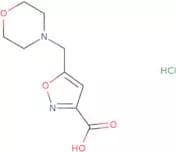
CAS:<p>Please enquire for more information about Amylin (free acid) (human) trifluoroacetate salt including the price, delivery time and more detailed product information at the technical inquiry form on this page</p>Formula:C165H260N50O56S2Purity:Min. 95%Molecular weight:3,904.27 g/mol5-(Morpholin-4-ylmethyl)isoxazole-3-carboxylic acid hydrochloride
CAS:<p>Please enquire for more information about 5-(Morpholin-4-ylmethyl)isoxazole-3-carboxylic acid hydrochloride including the price, delivery time and more detailed product information at the technical inquiry form on this page</p>Formula:C9H12N2O4•HClPurity:Min. 95%Molecular weight:248.66 g/mol4-[2-[[(1S)-1-(2-Aminophenyl)-3-methylbutyl]amino]-2-oxoethyl]-2-ethoxybenzoic acid
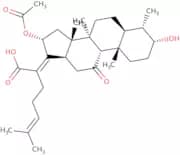
CAS:<p>Bosentan is a potent inhibitor of the uptake of organic anions. It is used in the treatment of pulmonary arterial hypertension and has been shown to be effective against pravastatin-resistant HIV protease inhibitors, such as saquinavir, quinidine, and rosuvastatin. Bosentan inhibits uptake by binding to the transporter protein at a site that does not overlap with the binding site for organic anion substrates. This leads to a change in kinetic parameters for substrates, such as pravastatin and saquinavir. The binding site on bosentan may also be elucidated through monolayer experiments with efflux transporters.</p>Formula:C22H28N2O4Purity:Min. 95%Molecular weight:384.47 g/mol11-Keto fusidic acid
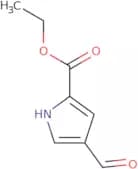
CAS:<p>Fusidic acid is a hydrophilic antibiotic that is structurally related to penicillin. It has a cavity that interacts with γ-cyclodextrin, which can be used for its monitoring and stoichiometry. Fusidic acid has hydroxyl groups that are located on the 7th and 8th positions of the fusidate ring. This antibiotic has been shown to have stability constants in a range of 10-10 M. Fusidic acid also has two electrophoretically distinct forms, depending on the pH of the solution. The form at pH 10 is called fusidane, while the form at pH 5 is called fusidate.</p>Formula:C31H46O6Purity:Min. 95%Molecular weight:514.69 g/molEthyl 4-formylpyrrole-2-carboxylate
CAS:<p>Ethyl 4-formylpyrrole-2-carboxylate is a chemical compound that is used as an intermediate in organic synthesis. The compound has been reported to have spectra at m/z (M+1) of 168, 156 and 140. It also has been reported to have yields of about 98% when synthesized from ethyl azidoacetate and ethyl bromoacetate. The mass spectra show the molecular ion peak at m/z of 168, 156 and 140 corresponding to the structure of ethyl 4-formylpyrrole-2-carboxylate. Furan, n-substituted furan, thiophene, acetamide and cyclization are other possible structures for this molecule.</p>Formula:C8H9NO3Purity:Min. 95%Molecular weight:167.16 g/mol3-[2-Amino-3-(2-tert-butoxycarbonyl-ethoxy)-2-(2-tert-butoxycarbonyl-ethoxymethyl)-propoxy]-propionic acid tert-butyl ester
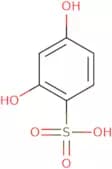
CAS:<p>Please enquire for more information about 3-[2-Amino-3-(2-tert-butoxycarbonyl-ethoxy)-2-(2-tert-butoxycarbonyl-ethoxymethyl)-propoxy]-propionic acid tert-butyl ester including the price, delivery time and more detailed product information at the technical inquiry form on this page</p>Formula:C25H47NO9Purity:Min. 95%Molecular weight:505.64 g/mol2,4-Dihydroxybenzenesulfonic acid
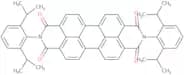
CAS:<p>2,4-Dihydroxybenzenesulfonic acid is a chemical compound that is used as a polymerization catalyst. It is most commonly used in the production of polyoxyethylene and copolymers. The catalytic activity of 2,4-dihydroxybenzenesulfonic acid is due to its acid group and hydroxy groups. This chemical can also be prepared by the reaction of resorcinol and hydrogen peroxide. The fluidity of this compound can be increased by adding an appropriate fluidizing agent such as peroxide or ammonium persulfate.</p>Formula:C6H6O5SPurity:Min. 95%Molecular weight:190.17 g/molN,N'-Bis(2,6-diisopropylphenyl)-3,4,9,10-perylenetetracarboxylic diimide
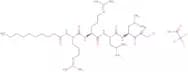
CAS:<p>N,N'-Bis(2,6-diisopropylphenyl)-3,4,9,10-perylenetetracarboxylic diimide is a molecule that has an optimum concentration of 0.5 M. It has a hydrogen bond donor and acceptor and is optically active. This molecule displays fluorescence properties and is inorganic with a chloride acceptor group. N,N'-Bis(2,6-diisopropylphenyl)-3,4,9,10-perylenetetracarboxylic diimide has been shown to have high photostability and to be enhanced by light emission from a diode. This molecule also has carbonyl groups that are electron donors for the fluorescence process.</p>Formula:C49H50N6O4Purity:Min. 95 Area-%Color and Shape:PowderMolecular weight:786.96 g/molDecanoyl-Arg-Arg-Leu-Leu-chloromethylketone trifluoroacetate salt
CAS:<p>Decanoyl-arginine-arginine-leucine-chloromethylketone trifluoroacetate salt is a prohormone that is biosynthesized from the amino acid decanoic acid. It has been shown to inhibit fatty acid synthesis and mineralization in tissue samples, as well as drug target enzymes such as human pathogens. Decanoyl-arginine-arginine-leucine-chloromethylketone trifluoroacetate salt has also been shown to have insulin resistance properties and may be used for the treatment of metabolic disorders.</p>Formula:C35H67ClN10O5Purity:Min. 95%Molecular weight:743.42 g/mol5-[4-(1,2,4,5-Tetrazin-3-yl)benzylamino]-5-oxopentanoic acid
CAS:<p>Please enquire for more information about 5-[4-(1,2,4,5-Tetrazin-3-yl)benzylamino]-5-oxopentanoic acid including the price, delivery time and more detailed product information at the technical inquiry form on this page</p>Formula:C14H15N5O3Purity:Min. 95%Color and Shape:White To Yellow To Dark Red SolidMolecular weight:301.3 g/molCromoglicic acid D5
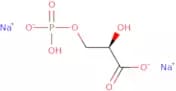
CAS:<p>Please enquire for more information about Cromoglicic acid D5 including the price, delivery time and more detailed product information at the technical inquiry form on this page</p>Formula:C6D5BrPurity:Min. 95%Color and Shape:PowderMolecular weight:473.40 g/molD-(-)-3-Phosphoglyceric acid disodium
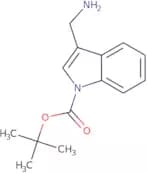
CAS:<p>D-(-)-3-Phosphoglyceric acid disodium is a homologue of D-glyceric acid and is used in the synthesis of phosphatidylcholine. It binds to the active site of phosphatases and prevents them from hydrolyzing phosphate groups, which are critical for the production of adenosine triphosphate (ATP). The chemical stability and the availability make this compound an excellent candidate for biochemical studies. D-(-)-3-Phosphoglyceric acid disodium has been shown to be essential in biological function, as it functions as a substrate for many metabolic pathways such as glycolysis, gluconeogenesis, pentose phosphate pathway, and fatty acid biosynthesis. The molecule is also involved in a number of biochemical reactions that are catalyzed by enzymes. Mutational studies have shown that organisms without this compound will not survive.</p>Formula:C3H5O7PNa2Purity:Min. 93%Color and Shape:White PowderMolecular weight:230.02 g/moltert-Butyl 3-(aminomethyl)-1H-indole-1-carboxylate hydrochloride
CAS:<p>Please enquire for more information about tert-Butyl 3-(aminomethyl)-1H-indole-1-carboxylate hydrochloride including the price, delivery time and more detailed product information at the technical inquiry form on this page</p>Formula:C14H18N2O2Purity:Min. 95%Molecular weight:246.31 g/mol



![4-[2-[[(1S)-1-(2-Aminophenyl)-3-methylbutyl]amino]-2-oxoethyl]-2-ethoxybenzoic acid](/_next/image/?url=https%3A%2Fstatic.cymitquimica.com%2Fproducts%2F3D%2Fthumb-webp%2FFD21379.webp&w=3840&q=75)
![3-[2-Amino-3-(2-tert-butoxycarbonyl-ethoxy)-2-(2-tert-butoxycarbonyl-ethoxymethyl)-propoxy]-propio…](/_next/image/?url=https%3A%2Fstatic.cymitquimica.com%2Fproducts%2F3D%2Fthumb-webp%2FFA163774.webp&w=3840&q=75)
![5-[4-(1,2,4,5-Tetrazin-3-yl)benzylamino]-5-oxopentanoic acid](/_next/image/?url=https%3A%2Fstatic.cymitquimica.com%2Fproducts%2F3D%2Fthumb-webp%2FFT170851.webp&w=3840&q=75)