Aldehydes
Aldehydes are organic compounds containing a carbonyl group (C=O) bonded to at least one hydrogen atom. These versatile compounds are fundamental in various chemical reactions, including oxidation, reduction, and nucleophilic addition. Aldehydes are essential building blocks in the synthesis of pharmaceuticals, fragrances, and polymers. At CymitQuimica, we provide a diverse selection of high-quality aldehydes to support your research and industrial applications.
Found 8551 products of "Aldehydes"
Sort by
Purity (%)
0
100
|
0
|
50
|
90
|
95
|
100
2-(4-Fluorophenyl)thiazole-4-carbaldehyde
CAS:<p>Please enquire for more information about 2-(4-Fluorophenyl)thiazole-4-carbaldehyde including the price, delivery time and more detailed product information at the technical inquiry form on this page</p>Formula:C10H6FNOSPurity:Min. 95%Color and Shape:PowderMolecular weight:207.23 g/mol2-Fluoro-6-nitrobenzaldehyde
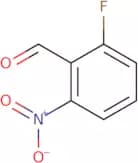
CAS:<p>2-Fluoro-6-nitrobenzaldehyde is an electron donor that reduces a range of electron acceptors including piperazine. This compound has been shown to have antitumor effects. 2-Fluoro-6-nitrobenzaldehyde has also been shown to inhibit the growth of cancer cells in vitro and in vivo. The mechanism of action is not yet known, but it is thought that 2-fluoro-6-nitrobenzaldehyde may be a potential chemotherapeutic agent for pancreatic cancer therapy.</p>Formula:C7H4FNO3Purity:Min. 95%Color and Shape:PowderMolecular weight:169.11 g/molSalicylaldehyde
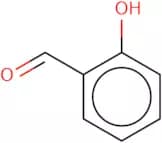
CAS:<p>Salicylaldehyde is a reactive compound that has been used as an antimicrobial and fluorescence probe. The protonation of salicylaldehyde is the rate-limiting step in its reaction with DNA, which leads to the formation of a chelate ligand. This binding results in intramolecular hydrogen bonding and linear calibration curves. Salicylaldehyde also reacts with coumarin derivatives to form a cyclic peptide, which can be used to measure glucose levels. The electrochemical impedance spectroscopy (EIS) of salicylic acid shows that it inhibits oxidative injury by preventing protein oxidation, lipid peroxidation, and hydroxyl radical production.</p>Formula:C7H6O2Purity:Min. 98.5%Color and Shape:Clear LiquidMolecular weight:122.12 g/mol2,4-Difluorobenzaldehyde
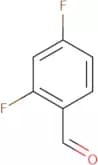
CAS:<p>2,4-Difluorobenzaldehyde is a glycosidic bond compound that is chiral. It has been shown to be able to inhibit human immunodeficiency virus (HIV) infection and inflammatory bowel disease. 2,4-Difluorobenzaldehyde is also an inhibitor of cholesterol ester transfer protein that can lead to autoimmune diseases. This compound has been shown to have receptor activity and is synthesized by the reaction of 2,4-dichlorobenzaldehyde with dimethyl acetal in refluxing ethanol. The synthesis method for this compound involves synchronous fluorescence and radiations. 2,4-Difluorobenzaldehyde has been found to have anti-inflammatory properties due to its ability to inhibit chronic pulmonary inflammation in rats.</p>Formula:C7H4F2OPurity:Min. 95%Color and Shape:Clear LiquidMolecular weight:142.1 g/molEnalapril diketopiperazine
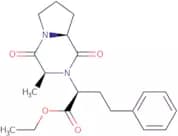
CAS:<p>Enalapril is a potassium-sparing diuretic that belongs to the group of angiotensin-converting enzyme (ACE) inhibitors. It is used in the treatment of high blood pressure and congestive heart failure. Enalapril is activated by hydrolysis to enalaprilat, which in turn inhibits the formation of angiotensin II and prevents its effects on blood vessels and kidneys. Enalapril also prevents the conversion of captopril to enalaprilat, thereby reducing its effectiveness as an ACE inhibitor.</p>Formula:C20H26N2O4Purity:Min. 95%Color and Shape:PowderMolecular weight:358.43 g/mol2-fluoro-4-(trifluoromethyl)benzaldehyde
CAS:<p>2-fluoro-4-(trifluoromethyl)benzaldehyde is a chemical compound that can be synthesized by the reaction of peroxide with fluorine. It is used as a solvent in coatings and in the production of organic chemicals. 2-fluoro-4-(trifluoromethyl)benzaldehyde has been shown to be toxic to cancer cells at high concentrations, but not normal cells. The waveguide effect can be observed at temperatures below -60°C and it has three functional groups that are hydrolyzed by HCl.</p>Formula:C8H4F4OPurity:Min. 95%Color and Shape:Clear LiquidMolecular weight:192.11 g/mol3,4-Dihydroxybenzaldehyde
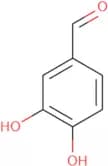
CAS:<p>3,4-Dihydroxybenzaldehyde is an active compound that is a protocatechuic aldehyde. It has been shown to inhibit protein oxidation and kidney injury. 3,4-Dihydroxybenzaldehyde also inhibits the production of bcl-2 protein and growth factor-β in rat urine. This compound has been used in Chinese medicinal preparations as well as in control methods for oxidizing agents.</p>Formula:C7H6O3Color and Shape:Brown White PowderMolecular weight:138.12 g/mol4'-(3,4-Difluorophenoxy)benzaldehyde
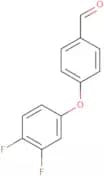
CAS:<p>4'-(3,4-Difluorophenoxy)benzaldehyde is an organic compound that yields a bright yellow color. It is used in the replication of DNA and RNA in the laboratory. This compound has been shown to interact with environmental conditions and significant effects have been observed for cultivars of wheat.</p>Formula:C13H8F2O2Purity:Min. 95%Molecular weight:234.2 g/mol2-Hydroxy-4-methoxybenzaldehyde
CAS:<p>2-Hydroxy-4-methoxybenzaldehyde is an organic chemical that is used as a versatile building block for complex compounds, research chemicals, and reagents. It is also used as a speciality chemical and as a useful intermediate in the synthesis of other chemicals. 2-Hydroxy-4-methoxybenzaldehyde has CAS No. 673-22-3 and can be used to make many different types of compounds. This compound is a useful scaffold for the synthesis of diverse compounds with biological activity such as pharmaceuticals, agrochemicals, dyes, perfumes, fragrances, flavors and fragrances.</p>Formula:C8H8O3Purity:Min. 99.0 Area-%Molecular weight:152.15 g/mol(Triphenylphosphoranylidene)acetaldehyde
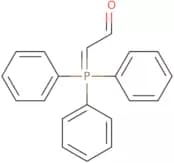
CAS:Controlled Product<p>Triphenylphosphoranylidene)acetaldehyde (TPPAA) is a diphenyl ether that binds to the allosteric site on the enzyme acetylcholinesterase, leading to inhibition of the catalytic mechanism. TPPAA has been shown to have insecticidal activity in the form of contact toxicity. It also has anticancer activity by inhibiting DNA synthesis and inducing apoptosis in cancer cells. TPPAA can be synthesized through a preparative method involving an asymmetric synthesis with a hydroxyl group as one of the reagents. TPPAA is an ionizable molecule that undergoes chemical ionization in a mass spectrometer and vibrational spectroscopy techniques.</p>Formula:C20H17OPPurity:min 96%Color and Shape:PowderMolecular weight:304.32 g/mol3-Methoxy-4-(4-nitrobenzyloxy)benzaldehyde
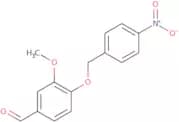
CAS:<p>3-Methoxy-4-(4-nitrobenzyloxy)benzaldehyde is a chemical intermediate that is used in the synthesis of complex compounds. It has been shown to be an effective reagent for the synthesis of various organic compounds, such as pharmaceuticals and pesticides. 3-Methoxy-4-(4-nitrobenzyloxy)benzaldehyde is also used as a research chemical or as a speciality chemical in laboratories. This compound can be used as a building block in the synthesis of other compounds with interesting properties, such as 3-methoxy-4-(2,5-dichlorobenzyloxy)benzaldehyde.</p>Formula:C15H13NO5Purity:Min. 95%Color and Shape:PowderMolecular weight:287.27 g/mol4-Benzyloxy-3-chlorobenzaldehyde
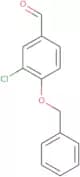
CAS:<p>4-Benzyloxy-3-chlorobenzaldehyde is a chemical intermediate that can be used for the production of a variety of compounds. It is an aromatic compound, with a benzene ring and two oxy groups at each end. The CAS number for 4-benzyloxy-3-chlorobenzaldehyde is 66422-84-2. It is also known as 1,4-dichloroacetophenone. This chemical is useful in the production of speciality chemicals and research chemicals, and it can act as a versatile building block in organic synthesis.</p>Formula:C14H11ClO2Purity:Min. 95%Molecular weight:246.69 g/mol2,4,6-Tribromo-3-hydroxybenzaldehyde
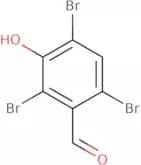
CAS:<p>2,4,6-Tribromo-3-hydroxybenzaldehyde (2,4,6-TBHB) is an aldehyde that is synthesized from the reaction of 2,4,6-trichlorobenzaldehyde and bromine. It has been shown to be cytotoxic in tumour cell lines in vitro. This compound binds to DNA by covalent binding and inhibits the synthesis of proteins. 2,4,6-TBHB also inhibits cellular uptake of halides such as chloride and bromide ions. This aldehyde has been shown to induce cell death in human lung cancer cells in a concentration dependent manner.</p>Formula:C7H3Br3O2Purity:Min. 95%Color and Shape:PowderMolecular weight:358.81 g/mol3,5-Dimethylbenzaldehyde oxime
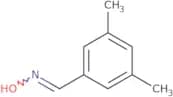
CAS:<p>3,5-Dimethylbenzaldehyde oxime is a white crystalline solid that is soluble in organic solvents. 3,5-Dimethylbenzaldehyde oxime reacts with water to produce hydrogen peroxide and formaldehyde. This reaction is an example of a dehydration reaction.</p>Formula:C9H11NOPurity:Min. 95%Color and Shape:PowderMolecular weight:149.19 g/mol2,5-Dichlorobenzaldehyde
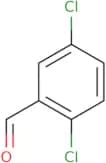
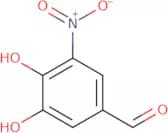
CAS:<p>2,5-Dichlorobenzaldehyde is a molecule that is used as a building block for the synthesis of etoposide. Etoposide is an anticancer drug that has been shown to be effective against many types of cancer cells. 2,5-Dichlorobenzaldehyde has been proposed as an optical probe for detecting methyltransferase activity in vivo and in vitro. It has also been shown to inhibit the proliferation of cancer cells by binding to survivin, which plays a role in regulating apoptosis. 2,5-Dichlorobenzaldehyde can be synthesized from commercially available chemicals with asymmetric synthesis methods. The molecule can also be used for functional studies on metal ions and dipole interactions.</p>Formula:C7H4Cl2OPurity:Min. 95%Molecular weight:175.01 g/mol3,4-Dihydroxy-5-nitrobenzaldehyde
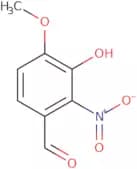
CAS:<p>3,4-Dihydroxy-5-nitrobenzaldehyde is a chemical substance that is used in an analytical method to measure the level of methoxy groups in chronic kidney disease. The methanol solvent and hydrochloric acid are used to dissolve the sample, which is then titrated with trifluoroacetic acid. The chloride ion reacts with the methylene group from the 3,4-dihydroxy-5-nitrobenzaldehyde molecule to form a new compound that can be detected by ultraviolet light at 254 nm. The active methylene group is quantified by measuring its absorbance at this wavelength and comparing it with a calibration curve using known concentrations of sodium salts. This test has been shown to be more sensitive than other chromatographic methods for detecting methoxy groups in chronic kidney disease.</p>Formula:C7H5NO5Purity:Min. 95%Color and Shape:Yellow PowderMolecular weight:183.12 g/mol3-Hydroxy-4-methoxy-2-nitrobenzaldehyde
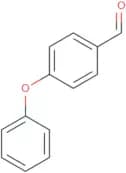
CAS:<p>3-Hydroxy-4-methoxy-2-nitrobenzaldehyde is a ternary complex that has been adsorbed onto the surface of an ion exchange resin. The adsorption process occurs through the formation of hydrogen bonds between the hydroxyl groups on the resin and the hydroxyl groups on the molecule. This complex is also soluble in chloroform, which may be due to its ability to form hydrogen bonds with itself and other molecules. The 3-hydroxy group on this molecule has been shown to react reductively with nitrophenol, forming a nitroso derivative. 3-Hydroxy-4-methoxy-2-nitrobenzaldehyde has been used as a template for the microbiological assay of azides and quinones.</p>Formula:C8H7NO5Purity:Min. 95%Molecular weight:197.14 g/mol4-Phenoxybenzaldehyde
CAS:<p>4-Phenoxybenzaldehyde is a phenolic compound that has potent inhibitory activity against bacteria. It was shown to have the highest antibacterial activity among alkanoic acids, with an MIC of less than 2 µg/mL. 4-Phenoxybenzaldehyde is produced by the condensation of phenol and acetaldehyde in the presence of a solid catalyst and potassium hydroxide. This reaction produces a mixture of products, including 4-phenoxybenzaldehyde, which can be purified by recrystallization or column chromatography. The biosynthetic pathway for 4-phenoxybenzaldehyde in plants has been elucidated and includes two steps: one involving pyrazole ring formation and another involving hydroxyl group formation.</p>Formula:C13H10O2Purity:Min. 95%Molecular weight:198.22 g/mol3-Bromo-4-methoxybenzaldehyde
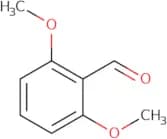
CAS:<p>3-Bromo-4-methoxybenzaldehyde is a heterocycle that contains a covalent inhibitor. It has been shown to have inhibitory activity against imines, hydroxyl groups, and human serum. 3-Bromo-4-methoxybenzaldehyde has been shown to be an efficient method for the synthesis of nitrogen containing heterocycles with potential use as pharmaceuticals. This compound has also been used in the asymmetric synthesis of diphenyl ethers, which are useful in pharmacological studies. The reaction mechanism of this compound is not well understood and needs more research before it can be applied to other areas.</p>Formula:C8H7BrO2Purity:Min. 95%Color and Shape:PowderMolecular weight:215.04 g/mol2,6-Dimethoxybenzaldehyde
CAS:<p>Synthetic building block</p>Formula:C9H10O3Purity:Min. 95%Color and Shape:White PowderMolecular weight:166.17 g/mol