Aldehydes
Aldehydes are organic compounds containing a carbonyl group (C=O) bonded to at least one hydrogen atom. These versatile compounds are fundamental in various chemical reactions, including oxidation, reduction, and nucleophilic addition. Aldehydes are essential building blocks in the synthesis of pharmaceuticals, fragrances, and polymers. At CymitQuimica, we provide a diverse selection of high-quality aldehydes to support your research and industrial applications.
Found 8540 products of "Aldehydes"
Sort by
Purity (%)
0
100
|
0
|
50
|
90
|
95
|
100
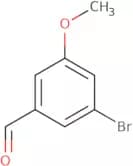
5-Bromo-3-methoxybenzaldehyde
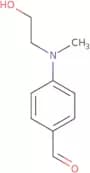
CAS:<p>5-Bromo-3-methoxybenzaldehyde is a type of growth factor that is synthesized by cancer cells. It has been shown to have anticancer activity when used in conjunction with other drugs. 5-Bromo-3-methoxybenzaldehyde has been shown to inhibit tumor growth in mice, which may be due to its ability to prevent the activation of PD-L1. This compound interacts with a tetranuclear ligand and can be activated by light.</p>Formula:C8H7BrO2Purity:Min. 95%Color and Shape:PowderMolecular weight:215.04 g/molN-Methyl-N-hydroxyethyl-4-aminobenzaldehyde
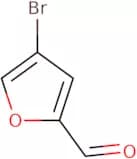
CAS:<p>N-Methyl-N-hydroxyethyl-4-aminobenzaldehyde (NHABA) is a bathochromic molecule that absorbs light at wavelengths of 400 to 500 nm. It is reactive and reacts with metal cations to form chromophores. NHABA has been shown to be a fluorescent probe for the detection of tyrosinase and autophagy in human serum. It also has inhibitory properties against tyrosinase, which may be due to its ability to inhibit the formation of melanin. NHABA is used as an analytical chemistry reagent for the determination of ammonia, nitrite, and nitrate ions in water samples. This molecule can also be used as a chemosensor for the detection of phenolic compounds in water samples.</p>Formula:C10H13NO2Purity:Min. 95%Molecular weight:179.22 g/mol4-Bromofuran-2-carbaldehyde
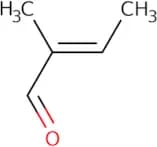
CAS:<p>4-Bromofuran-2-carbaldehyde is a synthetic compound that has been shown to have antioxidant properties. It contains an electron-donating carbonyl group and an electron-withdrawing bromine atom. 4-Bromofuran-2-carbaldehyde is useful in the treatment of endophytic fungi infections, as it inhibits the synthesis of ergosterol, which is an important component of the fungal cell membrane. The molecule's conformational properties are also important for its biological activity, as they enable it to act as a chiral ligand by binding to proteins in a way that will inhibit their function. In addition, 4-bromofuran-2-carbaldehyde has been shown to be effective against cancer cells in vitro, particularly against MMCF7 cells. This may be due to its ability to bind to DNA and prevent transcription or replication of DNA strands.</p>Formula:C5H3BrO2Purity:Min. 95%Molecular weight:174.98 g/mol2-Methylbut-2-enal
CAS:<p>2-Methylbut-2-enal is an aldehyde that belongs to the class of fatty acid. It has been shown that 2-methylbut-2-enal inhibits the growth of bacteria by binding to the anhydrous sodium and tiglic acid in the bacterial cell wall. This binding prevents the formation of an antibiotic-inhibitor complex with the enzyme cell wall synthesis that is required for cell wall biosynthesis, inhibiting protein synthesis and cell division. 2-Methylbut-2-enal also inhibits locomotor activity in mice, which may be due to its ability to inhibit acetylcholinesterase.</p>Formula:C5H8OPurity:Min. 95%Molecular weight:84.12 g/mol4-Ethylbenzaldehyde
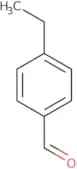
CAS:<p>4-Ethylbenzaldehyde is a chemical compound that belongs to the group of fatty acids. It has been shown to have biological properties, such as antiviral potency and genotoxic effects. This chemical compound also has a gas sensor property and is used as an exothermic reactant in organic synthesis reactions. 4-Ethylbenzaldehyde has been shown to inhibit the growth of bacteria, fungi, and viruses by blocking the synthesis of viral nucleic acid or inhibiting viral protein synthesis. The magnetic resonance spectroscopy (NMR) spectral data for 4-ethylbenzaldehyde show that this chemical compound contains two methyl groups, one on each side of the benzene ring, with a hydroxyl group on one end. The carbon atoms are bonded together in an alternating pattern of single and double bonds. The molecular formula for 4-ethylbenzaldehyde is C9H10O2.</p>Formula:C9H10OPurity:Min. 96.0%Color and Shape:PowderMolecular weight:134.18 g/mol2-Fluoro-4-hydroxybenzaldehyde
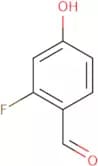
CAS:<p>2-Fluoro-4-hydroxybenzaldehyde is an oxidative compound that is a model compound of phenolic compounds. It can be used to synthesize 2,6-dichloroquinone and 2,5,7,8-tetrachlorodibenzo[p]fluoranthene. The metabolic pathway for this compound starts with the oxidative decarboxylation of L-tyrosine to form 4-hydroxyphenylpyruvic acid. This compound is then oxidized by cytochrome P450 enzymes to form 4-(2'-oxo)phenol. The 4-(2'-oxo)phenol can be methylated by S-adenosylmethionine in order to form 2-fluoro-4-hydroxybenzaldehyde.</p>Formula:C7H5FO2Purity:Min. 95%Molecular weight:140.11 g/mol3-Methyl-p-anizaldehyde
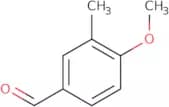
CAS:<p>3-Methyl-p-anizaldehyde is a vanillyl alcohol, which is a natural compound that can be found in vanilla beans. It has been used in the synthesis of vanillic acid and lactams. 3-Methyl-p-anizaldehyde has been shown to react with alkyl halides to form alkylated products. These reactions are catalyzed by an enzyme called alcohol dehydrogenase. This enzyme binds to the hydroxyl group on the 3 position of the vanillin molecule, which is then oxidized to form a functional group called an acetate ester. The reaction occurs at low temperatures and can result in optical activity if it produces a chiral product. 3-Methyl-p-anizaldehyde also reacts with ecteinascidins, which are marine natural products that have potent cytotoxic properties against cancer cells.</p>Formula:C9H10O2Purity:Min. 95%Molecular weight:150.17 g/mol2-Phenoxyacetaldehyde
CAS:<p>2-Phenoxyacetaldehyde is a reactive molecule that has been shown to inhibit the growth of hematopoietic cells. It also inhibits the production of active enzymes, such as amylase, by interfering with the nucleophilic attack and oxidation of 2-phenoxyacetaldehyde. The synthesis methods for 2-phenoxyacetaldehyde include homogeneous catalysts and chemical reactions. This molecule has been used in detergent compositions, but it is not suitable for use in food contact materials because of its toxicity.</p>Formula:C8H8O2Purity:Min. 95%Molecular weight:136.15 g/mol1-Allyl-1H-benzimidazole-2-carbaldehyde
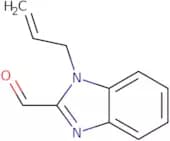
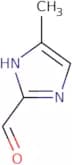
CAS:<p>1-Allyl-1H-benzimidazole-2-carbaldehyde is a dipolar compound that can be synthesized from the reaction of 1,3-diphenylazomethine and allyl bromide. It is an orange solid that has been shown to form cycloadducts with alkenes. The selectivity of this reaction depends on the substituents on both reactants, with electron withdrawing groups increasing the rate of substitution. Dipolar cycloaddition theory predicts that 1-allyl-1H-benzimidazole-2-carbaldehyde undergoes intramolecular cycloaddition to form a six membered ring in which one carbon atom is shared between two adjacent atoms.</p>Formula:C11H10N2OPurity:Min. 95%Color and Shape:SolidMolecular weight:186.21 g/mol4(5)-Methyl-1H-imidazole-2-carbaldehyde
CAS:<p>Please enquire for more information about 4(5)-Methyl-1H-imidazole-2-carbaldehyde including the price, delivery time and more detailed product information at the technical inquiry form on this page</p>Formula:C5H6N2OPurity:95%NmrMolecular weight:110.11 g/molParaformaldehyde
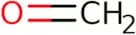
CAS:<p>Paraformaldehyde is a carcinogenic substance that belongs to the family of heterocyclic compounds. It reacts with water vapor in the air to form formaldehyde, which is responsible for its fluorescence properties. Paraformaldehyde has been used as a probe for DNA and RNA and can be used as an indicator for nonsteroidal anti-inflammatory drugs. The reaction mechanism of paraformaldehyde is not well understood and it has been shown that it reacts with p-hydroxybenzoic acid, polymerase chain, and water vapor. This compound can be found in soybean extract or fetal bovine serum. Paraformaldehyde is usually detected using a plate test or analytical methods such as high performance liquid chromatography (HPLC).</p>Formula:(CH2O)nPurity:90%MinColor and Shape:White Clear Liquid4-Cinnolinecarboxaldehyde
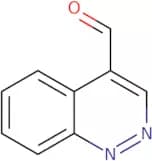
CAS:<p>4-Cinnolinecarboxaldehyde is an organic compound that belongs to the group of cinnoline. It is a colorless liquid that can be used as a precursor in the production of aluminum metal. 4-Cinnolinecarboxaldehyde reacts with lithium aluminum hydride to form a compound that can be used as a reducing agent in organic chemistry. 4-Cinnolinecarboxaldehyde is also used as a precursor for preparing other compounds, such as lithium aluminum hydride and lithium aluminum trihydride.</p>Formula:C9H6N2OPurity:Min. 95%Molecular weight:158.16 g/mol2-(1H-Pyrazol-1-yl)benzaldehyde
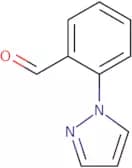
CAS:<p>2-(1H-Pyrazol-1-yl)benzaldehyde is a synthetic chemical compound that is used in the preparation of coupling reactions. It has been shown to be an efficient reagent for the synthesis of 2-bromobenzaldehyde and pyrazole. The molecule has a hydrazone attack, which can be coupled with 2-bromobenzaldehyde, with or without the use of an additional base such as sodium methoxide. This reaction can be carried out at room temperature and does not require any harsh conditions. 2-(1H-Pyrazol-1-yl)benzaldehyde also belongs to the family of aldehydes, which are molecules containing a carbon group that is connected to two hydrogen groups (i.e., RCH=O). Hydrogenation of this type of molecule gives rise to alcohols (RCHOH).</p>Formula:C10H8N2OPurity:Min. 95%Molecular weight:172.18 g/mol2-Hydroxy-1-naphthaldehyde
CAS:<p>2-Hydroxy-1-naphthaldehyde is a redox potential chemical that has been shown to have anticancer activity in vitro and in vivo. It inhibits the growth of cells by binding to iron, which is important for many biological processes including DNA synthesis. 2-Hydroxy-1-naphthaldehyde has also been shown to have metal carbonyl reactivity and fluorescence properties that may be useful as a fluorescent probe. 2-Hydroxy-1-naphthaldehyde binds to iron ions through hydrogen bonding interactions, forming an octahedral complex with six ligands. The compound also has coordination geometry that can be described as either trigonal bipyramidal or square planar, depending on the solvent used. This data was obtained by x-ray diffraction studies of crystalline solids. The compound's Langmuir adsorption isotherm was found to be linear at low concentrations and shifted to nonlinear behavior at higher concentrations. The</p>Formula:C11H8O2Purity:Min. 95%Color and Shape:SolidMolecular weight:172.18 g/mol2-Furaldehyde diethylacetal
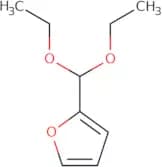
CAS:<p>2-Furaldehyde diethylacetal is a synthetic compound that has been used in the synthesis of calcium carbonate. It is also a potent inhibitor of p. aeruginosa and other bacteria, as well as organic acids and halogen compounds. It reacts with hydroxy groups to form aldehydes, which are then oxidized to form carboxylic acid derivatives. The reaction mechanism for this compound is not well understood, but it is thought that the activation energy for the reaction may be low due to the presence of a furfural functional group.</p>Formula:C9H14O3Purity:Min. 95%Molecular weight:170.21 g/mol1-Benzyl-5-ethoxy-1H-indole-3-carbaldehyde
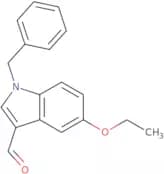
CAS:Controlled Product<p>Please enquire for more information about 1-Benzyl-5-ethoxy-1H-indole-3-carbaldehyde including the price, delivery time and more detailed product information at the technical inquiry form on this page</p>Formula:C18H17NO2Purity:Min. 95%Molecular weight:279.33 g/mol4-tert-Butylbenzaldehyde
CAS:<p>4-tert-Butylbenzaldehyde is an organic compound with the molecular formula CH3COCH2C6H5. It is a viscous liquid that is insoluble in water and has a boiling point of 146 °C. 4-tert-Butylbenzaldehyde reacts with cationic surfactants to form polymeric micelles, which are spherical structures composed of many small spherical subunits. These polymeric micelles are used as model systems for studying the properties of surfactant aggregates in solution. The reaction mechanism for this polymerization process involves the oxidation of 4-tert-butylbenzaldehyde by hydrogen peroxide and the subsequent condensation of 4-tert-butylbenzoic acid with malonic acid or other cinnamic acid derivatives to form the corresponding esters. The oxidized product, 4-tert-butylbenzoic acid, can be regenerated by boiling a mixture containing it</p>Formula:C11H14OPurity:Min. 96.5%Color and Shape:Colorless Clear LiquidMolecular weight:162.23 g/mol4-Bromobenzaldehyde
CAS:<p>Please enquire for more information about 4-Bromobenzaldehyde including the price, delivery time and more detailed product information at the technical inquiry form on this page</p>Formula:C7H5BrOMolecular weight:185.03 g/mol4-Bromo-2-hydroxybenzaldehyde
CAS:<p>4-Bromo-2-hydroxybenzaldehyde is a versatile building block that can be used as a reaction component to synthesize other compounds. 4-Bromo-2-hydroxybenzaldehyde is a useful intermediate in the manufacture of pharmaceuticals, pesticides, and herbicides. This chemical also has various applications in research and industry. It is an important reagent for the production of polymers and resins, as well as being an essential raw material for the synthesis of pharmaceuticals and agrochemicals.</p>Formula:C7H5BrO2Molecular weight:201.02 g/molRef: 3D-W-201939
25gTo inquire50gTo inquire100gTo inquire250gTo inquire500gTo inquire-Unit-ggTo inquire3,4-Dichlorobenzaldehyde
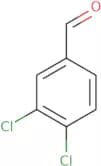
CAS:<p>3,4-Dichlorobenzaldehyde is a monosubstituted aromatic organic compound with inhibitory effects. 3,4-Dichlorobenzaldehyde has shown significant antifungal activity against Candida albicans and Saccharomyces cerevisiae. It also inhibits the growth of certain cancer cells in cell culture studies. 3,4-Dichlorobenzaldehyde has been found to have anti-inflammatory properties and would be effective in treating inflammatory diseases such as asthma or arthritis. This compound has been shown to have significant effects on energy metabolism and fatty acid synthesis by inhibiting enzymes that are involved in these processes. 3,4-Dichlorobenzaldehyde can also be used to treat metabolic disorders such as diabetes mellitus type II and hyperlipidemia by inhibiting enzymes that are involved in these processes.</p>Formula:C7H4Cl2OPurity:Min. 95%Color and Shape:White To Off-White SolidMolecular weight:175.01 g/mol