Aldehydes
Aldehydes are organic compounds containing a carbonyl group (C=O) bonded to at least one hydrogen atom. These versatile compounds are fundamental in various chemical reactions, including oxidation, reduction, and nucleophilic addition. Aldehydes are essential building blocks in the synthesis of pharmaceuticals, fragrances, and polymers. At CymitQuimica, we provide a diverse selection of high-quality aldehydes to support your research and industrial applications.
Found 8540 products of "Aldehydes"
Sort by
Purity (%)
0
100
|
0
|
50
|
90
|
95
|
100
1H-Indole-2-carbaldehyde
CAS:<p>1H-Indole-2-carbaldehyde is a solvent that has been used in the protein data and molecular modeling study. The 1H NMR spectrum of this compound showed an intense signal at δ 4.8 ppm, corresponding to the hydroxyl proton. This solvent also has fluorescence properties, as shown by its photophysical and structural analysis. The 1H-indole-2-carbaldehyde molecule has an active methylene group and an oxindole ring with amine substituents.</p>Formula:C9H7NOPurity:Min. 98%Color and Shape:PowderMolecular weight:145.16 g/mol1-H-Pyrazole-3-carboxaldehyde
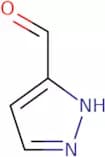
CAS:<p>1-H-Pyrazole-3-carboxaldehyde (1HP) is a β-unsaturated ketone that has been shown to inhibit the growth of chronic pulmonary fungal infections, such as histoplasmosis, coccidioidomycosis, and blastomycosis. It has also been shown to have anticancer activity in vitro and in vivo. 1HP inhibits cellular proliferation by inducing cell cycle arrest at the G(2)/M checkpoint. The molecular mechanism of this inhibition is due to an increase in the expression of p21 protein and p27 protein, which are tumor suppressor proteins that regulate progression through the cell cycle. 1HP also inhibits HIV infection by inhibiting reverse transcriptase and proteases, which are enzymes involved in viral replication. This compound binds to active methylene groups on the enzyme's surface, blocking its ability to perform chemical reactions with other molecules. 1HP also has strong inhibitory effects on cancer cells because it causes structural</p>Formula:C4H4N2OPurity:Min. 95%Molecular weight:96.09 g/molZ-Leu-Leu-4,5-dehydro-Leu-aldehyde
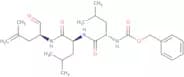
CAS:<p>Please enquire for more information about Z-Leu-Leu-4,5-dehydro-Leu-aldehyde including the price, delivery time and more detailed product information at the technical inquiry form on this page</p>Formula:C26H39N3O5Purity:Min. 95%Molecular weight:473.61 g/mol5-(2-Bromo-acetyl)-2-hydroxy-benzaldehyde
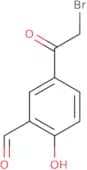
CAS:<p>5-Bromo-2-hydroxybenzaldehyde is an organic compound with a chemical formula of CHBrO. It is a white solid that is soluble in water, ethanol, and acetone. The synthesis of 5-bromo-2-hydroxybenzaldehyde has been achieved by the acylation reaction of benzaldehyde with bromide ion. The selectivity for this reaction can be increased by using sodium borohydride as a reducing agent instead of lithium aluminum hydride. This method can be applied to the synthesis of salmeterol, which is used as a medicine in the treatment of asthma.</p>Formula:C9H7BrO3Purity:Min. 95%Molecular weight:243.05 g/molPhenylpropargylaldehyde
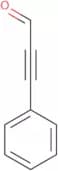
CAS:<p>Phenylpropargylaldehyde is an organic compound that is a chiral molecule, which means it has two enantiomers. It was first synthesized in 1964 by R.B. Woodward and T.W. Rittenberg at the University of Chicago, and is used as a chemical intermediate in the synthesis of other compounds with biological activity such as matrix metalloproteinase inhibitors, for example marimastat. Phenylpropargylaldehyde can be prepared from malonic acid and phenylboronic acid in a reaction mechanism that involves nucleophilic substitutions, carbonyl group activation and hydrogen bonding to lysine residues on proteins. The asymmetric synthesis of this compound has been shown to suppress genes associated with metabolic disorders such as diabetes mellitus type 2, fatty acid metabolism disorders and endocrine disorders (e.g., thyroid). It also has adjuvant therapeutic properties in cancer treatment, especially when combined with synthetic fatty acids such as oleic acid or ar</p>Purity:Min. 95%Boc-Tyr(Bzl)-aldehyde
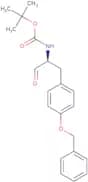
CAS:<p>Please enquire for more information about Boc-Tyr(Bzl)-aldehyde including the price, delivery time and more detailed product information at the technical inquiry form on this page</p>Formula:C21H25NO4Purity:Min. 95%Molecular weight:355.43 g/mol4-Bromobenzaldehyde
CAS:<p>4-Bromobenzaldehyde is a chemical compound that belongs to the group of aromatic compounds. It has been shown to have a potent stimulatory effect on locomotor activity in mice, which may be due to its ability to increase levels of epidermal growth factor and gamma-aminobutyric acid in the brain. 4-Bromobenzaldehyde can be synthesized from 2,4-dibromophenol and anhydrous copper chloride in the presence of sodium hydroxide. The reaction mechanism for this synthesis is believed to involve an intermediate enamine form of 4-bromobenzaldehyde, which can then undergo hydrolysis into 2,4-dibromophenol and benzaldehyde. This product is used as a reagent in organic synthesis because it can be used to form esters with trifluoroacetic acid or hydrochloric acid in high yield.</p>Formula:C7H5BrOPurity:Min. 90 Area-%Color and Shape:White PowderMolecular weight:185.02 g/mol5-Bromo-2-hydroxybenzaldehyde
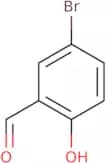
CAS:<p>5-Bromo-2-hydroxybenzaldehyde (5BHB) is an organic compound that has been shown to have a coordination geometry of group p2. This compound binds to DNA and RNA, inhibiting the transcription process. 5BHB also has the ability to form a copper complex with malonic acid. This redox potential is reduced by one electron when copper is added in order to form the copper complex, which allows for the reactivity of 5BHB to be increased. 5BHB binds to nucleic acids through hydrogen bonding interactions with nitrogen atoms and lone pairs on oxygen atoms. The reaction mechanism for 5BHB involves intramolecular hydrogen transfer from one molecule of 5BHB to another, forming an intermediate that then reacts with nucleic acid.</p>Formula:C7H5BrO2Purity:Min. 95%Color and Shape:White PowderMolecular weight:201.02 g/molAc-Tyr-Val-Ala-Asp-aldehyde (pseudo acid)
CAS:<p>Ac-Tyr-Val-Ala-Asp-aldehyde is a sesquiterpene lactone that has been shown to have anti-inflammatory properties. It inhibits the inflammatory response by inhibiting the production of pro-inflammatory cytokines and chemokines, such as IL1β, IL6, and TNFα. Ac-Tyr-Val-Ala-Asp-aldehyde also inhibits the activity of cyclooxygenase 2 (COX2) and lipoxygenase (LOX), which are enzymes that produce prostaglandins from arachidonic acid. Acetylsalicylic acid is an example of a drug with similar properties. Acetylsalicylic acid has been shown to inhibit the growth of cancer cells in tissue culture studies and in animal models. This compound may also be used to treat bowel disease, congestive heart failure, or other diseases that are characterized by increased apoptosis.</p>Formula:C23H32N4O8Purity:Min. 95%Molecular weight:492.52 g/moltrans-2-Hexenal
CAS:<p>Trans-2-hexenal is a natural compound that has been used as a model system for studying the toxicity of sodium salts. It is also used in studies on the enzyme activities of leaves and its carcinogenic potential. Trans-2-hexenal exhibits genotoxic effects, which may be due to its reaction with DNA or by inhibiting the polymerase chain reaction. In addition, this compound can inhibit enzymes involved in the synthesis of fatty acids, leading to cell death. Trans-2-hexenal is also found in plants and fruits such as apples, bananas, and pineapples.</p>Formula:C6H10OPurity:Min. 97 Area-%Color and Shape:Clear LiquidMolecular weight:98.14 g/molEnalapril maleate
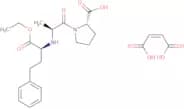
CAS:<p>Angiotensin-converting enzyme inhibitor; anti-hypertensive</p>Formula:C20H28N2O5•C4H4O4Purity:Min. 95%Color and Shape:PowderMolecular weight:492.52 g/molAc-Glu-Ser-Met-Asp-aldehyde (pseudo acid)
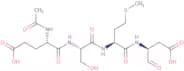
CAS:<p>Ac-Glu-Ser-Met-Asp-aldehyde is a molecule that is naturally produced by the human body. It has been shown to be an endogenous caspase activator, which may lead to apoptosis. Ac-Glu-Ser-Met-Asp-aldehyde can also bind to cholesterol and influence its synthesis, thus affecting the production of other proteins. This molecule has a protease activity and can cleave peptides at specific sites. The sequences of this molecule have been determined and it has been found that these sequences are similar to those found in other proteases such as serine proteases.</p>Formula:C19H30N4O10SPurity:Min. 95%Molecular weight:506.53 g/molAc-N-Me-Tyr-Val-Ala-Asp-aldehyde (pseudo acid)
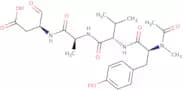
CAS:<p>Please enquire for more information about Ac-N-Me-Tyr-Val-Ala-Asp-aldehyde (pseudo acid) including the price, delivery time and more detailed product information at the technical inquiry form on this page</p>Formula:C24H34N4O8Purity:Min. 95%Molecular weight:506.55 g/mol5-(2-Methyl-4-nitrophenyl)-2-furaldehyde
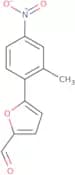
CAS:<p>Please enquire for more information about 5-(2-Methyl-4-nitrophenyl)-2-furaldehyde including the price, delivery time and more detailed product information at the technical inquiry form on this page</p>Formula:C12H9NO4Purity:Min. 95%Molecular weight:231.2 g/mol3-Hydroxyisonicotinaldehyde
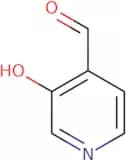
CAS:<p>3-Hydroxyisonicotinaldehyde is a disulfide bond that plays an important role in enzyme catalysis. The active site of the enzyme, which contains a nucleophilic attack on the electrophilic carbon atom, is composed of two cysteine residues with their sulfhydryl group (-SH) bonded to each other through a disulfide bond. This bond can be broken by either an acidic environment or protonation. In the absence of these conditions, the -SH groups are coordinated to metal ions and form a complex. The hydroxyl group (-OH) on one cysteine residue can coordinate to the nitrogen atom on the other cysteine residue and form tautomers. These tautomers correspond to two different configurations of the molecule: one where both sulfur atoms are in a trans configuration (tautomer A), and one where they are in a cis configuration (tautomer B). The biological properties of 3-hydroxyison</p>Formula:C6H5NO2Purity:Min. 95%Molecular weight:123.11 g/mol2-Bromo-6-methylpyridine-3-carboxaldehyde
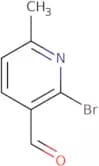
CAS:<p>2-Bromo-6-methylpyridine-3-carboxaldehyde (BMPCA) is a pharmacological agent that belongs to the group of antagonists. It has been shown to be a potent antagonist at the NMDA receptor and may be used for treating neuropathic pain. BMPCA also has been shown to have competitive inhibition at the naphthyridine receptor, which may allow it to act as an antagonist or an agonist depending on its binding site. The regioisomeric analogs of BMPCA are 2-(2,5-dichloropyridyl)-6-methylpyridine-3-carboxaldehyde and 2-(2,5-dimethylpyridyl)-6-methylpyridine-3-carboxaldehyde. These analogs have been shown to inhibit the growth of tumor cells in vitro and in vivo.</p>Formula:C7H6BrNOPurity:Min. 95%Molecular weight:200.03 g/mol3-Nitroisonicotinaldehyde
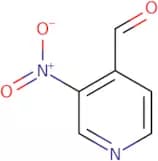
CAS:<p>3-Nitroisonicotinaldehyde is a kinase inhibitor that binds to the ATP binding site of receptor tyrosine kinases. It inhibits the activation of these receptors and prevents the phosphorylation of tyrosine residues on the receptor. 3-Nitroisonicotinaldehyde has been shown to inhibit VEGFR-2, ABCG2, and efflux in human cancer cells. This drug has been shown to inhibit tumor growth in mice by inhibiting angiogenesis, which is a process that involves the formation of new blood vessels from pre-existing ones. 3-Nitroisonicotinaldehyde also inhibits tumor growth by blocking the production of vascular endothelial growth factor (VEGF) from angiogenic cells.</p>Formula:C6H4N2O3Purity:Min. 95%Molecular weight:152.11 g/molPoly[(phenyl glycidyl ether)-co-formaldehyde] - Average MW 570
CAS:<p>Please enquire for more information about Poly[(phenyl glycidyl ether)-co-formaldehyde] - Average MW 570 including the price, delivery time and more detailed product information at the technical inquiry form on this page</p>Formula:(C6H6O•CH2O)xPurity:Min. 95%Color and Shape:Clear Liquid2,3,5-Trichlorobenzaldehyde
CAS:<p>2,3,5-Trichlorobenzaldehyde is a chemical compound that has been shown to have anticancer and apoptotic effects. It inhibits the growth of bacteria by chelating iron ions and inhibiting bacterial dna synthesis. 2,3,5-Trichlorobenzaldehyde has also been shown to inhibit the growth of cancer cells in culture in an experimental study. This chemical has been used as a substrate for nmr spectroscopy to study its functional groups and radical scavenging activities. 2,3,5-Trichlorobenzaldehyde can be synthesized from phenacyl chloride and benzaldehyde in the presence of hydrogen chloride gas. The carbonyl group in 2,3,5-trichlorobenzaldehyde may cause metabolic disorders such as diabetes mellitus or hyperglycemia.</p>Formula:C7H3Cl3OPurity:Min. 95%Color and Shape:PowderMolecular weight:209.46 g/mol(+/-)-Perillaldehyde
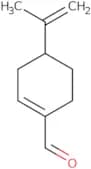
CAS:<p>Perillaldehyde is a natural compound that has been used in food and medicine for centuries. It is an antimicrobial agent with dextran sulfate, which is a sugar polymer that inhibits the growth of fungi and bacteria. Perillaldehyde also has been shown to inhibit the energy metabolism of microorganisms by decreasing ATP production. Perillaldehyde has also been shown to have genotoxic activity, as it can cause DNA strand breaks. This compound also causes oxidative stress in cells by reducing mitochondrial membrane potential and inducing reactive oxygen species (ROS). Perillaldehyde has acute toxicities, as it causes electrochemical impedance spectroscopy changes that indicate cell death.</p>Formula:C10H14OPurity:Min. 95%Color and Shape:PowderMolecular weight:150.22 g/mol





![Poly[(phenyl glycidyl ether)-co-formaldehyde] - Average MW 570](/_next/image/?url=https%3A%2Fstatic.cymitquimica.com%2Fproducts%2F3D%2Fthumb-webp%2FFP158268.webp&w=3840&q=75)