Aldehydes
Aldehydes are organic compounds containing a carbonyl group (C=O) bonded to at least one hydrogen atom. These versatile compounds are fundamental in various chemical reactions, including oxidation, reduction, and nucleophilic addition. Aldehydes are essential building blocks in the synthesis of pharmaceuticals, fragrances, and polymers. At CymitQuimica, we provide a diverse selection of high-quality aldehydes to support your research and industrial applications.
Found 8551 products of "Aldehydes"
Sort by
Purity (%)
0
100
|
0
|
50
|
90
|
95
|
100
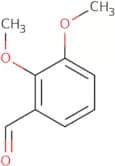
2,3-Dimethoxybenzaldehyde
CAS:<p>2,3-Dimethoxybenzaldehyde is a chemical substance that binds to its ligands by hydrogen bonding and van der Waals forces. It is used in the synthesis of diethyl succinate. 2,3-Dimethoxybenzaldehyde has been shown to inhibit the growth of squamous carcinoma cells. The conversion of 2,3-dimethoxybenzaldehyde into benzoquinone is catalyzed by glucose oxidase and peroxidase. This oxidation process results in a loss of two electrons and one proton from the molecule, changing it from a phenol to an aromatic hydrocarbon.</p>Formula:C9H10O3Purity:Min. 95%Color and Shape:PowderMolecular weight:166.17 g/molAtranol
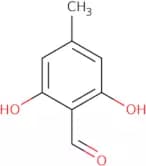
CAS:<p>Atranol is a phenolic compound that is found in plants such as the leaves of the white willow tree. It has been shown to have anti-inflammatory properties and is being researched for its potential use in treatment of inflammatory bowel disease. Atranol has been shown to inhibit the production of inflammatory cytokines such as tumor necrosis factor-α (TNF-α) and interleukin-1β (IL-1β), which are key mediators of inflammation, by inhibiting NFκB activation. The reaction mechanism for atranol's inhibition of IL-1β production involves atranol binding with the cystein residue on IκB kinase β, which prevents phosphorylation and thus activation.</p>Formula:C8H8O3Purity:Min. 95%Color and Shape:Brown Yellow PowderMolecular weight:152.15 g/mol3-Chlorobenzaldehyde
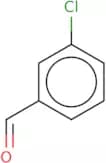
CAS:<p>3-Chlorobenzaldehyde is a chemical that is used as a diagnostic agent for mitochondrial diseases. 3-Chlorobenzaldehyde can be used to detect mutations in the mtDNA and diagnose deficiencies of enzymes involved in energy metabolism. It has been shown to inhibit the activity of dehydrogenase enzymes and the synthesis of acyl-coa from zirconium oxide, which is an important component in polymerase chain reactions. This chemical also inhibits mitochondrial functions and enzyme activities, making it useful for screening for drugs that affect these processes. 3-Chlorobenzaldehyde has also been shown to inhibit hydrogen fluoride, which is often found in industrial environments.</p>Formula:C7H5ClOColor and Shape:Colorless Clear LiquidMolecular weight:140.57 g/mol2,4-Dinitrobenzaldehyde
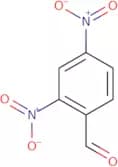
CAS:<p>2,4-Dinitrobenzaldehyde is a chemical compound that contains a hydroxyl group and an amine. It is reactive and can form cationic surfactants with other compounds. 2,4-Dinitrobenzaldehyde has been shown to react with dimethyl fumarate in the presence of ethyl esters to form ethyl 2,4-dinitrophenolate. This reaction is catalyzed by dinucleotide phosphate and requires salinity or a base such as sodium methoxide. 2,4-Dinitrobenzaldehyde reacts with 2-aminoethanol in the presence of water or alcohols to produce 2,4-diaminobenzoic acid. The reaction mechanism for this process is not known but it may involve hydrogen bonding between the hydroxyl group and amine groups.<br>2,4-Dinitrobenzaldehyde has been used as a reagent for staining DNA in gel elect</p>Formula:C7H4N2O5Purity:Min. 95%Color and Shape:PowderMolecular weight:196.12 g/mol2-Fluoro-1-naphthalenecarboxaldehyde
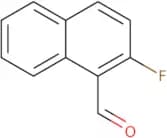
CAS:<p>2-Fluoro-1-naphthalenecarboxaldehyde is a high quality, complex compound that can be used as a versatile building block in the synthesis of many different compounds. As a reagent, it is used for the conversion of alcohols to ketones, esters to acid chlorides and amides to nitriles. It is also an intermediate in the synthesis of other chemicals such as 2-fluoronaphthalene, 2-(2-fluoroethyl)naphthalene, 1H-indole-2-carboxylic acid, and 3-(2-fluoropropyl)benzothiazole.</p>Formula:C11H7FOPurity:Min. 95%Color and Shape:PowderMolecular weight:174.17 g/mol4-Acetoxy-3-methoxybenzaldehyde
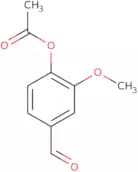
CAS:<p>4-Acetoxy-3-methoxybenzaldehyde is an antimicrobial agent that is used specifically for the treatment of lemongrass oil and eugenol. It has been shown to be effective against a wide range of microorganisms, such as Escherichia coli, Pseudomonas aeruginosa, Salmonella enterica, Staphylococcus aureus, and Streptococcus pneumoniae. 4-Acetoxy-3-methoxybenzaldehyde has been shown to inhibit the growth of bacteria by binding to the 50S ribosomal subunit. The molecule also has hydroxyl group which can react with potassium dichromate and sodium carbonate. This reaction results in the formation of 4-acetoxy-3-hydroxybenzaldehyde through an S N 2 substitution mechanism.</p>Formula:C10H10O4Purity:Min. 95%Color and Shape:PowderMolecular weight:194.18 g/mol3-Methoxy-2-nitrobenzaldehyde
CAS:<p>3-Methoxy-2-nitrobenzaldehyde is a synthetic compound that has been used in the industrial process of synthesizing other compounds. It is a nucleophilic compound, which means it can react with electrophiles to form new bonds. 3-Methoxy-2-nitrobenzaldehyde is also an oriented molecule, meaning that when it reacts with an electrophile, the resulting product can be determined by the orientation of the molecules. The rate of this reaction depends on how many functional groups are present and the presence of catalysts. 3-Methoxy-2-nitrobenzaldehyde is fluorescent, so it will emit light in a spectroscopic experiment. It has six functional groups which are all nucleophilic and capable of participating in reactions with other molecules. Catalytic rates for this reaction depend on concentration and temperature, as well as the number of chlorine atoms and polydentate ligands present in solution.</p>Formula:C8H7NO4Purity:Min. 95%Color and Shape:Slightly Yellow PowderMolecular weight:181.15 g/mol3,5-Dimethyl-4-methoxybenzaldehyde
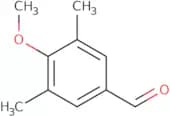
CAS:<p>3,5-Dimethyl-4-methoxybenzaldehyde is a high quality, versatile chemical that can be used as an intermediate to synthesize other fine chemicals. The compound can be reacted with various reagents to produce complex compounds. 3,5-Dimethyl-4-methoxybenzaldehyde can also be used as a building block to synthesize other useful compounds. This chemical has been shown to be a useful scaffold for the production of new compounds and has been used as a reaction component in research and development.</p>Formula:C10H12O2Purity:Min. 95%Color and Shape:PowderMolecular weight:164.2 g/mol2-Oxocyclohexanecarbaldehyde
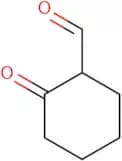
CAS:<p>2-Oxocyclohexanecarbaldehyde is a bifunctional carbonyl compound that reacts with amines to form carbinols. It can be used as a cheaper and more environmentally friendly alternative to the use of piperidine. 2-Oxocyclohexanecarbaldehyde also reacts with potassium hydride to form the corresponding ketones. The reaction of 2-oxocyclohexanecarbaldehyde with primary amines leads to isomeric products, depending on the position of substitution on the aromatic ring. This compound has been shown to react electrochemically in an asymmetric synthesis and has been used in the synthesis of morpholine, which is an important intermediate for pharmaceuticals, agrochemicals, and other chemical compounds.</p>Formula:C7H10O2Purity:Min. 90%Color and Shape:Clear LiquidMolecular weight:126.15 g/mol2,6-Dimethyl-4-hydroxybenzaldehyde
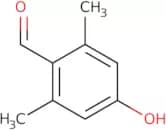
CAS:<p>2,6-Dimethyl-4-hydroxybenzaldehyde is a synthetic compound that belongs to the class of aminoguanidines. It has been shown to be a potent vasoprotective agent and is used in the treatment of cardiovascular diseases. 2,6-Dimethyl-4-hydroxybenzaldehyde reverses the effects of formate on the jejunum by inhibiting secretion and intestinal motility. The activity of this drug has been shown to be due to its inhibitory effect on histamine release from mast cells.</p>Formula:C9H10O2Purity:Min. 95%Color and Shape:Yellow PowderMolecular weight:150.17 g/mol3-Chloro-4-nitrobenzaldehyde
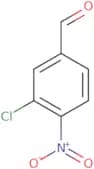
CAS:<p>3-Chloro-4-nitrobenzaldehyde is an aldehyde that is produced by the oxidation of 2-chloro-4-nitrobenzaldehyde. This chemical has been shown to have antitubercular activity in human erythrocytes, and it can be recycled from its reaction product with sodium hypochlorite. 3-Chloro-4-nitrobenzaldehyde has been shown to interact with acidic heterocycles such as oxadiazoles and triazoles. 3-Chloro-4-nitrobenzaldehyde has also been shown to alter the morphology of bacteria, such as subtilis, when exposed to ionic liquids. It is also known to inhibit the growth of Gram positive bacteria and show cytotoxic effects on mammalian cells.</p>Formula:C7H4ClNO3Purity:Min. 95%Molecular weight:185.56 g/molIsoquinoline-4-carbaldehyde
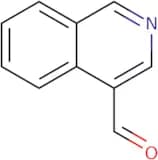
CAS:<p>Isoquinoline-4-carbaldehyde is an aldehyde chemical that has been synthesized in the laboratory. It is a chiral molecule with one asymmetric carbonyl group. Isoquinoline-4-carbaldehyde is a potential precursor to naphthyridine, which can be used as a building block for the synthesis of natural products. Isoquinoline-4-carbaldehyde has been shown to have phosphine properties, and it can be used as a ligand in transition metal complexes. The molecule has been shown to exist in two forms, which coexist in equilibrium and can undergo interconversion.</p>Formula:C10H7NOPurity:Min. 95%Molecular weight:157.17 g/moltrans-Cinnamaldehyde
CAS:<p>Cinnamaldehyde is a natural compound that has shown to have antiviral and antimicrobial properties. It has been shown to inhibit the toll-like receptor, which is a protein on the surface of cells that detects bacteria and other microorganisms. Cinnamaldehyde is also able to inhibit c. glabrata growth in vitro at concentrations between 10 and 100 μM, as well as copper-mediated cell death in hl-60 cells. Cinnamaldehyde has been shown to cause neuronal death by interfering with cellular physiology. This compound can be used in the treatment of infectious diseases because it inhibits bacterial dna gyrase, dna topoisomerase, and rna synthesis.</p>Formula:C9H8OPurity:Min. 95%Color and Shape:PowderMolecular weight:132.16 g/mol3-Nitrobenzaldehyde
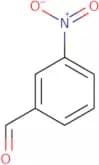
CAS:<p>3-Nitrobenzaldehyde is an organic compound that is used in the synthesis of monoclonal antibodies for use in cancer research. It has been shown to have genotoxic and carcinogenic effects, as it binds to nucleic acids and inhibits DNA replication. 3-Nitrobenzaldehyde has been shown to be effective against a variety of bacteria, including methicillin-resistant Staphylococcus aureus (MRSA) and Clostridium perfringens. This compound also inhibits protein synthesis by binding with amines and hydrogen bonding with the amino acid residues of proteins.</p>Formula:C7H5NO3Purity:Min. 95%Color and Shape:PowderMolecular weight:151.12 g/molUreaformaldehyde
CAS:<p>Ureaformaldehyde is a synthetic slow-release fertilizer that contains urea and formaldehyde. It has been shown to be highly active as a slow-release fertilizer in Langmuir adsorption isotherm studies. Ureaformaldehyde also has the ability to mineralize chloride and hydrogen bond to soil particles, increasing the availability of these ions for plant uptake. Ureaformaldehyde is also used in analytical methods such as chromatographic determination of fatty acids, which are an important component of animal and vegetable oils. !--</p>Formula:(CH4N2O•CH2O)xPurity:Min. 95%Color and Shape:Clear LiquidMolecular weight:90.08 g/molCyclooctanecarbaldehyde
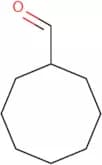
CAS:<p>Cyclooctanecarbaldehyde is a reactive chemical that contains a hydroxyl group and hydroxy group. It is used for the production of polymers such as cyclooctyne-1,4-diol. Cyclooctanecarbaldehyde is also used to synthesize acyl halides. The compound has been shown to be cytotoxic in cancer cells. It can inhibit the production of nucleic acids, proteins and lipids in cancer cells, leading to cell death. Cyclooctanecarbaldehyde also has depression and cardiac arrhythmia effects due to its κ-opioid receptor agonist properties.</p>Formula:C9H16OPurity:Min. 95%Color and Shape:Clear LiquidMolecular weight:140.22 g/mol5-Methylnicotinaldehyde
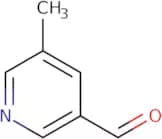
CAS:<p>5-Methylnicotinaldehyde is a chemical compound that belongs to the group of tetrahydropyridines. It is a reagent for producing triphosgene and dimethylformamide. 5-Methylnicotinaldehyde has been shown to inhibit muscarinic acetylcholine receptors, leading to an increase in acetylcholine release from nerve endings. This may be due to its ability to bind with the receptor affinity site at the base of the nicotinic acetylcholine receptor. 5-Methylnicotinaldehyde also has anti-inflammatory properties and can be used as a pesticide.</p>Formula:C7H7NOPurity:Min. 95%Color and Shape:PowderMolecular weight:121.14 g/mol1-Acetyl-3-indolecarboxaldehyde
CAS:<p>1-Acetyl-3-indolecarboxaldehyde is a ligand that binds to the cannabinoid receptor 1 (CB1). It has been shown to bind to the CB1 receptor with high affinity and selectivity. In addition, it has been demonstrated to inhibit the proliferation of human breast cancer cells in vitro. The compound is used as a fluorescent probe for cb1 receptor binding. Data obtained from molecular modelling studies have suggested that the hydroxyl group might be involved in binding to the CB1 receptor. 1-Acetyl-3-indolecarboxaldehyde also binds carotenoids, which are molecules responsible for giving plants and other photosynthetic organisms their coloration. This compound can be found in many different plants, such as carrots and bananas, where it acts as an antioxidant.</p>Formula:C11H9NO2Purity:Min. 95%Color and Shape:PowderMolecular weight:187.19 g/mol4-Iodobenzaldehyde
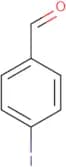
CAS:<p>4-Iodobenzaldehyde is a chemical compound with the molecular formula C6H5IO. It is an aromatic compound that can be used in cancer therapy. 4-Iodobenzaldehyde reacts with trifluoroacetic acid to form an intramolecular hydrogen, which is detected using a low-energy monomer and high detection sensitivity. 4-Iodobenzaldehyde has two phenyl substituents and a serine protease functional group, which are required for its interaction with other molecules. The presence of these functional groups allows analytical methods to be used to identify 4-iodobenzaldehyde in various samples. Using analytical methods, it can be determined that 4-iodobenzaldehyde interacts with an acceptor molecule at the reaction vessel thermally or by irradiation.</p>Formula:C7H5IOPurity:Min. 95%Color and Shape:Yellow PowderMolecular weight:232.02 g/mol2,6-Dimethoxy-4-methylbenzaldehyde
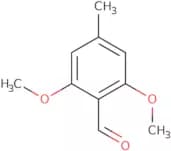
CAS:<p>2,6-Dimethoxy-4-methylbenzaldehyde (DMMB) is a useful chemical that is used as a building block in the synthesis of complex compounds. It has been shown to be an effective chemical intermediate and can be used in the synthesis of various products, such as pharmaceuticals and pesticides. DMMB can also be used to produce high quality research chemicals.</p>Formula:C10H12O3Purity:Min. 95%Color and Shape:PowderMolecular weight:180.2 g/mol