Aldehydes
Aldehydes are organic compounds containing a carbonyl group (C=O) bonded to at least one hydrogen atom. These versatile compounds are fundamental in various chemical reactions, including oxidation, reduction, and nucleophilic addition. Aldehydes are essential building blocks in the synthesis of pharmaceuticals, fragrances, and polymers. At CymitQuimica, we provide a diverse selection of high-quality aldehydes to support your research and industrial applications.
Found 8551 products of "Aldehydes"
Sort by
Purity (%)
0
100
|
0
|
50
|
90
|
95
|
100
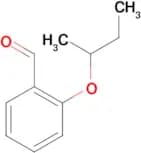
2-sec-butoxybenzaldehyde
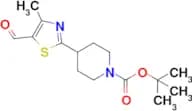
CAS:Formula:C11H14O2Purity:95+%Color and Shape:LiquidMolecular weight:178.231Tert-butyl 4-(5-formyl-4-methylthiazol-2-yl)piperidine-1-carboxylate
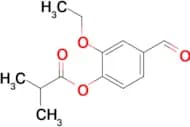
CAS:Purity:95%Molecular weight:310.41000372-Ethoxy-4-formylphenyl isobutyrate
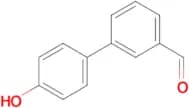
CAS:Formula:C13H16O4Purity:98%Color and Shape:SolidMolecular weight:236.2674′-Hydroxy-biphenyl-3-carbaldehyde
CAS:Formula:C13H10O2Purity:97%Color and Shape:Solid, PowderMolecular weight:198.221(5-Formyl-3-methylthiophen-2-yl)boronic acid
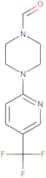
CAS:Formula:C6H7BO3SPurity:≥95%Color and Shape:SolidMolecular weight:169.994-(5-(Trifluoromethyl)-2-pyridyl)piperazinecarbaldehyde
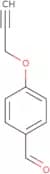
CAS:<p>Please enquire for more information about 4-(5-(Trifluoromethyl)-2-pyridyl)piperazinecarbaldehyde including the price, delivery time and more detailed product information at the technical inquiry form on this page</p>Formula:C11H12F3N3OPurity:Min. 95%Color and Shape:PowderMolecular weight:259.23 g/mol4-(2-propynyloxy)benzenecarboxaldehyde
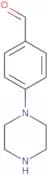
CAS:<p>4-(2-Propynyloxy)benzenecarboxaldehyde is an organic chemical compound that is classified as a copper complex. This molecule has been shown to have antibacterial properties against P. aeruginosa and other bacteria. It also possesses a constant antibacterial activity in both acidic and neutral pH conditions, which makes it an efficient method of treatment for bacterial infections. 4-(2-Propynyloxy)benzenecarboxaldehyde has been shown to inhibit the growth of P. aeruginosa by binding to the DNA gyrase enzyme and stopping its function, thus inhibiting bacterial replication. 4-(2-Propynyloxy)benzenecarboxaldehyde also inhibits the synthesis of proteins in neuronal cells, which may be due to its ability to react with carbonyl groups in proteins.</p>Purity:Min. 95%4-Piperazin-1-yl-benzaldehyde
CAS:<p>4-Piperazin-1-yl-benzaldehyde (PPBA) is a natural product that has been shown to have effects on animals and cells. PPBA can be used as an antidote for sulfite poisoning, which is caused by the ingestion of sulfites in food or drink. The mechanism of PPBA's effects is not fully known, but it may involve the inhibition of sulfite reductase, which converts sulfites into sulfates. It also reversibly forms a complex with the transition state of the reaction, enhancing the rate of this reaction. This enhancement is due to a low detection limit and shift in solution temperature. PPBA has been shown to have fluorescence and fluorescent properties when exposed to light, making it useful for endogenous labeling.</p>Formula:C11H14N2OPurity:Min. 95%Molecular weight:190.24 g/mol