Aldehydes
Aldehydes are organic compounds containing a carbonyl group (C=O) bonded to at least one hydrogen atom. These versatile compounds are fundamental in various chemical reactions, including oxidation, reduction, and nucleophilic addition. Aldehydes are essential building blocks in the synthesis of pharmaceuticals, fragrances, and polymers. At CymitQuimica, we provide a diverse selection of high-quality aldehydes to support your research and industrial applications.
Found 8551 products of "Aldehydes"
Sort by
Purity (%)
0
100
|
0
|
50
|
90
|
95
|
100
4-((4-methylphenyl)carbonyl)piperazinecarbaldehyde
CAS:<p>Please enquire for more information about 4-((4-methylphenyl)carbonyl)piperazinecarbaldehyde including the price, delivery time and more detailed product information at the technical inquiry form on this page</p>Purity:Min. 95%4-(5-(Trifluoromethyl)-2-pyridyl)piperazinecarbaldehyde
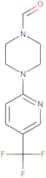
CAS:<p>Please enquire for more information about 4-(5-(Trifluoromethyl)-2-pyridyl)piperazinecarbaldehyde including the price, delivery time and more detailed product information at the technical inquiry form on this page</p>Formula:C11H12F3N3OPurity:Min. 95%Color and Shape:PowderMolecular weight:259.23 g/molCinnamaldehyde thiosemicarbazone
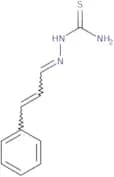
CAS:<p>Cinnamaldehyde thiosemicarbazone is a nitrogen-containing molecule that has been shown to have neuroprotective properties. It is also an antioxidant and potent inhibitor of tyrosinase, which is an enzyme involved in the production of melanin. Cinnamaldehyde thiosemicarbazone has been shown to be effective at nanomolar concentrations in the inhibition of tyrosinase. This compound has been shown to be effective in both basic structure and magnetic resonance spectroscopy studies.</p>Formula:C10H11N3SPurity:Min. 95%Color and Shape:PowderMolecular weight:205.28 g/mol4-(2-propynyloxy)benzenecarboxaldehyde
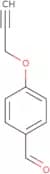
CAS:<p>4-(2-Propynyloxy)benzenecarboxaldehyde is an organic chemical compound that is classified as a copper complex. This molecule has been shown to have antibacterial properties against P. aeruginosa and other bacteria. It also possesses a constant antibacterial activity in both acidic and neutral pH conditions, which makes it an efficient method of treatment for bacterial infections. 4-(2-Propynyloxy)benzenecarboxaldehyde has been shown to inhibit the growth of P. aeruginosa by binding to the DNA gyrase enzyme and stopping its function, thus inhibiting bacterial replication. 4-(2-Propynyloxy)benzenecarboxaldehyde also inhibits the synthesis of proteins in neuronal cells, which may be due to its ability to react with carbonyl groups in proteins.</p>Purity:Min. 95%Zolpidem carbaldehyde
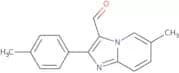
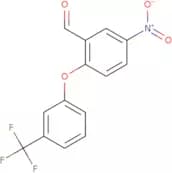
CAS:<p>Zolpidem is a sedative-hypnotic drug, which belongs to the class of imidazopyridines. It has a strong affinity for GABA receptors, and can be used as a treatment for insomnia. Zolpidem's chemical structure is similar to that of benzodiazepines. Zolpidem is an acidic compound with a pKa of 3.6. It has been shown to elute from HPLC columns at a hydrodynamic flow rate of 0.5 mL/min on the column of LiChrosorb RP-18e (250 × 4 mm). The optimum pH for chromatographic separation was found to be 4-5. Multiresponse analysis showed statistically significant differences between different batches of zolpidem in terms of particle size, shape and size distribution, surface area and surface charge. Zolpidem carbaldehyde is an organic compound that is used as an intermediate in the production of drugs such as zol</p>Formula:C16H14N2OPurity:Min. 95%Molecular weight:250.3 g/mol2-(3-Trifluoromethylphenoxy)-5-nitrobenzaldehyde
CAS:<p>Please enquire for more information about 2-(3-Trifluoromethylphenoxy)-5-nitrobenzaldehyde including the price, delivery time and more detailed product information at the technical inquiry form on this page</p>Formula:C14H8F3NO4Purity:Min. 95%Color and Shape:PowderMolecular weight:311.21 g/molN-[3-(1,1,2,2-Tetrafluoroethoxy)phenyl]formamide
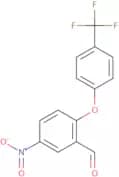
CAS:<p>Please enquire for more information about N-[3-(1,1,2,2-Tetrafluoroethoxy)phenyl]formamide including the price, delivery time and more detailed product information at the technical inquiry form on this page</p>Formula:C9H7F4NO2Purity:Min. 95%Color and Shape:PowderMolecular weight:237.15 g/mol2-(4-Trifluoromethylphenoxy)-5-nitrobenzaldehyde
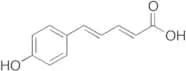
CAS:<p>Please enquire for more information about 2-(4-Trifluoromethylphenoxy)-5-nitrobenzaldehyde including the price, delivery time and more detailed product information at the technical inquiry form on this page</p>Formula:C14H8F3NO4Purity:Min. 95%Color and Shape:PowderMolecular weight:311.21 g/mol3-(2,4-Dihydroxyphenyl)-2-propenal
CAS:Controlled ProductFormula:C9H8O3Color and Shape:NeatMolecular weight:164.16cis-4-Decenal (>90%)
CAS:Controlled Product<p>Applications CIS-4-DECENAL (cas# 21662-09-9) is a useful research chemical.<br></p>Formula:C10H18OColor and Shape:NeatMolecular weight:154.24(E,E)-5-[4-(Diethylamino)phenyl]penta-2,4-dienal
CAS:Controlled Product<p>Stability Light Sensitive<br>Applications (E,E)-5-[4-(Diethylamino)phenyl]penta-2,4-dienal is used in polymerization process.<br>References Innocenzi, P., et al.: J. Mater Chem., 15, 3821 (2005), Cai, Y., et al.: Polymer, 2006, 47, 6560 (2006),<br></p>Formula:C15H19NOColor and Shape:NeatMolecular weight:229.32N,N,N-Tributyl-1-butanaminium Salt with (E)-3-Hydroxy-2-propenal
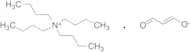
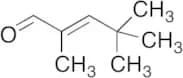
CAS:Controlled Product<p>Applications N,N,N-Tributyl-1-butanaminium Salt with (E)-3-Hydroxy-2-propenal is a useful reagent for preparation of crystalline (±)-fecapentaene.<br> Not a dangerous good if item is equal to or less than 1g/ml and there is less than 100g/ml in the package<br>References Pfaendler, H., et al.: J. Am. Chem. Soc., 108, 1338 (1986);<br></p>Formula:C16H36N•CH3O2Color and Shape:Off-WhiteMolecular weight:242.46 + 71.062,4,4-Trimethyl-2-pentenal
CAS:Controlled ProductFormula:C8H14OColor and Shape:NeatMolecular weight:126.2Oct-7-enal
CAS:Controlled Product<p>Stability Air Sensitive<br>Applications Oct-7-enal is a useful research chemical, an aliphatic aldehyde isolated from the roots of Cirsium Cipsacolepis.<br>References Takano, S., et al.: Phytochemistry, 26, 435 (1987); Halle, M. B., et al.: RSC Adv., 4, 63342 (2014)<br></p>Formula:C8H14OColor and Shape:NeatMolecular weight:126.22,4-Octadienal, predominantly trans,trans (Technical Grade)
CAS:Controlled Product<p>Applications 2,4-Octadienal, predominantly trans,trans >=95%, FG is a useful research chemical for organic synthesis and other chemical processes.<br>References Feng, J., et al.: J. Org. Chem., 82, 1412 (2017); Sun, S., et al.: J. Appl. Phycol., 24, 1003 (2012)<br></p>Formula:C8H12OColor and Shape:NeatMolecular weight:124.18(2E,4E,6E)-2,4,6-Nonatrienal
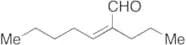
CAS:Controlled Product<p>Stability Light Sensitive, Temperature Sensitive<br>Applications (2E,4E,6E)-2,4,6-Nonatrienal is an unsaturated aldehyde that is a natural volatile constituent of aggregation pheromones produced by male flea beetles. (2E,4E,6E)-2,4,6-Nonatrienal is also found in licorice root, one of the widely used herbs for its<br>References Zilkowski, B., et al.: J. Agr. Food Chem., 56, 4982 (2008)<br></p>Formula:C9H12OPurity:>90%Color and Shape:NeatMolecular weight:136.192-Propyl-2-heptenal (Technical Grade)
CAS:Controlled Product<p>Applications 2-Propyl-2-heptenal is an alkene shown as an metabolic by-product of unsaturated fatty acids metabolism to oxylipins.<br>References Montanari, C., et al.: J. App. Microbiol., 115, 1388 (2013);<br></p>Formula:C10H18OColor and Shape:Clear ColourlessMolecular weight:154.251-(3-Methoxybenzyl)-1H-indole-3-carbaldehyde
CAS:Controlled Product<p>Please enquire for more information about 1-(3-Methoxybenzyl)-1H-indole-3-carbaldehyde including the price, delivery time and more detailed product information at the technical inquiry form on this page</p>Formula:C17H15NO2Purity:Min. 95%Molecular weight:265.31 g/mol3-(Methylthio)propionaldehyde
CAS:<p>3-(Methylthio)propionaldehyde (MTPA) is a hydroxy methyl fatty acid that is used as an intermediate in the synthesis of ethyl decanoate. MTPA has been shown to be toxic at high doses, with death occurring in rats after a single oral dose of 30 mg/kg. The toxicity of MTPA may be due to its reactive nature and ability to form acrolein and malondialdehyde, which are known to have cytotoxic effects on cells. 3-(Methylthio)propionaldehyde can also inhibit microbial metabolism by inhibiting microbial growth and decreasing microbial activity. This inhibition is mediated by the inhibition of enzymes such as fatty acid synthase and acetyl-CoA carboxylase. 3-(Methylthio)propionaldehyde also inhibits the production of ATP in bacteria, leading to cell death.</p>Formula:C4H8OSPurity:Min. 95%Color and Shape:Clear LiquidMolecular weight:104.17 g/mol


![N-[3-(1,1,2,2-Tetrafluoroethoxy)phenyl]formamide](/_next/image/?url=https%3A%2Fstatic.cymitquimica.com%2Fproducts%2F3D%2Fthumb-webp%2FFA169600.webp&w=3840&q=75)


![(E,E)-5-[4-(Diethylamino)phenyl]penta-2,4-dienal](/_next/image/?url=https%3A%2Fstatic.cymitquimica.com%2Fproducts%2FTR%2Fthumb-webp%2FD443665.webp&w=3840&q=75)