6-membered Rings
Subcategories of "6-membered Rings"
- 6-membered Heterocycles(61,492 products)
- Anilines(104 products)
- Anisoles(29 products)
- Benzenes(48,853 products)
- Ciclohexanes(3,062 products)
- Quinones(253 products)
- Toluenes(193 products)
Found 10221 products of "6-membered Rings"
1,2,4,5-Tetrabromobenzene
CAS:1,2,4,5-Tetrabromobenzene is a brominated organic compound that forms a palladium complex. It has been studied by chemical ionization with an atmospheric pressure photoionization detector (APPI) and molecular modeling. The debromination reaction of 1,2,4,5-tetrabromobenzene was observed to take place in the liquid phase at room temperature. The detection limit for this reaction was found to be between 0.1 and 5 ppm. The most common form of 1,2,4,5-tetrabromobenzene is the monoclinic polymorph; however it can also exist as a trigonal system or as a hexagonal system when heated above its phase transition temperature. This compound is soluble in water and mercury chloride solutions but insoluble in ethers or chloroform.
Formula:C6H2Br4Purity:Min. 95%Color and Shape:White PowderMolecular weight:393.7 g/molRef: 3D-FT12104
Discontinued product2-Bromo-1,3-diethylbenzene
CAS:2-Bromo-1,3-diethylbenzene is a reactive intermediate that can be used for the synthesis of styrene derivatives. It is also used as an anesthetic agent and has been shown to have cognition-enhancing properties. This compound reacts with electrophiles to form monoadducts, which are useful for protein targetting. The pharmacophore of 2-bromo-1,3-diethylbenzene consists of vinyl groups and halides. Radiation induces substitution reactions on the vinyl groups. Pharmacophores are important in drug design because they help identify specific chemical features that are necessary for binding to a particular protein target or protein targets.
Formula:C10H13BrPurity:Min. 95%Color and Shape:Clear LiquidMolecular weight:213.11 g/molRef: 3D-FB166911
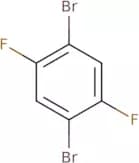
Discontinued product1,4-Dibromo-2,5-difluorobenzene
CAS:1,4-Dibromo-2,5-difluorobenzene is a synthetic compound that is used as a building block for the synthesis of polymers. It is also a natural product that can be isolated from plant material and has been shown to have antimicrobial properties. 1,4-Dibromo-2,5-difluorobenzene has been shown to have an acceptor group and it polymerizes in the presence of free radicals. This compound has been studied using gel permeation chromatography, x-ray structures, and microscopy studies. It is a nonpolar solvent at room temperature and its fluoro group makes it reactive with other polar solvents such as water.
Formula:C6H2Br2F2Purity:Min. 95%Color and Shape:PowderMolecular weight:271.88 g/molRef: 3D-FD11144
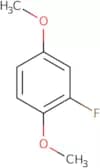
Discontinued product1,4-Dimethoxy-2-fluorobenzene
CAS:1,4-Dimethoxy-2-fluorobenzene is a synthetic molecule that belongs to the class of halides. It is used as a ligand in X-ray crystallography and has been shown to have anti-cancer properties. 1,4-Dimethoxy-2-fluorobenzene can be prepared by reacting primary amines with chloroformates in the presence of bases at temperatures between -20 °C and 100 °C. This method is efficient and produces high yields. The synthesis of 1,4-dimethoxy 2-fluorobenzene can be optimized by using strategies such as preparative scale techniques or temperature changes.
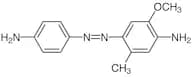
Formula:C8H9FO2Purity:Min. 95%Color and Shape:PowderMolecular weight:156.15 g/molDisperse Diazo Black 3BF
CAS:Formula:C14H16N4OColor and Shape:Light yellow to Brown powder to crystalMolecular weight:256.31Direct Violet 1
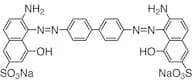
CAS:Formula:C32H22N6Na2O8S2Color and Shape:Red to Dark blue to Black powder to crystalMolecular weight:728.664-Chloro-2-fluorocinnamic Acid
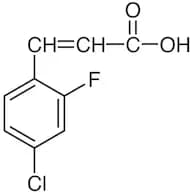
CAS:Formula:C9H6ClFO2Purity:>97.0%(GC)(T)Color and Shape:White to Almost white powder to crystalMolecular weight:200.59Isoviolanthrone
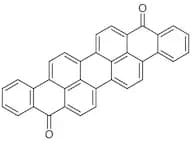
CAS:Formula:C34H16O2Color and Shape:Gray to Dark purple to Black powder to crystalMolecular weight:456.504-(Diethoxymethyl)-trans-stilbene
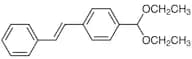
CAS:Formula:C19H22O2Purity:>98.0%(GC)Color and Shape:White to Almost white powder to crystalMolecular weight:282.38Clinofibrate
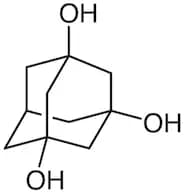
CAS:Formula:C28H36O6Purity:>98.0%(HPLC)Color and Shape:White to Almost white powder to crystalMolecular weight:468.591,3,5-Adamantanetriol
CAS:Formula:C10H16O3Purity:>97.0%(GC)Color and Shape:White to Almost white powder to crystalMolecular weight:184.242-Toluenesulfonyl isocyanate
CAS:2-Toluenesulfonyl isocyanate (2TSIC) is a reactive compound that belongs to the group of polyols. It has high resistance to water and other solvents, which makes it an excellent sealant. 2TSIC reacts with hydroxy groups on polymers and monomers to form hydrogen bonds. This reaction can be used in radiation curing of sealants. 2TSIC also interacts with m1 receptors, which are proteins found in the brain and spinal cord that regulate neurotransmitter release.
Formula:C8H7NO3SPurity:Min. 95%Color and Shape:Colourless liquid.Molecular weight:197.21 g/molRef: 3D-FT01740
Discontinued product[RuCl(p-cymene)((R)-xylbinap)]Cl
CAS:Formula:C62H62Cl2P2RuColor and Shape:Light yellow to Brown powder to crystalMolecular weight:1,041.104,4'-Di-n-octyloxyazoxybenzene
CAS:Formula:C28H42N2O3Purity:>97.0%(HPLC)(N)Color and Shape:Light yellow to Yellow to Orange powder to crystalMolecular weight:454.66p-Toluenesulfonyl Hydrazide
CAS:Stability Light Sensitive
Applications p-Toluenesulfonyl Hydrazide is a reactant that has been used in the synthesis of paspaline.
E0
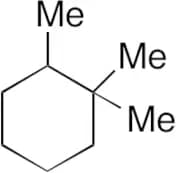
References Sharpe, R.J., Johnson, J.S.: J. Am. Chem. Soc., 137, 4968 (2015)Formula:C7H10N2O2SColor and Shape:White to Off-White SolidMolecular weight:186.231,1,2-Trimethylcyclohexane (>85%)
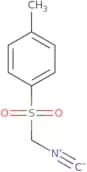
CAS:Controlled ProductFormula:C9H18Color and Shape:NeatMolecular weight:126.244-Toluenesulfonylmethylisonitrile
CAS:4-Toluenesulfonylmethylisonitrile is a potent antagonist of the malonic acid receptor that has been shown to be reactive. It is synthesized by reacting methyl ketones with trifluoroacetic acid and nitrogen gas in the presence of a catalyst. The reaction mechanism has been studied using gravimetric analysis and the thermodynamic data have been calculated for fatty acids. 4-Toluenesulfonylmethylisonitrile can be used to make esters.
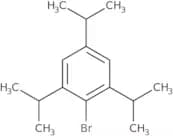
Formula:C9H9NO2SPurity:Min. 95%Color and Shape:Off-White To Yellow SolidMolecular weight:195.24 g/mol2-Bromo-1,3,5-triisopropylbenzene
CAS:2-Bromo-1,3,5-triisopropylbenzene is an ethylene acetal that is prepared by the catalyzed reaction of aryl chlorides and anhydrous zinc bromide in the presence of triethylamine. The selectivities of this method are high because it can produce mainly a single isomer. The stereoselectivity is also high because the reaction proceeds with the formation of only one stereoisomer. The mechanism for this reaction involves a nucleophilic substitution of the halogenated aryl chloride with the trialkylborane, which generates two different products. This product has been used in the synthesis of biphenyls and nitro compounds.
Formula:C15H23BrPurity:Min. 95%Color and Shape:Colorless Clear LiquidMolecular weight:283.25 g/molRef: 3D-FB33867
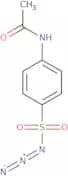
Discontinued product4-Acetamidobenzenesulfonyl azide
CAS:4-Acetamidobenzenesulfonyl azide (4ABS) is a low detection reagent that can be used for the determination of 4-acetamidobenzoic acid. It reacts with the amine group in 4-acetamidobenzoic acid to form a sulfonamide intermediate and releases an azide ion. The linear calibration curve was obtained using vibrational spectroscopy and has a detection sensitivity of 0.03 ppm. This method can also be used to determine the functional groups present in dopamine, which have been shown to affect electrochemical impedance spectroscopy measurements.
Formula:C8H8N4O3SPurity:Min. 95%Color and Shape:White PowderMolecular weight:240.24 g/mol1-Bromo-4-iodobenzene
CAS:1-Bromo-4-iodobenzene is an aryl halide that can be synthesized by the cross coupling of ethyl formate and hydrochloric acid. This compound is useful in analytical applications, such as chromatographic methods, due to its high solubility in organic solvents. It is also used in synthetic procedures for the preparation of other aryl halides. 1-Bromo-4-iodobenzene has been used to synthesize calcium carbonate via the Suzuki coupling reaction with sodium salts, which are nucleophiles. The carbonyl group on this molecule reacts with the nucleophile, forming an alkyl group and a metal salt. Transfer reactions involving these salts can produce other products with different functional groups.
Formula:C6H4BrIPurity:Min. 95%Color and Shape:PowderMolecular weight:282.9 g/molRef: 3D-FB38228
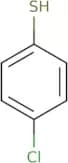
Discontinued product4-Chlorobenzenethiol
CAS:4-Chlorobenzenethiol is a chemical compound that contains a fatty acid. It is an intramolecular hydrogen donor with the ability to form a disulfide bond. The compound also has high stability and can be used in organic synthesis reactions involving reactive sulfur groups. 4-Chlorobenzenethiol reacts with sodium carbonate to produce sodium thiocarbonate and chloroform, which are then reacted with phosphorus pentoxide for oxidation. The reaction mechanism is similar to that of the Diels-Alder reaction and the model system involves dinucleotide phosphate. 4-Chlorobenzenethiol can be reacted with hydrochloric acid or trifluoroacetic acid as an oxidizing agent.
Formula:C6H5ClSPurity:Min. 95%Color and Shape:White PowderMolecular weight:144.62 g/mol





![[RuCl(p-cymene)((R)-xylbinap)]Cl](/_next/image/?url=https%3A%2Fstatic.cymitquimica.com%2Fproducts%2F3B%2Fthumb-webp%2FR0150.webp&w=3840&q=75)