6-membered Rings
Subcategories of "6-membered Rings"
- 6-membered Heterocycles(61,492 products)
- Anilines(104 products)
- Anisoles(29 products)
- Benzenes(48,854 products)
- Ciclohexanes(3,062 products)
- Quinones(253 products)
- Toluenes(193 products)
Found 10221 products of "6-membered Rings"
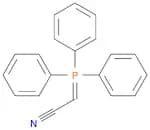
2-(Triphenylphosphoranylidene)acetonitrile
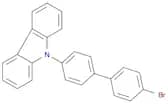
CAS:Formula:C20H16NPPurity:98%Color and Shape:SolidMolecular weight:301.32159-(4'-BroMo-4-biphenylyl)-9H-carbazole
CAS:Formula:C24H16BrNPurity:98%Color and Shape:SolidMolecular weight:398.2945(R)RuCl[(pcymene)(DMBINAP)]Cl
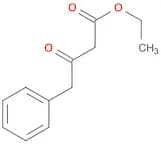
CAS:Formula:C65H71Cl2P2RuPurity:95%Color and Shape:SolidMolecular weight:1086.18283-OXO-4-PHENYL-BUTYRIC ACID ETHYL ESTER
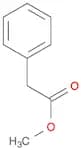
CAS:Formula:C12H14O3Purity:95%Color and Shape:LiquidMolecular weight:206.2378Benzeneacetic acid, methyl ester
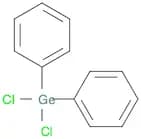
CAS:Formula:C9H10O2Purity:98%Color and Shape:LiquidMolecular weight:150.1745Germane, dichlorodiphenyl-
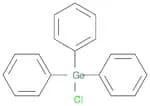
CAS:Formula:C12H10Cl2GePurity:95%Color and Shape:LiquidMolecular weight:297.7538Germane, chlorotriphenyl-
CAS:Formula:C18H15ClGePurity:98%Color and Shape:SolidMolecular weight:339.40472,6-Bis(triMethyltin)-4,8-bis(5-(2-ethylhexyl)thiophen-2-yl)benzo [1,2-b
CAS:Formula:C40H58S4Sn2Purity:96%Color and Shape:SolidMolecular weight:904.5505Benzobarbital
CAS:Formula:C19H16N2O4Purity:98%Color and Shape:SolidMolecular weight:336.34133999999993-Ethynyltoluene
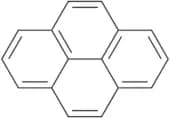
CAS:Formula:C9H8Purity:>98.0%(GC)Color and Shape:Colorless to Light orange to Yellow clear liquidMolecular weight:116.16Pyrene
CAS:Pyrene is a chemical compound that has been found to bind to DNA and inhibit the transcription of genetic information. It has been used as a fluorescence probe in biochemical research, wastewater treatment, and surface methodology. As a redox probe, pyrene can be used to measure the redox potential of reaction solutions. Pyrene has also been used as an analytical method for measuring transfer reactions in biological studies.
Formula:C16H10Purity:Min. 98 Area-%Color and Shape:PowderMolecular weight:202.25 g/mol2-Bromo-1,3-diethylbenzene
CAS:2-Bromo-1,3-diethylbenzene is a reactive intermediate that can be used for the synthesis of styrene derivatives. It is also used as an anesthetic agent and has been shown to have cognition-enhancing properties. This compound reacts with electrophiles to form monoadducts, which are useful for protein targetting. The pharmacophore of 2-bromo-1,3-diethylbenzene consists of vinyl groups and halides. Radiation induces substitution reactions on the vinyl groups. Pharmacophores are important in drug design because they help identify specific chemical features that are necessary for binding to a particular protein target or protein targets.
Formula:C10H13BrPurity:Min. 95%Color and Shape:Clear LiquidMolecular weight:213.11 g/molRef: 3D-FB166911
Discontinued product1,2,4,5-Tetrabromobenzene
CAS:1,2,4,5-Tetrabromobenzene is a brominated organic compound that forms a palladium complex. It has been studied by chemical ionization with an atmospheric pressure photoionization detector (APPI) and molecular modeling. The debromination reaction of 1,2,4,5-tetrabromobenzene was observed to take place in the liquid phase at room temperature. The detection limit for this reaction was found to be between 0.1 and 5 ppm. The most common form of 1,2,4,5-tetrabromobenzene is the monoclinic polymorph; however it can also exist as a trigonal system or as a hexagonal system when heated above its phase transition temperature. This compound is soluble in water and mercury chloride solutions but insoluble in ethers or chloroform.
Formula:C6H2Br4Purity:Min. 95%Color and Shape:White PowderMolecular weight:393.7 g/molRef: 3D-FT12104
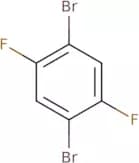
Discontinued product1,4-Dibromo-2,5-difluorobenzene
CAS:1,4-Dibromo-2,5-difluorobenzene is a synthetic compound that is used as a building block for the synthesis of polymers. It is also a natural product that can be isolated from plant material and has been shown to have antimicrobial properties. 1,4-Dibromo-2,5-difluorobenzene has been shown to have an acceptor group and it polymerizes in the presence of free radicals. This compound has been studied using gel permeation chromatography, x-ray structures, and microscopy studies. It is a nonpolar solvent at room temperature and its fluoro group makes it reactive with other polar solvents such as water.
Formula:C6H2Br2F2Purity:Min. 95%Color and Shape:PowderMolecular weight:271.88 g/molRef: 3D-FD11144
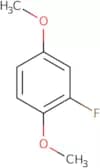
Discontinued product1,4-Dimethoxy-2-fluorobenzene
CAS:1,4-Dimethoxy-2-fluorobenzene is a synthetic molecule that belongs to the class of halides. It is used as a ligand in X-ray crystallography and has been shown to have anti-cancer properties. 1,4-Dimethoxy-2-fluorobenzene can be prepared by reacting primary amines with chloroformates in the presence of bases at temperatures between -20 °C and 100 °C. This method is efficient and produces high yields. The synthesis of 1,4-dimethoxy 2-fluorobenzene can be optimized by using strategies such as preparative scale techniques or temperature changes.
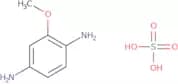
Formula:C8H9FO2Purity:Min. 95%Color and Shape:PowderMolecular weight:156.15 g/mol2-Methoxybenzene-1,4-diamine sulfate
CAS:2-Methoxybenzene-1,4-diamine sulfate (2MBDS) is a chemical that inhibits the synthesis of quinolines and dyes. 2MBDS is used as a control in animal experiments to maintain the level of sulfate in the blood. It is injected into animals and then measured using assays to measure the concentration of sulfate in the blood. 2MBDS has been shown to cause genetic damage and death in animals, as well as brittleness of muscle cells. The effects of 2MBDS on DNA replication and cell division have been studied by observing its effect on meiosis in mice. This chemical also simplifies chromosome structure and reduces chromosome number during meiosis, which may lead to chromosomal aberrations.
Formula:C7H10N2O·H2O4SPurity:Min. 95%Color and Shape:Off-White PowderMolecular weight:236.25 g/molRef: 3D-FM30843
Discontinued product

![(R)RuCl[(pcymene)(DMBINAP)]Cl](/_next/image/?url=https%3A%2Fstatic.cymitquimica.com%2Fproducts%2FIN%2Fthumb-webp%2FDA003C6L.webp&w=3840&q=75)